Are solar panels worth it? An honest UK cost guide
What solar panels really cost in 2026, what you actually get back, and the roofs they don't suit — an honest UK guide with no 'free electricity' or 'pays for itself' hype.
By Tom Calder · Updated 21 July 2026 · Sourced to the Energy Saving Trust & Ofgem
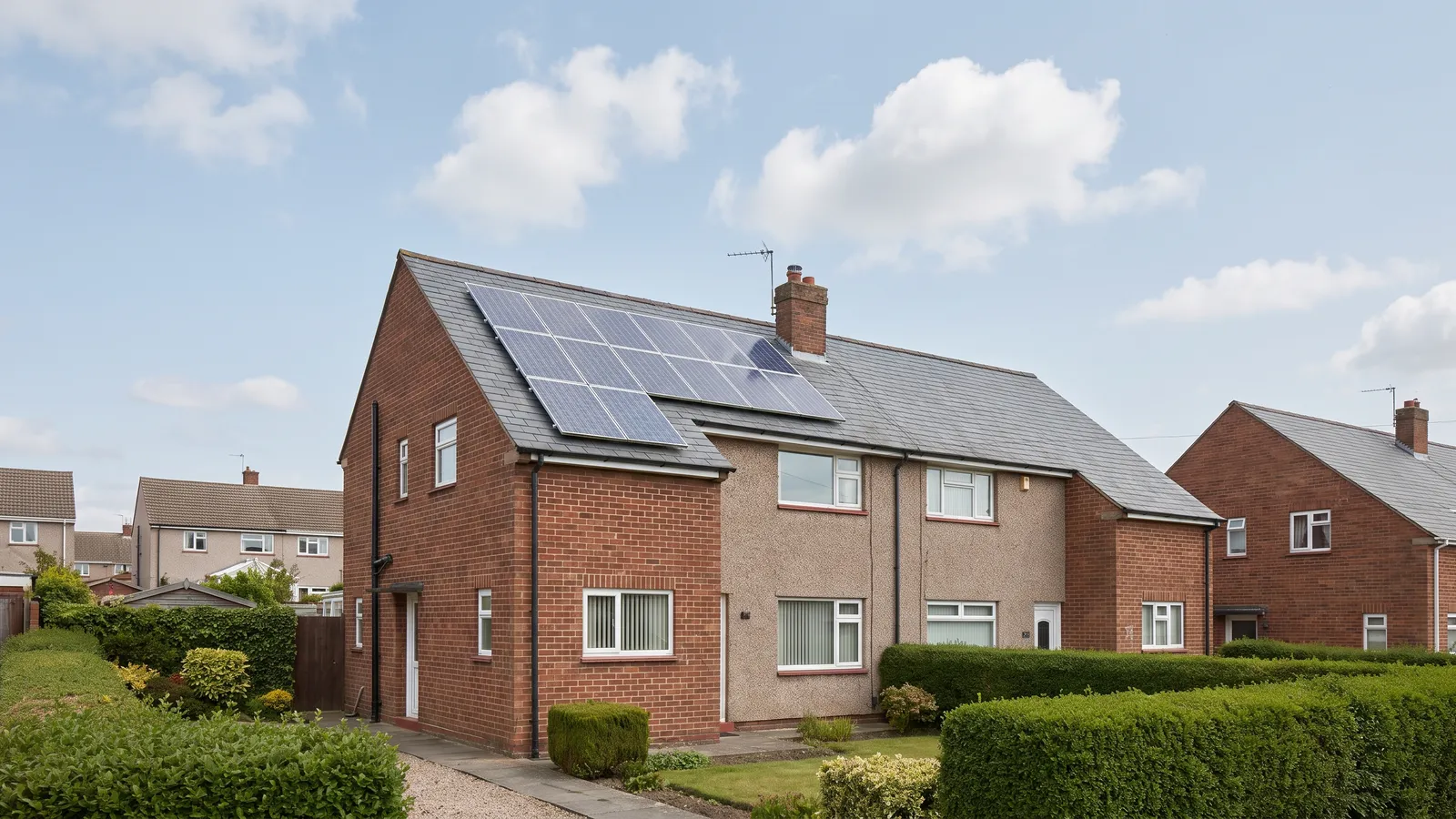
What solar costs in 2026
A typical home solar system is around 4.5 kWp and costs about £7,600 installed, according to the Energy Saving Trust. Smaller 3 kWp arrays start nearer £5,000; a larger 5–6 kWp system runs to £9,000–£11,000 or more. The big variables are the size, how easy your roof is to work on, and whether the roof needs any repair first.
One genuine saving applies to everyone: there's 0% VAT on solar panels and home batteries until 31 March 2027, after which it returns to 5%. If you're seriously considering solar, that deadline is worth having in mind.
A battery is a separate cost on top. The Energy Saving Trust puts home battery storage anywhere from about £1,500 to £10,000, with a 5 kWh battery around £4,600 — and a battery lasts roughly 10–12 years, shorter than the panels, so it will need replacing sooner.
What you actually get back
Solar saves you money two ways, and the bigger one is often overlooked. First, every unit you generate and use yourself is a unit you don't buy from the grid at around 26p — so the more of your generation you use during the day, the better the maths. Second, you can be paid for the surplus you export through the Smart Export Guarantee (SEG), though those rates are set by suppliers and are usually far lower than the price you pay to import.
That's why payback varies so much between homes. The Energy Saving Trust's figures put the payback on a typical system somewhere around 9 to 13 years once export payments are counted, but it depends heavily on how much electricity you use in daylight hours, your export tariff, and where in the UK you are. For a figure tailored to your roof and usage, the Energy Saving Trust's free Solar Energy Calculator is the honest place to start — not an installer's sales estimate.
What no one can honestly promise is a guaranteed return. Solar is a long-term investment that usually pays off on a suitable roof — but it is not free money, and the payback is measured in years, not months.
Is a battery worth it?
A battery lets you store your daytime solar to use in the evening instead of exporting it cheaply and buying it back expensively — which can meaningfully increase what you save. But the Energy Saving Trust is careful to say those savings 'won't always be enough on their own to justify the cost of the battery', and the upfront price makes it unrealistic for some homes.
Two things to weigh: a battery loses a little energy every time it charges and discharges, and it wears out sooner than the panels. And a normal battery does not keep your lights on in a power cut — that needs specific backup hardware, which is a separate decision we cover in its own guide.
When solar isn't worth it (yet)
Solar suits a lot of UK homes, but not all. It's a weaker bet if:
Your roof is heavily shaded. Even partial shade from trees, chimneys or nearby buildings cuts output disproportionately — shading is one of the biggest killers of a solar system's economics.
Your roof faces north, or has a poor pitch. South is ideal; east–west still works reasonably; a north-facing main roof generates too little to stack up well.
Your roof needs work soon. If the roof will need re-covering within a few years, do that first — or fit the panels during the roof job, so you're not paying twice for scaffolding.
You use very little electricity in the daytime. If the house is empty 9–5 and you export most of your generation at a low SEG rate, the savings shrink. A battery, or shifting usage into daylight, helps.
You're planning to move soon. With payback measured at roughly 9–13 years, solar rarely pays for itself before a near-term house move (though it may still add some value at sale).
Don't buy solar on a 'it pays for itself' promise
A hard-won lesson sits behind this whole section. In the early 2010s, thousands of people were sold solar on finance with the pitch that the electricity savings and export income would cover the loan repayments — and for many the systems simply didn't generate enough. Barclays Partner Finance alone set aside £38.5m for mis-selling claims.
So: treat 'the panels pay for themselves' and '£0 upfront' subscription pitches with real caution. Solar finance and solar subscriptions are regulated financial products — if you're considering one, get independent advice, and never let a salesperson's projection stand in for the Energy Saving Trust's calculator or your own numbers. Where you can, buying outright avoids the whole trap.
Common questions
Are solar panels worth it in the UK?
For many homes, yes — over the long term. A typical system pays back in roughly 9–13 years once export payments are counted, and does best on an unshaded, roughly south-facing roof in a home that uses electricity during the day. It's a weaker bet on a shaded or north-facing roof, or if you're moving soon. It's a long-term investment, not quick money.
How much do solar panels cost in the UK?
A typical 4.5 kWp system is around £7,600 installed (Energy Saving Trust), with smaller systems from about £5,000 and larger ones £9,000–£11,000+. There's 0% VAT on solar and batteries until 31 March 2027. A home battery is a separate cost, roughly £1,500–£10,000.
How long do solar panels take to pay for themselves?
Indicatively around 9 to 13 years with export payments, but it depends heavily on how much of your own generation you use, your export tariff and your location. Treat any single figure as indicative — use the Energy Saving Trust's Solar Energy Calculator for an estimate tailored to your home, and be wary of shorter paybacks quoted in a sales pitch.
Do you get paid for solar electricity you export?
Yes, through the Smart Export Guarantee (SEG). Larger suppliers must offer an export tariff, but they set their own rates, which vary widely and are usually well below the price you pay to import — so using your own solar during the day saves you more than exporting it. An MCS-certified installation is required to claim SEG.
Do solar panels work in winter or on a north-facing roof?
They work year-round but generate much less in winter and on north-facing roofs. South-facing is ideal; east–west is still viable. A heavily shaded or north-facing main roof generates too little to make solar stack up well financially.
Is a solar battery worth it?
It can be — a battery lets you use more of your own solar in the evening rather than exporting it cheaply. But the Energy Saving Trust notes the savings won't always justify the cost, and a battery wears out sooner than the panels (about 10–12 years). It's worth modelling the numbers for your usage rather than assuming it pays.
Sources: Energy Saving Trust — Solar panels · Energy Saving Trust — Battery storage · Ofgem — Smart Export Guarantee · GOV.UK — VAT on energy-saving materials (Notice 708/6). PreparedBritain is independent and not affiliated with HM Government.
The Blackout Briefing
One calm email when something genuinely matters — severe weather, live incidents, real price drops. No noise.
Keep reading
All money & bills guides →Is a heat pump worth it? An honest UK cost guide
What an air-source heat pump really costs in 2026, whether it actually saves money to run, and the homes it doesn't…
Power cut compensation: what you're owed and how to claim
How much compensation you're owed for a long power cut, the different rules for storms, and how to claim from your…
When the card machine's down: bank outages and keeping a little cash
UK bank IT outages, card and cash-machine failures in a power cut, and why keeping a modest amount of physical cash…