Will solar panels keep the lights on in a power cut?
It's the question people assume they know the answer to — and usually get wrong. Here's what actually happens to solar in a blackout, and what you'd really need to keep the lights on.
By Tom Calder · Updated 21 July 2026 · Sourced to the Energy Networks Association & Energy Saving Trust
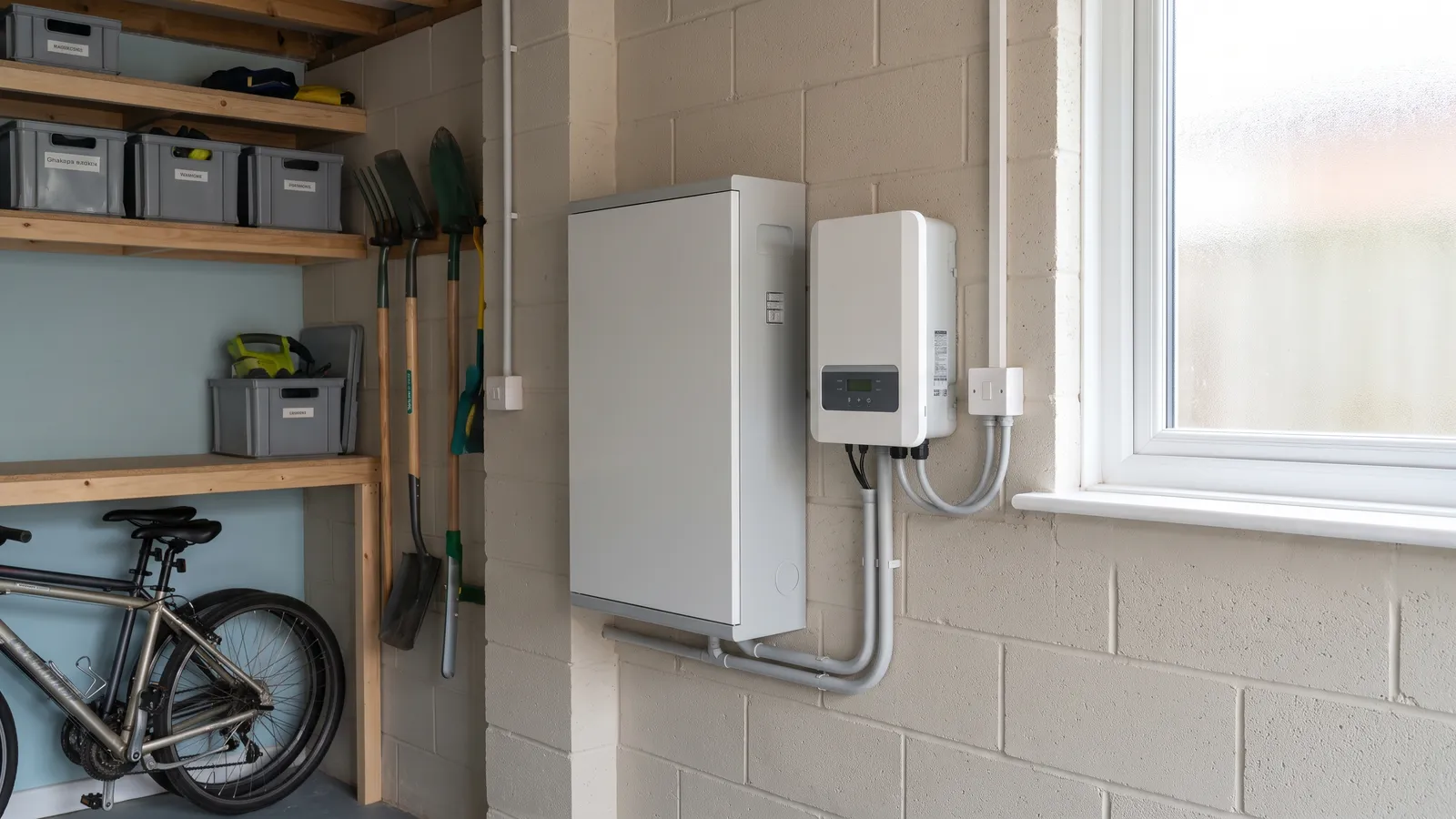
No — a standard solar system switches off in a power cut, even in full sun, and a normal battery does too. You only keep power in a blackout if you add a battery with a dedicated backup (EPS) function. Here's why, and what it takes.
Why standard solar switches off
When the grid fails, a normal grid-connected solar inverter is required to disconnect and stop generating. It's called anti-islanding (or loss-of-mains) protection, and it's mandated by the UK grid-connection standards G98 and G99. The reason is safety: if your system kept pushing electricity onto the network during an outage, it could energise lines that engineers believe are dead and are working to repair.
So the inverter cuts off within about two seconds of the grid going down — usually much faster. Your panels could be bathed in sunshine and you'd still have nothing: without extra hardware, solar (and an ordinary battery) gives you no power in a cut.
What you actually need: backup (EPS)
To have power during an outage you need a battery system with an explicit backup or EPS (Emergency Power Supply) function, plus the hardware to switch your home safely off the grid and onto the battery. This has to be specified when the system is designed — it's normally a paid optional extra, not something every battery does by default. It comes in three tiers:
| Backup tier | What it does | Worth knowing |
|---|---|---|
| Backup socket (EPS) | Powers a single dedicated socket you plug into by hand when the grid goes down. | Cheapest option; manual, and only what you plug in. |
| Essential circuits | Selected circuits — say lights, fridge and router — switch over automatically with no interruption. | The most common choice; needs a changeover/backup gateway. |
| Whole-home backup | Runs the whole house as normal during a cut. | Priciest — needs a bigger battery, high inverter output and full backup hardware. |
The two numbers that decide what backup can do
Two separate specs govern a backup system, and people conflate them: the battery's usable capacity (kWh) sets how long it can keep going, while the inverter's output (kW) sets how much you can run at once. A battery with plenty of stored energy will still trip if you switch on something high-draw — a kettle, an oven, an electric shower — that exceeds the inverter's output.
A system will also usually hold back a reserve (often around 20–30% of capacity) for grid-down cover rather than letting the battery run flat. So when an installer quotes backup, ask two things: which circuits or sockets it powers, and what it can and can't run at the same time.
For most households, whole-home solar backup is overkill for the problem. The average British home loses well under an hour of electricity supply a year, and most cuts are short. A portable power station — from around a couple of hundred pounds for a unit that runs a fridge, router, phones and a few lights for hours — rides out a typical cut for a fraction of the £5,000–£8,000-plus a solar battery with backup costs. Whole-home solar backup is about long-term resilience and energy independence, and it pairs with generation to recharge through a longer outage — but if your goal is simply not to be caught out by the occasional blackout, a power station is the sensible buy. See how often your area actually loses power on our live power-cut tracker, and the wider power-cut guide.
Common questions
Do solar panels work in a power cut?
Not on their own. A standard grid-tied solar system automatically shuts down the moment the grid fails — even in bright sunshine — so the panels give you no power during a blackout. This is a mandatory safety feature. You only get power in a cut if you add a battery with a dedicated backup (EPS) function.
Why do solar panels switch off when the power goes out?
It's called anti-islanding (or loss-of-mains) protection, required by the UK grid-connection rules G98 and G99. If your inverter kept pushing electricity onto the network during an outage, it could endanger the engineers repairing the 'dead' lines. So the inverter disconnects within about two seconds of the grid failing.
Can a solar battery power my house in a blackout?
Only if it's set up for it. A normal battery still shuts down with the grid unless it has an explicit backup or EPS function plus the right hardware (a backup gateway or changeover). That capability has to be specified and installed up front — it's usually a paid optional extra, not a default.
What's the difference between EPS and whole-home backup?
EPS (Emergency Power Supply) in its simplest form powers one dedicated socket you plug into. Essential-circuits backup automatically keeps selected circuits (lights, fridge, router) running. Whole-home backup runs the entire house — but needs a larger battery, higher inverter output and more hardware, so it costs the most.
Do I need solar panels to have battery backup?
No — a home battery with backup can keep essential circuits running in a cut whether or not you have solar (though solar lets it recharge during a longer outage). And for simply riding out a typical short cut, a portable power station is far cheaper than a whole-home battery system.
Sources: Energy Networks Association — G98/G99 (anti-islanding), Energy Saving Trust — Battery storage and Ofgem electricity-distribution reporting. This is general guidance, not installation advice — always use an MCS-certified installer. PreparedBritain is independent and not affiliated with HM Government.
The Power Cut Action Card
One page for the kitchen drawer: what to do first, what to have ready, how long food keeps, and how to stay warm without risking carbon monoxide. Free, no catch.
Download it straight away. We'll also send the occasional briefing when something genuinely matters — severe weather, live incidents, real price drops. Nothing else.
Keep reading
All planning & the national picture guides →The Boiler Upgrade Scheme: the £7,500 heat-pump grant explained
A plain-English guide to the £7,500 Boiler Upgrade Scheme grant (£9,000 for off-gas-grid homes from 21 July 2026) —…
The Priority Services Register: free extra help in an emergency
What the free Priority Services Register is, who's eligible, the help it gives in a power, gas or water emergency,…
How the UK responds to a national emergency
The calm, evidence-based answer to 'is anyone in charge in a crisis?' — the Civil Contingencies Act, Local…