Best grab bags & ready-made emergency kits (2026)
A grab bag is the one thing to seize if you have to leave fast. You can build your own, but a ready-made kit is a decent shortcut — here are the ones worth the money, and what to check before you buy.
By Tom Calder · Updated 20 September 2026 · 6 products, 5 of 6 price-tracked
Before you buy
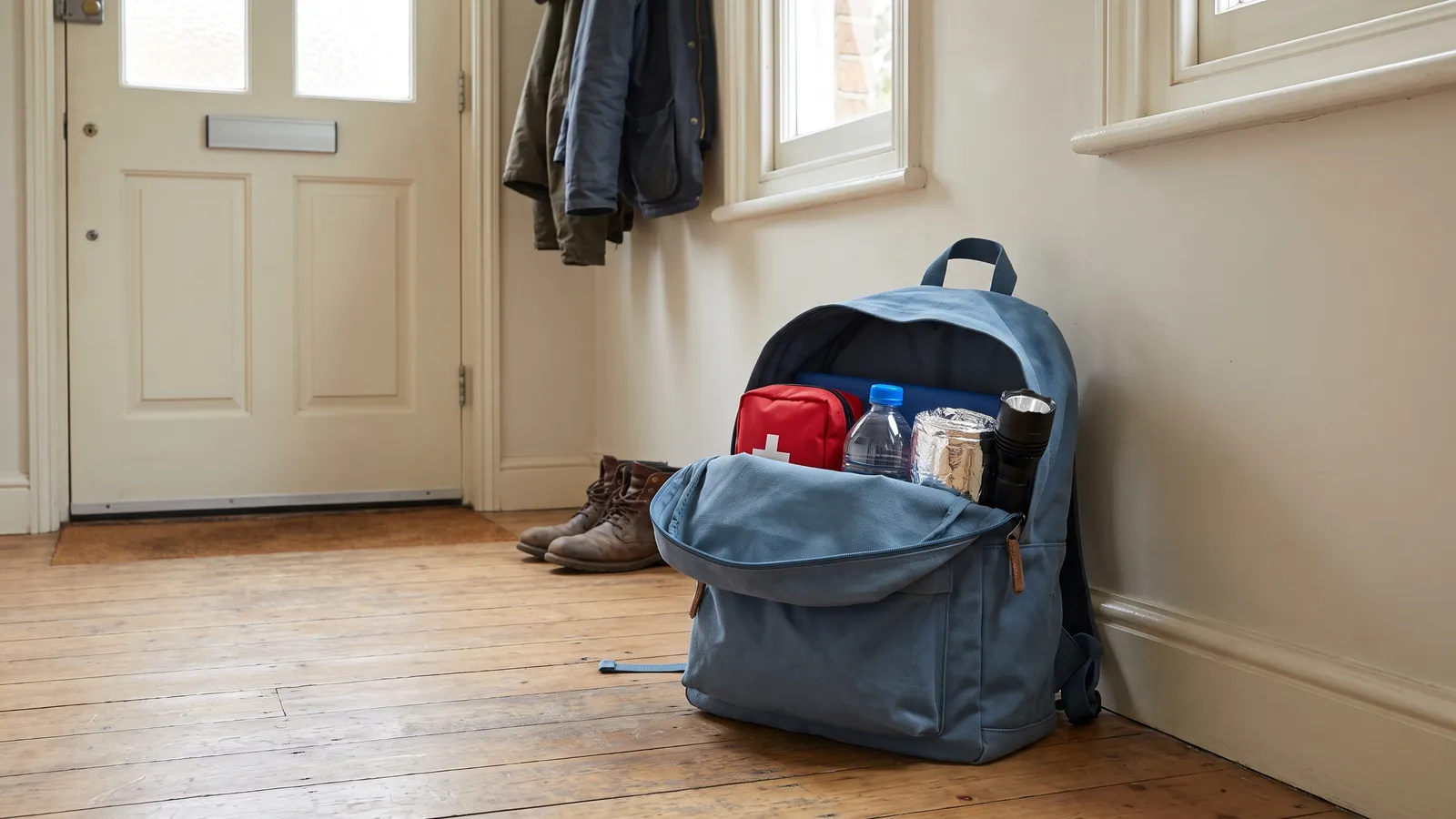
A grab bag answers one question: if you had to leave in five minutes — flood, gas leak, police knock — what walks out of the door with you? Ready-made kits are a shortcut to a decent baseline; building your own is cheaper and fits your household better. Either way it lives packed, by the door, not as a list of good intentions.
Judge a premade kit by its contents list, not its item count — fifty cotton buds pad a number nicely. What matters: water or a filter, light, a first aid kit, a radio, warmth (foil blankets or a survival bag), and a bag you'd actually carry. Assume you'll add the personal layer yourself: medicines, documents, cash, chargers, glasses, and anything your children or pets can't do without.
Weight is the forgotten spec. A bag you can't carry a mile isn't a grab bag; somewhere around 6–10kg loaded is realistic for most adults. Waterproofing matters too — if you're leaving because of water, a dry bag inside the rucksack keeps documents and spare clothes dry.
Top pick: Blizzard Survival Bag. A genuinely capable bit of kit that packs to paperback size yet gives a fully-clothed adult roughly a medium sleeping bag's worth of warmth, plus wind and waterproofing. It is the emergency bivvy the mountain rescue and ambulance services actually carry, and for that job it is hard to fault.
| Kit | Covers | Duration | Items | Price | |
|---|---|---|---|---|---|
| Blizzard Survival BagTOP PICK | 1 ppl | — | 1 | — | Check price → |
| Lifesystems Survival Shelter 2 | 2 ppl | — | 1 | £38.49as of 20 Sep 2026, 12:29 BST · DetailsProduct prices and availability are accurate as of the date/time indicated and are subject to change. Any price and availability information displayed on Amazon.co.uk at the time of purchase will apply to the purchase of this product. | Check price → |
| Sea to Summit Lightweight Dry Bag 20L | — | — | 1 | £28.19as of 20 Sep 2026, 12:29 BST · DetailsProduct prices and availability are accurate as of the date/time indicated and are subject to change. Any price and availability information displayed on Amazon.co.uk at the time of purchase will apply to the purchase of this product. | Check price → |
| EVAQ8 1-Person Emergency Grab Bag | 1 ppl | 3 days | 16 | £95.00as of 20 Sep 2026, 12:29 BST · DetailsProduct prices and availability are accurate as of the date/time indicated and are subject to change. Any price and availability information displayed on Amazon.co.uk at the time of purchase will apply to the purchase of this product. | Check price → |
| EVAQ8 Family Emergency Grab Bag | 4 ppl | 3 days | 17 | £225.00as of 20 Sep 2026, 12:29 BST · DetailsProduct prices and availability are accurate as of the date/time indicated and are subject to change. Any price and availability information displayed on Amazon.co.uk at the time of purchase will apply to the purchase of this product. | Check price → |
| Car Emergency Breakdown & Winter Kit | 2 ppl | 1 days | 20 | — | See price on Amazon → |
ⓘ As an Amazon Associate, PreparedBritain earns from qualifying purchases. We may earn a commission when you buy, or a fee when you request a quote, through our links — it never affects what we recommend. Amazon prices come from Amazon's own product data and show the date and time they were retrieved. Prices at other retailers are checked by us, less often. Prices and stock can change at any time, so always check the retailer's price before you buy.
Blizzard Survival Bag
4.5Who it's for: A serious emergency-warmth layer for a hillwalking, car or grab bag where cold and wet are real risks.
A genuinely capable bit of kit that packs to paperback size yet gives a fully-clothed adult roughly a medium sleeping bag's worth of warmth, plus wind and waterproofing. It is the emergency bivvy the mountain rescue and ambulance services actually carry, and for that job it is hard to fault.
- Reflexcell construction delivers around 7.5 tog of warmth, far beyond a thin foil survival blanket, and it is windproof and waterproof.
- Vacuum-packs to about 23 x 11 x 4 cm and 385 g, so it disappears into a rucksack, car boot or grab bag until needed.
- Reusable rather than a one-shot foil sheet, and the elasticated hug plus drawcord hood genuinely help retain body heat.
- Costs several times more than a basic foil bivvy bag, which is enough for many low-risk uses.
- Covers one person only and is bulky to re-pack neatly once opened.
Don't buy if Don't buy this if you only want something cheap to leave in the glovebox for a roadside breakdown near home; a £5 foil bivvy or keeping a proper blanket in the car does that job for far less. The Blizzard earns its price when hypothermia is a real possibility, out on the hills or in genuinely cold, remote conditions.
Lifesystems Survival Shelter 2
4.5Who it's for: A lightweight warmth-and-shelter layer for a car kit or grab bag when two people are caught out in bad weather.
A proven, pocket-sized group shelter that traps body heat to keep two people warm and dry when you're stuck outdoors, using the same design mountain rescue teams carry. For a household emergency box it's sensible, low-cost insurance rather than an everyday essential.
- Very light at 345g and packs to roughly the size of a drinks can, so it earns its place in a car kit or grab bag.
- Genuinely effective at trapping body heat, with a 5000mm waterproof, taped-seam build and reflective strips that also aid being spotted.
- Inexpensive for the reassurance it buys, and trusted by mountain rescue teams and outdoor centres.
- It's a sit-inside emergency shelter, not a tent, so it's cramped and prone to condensation beyond short-term use.
- Aimed at outdoor and roadside situations rather than sheltering inside the home.
Don't buy if Don't buy it expecting a tent or a way to shelter indoors. If your main worry is staying put at home during a power cut, put the money towards blankets, a stove and lighting instead.
as of 20 Sep 2026, 12:29 BST · Details
Product prices and availability are accurate as of the date/time indicated and are subject to change. Any price and availability information displayed on Amazon.co.uk at the time of purchase will apply to the purchase of this product.Sea to Summit Lightweight Dry Bag 20L
4.5Who it's for: Waterproofing the contents of a grab bag or rucksack — documents, electronics, spare clothes and a first-aid kit.
A properly made 20-litre roll-top dry bag that weighs about 95g and keeps kit dry through heavy rain, with taped seams and a lifetime guarantee. It is a liner rather than a bag in its own right, but for protecting an emergency kit inside another bag it is hard to fault.
- Reliably waterproof: TPU-laminated 70D ripstop nylon, fully taped seams and a Hypalon roll-top
- Very light (~95g) and packs down to almost nothing when not in use
- Durable for its weight class, with Sea to Summit's lifetime guarantee behind it
- No straps or handles — it has to live inside or clip onto another bag
- Roll-top closure resists rain and splashes, not prolonged submersion
Don't buy if You want a standalone grab-and-go bag — this has no carry straps. Buy a rucksack for that job and use this inside it; or if you only need cheap organisation rather than waterproofing, a £3 zip-lock approach will do.
as of 20 Sep 2026, 12:29 BST · Details
Product prices and availability are accurate as of the date/time indicated and are subject to change. Any price and availability information displayed on Amazon.co.uk at the time of purchase will apply to the purchase of this product.EVAQ8 1-Person Emergency Grab Bag
3.8Who it's for: Someone who wants a ready-made, UK-assembled 72-hour grab bag without sourcing parts themselves.
A neatly assembled British-made grab bag that maps closely to the government's Prepare guidance, covering light, warmth, first aid and basic food and water for 72 hours. You pay a premium for the convenience of not building it yourself, and you'll still want to add your own stored water and personal medications.
- UK-assembled and dispatched, with contents aligned to standard 72-hour emergency guidance
- Sensible core kit in one bag: wind-up torch, first aid, sleeping bag, purification tablets, powerbank and multi-tool
- Contents can be customised on request, so you can tailor it to your household
- Priced well above the cost of assembling an equivalent kit yourself from the gov.uk list
- Only a single 500ml water ration is included, so you must store additional water separately
Don't buy if Don't buy if you're happy to follow the free gov.uk Prepare kit list and assemble the same items yourself for less.
as of 20 Sep 2026, 12:29 BST · Details
Product prices and availability are accurate as of the date/time indicated and are subject to change. Any price and availability information displayed on Amazon.co.uk at the time of purchase will apply to the purchase of this product.EVAQ8 Family Emergency Grab Bag
3.5Who it's for: A household of four wanting a complete, ready-packed 72-hour grab bag without sourcing parts themselves.
A comprehensive, UK-assembled 72-hour kit that covers food, water, warmth, light and first aid for four people in a single holdall. You pay a premium for the convenience, and a confident DIY builder could assemble comparable contents for noticeably less.
- Genuinely complete for the critical first 72 hours — food rations, water and purification tablets, foil blankets, sleeping bags, wind-up torch/radio and a first-aid kit, with nothing major missing
- Assembled and dispatched in the UK by an emergency-kit specialist rather than a generic drop-shipped bundle
- One grab-and-go holdall for the whole family — a sensible choice for people who realistically won't build their own
- Premium price; someone comfortable buying the components separately can match the coverage for less
- Some parts (wind-up torch/radio, multi-tool) are functional rather than high-end kit
Don't buy if You're happy sourcing items yourself — buying food rations, water pouches, blankets and a first-aid kit separately will cost less for similar coverage.
as of 20 Sep 2026, 12:29 BST · Details
Product prices and availability are accurate as of the date/time indicated and are subject to change. Any price and availability information displayed on Amazon.co.uk at the time of purchase will apply to the purchase of this product.Car Emergency Breakdown & Winter Kit
3.5Who it's for: Drivers who want one grab-and-go bag covering both a roadside breakdown and a cold-weather wait.
A sensible, low-cost way to keep the legal and winter roadside basics in the boot in a single bag. Just check the actual contents before buying, as cheaper kits pad the item count with token-quality pieces.
- Puts the safety essentials (hi-vis vest, warning triangle, torch, foil blankets, first-aid) in one place so nothing is forgotten before a winter journey
- Inexpensive peace of mind, and a tidy alternative to loose items rolling around the boot
- Covers both scenarios most UK drivers face — a breakdown wait and being caught out in ice or snow
- Contents are often budget-grade: thin foil blankets, a minimal first-aid kit and a small torch that you may want to upgrade
- Advertised piece counts can be inflated with low-value extras, so a '25-piece' kit isn't necessarily better than a 12-piece one
Don't buy if You already own a decent first-aid kit, hi-vis vest and torch — you'd be paying twice for weaker duplicates, and assembling your own bag gives better kit for similar money.
The Emergency Kit Checklist
The GOV.UK Prepare essentials on one printable page — tick them off as you go and keep it with the kit. Free, no catch.
Download it straight away. We'll also send the occasional briefing when something genuinely matters — severe weather, live incidents, real price drops. Nothing else.
We verify every product's specifications against at least two independent sources, re-check its UK price and stock on a schedule where we can track it automatically, and cross-check safety-relevant claims against official guidance. Where we've bought and used a product ourselves we say so on its review; where we haven't, our verdict is a considered spec-and-evidence comparison, not a hands-on test — and commissions never change a ranking either way. Read our full methodology →
Guides that go with this
The Government's recommended kit — with the best products for each item at every budget.
A simple, practical household emergency plan — the official GOV.UK Prepare approach: contacts, meeting points,…
Common questions
What should be in a grab bag?
The Government's list is the backbone: water, snacks, a torch, a battery or wind-up radio, a power bank, a small first aid kit, hygiene basics — plus copies of key documents, cash, medicines, chargers, warm layers and a change of clothes. Our kit builder turns it into a sized checklist.
Are ready-made emergency kits worth it?
As a starting point, yes — you pay a convenience premium for someone else's shopping. As a finished article, no: every premade kit still needs your medicines, documents and personal essentials added before it's genuinely yours.
How heavy should a grab bag be?
Light enough to carry for a mile without stopping — for most adults that's roughly 6–10kg. If yours is heavier, strip duplicates and bulk water (carry a filter bottle instead of litres).
Should I keep a kit in the car as well?
A smaller one, yes: water, snacks, a torch, a foil blanket, a phone cable, and in winter a warm layer and de-icer. Hundreds of drivers get stranded in every serious UK snow event — the car kit is what makes that boring instead of dangerous.
What about children and babies?
Add nappies, ready-to-feed formula (it needs no water), a comfort object, and a recent photo of each child in case you're separated. Let older children pack a small bag of their own — it helps them feel in control, too.
How often should I check the bag?
Twice a year — the clock changes are the classic reminder. Swap expiring food, water and medicines, test the torch, and update documents and clothing sizes.