Kit builder · First aid
Build your home first aid kit
A home first aid kit from the lists NHS 111 Wales, St John Ambulance, the HSE and GOV.UK Prepare publish, with the medicine cabinet basics kept as advice, not doses.
A home first aid kit is for the everyday: a cut, a graze, a sprain, a minor burn, something in an eye. GOV.UK Prepare lists the core of it in its emergency kit: waterproof plasters, bandages, a thermometer, antiseptic, eyewash solution, sterile dressings and gloves, medical tape and tweezers. NHS 111 Wales, St John Ambulance and the HSE add eye pads, triangular bandages, cleansing wipes, scissors and safety pins, and this builder puts them in one list with where each comes from.
St John Ambulance says you can buy a ready-made kit or put your own together in a clean, waterproof box. Either way, the kit is only as good as its dates: the HSE says check it regularly and replace anything out of date. The medicines most homes keep, such as painkillers and antihistamines, are listed here as advice only. Follow the packet and the NHS, ask a pharmacist if you are unsure, and don’t store anything here that is prescribed for someone.
No kit replaces knowing what to do. GOV.UK Prepare suggests learning some basic first aid, and the British Red Cross and St John Ambulance run courses and free apps. In an emergency, call 999; for urgent advice, NHS 111.
Who is this for?
Your list: 17 items, 11 essential
You probably own some of this already: only buy the gaps. Each price shows when it was checked.
- A box to keep it in, or a ready-made kit1 Essential
St John Ambulance says a home kit can be a ready-made one or your own, put together in a clean, waterproof box. The HSE’s advice is for workplaces: look for British Standard BS 8599 when buying, though even a workplace kit doesn’t have to meet it by law. For a home, check what a ready-made kit actually contains.
One kit for the house, kept somewhere everyone knows and can reach, not locked away. A ready-made kit covers most of the lines below; tick off what it has and add the rest.
 Steroplast 70-pieceAlso good: Lifesystems Waterproof First Aid Kit — £21.99
as of 21 Oct 2026, 10:37 BST · Details
Product prices and availability are accurate as of the date/time indicated and are subject to change. Any price and availability information displayed on Amazon.co.uk at the time of purchase will apply to the purchase of this product.£19.99Check price →Compareas of 21 Oct 2026, 10:37 BST · Details
Product prices and availability are accurate as of the date/time indicated and are subject to change. Any price and availability information displayed on Amazon.co.uk at the time of purchase will apply to the purchase of this product. - Plasters, including waterproof onesEssential
Every list starts here: GOV.UK Prepare says waterproof plasters, the HSE individually wrapped plasters in assorted sizes, and NHS 111 Wales a waterproof plaster for a small wound once it has been washed and patted dry. NHS 111 Wales and St John Ambulance both suggest blue plasters for the kitchen, so one that falls into food is easy to spot.
A mixed box of sizes, around twenty to start, and more if you have children. Gel blister plasters are worth adding, St John Ambulance says, to cushion a blister and stop it rubbing.
- Sterile dressings, medium and largeEssential
The HSE lists large and medium-sized sterile, individually wrapped, unmedicated wound dressings; GOV.UK Prepare says sterile dressings. NHS 111 Wales says they cover wounds too big for a plaster, and if blood soaks through, put a second dressing over the top rather than taking the first one off.
Two or three of each size. They are sterile only while sealed, so check the dates.
- Sterile eye pads and eyewashEssential
The HSE and NHS 111 Wales list sterile eye pads, and GOV.UK Prepare lists eyewash solution. NHS 111 Wales says an eye pad can cover an eye with a small wound or something like grit in it that isn’t embedded, until you get medical advice.
Two eye pads and a small bottle or pods of sterile eyewash. If something is embedded in the eye, get medical help.
- Triangular bandagesEssential
On the HSE’s list and NHS 111 Wales’s, and St John Ambulance says they work as slings or bandages and, if sealed and sterile, can cover large wounds or burns. NHS 111 Wales says they can support a suspected broken collarbone or hand.
Two, individually wrapped.
- Crepe or roller bandagesEssential
GOV.UK Prepare says bandages; NHS 111 Wales says a crepe bandage supports a sprained or strained ankle or wrist once the swelling has been treated with an ice pack, and St John Ambulance lists roller bandages to support joints and keep dressings in place.
One or two crepe or conforming bandages. If swelling doesn’t go down, NHS 111 Wales says it could be a break: get medical advice.
- Disposable glovesEssential
On every list. NHS 111 Wales says gloves protect the person you are helping if your hands are dirty, and you if they are bleeding. St John Ambulance says choose latex-free where you can, as some people are allergic to latex.
Several pairs, nitrile or another latex-free kind.
- Cleansing wipes and antisepticEssential
NHS 111 Wales lists alcohol-free wipes for cleaning grazes and minor wounds when there is no water, and says wipe once and use a fresh one each time. GOV.UK Prepare lists antiseptic, and NHS 111 Wales says antiseptic cream can help minor cuts, grazes, burns, bites and stings.
A pack of individually wrapped wipes and a tube of antiseptic cream. Clean water is still the first choice for a wound.
- Tough-cut scissorsEssential
NHS 111 Wales and St John Ambulance both list them: blunt-tipped safety scissors for cutting tape, bandages or clothing to reach an injury, without the risk of cutting skin.
One pair, kept in the kit and not borrowed for wrapping paper.
- Tape, safety pins and tweezersEssential
GOV.UK Prepare lists medical tape for dressings and tweezers; the HSE, NHS 111 Wales and St John Ambulance list safety pins for securing bandages and slings.
A roll of microporous tape, a few safety pins and a pair of fine tweezers for splinters.
- Digital thermometer1 Essential
GOV.UK Prepare includes a thermometer in its first aid list, and NHS 111 Wales puts one in the medicine cabinet: under the arm, in the ear or in the mouth, depending on the type.
One for the house. Follow the instructions for each age; spare batteries if it takes them.
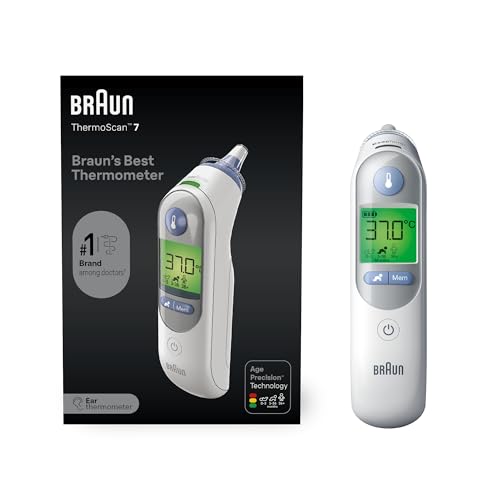 ThermoScan 7Also good: Eco Temp Basic — £5.49
as of 21 Oct 2026, 10:37 BST · Details
Product prices and availability are accurate as of the date/time indicated and are subject to change. Any price and availability information displayed on Amazon.co.uk at the time of purchase will apply to the purchase of this product.£45.25Check price →Compareas of 21 Oct 2026, 10:37 BST · Details
Product prices and availability are accurate as of the date/time indicated and are subject to change. Any price and availability information displayed on Amazon.co.uk at the time of purchase will apply to the purchase of this product. - Foil blanketOptional
St John Ambulance lists an aluminium blanket to keep in body heat in an emergency. It folds to the size of a wallet.
One or two in the kit.
- Resuscitation face shieldOptional
St John Ambulance says a face shield or pocket mask puts a barrier between you and the person when giving rescue breaths, lowering the risk of infection.
One. It is only useful if you know CPR, so pair it with a course.
- Painkillers for adultsOptional
NHS 111 Wales lists paracetamol, aspirin and ibuprofen in a home medicine cabinet for minor aches and pains, and says always check the directions on the packaging and never take more than the stated dose. The NHS says never give aspirin to children aged 15 or under.
Follow the packet and the NHS website; ask a pharmacist if you take other medicines or aren’t sure which suits you. Keep them in their boxes, with the leaflet.
- AntihistamineOptional
NHS 111 Wales lists antihistamine tablets and cream for allergic reactions such as hay fever and insect bites or stings. They ease symptoms rather than cure the cause.
Follow the packet, and ask a pharmacist which suits you or a child. A severe allergic reaction is a 999 call, not a job for the cabinet.
- Oral rehydration sachetsOptional
The NHS says a pharmacist can recommend oral rehydration solutions, powders you mix with water, for dehydration, and that they help someone with heat exhaustion replace the salt lost through sweating.
A few sachets. Ask the pharmacist which suits you or your child, and make them up exactly as the packet says.
- A first aid app, leaflet or courseOptional
The HSE’s suggested kit starts with a leaflet of general first aid guidance. GOV.UK Prepare says learn some basic first aid skills, and the British Red Cross offers free first aid apps for adults and children. NHS 111 Wales points to courses from the British Red Cross and St John Ambulance.
A free app on each adult’s phone, and a course when you can. Our guide on treating a burn or scald covers the commonest kitchen injury.
Our home first aid kit guide →
One of each goes into your Amazon basket in one go (Amazon may ask you to sign in first). Change the quantities or take out anything you already own before you pay.
We don’t add these up: each price is shown beside its item, and you’ll probably only need some of them.
A kit is for minor injuries. In an emergency, call 999; for urgent advice, call NHS 111 or use 111 online.
Medicines: follow the directions on the packet and never take more than the stated dose (NHS 111 Wales). Never give aspirin to children aged 15 or under (NHS). Ask a pharmacist if you take other medicines, are pregnant, or are buying for a child. This builder doesn’t give doses.
Burns and scalds: the NHS says hold the burn under cool running water for 20 minutes, as soon as possible and within 3 hours, then lay cling film over it rather than wrapping it round. Our guide covers when to get help.
Check the kit regularly: the HSE says many items, particularly sterile ones, carry expiry dates; replace expired items and dispose of them safely.
Learn the basics. GOV.UK Prepare suggests a first aid course, and the British Red Cross and St John Ambulance run them.
Get your personalised checklist
A printable PDF sized to 2 adults, with a QR code back to your list.
Your kit covers supplies. The Family File covers everything else: who to ring, where the paperwork is, what someone would need to know.
Questions
What should be in a home first aid kit?
GOV.UK Prepare lists waterproof plasters, bandages, a thermometer, antiseptic, eyewash solution, sterile dressings and gloves, medical tape and tweezers. NHS 111 Wales, St John Ambulance and the HSE add sterile eye pads, triangular bandages, crepe bandages, alcohol-free cleansing wipes, tough-cut scissors and safety pins. St John Ambulance also lists a foil blanket and a face shield for rescue breaths. A ready-made kit covers most of it; check what is inside.
Does a home first aid kit need to meet BS 8599?
No. The HSE says BS 8599 is the British Standard to look for when buying a workplace kit, and that even workplaces aren’t required by law to meet it. In our view a BS 8599 kit is fine at home but often holds more than a household needs; a home kit should suit the people who live there.
Should medicines go in the first aid kit?
Many people keep a separate medicine cabinet: NHS 111 Wales lists painkillers, antihistamines, antacids, antiseptic cream and a thermometer. Keep medicines in their boxes with the leaflets, follow the directions on the packet, and never give aspirin to children aged 15 or under (NHS). If you aren’t sure what suits you or a child, ask a pharmacist.
How often should I check my first aid kit?
The HSE says check it regularly: many items, particularly sterile ones, have expiry dates, so replace expired items and dispose of them safely. Restock anything you use straight away. A twice-a-year check, when the clocks change, is an easy habit; that is our suggestion.
Sources (11)
- GOV.UK Prepare: get prepared for emergencies (first aid kit list)
- NHS 111 Wales: first aid kit
- NHS 111 Wales: medicine cabinet
- St John Ambulance: what to put in a first aid kit
- HSE: first aid in work, what to put in your first aid kit (BS 8599)
- British Red Cross: prepare an emergency kit
- British Red Cross: first aid apps
- NHS: aspirin (not for children aged 15 or under)
- NHS: burns and scalds
- NHS: dehydration (rehydration solutions from a pharmacist)
- NHS: heat exhaustion and heatstroke
Follow PreparedBritain
A calm heads-up when a storm is named, scam warnings, and the money checkers worth knowing about, in your feed.