Best carbon monoxide alarms for UK homes (2026)
A carbon monoxide alarm is one of the few bits of safety kit that genuinely saves lives for under £25 — CO is invisible, odourless, and produced by any fuel-burning appliance from a boiler to a camping stove used indoors. If your home has gas, oil, solid fuel or an open flame anywhere, you need one. Here's how to pick a good one and where to put it.
By Tom Calder · Updated 20 September 2026 · 5 products, 4 of 5 price-tracked
Before you buy
The one spec that matters is the standard: a CO alarm must be marked EN 50291 (the British/European standard) and ideally carry a Kitemark or equivalent. That's what tells you it's been independently tested to detect CO at the right levels and sound in time. A cheap unbadged detector is worse than useless because it breeds false confidence.
After that, it's about sensor life and power. CO sensors don't last forever — most alarms have a sealed 7-year or 10-year life and then must be replaced (the alarm bleeps at end of life). Sealed-battery models (FireAngel, Honeywell) need no battery changes for their whole life; replaceable-battery models are cheaper upfront. A digital display is a nice-to-have that shows CO levels and helps you spot a low-level chronic leak, not just an emergency.
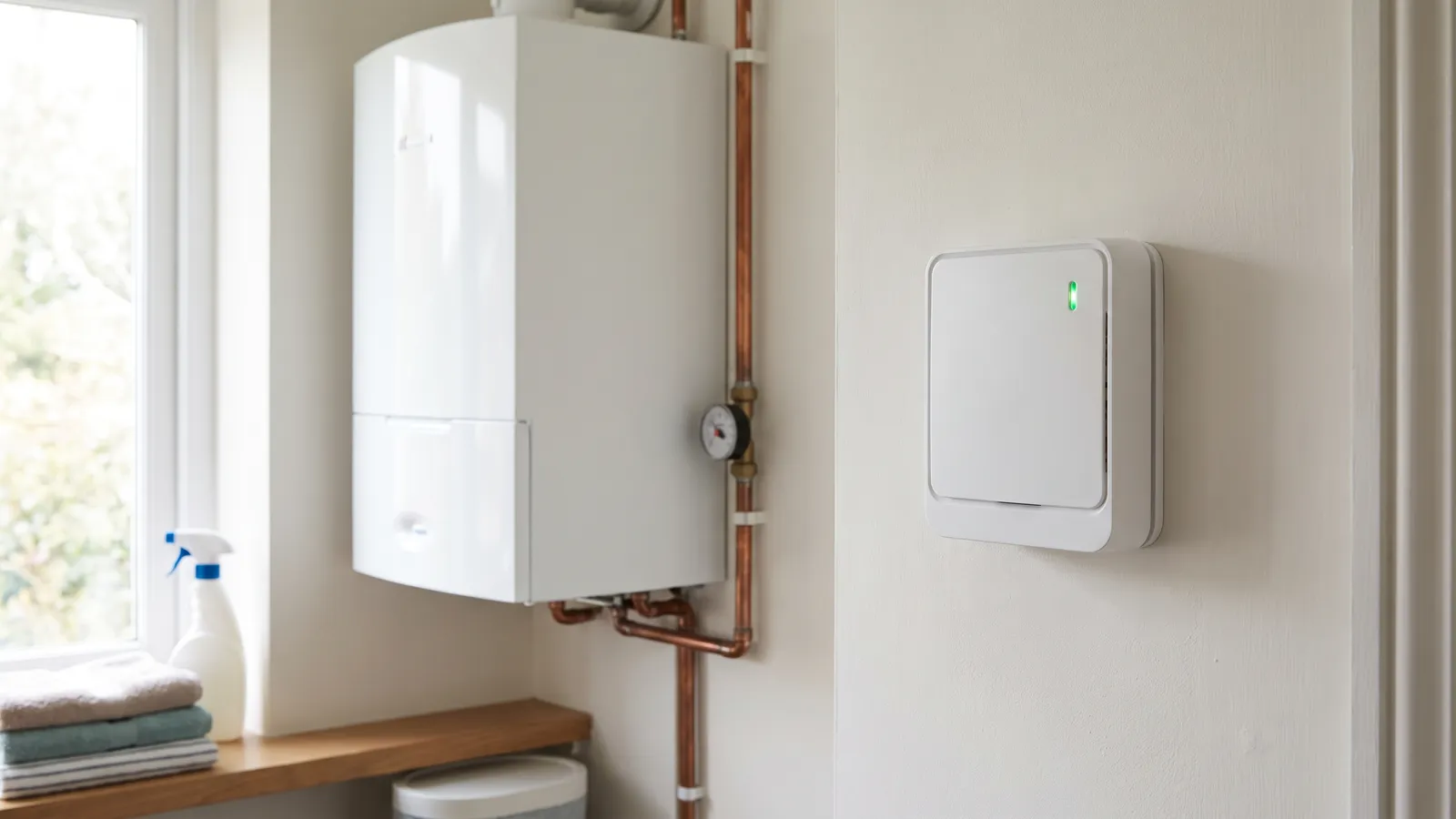
Placement is part of buying: fit an alarm in every room with a fuel-burning appliance, roughly at head height and about 1–3 metres horizontally from the appliance — not right next to it, and not in a sealed cupboard. Test it monthly and note the replacement date. If it ever sounds, get everyone out into fresh air and call the gas emergency line (0800 111 999) or 999.
Top pick: FireAngel FA3322 10-Year Digital Carbon Monoxide Alarm. The FA3322 is an independently well-rated CO alarm with a sealed 10-year battery, so it's fit and forget. It's a sound, low-maintenance choice for most UK homes.
| Alarm | Standard | Sensor life | Display | Power | Price | |
|---|---|---|---|---|---|---|
| FireAngel FA3322 10-Year Digital Carbon Monoxide AlarmTOP PICK | BS EN 50291-1:2018 & -2:2019 | 10 yrs, sealed-for-life battery yr | Multi-function colour LCD | Sealed 10-yr lithium battery | £31.98as of 20 Sep 2026, 12:29 BST · DetailsProduct prices and availability are accurate as of the date/time indicated and are subject to change. Any price and availability information displayed on Amazon.co.uk at the time of purchase will apply to the purchase of this product. | Check price → |
| Aico Ei208 Carbon Monoxide Alarm | BS EN 50291-1:2018 (Kitemarked) | 10 yr | None (LED status indicators) | Sealed 10-year lithium battery (non-replaceable) | £23.59as of 20 Sep 2026, 12:29 BST · DetailsProduct prices and availability are accurate as of the date/time indicated and are subject to change. Any price and availability information displayed on Amazon.co.uk at the time of purchase will apply to the purchase of this product. | Check price → |
| Kidde 5CO Carbon Monoxide Alarm | BS EN 50291-1, Kitemarked | 10 yr | LED only (no digital readout) | 2 x AA (replaceable, supplied) | £13.75as of 20 Sep 2026, 12:29 BST · DetailsProduct prices and availability are accurate as of the date/time indicated and are subject to change. Any price and availability information displayed on Amazon.co.uk at the time of purchase will apply to the purchase of this product. | Check price → |
| X-Sense CO03D Carbon Monoxide Detector | EN 50291 | 10 yr | LCD digital (real-time CO ppm, backlit) | 3 x AA replaceable batteries | £26.99as of 20 Sep 2026, 12:29 BST · DetailsProduct prices and availability are accurate as of the date/time indicated and are subject to change. Any price and availability information displayed on Amazon.co.uk at the time of purchase will apply to the purchase of this product. | Check price → |
| Honeywell XC100 Carbon Monoxide Alarm | BS EN 50291-1:2010 (Kitemarked) | 10 yr | LED indicators only (no digital readout) | Sealed 10-year lithium battery (non-replaceable) | — | Check price → |
ⓘ As an Amazon Associate, PreparedBritain earns from qualifying purchases. We may earn a commission when you buy, or a fee when you request a quote, through our links — it never affects what we recommend. Amazon prices come from Amazon's own product data and show the date and time they were retrieved. Prices at other retailers are checked by us, less often. Prices and stock can change at any time, so always check the retailer's price before you buy.
FireAngel FA3322 10-Year Digital Carbon Monoxide Alarm
4.6Who it's for: Bedrooms and living rooms wanting a clear, readable CO alarm with no battery faff
The FA3322 is an independently well-rated CO alarm with a sealed 10-year battery, so it's fit and forget. It's a sound, low-maintenance choice for most UK homes.
- Which? Best Buy-rated carbon monoxide alarm
- 10-year sealed battery — nothing to replace
- Widely stocked: Screwfix, Toolstation, B&Q, Wickes, Amazon
- Costs more than a basic non-digital CO alarm
- Wall-mount bracket is screw-fix, not adhesive
Don't buy if Skip it if you just want the cheapest compliant alarm — a basic FireAngel model without the digital display meets the same BS EN 50291 standard for less.
as of 20 Sep 2026, 12:29 BST · Details
Product prices and availability are accurate as of the date/time indicated and are subject to change. Any price and availability information displayed on Amazon.co.uk at the time of purchase will apply to the purchase of this product.Aico Ei208 Carbon Monoxide Alarm
4.5Who it's for: Households with a gas boiler, hob, open fire or wood burner who want fit-and-forget protection.
A professional-grade CO alarm from a trusted UK manufacturer, with a sealed 10-year lithium battery so there are no cells to change and nothing to forget. It costs more than a supermarket alarm, but the electrochemical sensor and BS EN 50291 Kitemark make it a sensible long-term buy for any home that burns fuel.
- Sealed 10-year lithium battery means no battery changes and no low-battery beeps for a decade
- Proven electrochemical sensor, factory-calibrated to CO gas and meeting BS EN 50291-1:2018 with a Kitemark
- AudioLINK+ lets you pull an alarm-status report to your phone, useful for landlords and checking history
- No digital display, so you cannot see a live CO ppm reading at a glance
- Dearer than budget alarms, and the whole unit must be replaced at end of life rather than just the battery
Don't buy if You want a live digital ppm readout, or you need alarms that interlink across the house so one sounding triggers the rest, in which case choose a display model or the RadioLINK Ei208WRF instead.
as of 20 Sep 2026, 12:29 BST · Details
Product prices and availability are accurate as of the date/time indicated and are subject to change. Any price and availability information displayed on Amazon.co.uk at the time of purchase will apply to the purchase of this product.Kidde 5CO Carbon Monoxide Alarm
4.0Who it's for: An affordable, standards-approved CO alarm for a room with a gas boiler, fire or stove.
A dependable, no-frills carbon monoxide alarm from a well-known brand, Kitemarked to BS EN 50291 with a 10-year sensor. It does the essential job well, though there is no digital readout and you will need to keep the AA batteries fresh.
- Kitemarked to BS EN 50291-1 with a 10-year sensor life from a trusted brand
- Inexpensive and widely stocked at UK retailers
- Simple to fit, wall-mounted or freestanding, with batteries and fixings supplied
- LED indicators only, so you cannot read the actual CO ppm level
- Uses replaceable AA batteries rather than a sealed 10-year cell, so they must be kept charged
Don't buy if You want a digital display showing live CO levels or a fully sealed battery you never have to touch, in which case the digital 5DCO or a sealed-battery model suits better.
as of 20 Sep 2026, 12:29 BST · Details
Product prices and availability are accurate as of the date/time indicated and are subject to change. Any price and availability information displayed on Amazon.co.uk at the time of purchase will apply to the purchase of this product.X-Sense CO03D Carbon Monoxide Detector
4.0Who it's for: Households who want a clear digital CO readout without paying premium-brand money.
A dependable, EN 50291-compliant CO alarm that shows the actual CO level on its screen rather than just sounding off, at a genuinely low price. The 10-year sensor life and replaceable AA batteries make it easy to live with, though it works alone rather than linking to other alarms.
- Certified to EN 50291, the standard UK CO alarms should meet
- LCD shows real-time CO concentration in ppm, not just an alarm tone
- 10-year sensor lifespan and low price make it strong value
- Standalone only, it won't interconnect with alarms elsewhere in the house (the separate CO03D-W does)
- Uses replaceable AA batteries rather than a sealed 10-year cell, so you'll swap them periodically
Don't buy if You want a fully sealed, fit-and-forget 10-year unit with no battery changes, or a whole-home system where every alarm sounds together, in which case choose a sealed-battery or interconnected model instead.
as of 20 Sep 2026, 12:29 BST · Details
Product prices and availability are accurate as of the date/time indicated and are subject to change. Any price and availability information displayed on Amazon.co.uk at the time of purchase will apply to the purchase of this product.Honeywell XC100 Carbon Monoxide Alarm
4.0Who it's for: Fit-and-forget CO protection for a decade with no battery changes.
A well-certified, Kitemarked alarm from a trusted brand, with a sealed 10-year battery so there is nothing to replace until it retires. The plain XC100 gives an LED-and-sounder alert only, and it is now being phased out in favour of newer X-Series models, so check the warranty date on what you receive.
- Kitemarked and certified to BS EN 50291-1:2010, the UK domestic CO standard
- Sealed 10-year lithium battery means no annual battery fiddling
- Flexible mounting (wall, ceiling or free-standing) with a 90dB sounder plus LED alert
- LED indicators only, with no digital ppm readout (you need the XC100D for that)
- Now discontinued and being superseded, so remaining stock may already have some of its 10-year life used up
Don't buy if You want to see the actual carbon monoxide level in ppm, or you would rather buy a current model with a full, fresh 10-year warranty. In those cases look at the XC100D (digital display) or the newer X-Series alarms instead.
The Power Cut Action Card
One page for the kitchen drawer: what to do first, what to have ready, how long food keeps, and how to stay warm without risking carbon monoxide. Free, no catch.
Download it straight away. We'll also send the occasional briefing when something genuinely matters — severe weather, live incidents, real price drops. Nothing else.
We verify every product's specifications against at least two independent sources, re-check its UK price and stock on a schedule where we can track it automatically, and cross-check safety-relevant claims against official guidance. Where we've bought and used a product ourselves we say so on its review; where we haven't, our verdict is a considered spec-and-evidence comparison, not a hands-on test — and commissions never change a ranking either way. Read our full methodology →
Guides that go with this
The NHS symptoms of carbon monoxide poisoning, the two tells that separate it from flu, the six sources in you…
Yes — a wood burner can produce dangerous carbon monoxide if the flue is blocked or the wood is wet. Here's ho…
The correct, official steps if you smell gas or suspect a leak — the free 24-hour emergency number, what to do…
Common questions
Do I really need a carbon monoxide alarm?
Yes, if your home has any fuel-burning appliance — a gas or oil boiler, gas hob, open fire, wood burner or similar. CO is invisible and odourless, and an alarm is the only way to detect it. It's cheap, life-saving and, in many rented homes, a legal requirement.
What standard should a CO alarm meet?
Look for EN 50291 marked on the alarm, ideally with a Kitemark or equivalent third-party certification. That confirms it's been independently tested to detect carbon monoxide at the correct levels. Avoid any detector that doesn't clearly state the standard.
Is a carbon monoxide alarm the same as a smoke alarm?
No — they detect different things and you need both. A smoke alarm detects fire; a CO alarm detects carbon monoxide gas. Some combined smoke-and-CO units do both, but a standard smoke alarm will not warn you about CO.
How long do CO alarms last?
The sensor has a limited life — typically a sealed 7 or 10 years — after which the alarm signals end of life and must be replaced. Sealed-battery models last their whole life with no battery changes; replaceable-battery ones are cheaper but need new batteries.
Where should I put a carbon monoxide alarm?
In each room with a fuel-burning appliance, at about head height and roughly 1–3 metres horizontally from the appliance — not directly above or beside it, and not shut in a cupboard. Test it monthly.
What do I do if my CO alarm goes off?
Get everyone out into fresh air immediately, don't stay to investigate, and call the free national gas emergency line on 0800 111 999 (or 999 if anyone is unwell). Only return when you're told it's safe.