Carbon monoxide poisoning: the symptoms and the six sources in your home
The NHS symptoms of carbon monoxide poisoning, the two tells that separate it from flu, the six sources in your home, and why only an alarm can detect it.
By Tom Calder · Updated 21 July 2026 · Sourced to the NHS, the HSE, nidirect and Gas Safe Register
The symptoms, and why they read like flu
Carbon monoxide (CO) poisoning is easy to miss because it borrows the symptoms of much more ordinary illnesses. The NHS lists the main symptoms as a headache, dizziness, feeling or being sick, feeling weak, tiredness and confusion, chest and muscle pain, and shortness of breath, along with the face turning hot and red and loss of vision. A headache is usually the sign people notice first — the NHS-derived guidance on nidirect calls a tension-type headache the most common symptom of mild poisoning.
That overlap with flu, a hangover or food poisoning is exactly what makes CO dangerous: people put the headache and nausea down to a bug and stay in the room that is making them ill. There is one clinical difference worth holding onto — unlike flu, carbon monoxide poisoning does not cause a high temperature. A cluster of flu-like symptoms with no fever deserves a second thought.
The two tells that separate CO from a bug
If the symptoms are ambiguous, the pattern usually isn't. The first tell is timing: the NHS notes that symptoms may get worse while you spend time in the affected room or building and get better when you leave or go outside. A headache that lifts on the walk to work and returns at bedtime, or that clears on holiday and comes back when you get home, is a warning rather than a coincidence.
The second tell is that you are not the only one affected. Because CO fills a space rather than infecting a person, other people in the house — and pets — often fall ill with similar symptoms at the same time. Smaller bodies are affected fastest, so a listless pet or an unusually poorly child can be the first sign for the whole household. Two or more people under one roof feeling rough together, with no fever, is a classic CO picture.
Six common sources in the home
CO is produced whenever a carbon-based fuel burns incompletely — the root cause the HSE points to. The HSE names gas, oil, wood and coal; charcoal belongs on that list too. In a home it usually traces back to one of six things: a faulty or poorly maintained gas boiler; gas fires, cookers and hobs; a blocked or leaking flue or chimney that stops combustion gases venting outside; wood burners, solid-fuel stoves and open fires; oil-burning appliances such as range cookers and oil boilers; and portable fuel-burning kit brought indoors — camping stoves, disposable barbecues and petrol generators.
The appliance itself often shows warning signs before anyone feels unwell. The HSE says to watch for a lazy yellow or orange flame where it should be crisp and blue, soot or brown-yellow staining around an appliance, pilot lights that keep blowing out, and more condensation than usual on the windows. Any of these means stop using the appliance and get it checked.
Never run a stove, barbecue or generator indoors
The single most preventable cause of CO poisoning is fuel-burning equipment used in an enclosed space. A camping stove, disposable barbecue or petrol generator that is perfectly safe outdoors becomes lethal in a tent, caravan awning, garage, porch or kitchen, because the CO has nowhere to escape. A barbecue that has 'gone out' still smoulders and can give off carbon monoxide for hours.
The rule is absolute and worth repeating to anyone camping, cooking off-grid during a power cut, or heating a workshop: these appliances live outside, full stop. If you keep a generator for outages, run it outdoors and well away from doors, windows and air bricks; if you cook on a camping stove, do it in the open air, and never to warm a tent.
Why an alarm is the only thing that will actually warn you
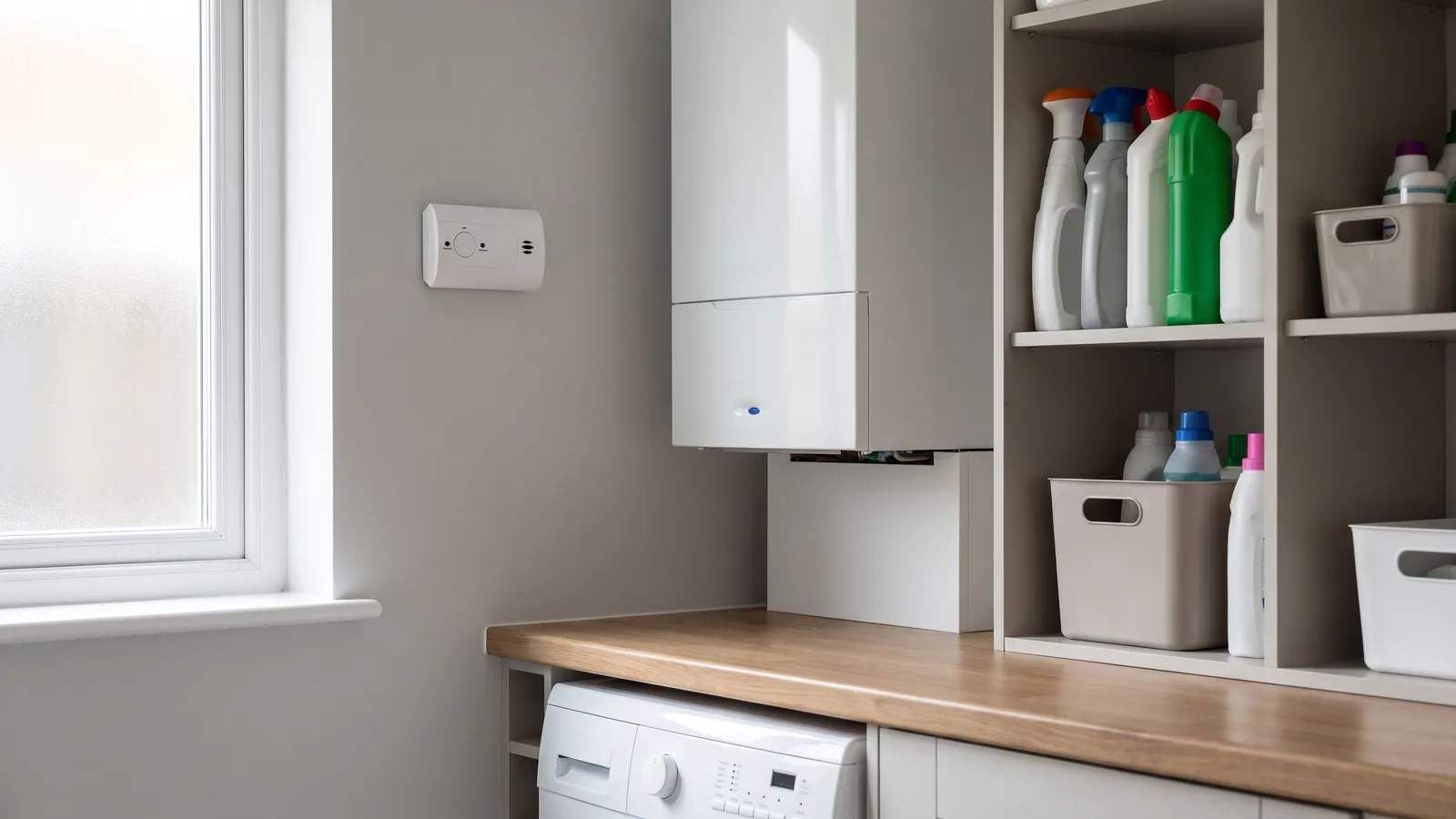
You cannot rely on your senses. The HSE describes carbon monoxide as a "colourless, odourless, tasteless, poisonous gas" — there is no smell to wake you and nothing to taste. That is why an audible carbon monoxide alarm is not optional; it is the only reliable detector in the house. Choose one that meets the British Standard BS EN 50291, fit it in any room with a fuel-burning appliance, and test it in line with the maker's instructions.
An alarm is a backstop, not a fix. It does not replace an annual service — have gas appliances checked every year by a Gas Safe registered engineer (and oil appliances by an OFTEC technician), and have chimneys and flues swept. The alarm buys you warning; servicing removes the cause.
If you suspect CO, or the alarm sounds
Act on suspicion — don't wait for certainty. Stop using the appliance you suspect if you can safely do so, open doors and windows to let air through, and get everyone, pets included, outside into fresh air. If anyone has collapsed, lost consciousness or is struggling to breathe, call 999; for milder symptoms, ring NHS 111 and say you think it may be carbon monoxide.
If a gas appliance looks to be the culprit, call the free National Gas Emergency Service on 0800 111 999, which runs 24 hours a day. Don't use the appliance again until a registered engineer has confirmed it is safe.
Common questions
How do I know if it's carbon monoxide poisoning or just flu?
Two things point to CO rather than flu: your symptoms ease when you leave the building and return when you come back, and other people — and pets — in the same place feel unwell at the same time. Unlike flu, CO poisoning does not cause a high temperature. If in doubt, get into fresh air and ring NHS 111.
Can you smell or see carbon monoxide?
No. The HSE describes CO as a colourless, odourless, tasteless gas, so there is nothing to smell, see or taste. That is precisely why an audible alarm is the only reliable way to detect it — your senses will not warn you.
What are the main symptoms of carbon monoxide poisoning?
The NHS lists a headache, dizziness, feeling or being sick, feeling weak, tiredness and confusion, chest and muscle pain, and shortness of breath, along with the face turning hot and red and loss of vision. A headache is usually noticed first, and it is that headache-and-nausea combination that makes CO so easy to mistake for flu.
Where should I fit a carbon monoxide alarm?
Fit an audible alarm that meets BS EN 50291 in any room containing a fuel-burning appliance — boiler, gas fire, cooker or wood burner — and follow the manufacturer's instructions on exact placement and testing. Treat it as a backstop for, not a replacement for, an annual service.
What should I do if my carbon monoxide alarm goes off?
Stop using the suspect appliance if you can do so safely, open doors and windows, and get everyone including pets outside. Call 999 if anyone has collapsed or can't breathe, or NHS 111 for milder symptoms. For a gas appliance, call the free National Gas Emergency Service on 0800 111 999, and don't go back in until it's declared safe.
Do camping stoves, barbecues and generators really produce carbon monoxide?
Yes — any fuel-burning appliance does. Never use a camping stove, disposable barbecue or petrol generator inside a house, tent, caravan awning or garage: a barbecue that looks out can still give off CO for hours. Keep them outdoors and away from doors, windows and vents.
Sources: NHS — Carbon monoxide poisoning · HSE — Carbon monoxide (domestic gas safety) · nidirect — Carbon monoxide poisoning · Gas Safe Register — Carbon monoxide poisoning. PreparedBritain is independent and not affiliated with HM Government.
The Emergency Kit Checklist
The GOV.UK Prepare essentials on one printable page — tick them off as you go and keep it with the kit. Free, no catch.
Download it straight away. We'll also send the occasional briefing when something genuinely matters — severe weather, live incidents, real price drops. Nothing else.
Keep reading
All fire, gas & first aid guides →Power cut food safety: is your fridge and freezer food still safe?
How long fridge and freezer food stays safe in a power cut — with an interactive checker, from official Food…
What to do in a house fire
The fire service's own advice: get out, stay out, call 999 — plus how to plan your escape, what to do if you're…
What to do if you smell gas
The correct, official steps if you smell gas or suspect a leak — the free 24-hour emergency number, what to do, what…