What to do in a house fire
The fire service's own advice: get out, stay out, call 999 — plus how to plan your escape, what to do if you're trapped, and why smoke alarms save lives.
By Tom Calder · Updated 20 July 2026 · Sourced to the GOV.UK Fire Kills campaign & fire services
The rule that saves lives: get out, stay out, call 999
If a fire breaks out, the fire service's advice is three things, in order: get out, stay out, and call 999. Leave as quickly as you can, don't stop to collect belongings, and never assume someone else has already called 999. Everything else on this page supports that one rule — because in a fire, the danger is the smoke and how fast it spreads, and the time you have is measured in a couple of minutes, not more.
It's a hard instinct to override, but property can be replaced. Getting everyone out is the only priority.
Plan your escape before you ever need it
The households that get out safely are usually the ones that thought about it in advance. Plan the quickest way out of each room and, where possible, a second way out in case the first is blocked, and actually walk it through with everyone — the fire service notes that the more familiar everyone is with the plan, the more likely you are to escape safely.
Keep escape routes clear, and keep door and window keys where everyone can find them in the dark. A plan you've practised works when you're half-asleep and disoriented; one you've only thought about doesn't.
Close doors — and never tackle a spreading fire
Closing doors behind you as you leave slows the spread of fire and smoke, which can buy vital seconds — and closing internal doors at night does the same while you sleep. It's one of the simplest, most effective things you can do.
And do not try to tackle a fire yourself. As the London Fire Brigade puts it: leave it to the professionals — as soon as you call, they're on their way. A small bin fire is one thing, but the moment a fire is spreading, fighting it costs you the seconds you need to escape.
If your escape route is blocked
If you can't get out, don't panic — there's a clear plan for this too. Get everyone into one room, ideally one with a window and a phone. Close the door and put bedding or any soft materials along the bottom of the door to block the smoke. Then open the window, shout 'HELP, FIRE' to attract attention, and call 999.
Staying low, below the smoke, and keeping that door sealed can keep a room survivable for a long time — long enough for the fire service to reach you.
The one thing that most changes the odds: smoke alarms
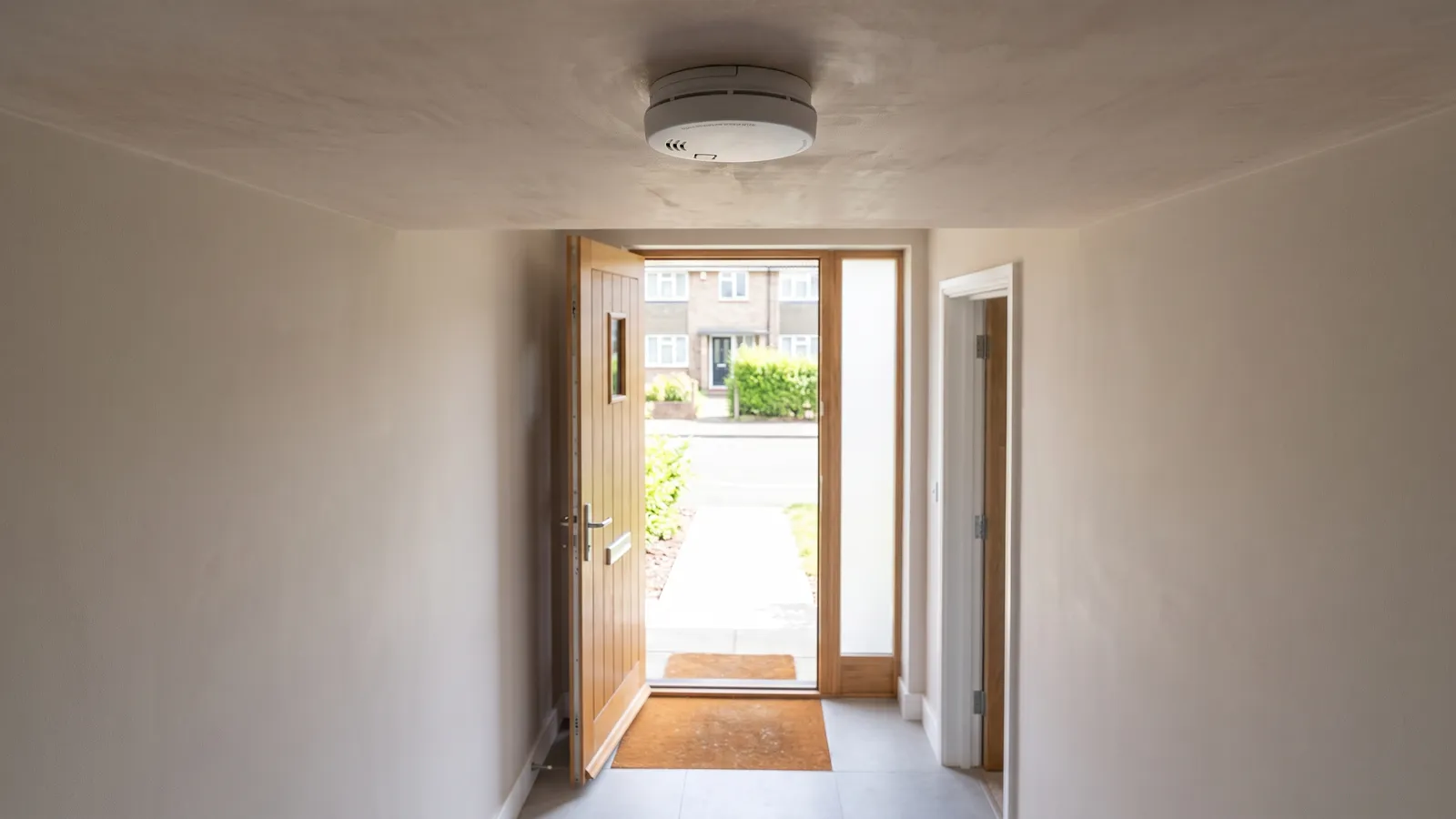
None of the above helps if you don't know there's a fire until it's too late — which is why smoke alarms are the single most important piece of home fire safety. Fit at least one on every level of your home, and test them at least monthly by pressing the button until the alarm sounds. The statistic is stark: you're around eight times more likely to die in a fire without a working smoke alarm.
A working alarm gives you the early warning that makes 'get out, stay out, call 999' possible. It's the cheapest life-saver you can own.
Common questions
What should I do if there's a fire in my house?
Get out, stay out, and call 999. Leave immediately by your nearest safe exit, don't stop to collect belongings, close doors behind you to slow the fire, and never assume someone else has already called 999.
Should I try to put the fire out myself?
No, not if it's spreading. The fire service's advice is to leave it to the professionals — call 999 and get out. Fighting a spreading fire costs you the seconds you need to escape safely.
What do I do if I can't escape a house fire?
Get everyone into one room, ideally with a window and a phone. Close the door and pack bedding or soft materials along the bottom to block smoke, then open the window, shout 'HELP, FIRE' and call 999. Stay low, below the smoke.
Should I go back inside for a pet or belongings?
Never. Once you're safely outside, do not go back in for any reason — possessions, pets or people. Tell the fire service immediately if anyone is still inside, and let them carry out the rescue.
How many smoke alarms do I need?
Fit at least one on every level of your home, and test them at least monthly by pressing the test button until they sound. You're around eight times more likely to die in a fire without a working smoke alarm.
Why does closing doors matter in a fire?
A closed door significantly slows the spread of fire and smoke, buying vital seconds to escape — which is why the fire service advises closing doors behind you as you leave, and closing internal doors at night.
Sources: GOV.UK Fire Kills — Escape · GOV.UK — Fire safety in the home · London Fire Brigade — Escape plan for houses and flats. PreparedBritain is independent and not affiliated with HM Government.
The Emergency Kit Checklist
The GOV.UK Prepare essentials on one printable page — tick them off as you go and keep it with the kit. Free, no catch.
Download it straight away. We'll also send the occasional briefing when something genuinely matters — severe weather, live incidents, real price drops. Nothing else.
Keep reading
All fire, gas & first aid guides →What to do if you smell gas
The correct, official steps if you smell gas or suspect a leak — the free 24-hour emergency number, what to do, what…
Run, Hide, Tell: the official advice for a weapons attack
The UK's official Run, Hide, Tell protocol for a firearms or weapons attack, what each step means, how to report…
Medicine shortages: how to stay safe and supplied
Medicine supply gaps are common and usually managed. The safe, calm response — order in good time, never stockpile,…