
Best tinned food for emergencies in a UK household (2026)
The government's Be Ready checklist (22 October 2026) asks every home to keep non-perishable food for 3 days that doesn't need refrigeration or cooking, such as tinned meat, fish or vegetables, and says it's best to buy food you'd usually eat. Tins are the simplest way to build that. Here are the multipacks worth keeping, compared on calories per tin and on whether they need heating.
By Tom Calder · Updated 13 November 2026 · 15 products, all price-tracked
Our picks
 Photo: Amazon
Ambrosia Deluxe Rice
Calories you can eat cold, straight from the tin.
as of 13 Nov 2026, 12:07 GMT · Details
Product prices and availability are accurate as of the date/time indicated and are subject to change. Any price and availability information displayed on Amazon.co.uk at the time of purchase will apply to the purchase of this product.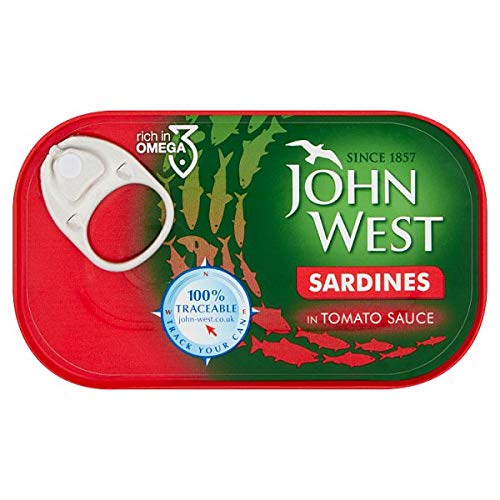 Photo: Amazon
John West Sardines
Protein and oily fish with no cooking at all.
as of 13 Nov 2026, 12:07 GMT · Details
Product prices and availability are accurate as of the date/time indicated and are subject to change. Any price and availability information displayed on Amazon.co.uk at the time of purchase will apply to the purchase of this product. Photo: Amazon
Rio Mare Tuna
Protein from a small tin that works in a sandwich or salad.
as of 13 Nov 2026, 12:07 GMT · Details
Product prices and availability are accurate as of the date/time indicated and are subject to change. Any price and availability information displayed on Amazon.co.uk at the time of purchase will apply to the purchase of this product.Three days of food for your household
The government's Be Ready checklist asks every home to keep food for 3 days that doesn't need a fridge or cooking, such as tinned meat, fish or vegetables, and says it's best to buy food you'd usually eat. At three no-cook meals a day each, that comes to:
Keep a manual tin opener with them unless every tin is ring-pull. Water is separate: Be Ready says 3 litres each a day to drink.
Size the rest of your kit →One of each goes into your Amazon basket in one go (Amazon may ask you to sign in first). Change the quantities or take out anything you already own before you pay.
All 15 compared
Photo: AmazonOur top pickCalories you can eat cold, straight from the tin.
as of 13 Nov 2026, 12:07 GMT · Details
Product prices and availability are accurate as of the date/time indicated and are subject to change. Any price and availability information displayed on Amazon.co.uk at the time of purchase will apply to the purchase of this product.Our verdict
The most filling tin here that its maker says you can eat cold: 480 kcal a can, with no heating needed. It's a pudding rather than a meal, but a few in the cupboard make a no-cook store go a lot further.
Worth knowing: Made with milk and cream: no good for a milk allergy
Who shouldn't buy it: Don't buy it if anyone at home has a milk allergy, or nobody eats rice pudding now: tins nobody wants don't get rotated.
Read the full review →Photo: AmazonRunner-upProtein and oily fish with no cooking at all.
as of 13 Nov 2026, 12:07 GMT · Details
Product prices and availability are accurate as of the date/time indicated and are subject to change. Any price and availability information displayed on Amazon.co.uk at the time of purchase will apply to the purchase of this product.Our verdict
John West says to eat these straight out of the tin, which makes them one of the most useful tins in a power cut. Sardines are oily fish, and the NHS notes that canned sardines have bones you can eat, which makes them a source of calcium.
Worth knowing: The NHS sets weekly limits on oily fish, lowest for girls and for women who haven't been through the menopause
Who shouldn't buy it: Don't buy it if nobody at home eats sardines now: the tins you already like are the ones that get rotated.
Read the full review →Photo: AmazonAlso goodProtein from a small tin that works in a sandwich or salad.
as of 13 Nov 2026, 12:07 GMT · Details
Product prices and availability are accurate as of the date/time indicated and are subject to change. Any price and availability information displayed on Amazon.co.uk at the time of purchase will apply to the purchase of this product.Our verdict
Tuna in olive oil in small 80g tins. The listing suggests sandwiches, salads and pasta, so it fits uses that need no cooking. It is fish, so anyone with a fish allergy should avoid it. A supermarket own-label tuna is a sound alternative, and our by Amazon tuna in spring water is the lower-fat option on the tinned food page.
Worth knowing: Fish: not for fish allergy
Who shouldn't buy it: Don't buy it if you'd rather have tuna in spring water or already buy own-label tins.

Fruit in a power cut, straight from the tin.
as of 13 Nov 2026, 12:07 GMT · Details
Product prices and availability are accurate as of the date/time indicated and are subject to change. Any price and availability information displayed on Amazon.co.uk at the time of purchase will apply to the purchase of this product.Our verdict
Del Monte's Amazon listing says simply to open the can and enjoy, and it's fruit in juice rather than syrup, which is what the NHS suggests for tinned fruit. 203 kcal a tin, counting the juice: a side or a pudding, not a meal.
Worth knowing: 203 kcal a tin: a side, not a meal
Who shouldn't buy it: Don't buy it if you're stocking for calories first: the rice pudding or the beans give more per tin.
Read the full review →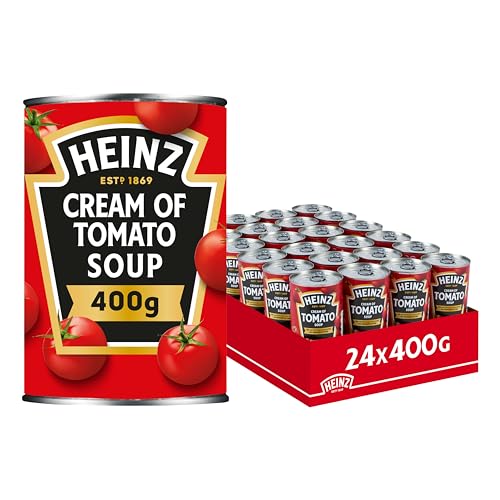
A hot lunch whenever you can heat it, by the case.
as of 13 Nov 2026, 12:07 GMT · Details
Product prices and availability are accurate as of the date/time indicated and are subject to change. Any price and availability information displayed on Amazon.co.uk at the time of purchase will apply to the purchase of this product.Our verdict
The classic, by the case of 24. At 204 kcal a tin it's a light meal with bread rather than a meal on its own, and Heinz's directions are to heat it, so it belongs in the store for the disruptions where you can still cook.
Worth knowing: Contains milk
Who shouldn't buy it: Don't buy it if you won't get through 24 tins before their best-before dates: a few extra from the weekly shop is plenty.
Read the full review →
A plain pulse for adding to meals, bought by the case.
as of 13 Nov 2026, 12:07 GMT · Details
Product prices and availability are accurate as of the date/time indicated and are subject to change. Any price and availability information displayed on Amazon.co.uk at the time of purchase will apply to the purchase of this product.Our verdict
Chickpeas in water are a flexible tin: they go into soups, stews and salads. This is Amazon's own brand, so a supermarket own-label tin does the same thing; the case of 12 is the reason to buy here. The listing doesn't give directions, so check the label.
Worth knowing: Directions not confirmed here
Who shouldn't buy it: Don't buy it if you only want a couple of tins: any supermarket sells the same.

A soup with chicken and vegetables in it, in a six-pack.
as of 13 Nov 2026, 12:07 GMT · Details
Product prices and availability are accurate as of the date/time indicated and are subject to change. Any price and availability information displayed on Amazon.co.uk at the time of purchase will apply to the purchase of this product.Our verdict
A chicken and vegetable soup in a six-pack. The listing and Baxters' own page both say it is gluten free, and Baxters says to use it within 2 days once opened. Soups like this are normally heated, so don't count it as a no-cook tin until you've read the label.
Worth knowing: Use within 2 days once opened, per Baxters
Who shouldn't buy it: Don't buy it if you buy soup in the weekly shop anyway: a few extra tins do the same job.

A barley soup, bought by the case.
as of 13 Nov 2026, 12:07 GMT · Details
Product prices and availability are accurate as of the date/time indicated and are subject to change. Any price and availability information displayed on Amazon.co.uk at the time of purchase will apply to the purchase of this product.Our verdict
A Scotch broth at 152 kcal a tin, from Baxters' own figure. Pearl barley is the emphasised allergen on Baxters' page, so it contains gluten. Baxters' page says to use it within 2 days once opened, so it suits a household that finishes a tin in one sitting.
Worth knowing: Contains gluten (pearl barley)
Who shouldn't buy it: Don't buy it if you'd rather pick up soup you like in the shop: tins from any supermarket serve equally well.

Fruit in juice for a store that is otherwise mostly savoury.
as of 13 Nov 2026, 12:07 GMT · Details
Product prices and availability are accurate as of the date/time indicated and are subject to change. Any price and availability information displayed on Amazon.co.uk at the time of purchase will apply to the purchase of this product.Our verdict
Peach slices in juice in a case of 12, with 'easy open' cans per the listing. Fruit in juice rather than syrup is the sort the NHS points to. Tinned fruit is usually eaten as it is, but Del Monte's directions weren't seen. There's also a Del Monte fruit cocktail on this page, so choose by flavour.
Worth knowing: Little overlap with savoury meals
Who shouldn't buy it: Don't buy it if you already stock fruit tins: one more of the same adds little.

Meat, potatoes and veg in one tin, when you can heat it.
as of 13 Nov 2026, 12:07 GMT · Details
Product prices and availability are accurate as of the date/time indicated and are subject to change. Any price and availability information displayed on Amazon.co.uk at the time of purchase will apply to the purchase of this product.Our verdict
Mutton, beef, potatoes, carrots and pearl barley in one tin: a light main meal at 310 kcal a can. Grant's says open the can and heat, so it's for the disruptions where the hob, or a camping stove used outdoors, still works.
Worth knowing: Contains wheat and barley, so not gluten-free
Who shouldn't buy it: Don't buy it if anyone at home needs gluten-free food, or doesn't eat beef or mutton.
Read the full review →Sold out right now (5)
The shop says these are sold out today. We check stock every hour, and each one moves back up the list when it returns.

Households that already eat beans, bought by the case.
Our verdict
A tin many households already eat, which is exactly what a store cupboard needs: 336 kcal a can, and a case of 12 rotates into ordinary meals, so nothing sits waiting for its date. Heinz's directions are to heat it, so keep some ready-to-eat tins alongside for a power cut.
Worth knowing: Heinz's directions are to heat it
Who shouldn't buy it: Don't buy it if you buy beans in your weekly shop anyway: a few extra tins in that shop do the same job, with no case to find room for.
Read the full review →
Budget pick: own-label tuna, no cooking needed.
Our verdict
Own-label does this job perfectly well: MSC-certified skipjack tuna in spring water, with nothing to do but drain it. At 104 kcal a tin it's protein rather than a meal, so pair it with beans or crackers.
Worth knowing: 104 kcal a tin: protein, not a meal
Who shouldn't buy it: Don't buy it if you're pregnant or trying for a baby and would lean on tuna for protein: the NHS sets a weekly limit on tuna for you, so mix in other tins.
Read the full review →
A store-cupboard staple in a small multipack.
Our verdict
A familiar tin of beans in a four-pack, small enough to fit in with a normal shop. The listing doesn't give heating directions and they aren't confirmed from the maker, so read the label before counting on it as a no-cook tin. Heinz's case of 12 is the other option here if you want more tins at once.
Worth knowing: Heating directions not confirmed here
Who shouldn't buy it: Don't buy it if your supermarket already sells the same tins: a few extra in the weekly shop does the same job.

A meat-free tinned meal that needs nothing added.
Our verdict
A black bean chilli sold as a ready meal, organic and vegan per the listing, whose title calls it ready to eat. No meat in it, so it suits vegetarian and vegan households. No heating directions were found, so check the tin. A supermarket tin of chilli beans is much the same.
Worth knowing: Heating directions not confirmed
Who shouldn't buy it: Don't buy it if you want a meat tin: this one is vegan.

Chilli lovers who want the most calories per tin.
Our verdict
The most filling tin here at 536 kcal, with beef and beans. But Stagg warns on the can that it's a seriously hot chilli, and its directions are to heat it until piping hot, so it suits chilli lovers with a way to cook.
Worth knowing: Stagg itself warns it's a seriously hot chilli
Who shouldn't buy it: Don't buy it if anyone at home avoids very hot food: this is the hot one in Stagg's range.
Read the full review →ⓘ As an Amazon Associate, PreparedBritain earns from qualifying purchases. We may earn a commission when you buy, or a fee when you request a quote, through our links. When two products are close, commission can decide which one we pick. A clearly better product always wins. Amazon prices come from Amazon's own product data and show the date and time they were retrieved. Prices at other retailers are checked by us, less often. Prices and stock can change at any time, so always check the retailer's price before you buy.
The Long-Life Food List
One page for the cupboard door: long-life foods by type, the easy-to-forget things, how to rotate them, and which tins not to eat. Free, no catch.
Download it straight away. We'll also send the occasional briefing when something genuinely matters — severe weather, live incidents, real price drops. Nothing else.
Before you buy
Think about which tins you'd eat cold.
A power cut can take out the hob and the microwave, which is why the Be Ready checklist asks for food that doesn't need cooking. The Food Standards Agency says many canned foods intended to be heated before eating will not pose a safety risk if eaten cold, but that this depends on the product, and to always follow the manufacturer's instructions. So the Eat cold column says Yes only where a tin needs no heating: John West says its sardines can be eaten straight from the tin, Ambrosia says its Deluxe rice is good hot or cold, Del Monte's Amazon listing says to open the can and enjoy, and the tuna's label has no heating step at all. The rest come with heating directions from their makers. If you do heat food in a power cut, use a camping stove outdoors: the NHS says never to use one indoors or in a tent.
Keep a tin opener with the tins.
The old GOV.UK Prepare food line added one in brackets, and the British Red Cross says to include one in an emergency kit. Make it a manual opener, because an electric one stops when the power does. Ring-pull lids help, but don't plan around them.
Tins like these carry a best-before date rather than a use-by date.
Official food-labelling guidance on GOV.UK says a best-before date is about quality: after it, food is usually safe to eat but may not be of the same quality. Use-by dates are the safety line, used on foods that go off quickly, such as meat products and ready-to-eat salads. The FSA adds that how long a tin stays acceptable after its best-before date depends on the product, how it has been stored and the brand. None of the tins here has a shelf life in years on its maker's product page or listing, so check the date on each can when it arrives.
Rotation is what keeps a tinned store cheap.
Buy a few extra of the tins you already eat with each shop, put new ones at the back, eat from the front, and check the dates as you go. Store them the way the labels ask (several of the tins here say a cool, dry place) and the way Food Standards Scotland advises for a cupboard: dry and not too warm, with food off the floor and away from cleaning products.
Check tins when they arrive and whenever you rotate them.
The FSA says food should stay fit to eat if a dent is shallow and the can shows no other damage, but a deep dent can hide a split, a hole or a broken seal, and if a dent has caused rust the food should not be eaten. Don't eat from a visibly bulging can: take it back to the retailer. Once a tin is open, don't keep leftovers in it; the FSA says to empty them into a bowl or container and put it in the fridge.
Tins can be salty, and eating from them for a few days adds up.
The NHS says adults should have no more than 6g of salt a day, and counts a food as high in salt above 1.5g per 100g and high in sugar above 22.5g of total sugars per 100g. It suggests tinned vegetables, pulses and fish in water rather than brine, and tinned fruit in natural juice or water with no added sugar or salt, which is why our tuna pick is in spring water and our fruit pick is in juice.
If anyone at home has a food allergy, read each tin's label, even for brands you know.
Prepacked food must show any of the 14 main allergens in its ingredients list, emphasised, for example in bold, italics or a different colour. 'May contain' warnings are voluntary, so a tin without one is no guarantee, and a vegan label doesn't guarantee a food is free from a particular allergen. Here, the sardines and the tuna are fish, the soup and the rice pudding contain milk, and the stew contains wheat and barley. Makers do change recipes, so check again when you restock.
We haven't taste-tested these tins. Calories per tin come from each maker's own nutrition figures. The Eat cold column says Yes where the maker or listing says a tin can be eaten cold, or where its label has no heating step, and 'Maker says heat' where the maker's directions are to heat it; the buying guide above explains what the Food Standards Agency says about eating tins cold. Prices are re-checked on a schedule. When two products are close, commission can decide which one we pick. A clearly better product always wins. Read our full methodology →
Related kit comparisons
Guides that go with this
The maths done for you: turn about 2,000 kcal and 3 litres of water per person per day into concrete food and …
What a 25-year shelf life really promises, which foods keep for years, what heat, air, light and damp do, the …
The FSA's rule: use-by is safety, best before is quality. Which foods are genuinely fine past the date — tins,…
How long fridge and freezer food stays safe in a power cut — with an interactive checker, from official Food S…
A genuine three-day emergency kit from one supermarket shop, for about thirty pounds — what to buy, what it co…
Common questions
Can you eat tinned food cold in a power cut?
Often, yes. The Food Standards Agency says many canned foods intended to be heated before eating will not pose a safety risk if eaten cold, but that depends on the product, so always follow the maker's instructions. Some tins are meant to be eaten cold anyway: of those here, John West says its sardines can be eaten straight from the tin, Ambrosia's Deluxe rice is sold for eating hot or cold, and Del Monte's Amazon listing says to open the can and enjoy.
How long does tinned food last?
There's no fixed answer, and none of the makers here gives one in years. Tins usually carry a best-before date, which is about quality rather than safety: after it, food is usually safe to eat but may not be at its best. The FSA says how long a tin stays acceptable after that date depends on the product, how it has been stored and the brand. Rotate your tins so you rarely have to find out.
Is it safe to eat from a dented tin?
If the dent is shallow and the can shows no other damage, the FSA says the food should stay fit to eat. A deep dent can hide a split, a hole or a broken seal, so don't eat from that can, or from one where a dent has caused rust. Don't eat from a visibly bulging can either: take it back to the retailer.
Can I keep an opened tin in the fridge?
Not in the tin. The FSA says not to store food in an opened can, because once the food is exposed to the air, tin from the can could transfer into it more quickly. Empty leftovers into a bowl or container, cover it and put it in the fridge, then follow the 'once opened' instructions on the label.
How much tinned food should I keep?
Enough for 3 days: the government's Be Ready checklist (22 October 2026) asks for food for 3 days that doesn't need refrigeration or cooking, and Ready Scotland also suggests 3 days' supply. To size it, count calories: the reference intake for an average adult on UK food labels is 2,000 kcal a day, and the Calories per tin column shows what each tin adds. Our guide to how much food to store turns that into a shopping list.
Is own-label tinned food as good as branded?
For an emergency store, yes. What matters is that it's something you'll eat and that it's in date. Every prepacked tin, own-label or branded, has to show its ingredients with any of the 14 main allergens emphasised, and tins should carry a best-before date, so compare the labels rather than the brands. Our budget pick is an own-label tuna for exactly that reason.