Best generators for home backup in a power cut (2026)
When a power cut runs long — a storm that takes out the lines for a day or more — a portable generator can keep the essentials going: the fridge-freezer, a few lights, phones and the broadband router. But a generator is also the most dangerous thing on this site if used wrongly, so this page leads with the rule that saves lives, then compares the units actually worth buying.
By Tom Calder · Updated 20 September 2026 · 5 products, prices indicative
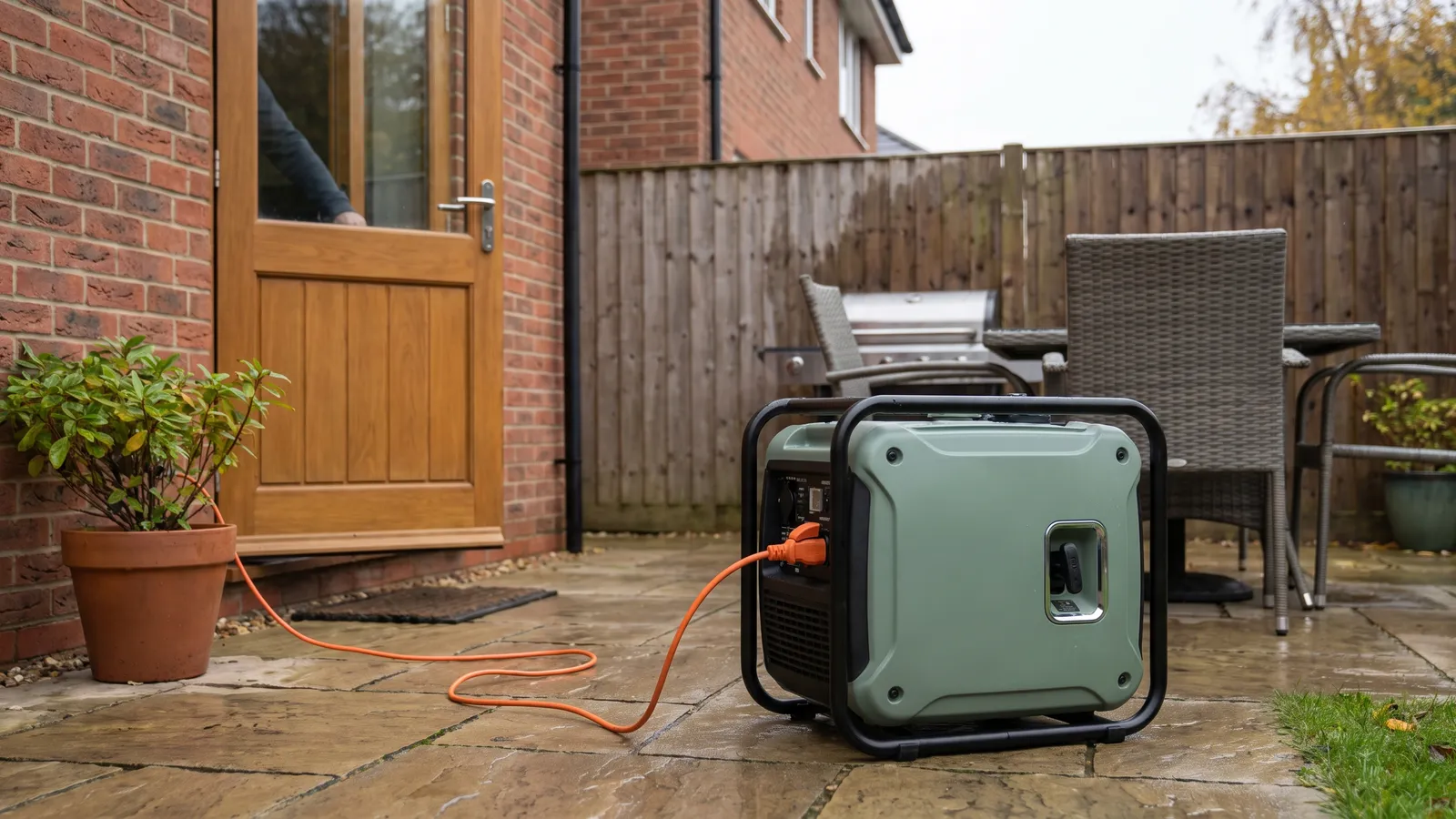
Before you buy
Start with what you actually need to run, because it sets the size. Add up the running watts of your essentials: a fridge-freezer (~150–200W running, but a brief start-up surge of 600–1,200W), a few LED lights (~50W), phone and laptop chargers plus the broadband router (~50W), and a gas boiler's pump and controls (~150W). Most homes' essentials fit comfortably inside a 2,000W (2kW) generator — which is why the popular models cluster there — but leave headroom for that fridge start-up surge.
Choose an INVERTER generator for home use. Inverter models produce clean, stable 'pure sine wave' electricity that's safe for sensitive electronics — laptops, phones, modern TVs and boiler circuit boards — whereas a cheap open-frame generator's rougher output can damage them and is far louder. Inverters are also much quieter (around 50–60dB versus 70dB+) and more fuel-efficient, throttling down when the load is light. For a house in a power cut, inverter is the sensible choice; open-frame generators are for building sites, not living rooms.
Then fuel and the practicalities. Petrol is the norm and easy to buy, but store it legally and safely (up to 30 litres at home in approved containers, outside living space — see our fuel guide). Dual-fuel models also run on LPG bottled gas, which stores more safely and burns cleaner. Check the runtime at quarter or half load (often 4–8 hours a tank) and the noise figure if neighbours are close. And don't forget the boring essentials that catch people out: most generators ship WITHOUT oil and must be filled before the first start, you need fresh fuel, and a heavy-duty outdoor extension lead to bring the power in from the generator safely outside.
Top pick: Honda EU22i 2200W Inverter Generator. The EU22i is about as good as a small portable generator gets: quiet, well built and its inverter output is clean enough for laptops, routers and medical kit. It is a premium price for occasional use, but for a resilience buy that has to start first time after months in the shed, few things match Honda's reliability.
| Generator | Running power | Fuel | Runtime | Noise | Inverter | Price | |
|---|---|---|---|---|---|---|---|
| Honda EU22i 2200W Inverter GeneratorTOP PICK | 1,800 W | Petrol | 8.1 hr | 57 dB | Yes | — | Check price → |
| Hyundai HY2000Si 2000W Portable Inverter Generator | 1,600 W | Petrol | 8 hr | 58 dB | Yes (pure sine wave) | — | Check price → |
| Hyundai HY3250SEi 3200W Inverter Generator | 3,000 W | Petrol | 5.5 hr | 59 dB | Yes (pure sine wave) | £629.99Checked 20 Sep · indicative — not price-tracked | Check price → |
| Champion 2000W Dual Fuel Inverter Generator | 1,600 W | Dual fuel (petrol/LPG) | 11 hr | 53 dB | Yes (pure sine wave, <3% THD) | — | See price on Amazon → |
| Böhmer-AG 2000W Portable Inverter Generator | 1,800 W | Petrol | 10 hr | 65 dB | Yes (pure sine wave) | — | See price on Amazon → |
ⓘ As an Amazon Associate, PreparedBritain earns from qualifying purchases. We may earn a commission when you buy, or a fee when you request a quote, through our links — it never affects what we recommend. Amazon prices come from Amazon's own product data and show the date and time they were retrieved. Prices at other retailers are checked by us, less often. Prices and stock can change at any time, so always check the retailer's price before you buy.
Who it's for: Households wanting a genuinely reliable, quiet petrol generator for occasional blackout backup, caravanning or running sensitive electronics.
The EU22i is about as good as a small portable generator gets: quiet, well built and its inverter output is clean enough for laptops, routers and medical kit. It is a premium price for occasional use, but for a resilience buy that has to start first time after months in the shed, few things match Honda's reliability.
- True inverter (pure sine) power that safely runs sensitive electronics, unlike cheap open-frame generators
- Very quiet for a petrol generator (around 48 dB at low load, ~57 dB at full load) and light at ~21 kg
- Honda reliability and parts support, with up to a 5-year domestic warranty (subject to annual servicing)
- Costs three to four times more than budget inverter generators of similar wattage
- Advertised 8-hour runtime is at quarter load; expect closer to 3.5 hours at or near full output, and you must store petrol and only ever run it outdoors
Don't buy if Don't buy if you only need to keep phones, lights and a router going through a short outage: a battery power station is fume-free, near-silent and safe to use indoors, with no petrol to store. Petrol generators must run outdoors, well away from windows, because of carbon monoxide risk.
Who it's for: Caravans, motorhomes and running a few essentials (fridge, laptop, phones, lights) through a power cut.
A quiet, well-made 2kW inverter generator with clean pure-sine-wave power and a reassuring three-year warranty, giving it the edge over cheaper no-name rivals. It is a sensible choice for leisure use or light emergency backup, provided you are realistic about the 1600W continuous limit.
- Quiet for its class at 58 dBA (measured at 7m) and light enough at 21kg to carry one-handed
- Pure sine wave output is safe for sensitive electronics like laptops, TVs and phone chargers
- Three-year Hyundai warranty and a well-supported UK spares network, unusual at this price
- 1600W continuous output won't run high-draw items such as kettles, electric heaters or washing machines
- Petrol only, so you must store fuel safely and run it outdoors — never indoors or in a garage, due to carbon monoxide risk
Don't buy if You want whole-home backup or need to power heating, cooking or laundry appliances — the 1600W continuous rating is for essentials only, and for genuine off-grid resilience without fuel handling a battery power station may suit you better.
Who it's for: Caravanners and homes wanting clean inverter power with electric start for occasional backup.
A 3.2kW pure sine-wave inverter generator that delivers clean power for sensitive electronics, with electric and recoil start and 3,000W continuous output. At 26.5kg with moulded carry handles it is lighter than the HY3200SEi it replaces in our guide, but Hyundai lists no wheel kit or remote key-fob start for it. Sensible for occasional outage cover or off-grid use, which is what Hyundai designs it for, though it is a petrol machine that must be run and refuelled safely outdoors.
- Pure sine-wave output safe for laptops, TVs and other sensitive electronics
- 3.2kW maximum / 3kW continuous covers a fridge-freezer, lights, router and small appliances in an outage
- Electric start with recoil as a backup, an ECO mode that matches engine speed to the load to save fuel, low-oil shutdown, and a 3-year Hyundai domestic warranty (1 year for commercial use)
- Petrol-only means storing fuel and refuelling about every 5.5 hours at half load (Hyundai's figure for the 7-litre tank) during a long outage
- At 26.5kg and 59 dB(A) (Hyundai's figure at 7m and 75% load) it is heavier and more audible than a battery power station, and not silent
- Hyundai lists moulded carry handles but no wheel kit or remote key-fob start, both of which the HY3200SEi had
Don't buy if Don't buy this if you only need to keep phones, a router and a few lights going, or if you have nowhere to run it safely outdoors: a battery power station is silent, indoor-safe and carries no carbon-monoxide risk. A petrol generator must never be run in a garage, porch or indoors.
Who it's for: Keeping a fridge, phones, laptops and a few lights running through a short power cut, or camping and caravan use.
A genuinely quiet, lightweight 2kVA dual-fuel inverter that delivers clean power safe for sensitive electronics, with the flexibility to run on petrol or LPG. It is a capable little unit, but it has been discontinued in the UK, so availability, spares and warranty support are now the main things to weigh before buying.
- Quiet in use (53 dB(A) at 7m) and light enough at around 20kg to carry and store easily
- Dual-fuel flexibility lets you run on petrol or LPG, handy if one fuel is hard to get in a shortage
- Pure sine wave output (<3% THD) is safe for laptops, phones and other sensitive electronics
- Now discontinued in the UK, so stock is patchy and long-term spares and warranty cover are uncertain
- At 1600W running it will not power high-draw appliances such as kettles, electric heaters or power tools
Don't buy if Do not buy this if you need to run high-wattage appliances like an electric kettle or heater, want whole-home backup, or expect reliable parts and warranty support for years to come, as the model is discontinued and a current-production alternative would serve you better.
Böhmer-AG 2000W Portable Inverter Generator
3.0Who it's for: Occasional camping, off-grid days out, and short power-cut backup for essentials like a fridge, phones, laptop and lights.
A capable budget inverter generator that delivers clean, pure sine wave power quietly enough for camping or a short outage. Build quality and after-sales support are middling, so treat it as occasional-use kit rather than a long-term workhorse.
- Pure sine wave output is safe for laptops, phones and other sensitive electronics
- Genuinely quiet for its class (around 65 dB) and easy to carry at roughly 22 kg
- Long runtime of up to about 10 hours with an economy mode, and far cheaper than premium Japanese brands
- 1800W continuous output won't run high-draw appliances such as kettles, most electric heaters or washing machines
- Mixed owner feedback and a known fuel-line splitting niggle, with only basic warranty and support
Don't buy if You need to power heavy appliances or want whole-home backup (size up to a larger generator), or you can't safely run and store petrol outdoors, in which case a battery power station is the safer, fume-free choice.
The Power Cut Action Card
One page for the kitchen drawer: what to do first, what to have ready, how long food keeps, and how to stay warm without risking carbon monoxide. Free, no catch.
Download it straight away. We'll also send the occasional briefing when something genuinely matters — severe weather, live incidents, real price drops. Nothing else.
We verify every product's specifications against at least two independent sources, re-check its UK price and stock on a schedule where we can track it automatically, and cross-check safety-relevant claims against official guidance. Where we've bought and used a product ourselves we say so on its review; where we haven't, our verdict is a considered spec-and-evidence comparison, not a hands-on test — and commissions never change a ranking either way. Read our full methodology →
Guides that go with this
The free number to save today, what to have ready, food safety, staying warm safely, and the compensation you …
A calm, sourced look at the 'national blackout' scenario: why it's a low-likelihood risk the grid is engineere…
The 2021 UK fuel crisis was panic-buying, not a fuel shortage. How forecourts really run, the calm response th…
Common questions
Can I run a generator indoors or in the garage?
No — never. Petrol generators give off carbon monoxide, which is invisible, odourless and kills quickly in an enclosed space. Run a generator outdoors only, several metres from the house with the exhaust pointing away from doors and windows, and fit a CO alarm indoors.
What size generator do I need for a power cut?
Add up the running watts of your essentials (fridge-freezer, a few lights, chargers, router, boiler controls) and leave headroom for the fridge's start-up surge. Most homes' essentials fit inside a 2,000W (2kW) inverter generator.
What is an inverter generator and do I need one?
An inverter generator produces clean, stable 'pure sine wave' power that's safe for sensitive electronics, and it's quieter and more fuel-efficient than a cheap open-frame model. For home backup in a power cut, yes — choose an inverter.
Petrol or dual-fuel generator?
Petrol is easy to buy and store within the legal 30-litre home limit. Dual-fuel models also run on LPG bottled gas, which stores more safely and burns cleaner — useful if you want a longer-term fuel option, at a little extra cost.
How long will a generator run on a tank of fuel?
Typically around 4–8 hours at quarter to half load, depending on the model and how much you're running. Check the manufacturer's runtime figure, and keep fresh spare fuel stored safely and legally.
Should I get a generator or a battery power station?
A battery power station is safer for most households — no fumes, silent, and usable indoors — but has limited capacity. A generator suits longer or higher-power needs, but must be run outdoors only. Many people are better served by a power station; see our power stations page.