Your household’s power cut plan, filled in while the lights are on
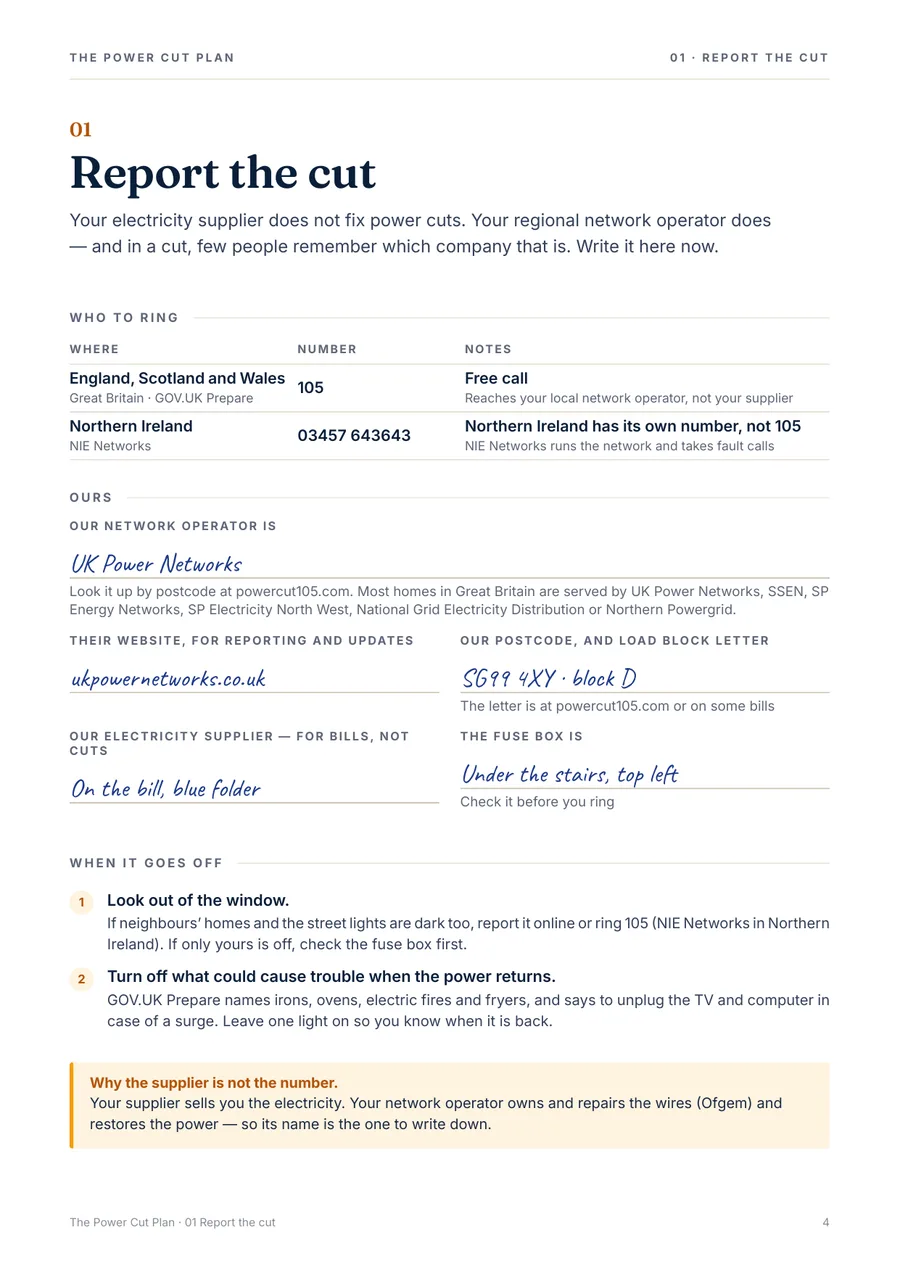
A fillable A4 PDF, 16 pages, where you write down your household’s own answers to what the official guidance asks you to know: your network operator’s name, who in the house needs extra help, what still works without mains and for how long, and who rings whom. It is for any UK household that wants one place to look when the lights go out, and especially for homes with medical equipment, a stairlift, a digital landline or a telecare alarm. Type into it in Adobe Acrobat Reader or Apple Preview, or print it and write.
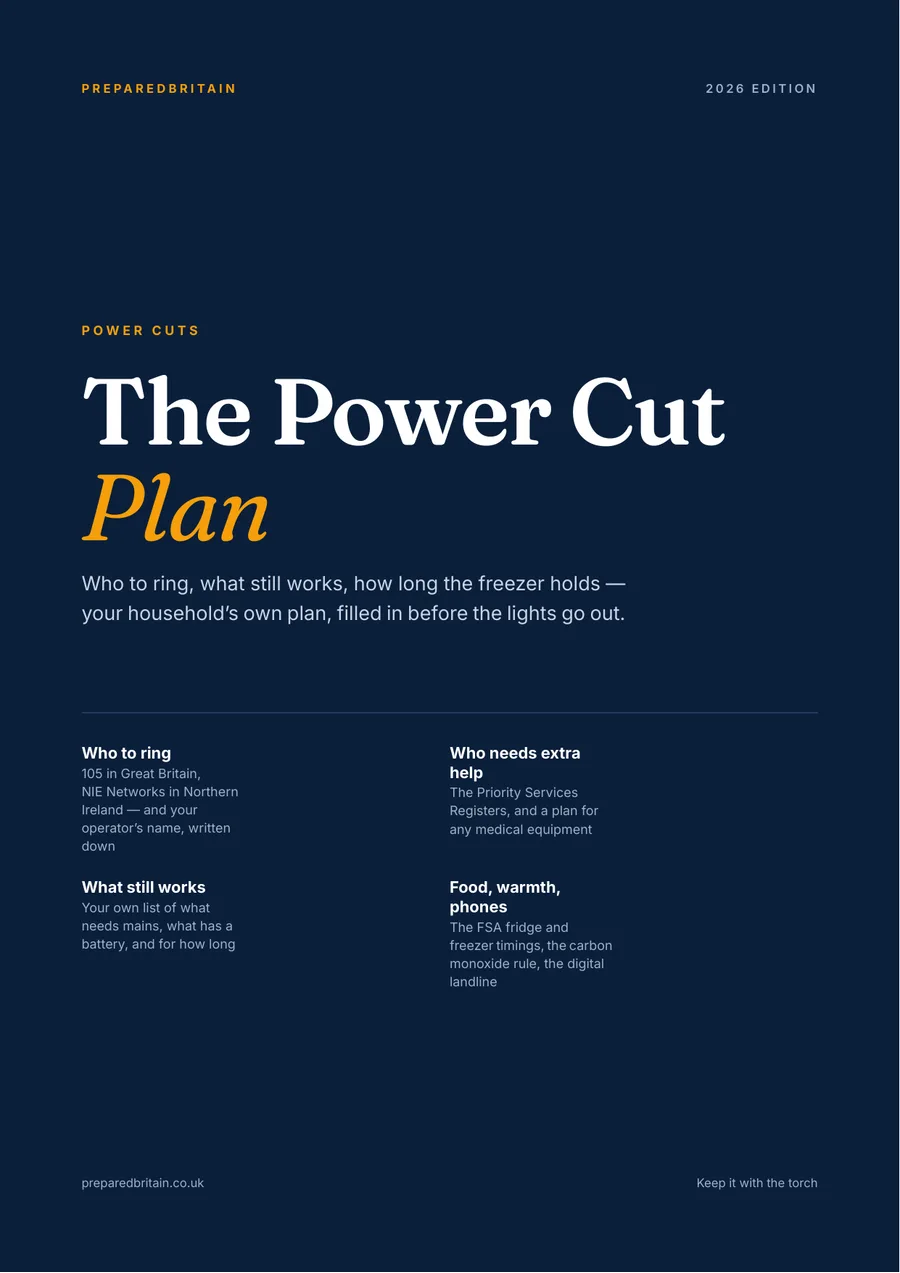
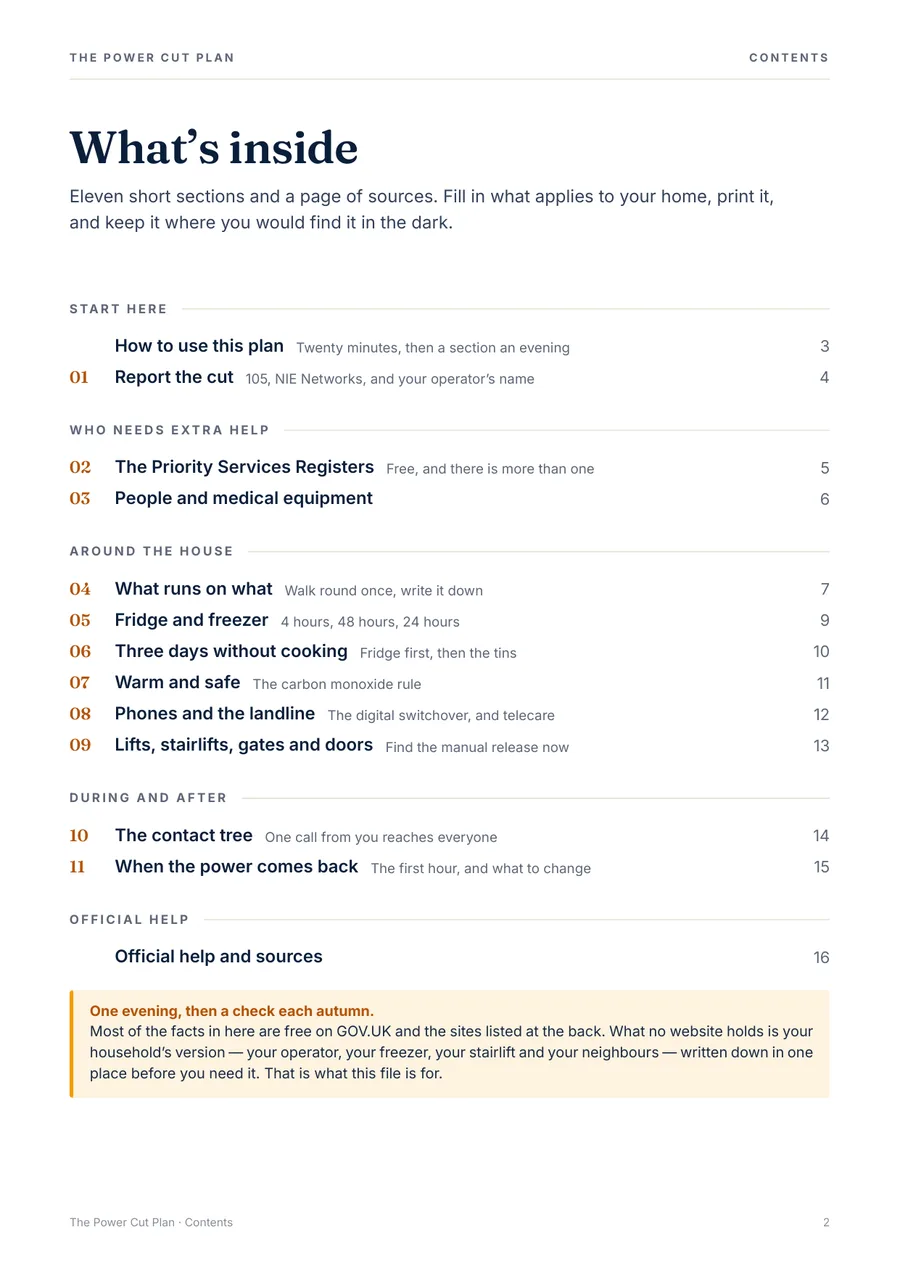
- Eleven short sections and a page of sources: report the cut, the Priority Services Registers, people and medical equipment, what runs on what, fridge and freezer, three days without cooking, warm and safe, phones and the landline, lifts and stairlifts, the contact tree, and when the power comes back.
- Notes where the four nations differ: 105 for England, Scotland and Wales and NIE Networks for Northern Ireland, the water registers for England and Wales, Scotland and Northern Ireland, Food Standards Scotland alongside the FSA, Scotland’s carbon monoxide alarm rules, and the gas emergency numbers for Great Britain and for Northern Ireland.
- 256 form fields, tick boxes included, with the official guidance summarised beside them and credited to its publisher: GOV.UK Prepare, Citizens Advice, the FSA, Ofcom, HSE and HSENI among others. The last page lists every source, checked September 2026.
Secure card payment by Stripe. It downloads the moment you pay, so by buying you ask for it straight away and there’s no 14-day cancellation. Terms of sale.
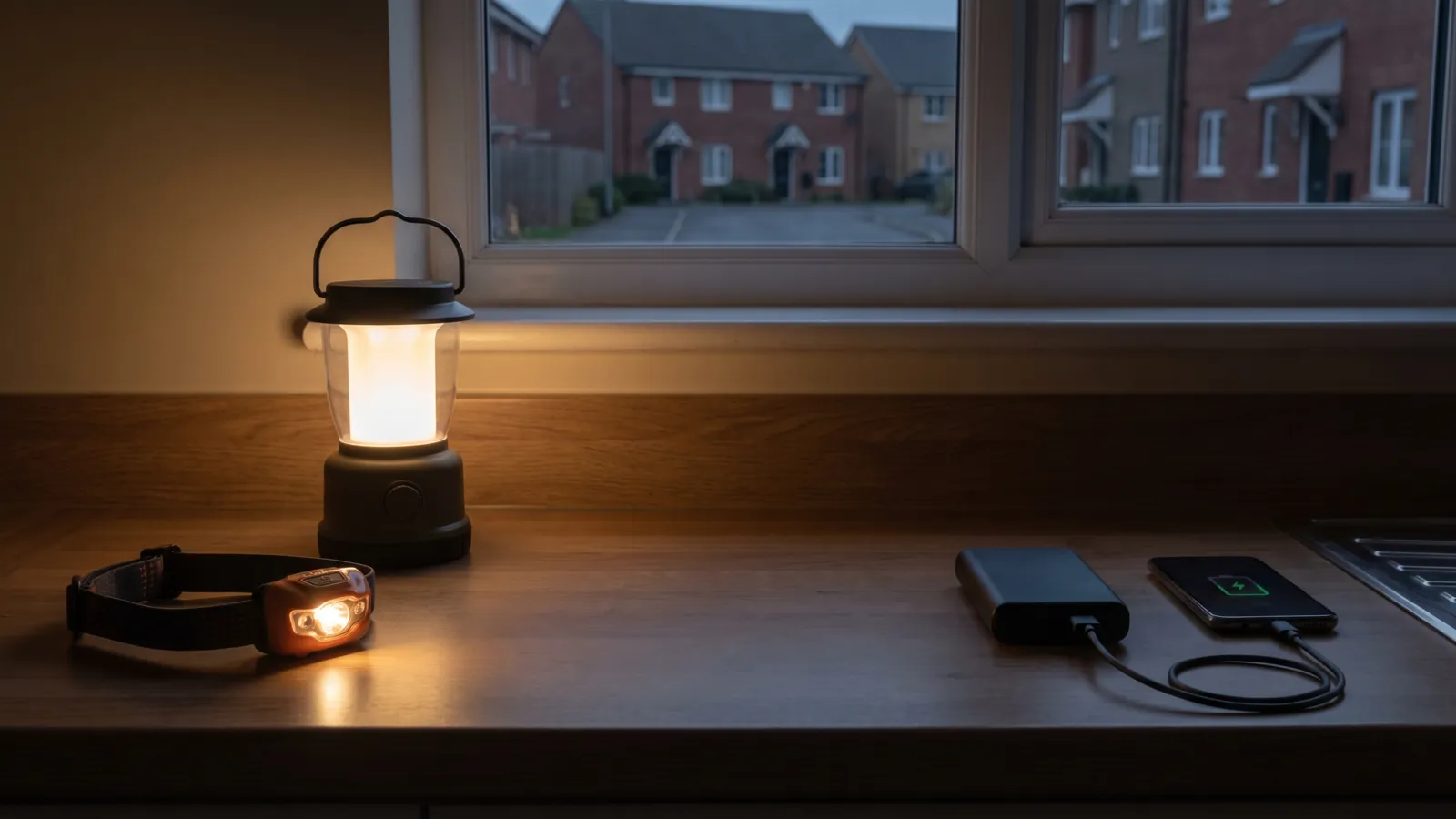
When you would use it
The night a storm is forecast, when the power banks go on charge and you want 105 and your operator’s name to hand. The first evening of a long cut, when phone battery is what the whole house is saving and the plan already says who rings whom. And each autumn when the clocks go back, when the two-minute review list in section 11 catches the flat batteries and the changed numbers.
What it records that guidance cannot
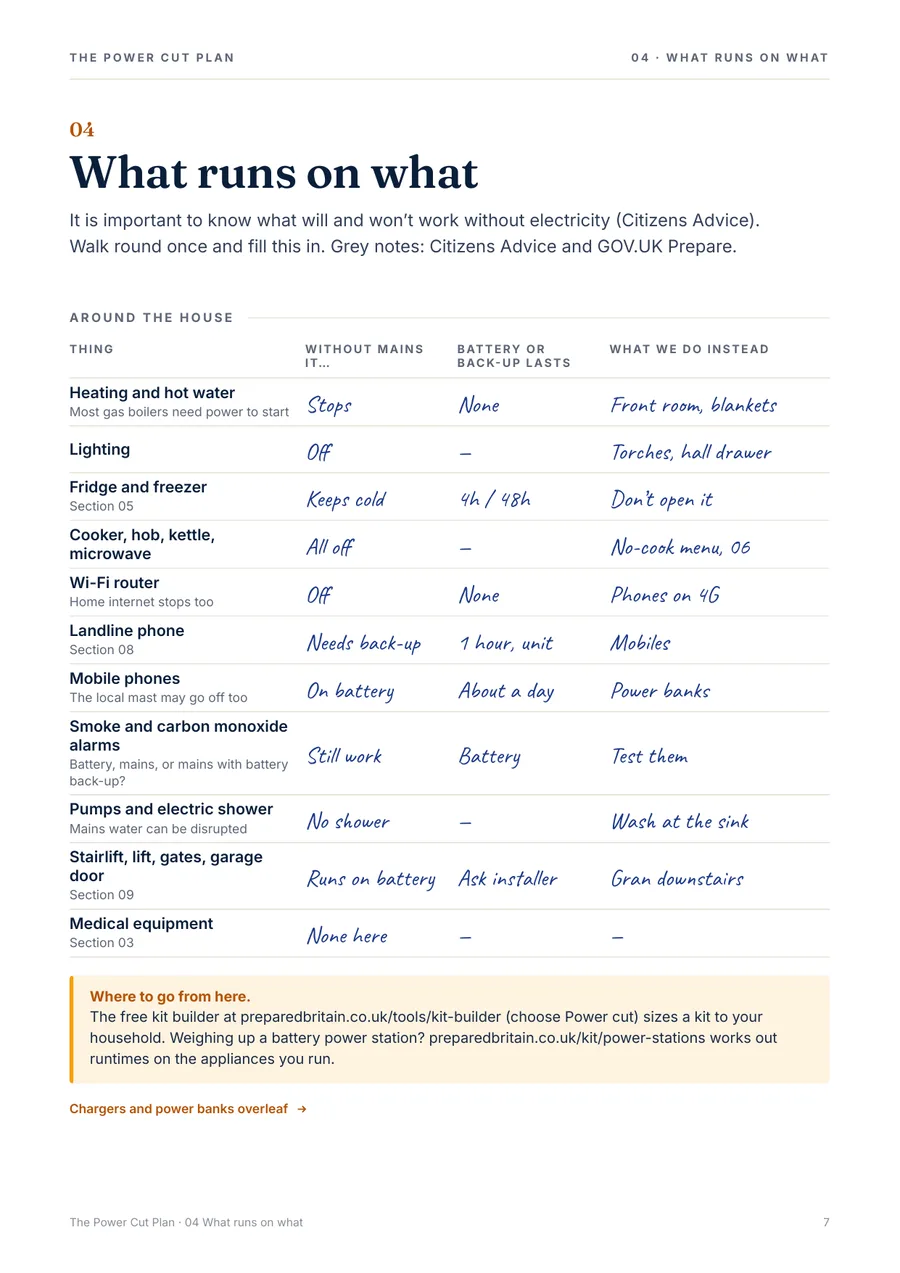
The official advice tells you to find out who your network operator is, check your equipment’s back-up battery and keep the freezer shut. This file is where your answers go: the operator’s name and your load block letter, how long the stairlift battery lasts, whether your freezer is usually full or half full, which neighbour has a key, and what the pharmacist said to do about fridge medicines if it warms.
Written for the whole household
The medical equipment page asks what you do if the battery runs out, as your care team agreed it, written so anyone in the house could follow it. The contact tree asks you to name one person outside the area everyone rings, and to agree which phone stays charged for the calls that matter. The page on lifts, gates and garage doors asks you to find and test each manual release now, not in the dark.
Look inside
Shown filled in, in a made-up household’s handwriting. Yours arrives blank, with every line ready to type into.
What’s inside
11 sections across 16 pages. Fill in what applies and skip what doesn’t.
When not to buy this
If you want the facts alone, you do not need this. The UK government’s Prepare campaign, Citizens Advice, the Food Standards Agency and Ofcom publish the guidance this plan draws on, free, and the sources page names each of them. Buy it only if you want your household’s version filled in and kept in one place. It does not replace your network operator’s advice, your care team’s plan or the official guidance it points to, and it is not legal, medical or financial advice. If you already keep a written plan with your operator’s name, your equipment batteries and your contact tree in it, keep using that.
Questions
Can I fill it in on screen?+
Yes. Every fill-in line and tick box is a form field, so you can type into it in Adobe Acrobat Reader or Apple Preview and save it. Print a copy as well. In a power cut, paper is the version that works.
Does it cover Scotland, Wales and Northern Ireland?+
Yes. It gives 105 for England, Scotland and Wales and NIE Networks’ number for Northern Ireland, names the water registers for England and Wales, Scotland and Northern Ireland and the gas emergency numbers for Great Britain and for Northern Ireland, points Scottish readers to Food Standards Scotland and Scotland’s carbon monoxide alarm rules, and notes that Ofcom’s landline rules apply across the UK.
How up to date is it?+
The sources page is marked checked September 2026 and names each publisher, so you can find the current version if a number or address changes. The plan says plainly that when it and an official source disagree, the source wins. Section 11 has an autumn review list for your own entries.
What exactly do I get?+
A PDF file, A4, that you download straight after paying. Every line is a real form field: open it in Adobe Acrobat Reader or Apple Preview, type into it and save. Or print it and write by hand. We also email you a link to your downloads.
Does it work in Scotland, Wales and Northern Ireland?+
Yes. Where the rules or services differ between the four nations, the file says so and points to the right official service for each.
Will it go out of date?+
It names the official service to check rather than printing fees or amounts that change. If we update the file, your download link gives you the current version.
Can I get a refund?+
Because it downloads the moment you pay, the 14-day cancellation period doesn’t apply to digital files you’ve asked to receive straight away. If a file won’t open or something is wrong with it, email us and we’ll sort it out.
Secure card payment by Stripe. It downloads the moment you pay, so by buying you ask for it straight away and there’s no 14-day cancellation. Terms of sale.
The Power Cut Plan is general information to help you organise your household’s records. It is not legal, financial or medical advice. Written by Tom Calder for PreparedBritain, an independent publisher not affiliated with HM Government.