
The Prepared Home: what to do when the lights go out, the water stops or the river rises
For any UK household that would like to be comfortable through the ordinary disruptions and steady through the rare serious ones, without turning the house into a bunker. Twenty-two chapters: how to read the government’s National Risk Register, the Be Ready three-day plan, water, food, kit, money and documents, then one chapter per hazard, from power cuts, storms and flooding to heat, cold, fuel, illness, scams, fire and gas, and finally extra help, claims and compensation, and a once-a-year home check. Every chapter follows the same pattern, so once you have read one you know how they all work. A PDF for any screen, or to print.
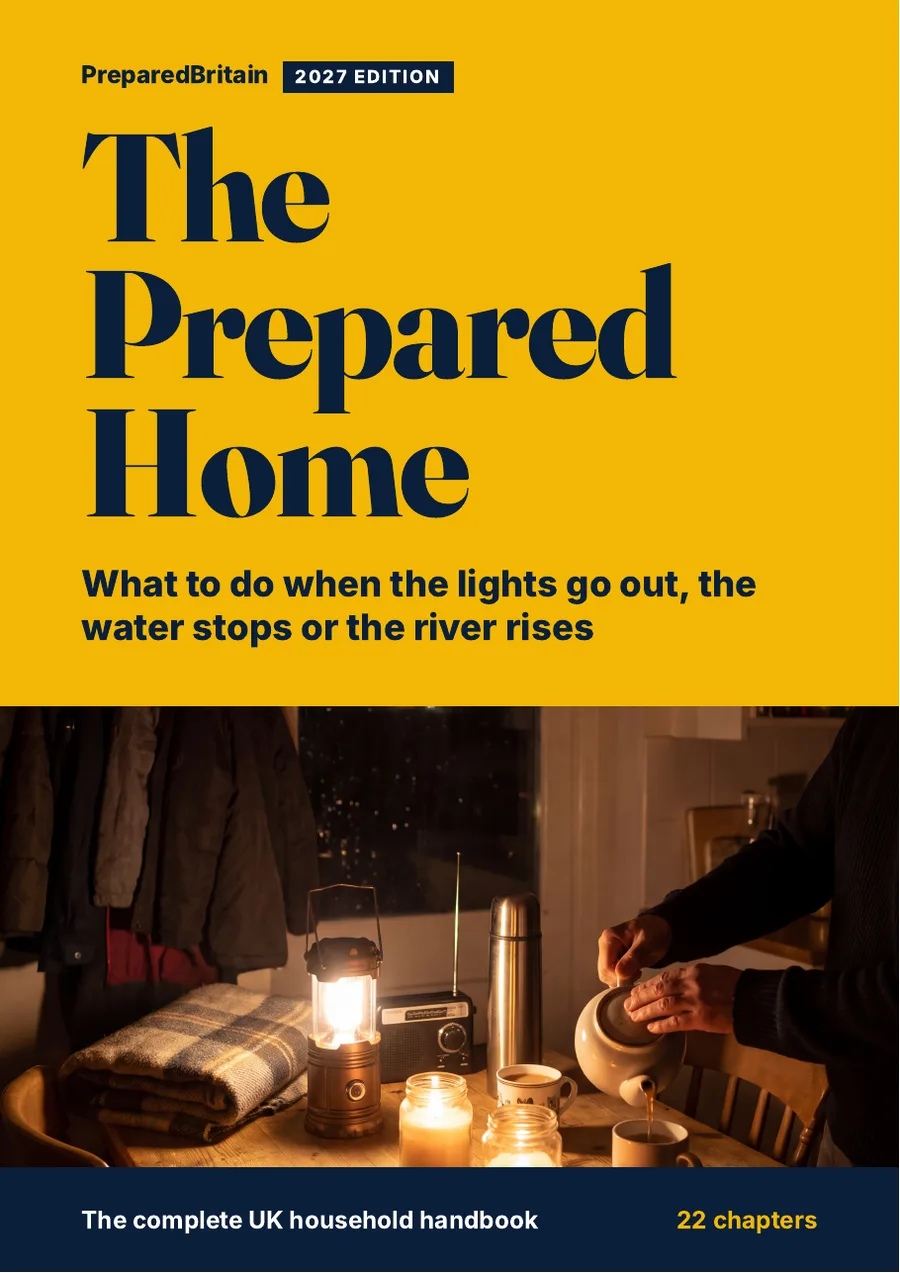
- 362 full-colour A4 pages in 22 chapters; numbered steps, a checklist, a who-to-contact table and a sources list in every chapter
- Where the four nations differ, it says so: 105 or NIE Networks, flood warnings, heat and cold alerts, landlords’ alarm duties, petrol storage, reporting fraud
- Every fact checked against its official source in October 2026: GOV.UK Be Ready, the National Risk Register 2026, the Met Office, the NHS, UKHSA, Ofcom and the food standards bodies among them
- Instant PDF download, yours to keep; read it on any device or print it
Secure card payment by Stripe. It downloads the moment you pay, so by buying you ask for it straight away and there’s no 14-day cancellation. Terms of sale.
For personal and household use. Buying for an organisation, tenants or staff? Ask about a licence.
Also in The Emergencies Pack, with 4 more handbooks and files: £29.99 for all 5.
Prefer to read on a Kindle? The Prepared Home is also on Amazon Kindle.
Book or files? This is a handbook to read: what to do in each kind of emergency. If you want forms to fill in for your own household (your water and food sums, your power cut plan, your numbers and documents), that is the Home Pack. See the Home Pack
When you’d reach for it
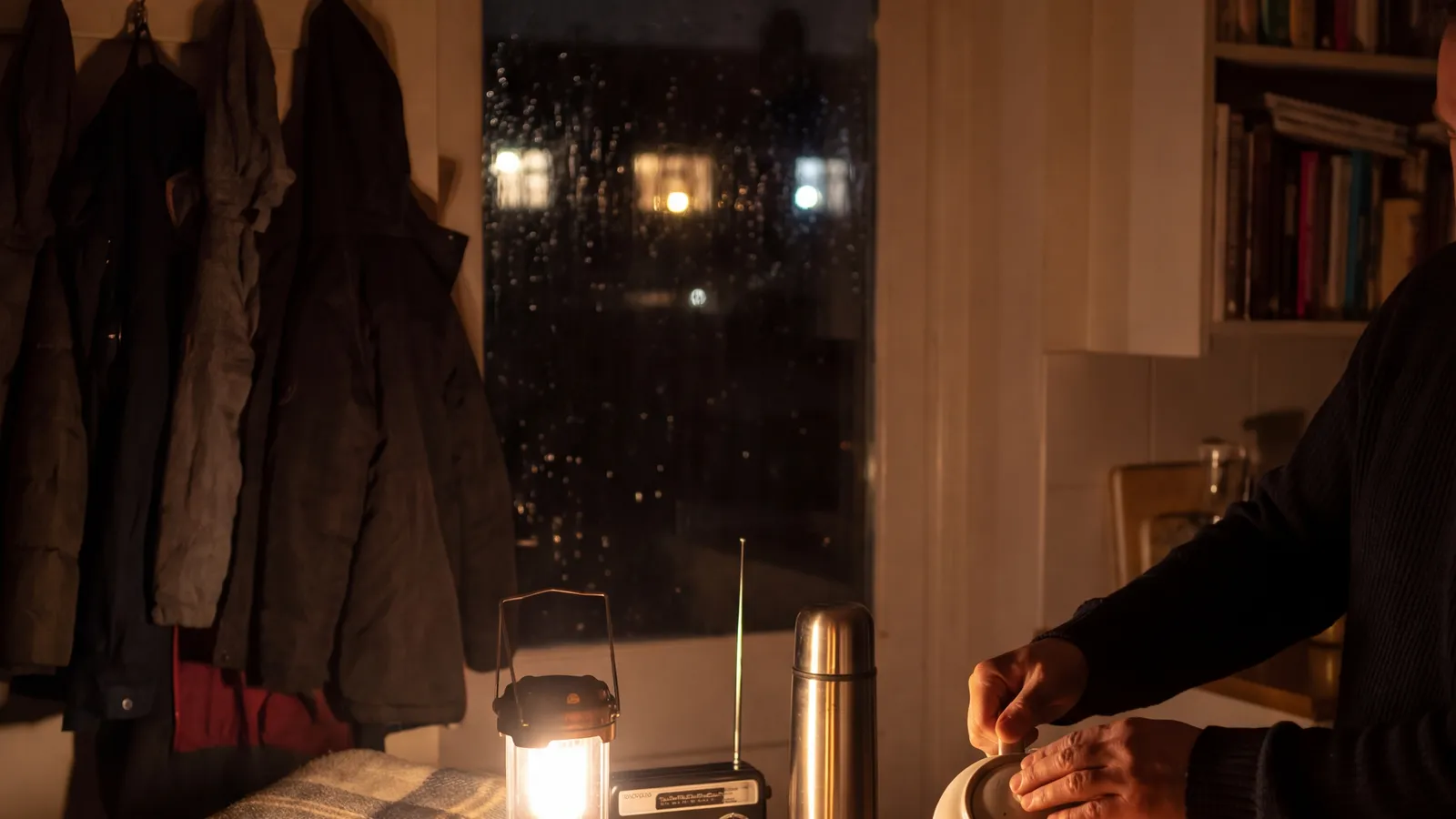
The evening a storm is named and you want to know what an amber warning actually asks of you. The first minutes of a power cut, when the order of things (report it, switch off anything that heats, leave the fridge shut) is written down and you do not have to remember it. The morning after a flood, when safety comes before paperwork and the claim depends on the photos you take now. And one weekend a year, for the home check in the last chapter.
What it does that a web search can’t
The official advice is spread across dozens of bodies, each writing about its own patch. This handbook reads the National Risk Register so you do not have to, and turns it into things you can do in your kitchen. It joins the pieces up: why a digital landline stops in a power cut, when a power-cut payment starts to be owed, which register moves your household to the front of the queue for bottled water, and what the three flood warning levels mean for your own front door.
Written to tell you when not to bother
Each chapter stops to say what is not worth your money or your time. You may already own most of the kit. Most power cuts are over before the kettle has gone cold. If the flood maps put your home outside every zone, register for warnings and move on. If your home is all-electric, you may not need a carbon monoxide alarm at all. The book would rather you skip a step than buy something you do not need, and it does not name brands or quote shop prices.
What you’ll be able to do
- Build the Be Ready three-day store gradually from what you already have, and write a household plan with meeting points and a family safe phrase
- Store enough water and food, keep them in date without waste, and know what a boil-water notice really asks of you
- Report a power cut to the right number in each nation, keep medical equipment and food safe, and know what you are owed when a cut goes on too long
- Read a Met Office warning, a flood warning level or a heat or cold alert and know what to do at each stage
- Keep a way to call 999 when the power and the digital landline fail, and tell a real emergency from the scam that follows one
- Make a home insurance claim step by step after a flood or storm, with the records and photos it depends on, and run the once-a-year home check
Look inside
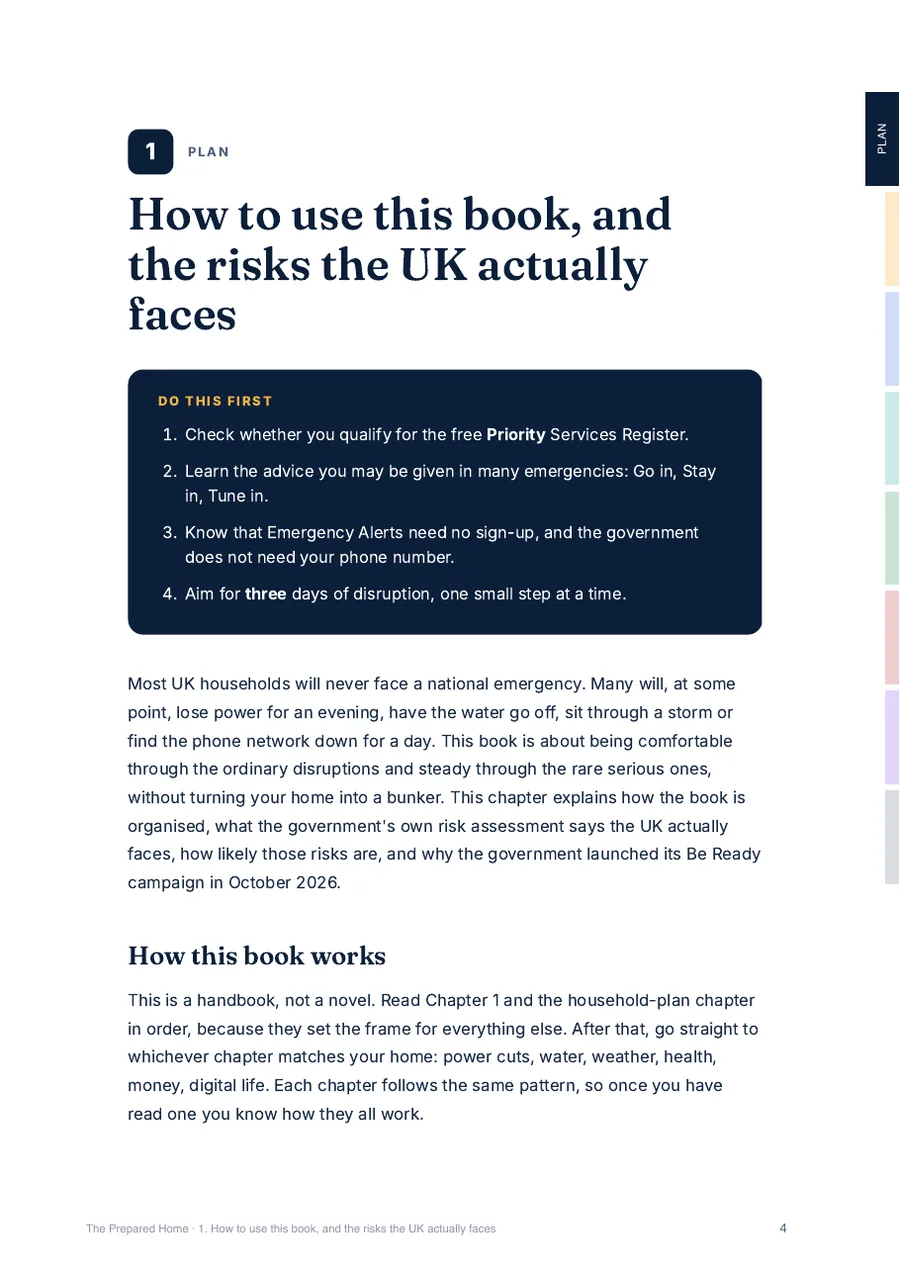
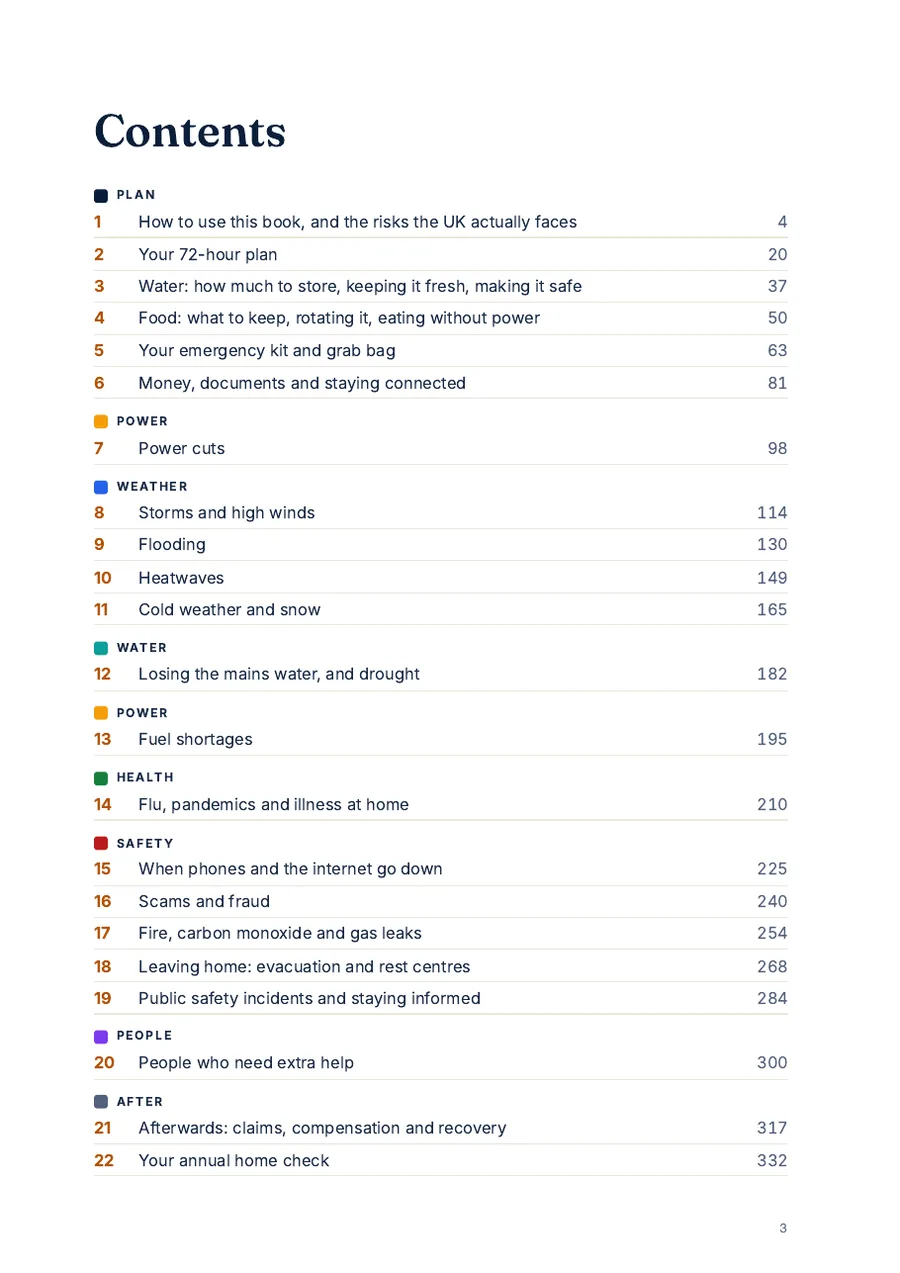
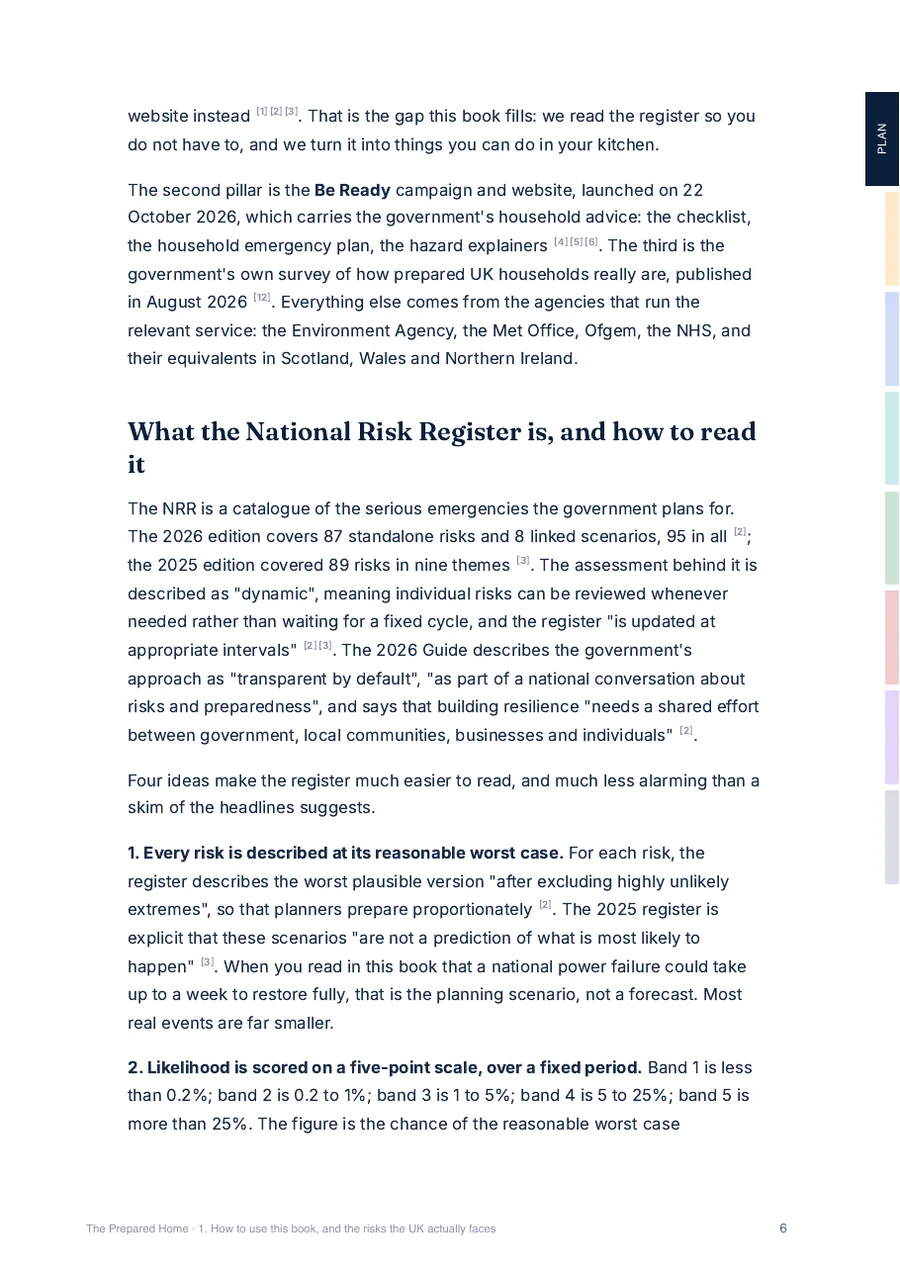
The cover, the start of chapter 1 and the contents. The free sample has the first chapter in full.
What’s inside
22 chapters across 362 pages. Read it straight through, or go to the chapter you need.
1. See what you already have. Check your cupboards first; Be Ready notes “You could have some of the items at home already.” 2. Plan for your household. Note down what you still need, remembering the things your household relies on, such as medical supplies, baby formula or pet food. 3. Build it gradually. Pick up missing items on regular shopping trips, which Be Ready says helps “spread the cost”. 4. Check it regularly. Set a reminder every six months to check expiry dates, swap out anything that needs replacing, and update the kit if your household’s needs have changed. 5. Connect with your community. Talk to neighbours about what extra support you might share during an outage, and swap contact details.
When not to buy this
If you want the facts alone, you do not need this. The government’s Be Ready website, the Met Office, the NHS, your network operator and your water company publish the guidance this book draws on, free, and every chapter lists its sources so you can go to them directly. If you already keep a torch, a few days of food, some cash and the right numbers on paper, and you know where your stop tap and fuse board are, you have most of the practical side done. It is information, not legal, medical or financial advice, and it does not recommend products or tell you what to buy.
Questions
Is it a doomsday or survivalist book?+
No. It opens by saying most UK households will never face a national emergency, and that the National Risk Register’s own authors call every risk in it a relatively low-likelihood event. The aim is to be comfortable through the ordinary disruptions (a night without power, a burst main, a storm) and steady through the rare serious ones. Each chapter says who may not need it.
Does it tell me what to buy?+
It tells you what the government asks a household to have and why each item is there, and it says you may already own most of it. It does not name brands or quote shop prices anywhere in the text; the book’s own rule is that it would rather you skip a step than buy something you do not need. Chapter 5 is the kit list and grab bag; chapter 22 is how to keep it all in date.
How does it handle the money side: compensation, insurance, winter payments?+
Chapter 21 walks through a home insurance claim step by step, the records to keep, emergency repairs, the guaranteed standards payments for a long power cut and what to do if a claim goes wrong. Chapter 11 covers the winter heating payments for 2026 to 2027 and who they are aimed at, and chapter 12 what a water company owes you when the supply fails. Figures are given with the period they apply to, so you can check they are still current.
What exactly do I get?+
A PDF ebook, A4, 362 pages, that you download straight after paying, to read on any phone, tablet or computer or to print. It isn't a printed book and nothing is posted. We also email you a link to your downloads.
Does it work in Scotland, Wales and Northern Ireland?+
Yes. Where the rules or services differ between the four nations, the file says so and points to the right official service for each.
Will it go out of date?+
It names the official service to check rather than printing fees or amounts that change. If we update the file, your download link gives you the current version.
Can I get a refund?+
Because it downloads the moment you pay, the 14-day cancellation period doesn’t apply to digital files you’ve asked to receive straight away. If a file won’t open or something is wrong with it, email us and we’ll sort it out.
Secure card payment by Stripe. It downloads the moment you pay, so by buying you ask for it straight away and there’s no 14-day cancellation. Terms of sale.
For personal and household use. Buying for an organisation, tenants or staff? Ask about a licence.
The Prepared Home is general information. It is not legal, financial or medical advice. Written by Tom Calder for PreparedBritain, an independent publisher not affiliated with HM Government.
Follow PreparedBritain
A calm heads-up when a storm is named, scam warnings, and the money checkers worth knowing about, in your feed.
