Legal mobile signal boosters UK (2026) — compared & price-tracked
Most of what is sold online as a "mobile signal booster" cannot legally be switched on in the UK, so this guide starts from the options that can. They fall into three groups. Mesh Wi-Fi systems do nothing to your mobile signal at all — they make home Wi-Fi solid enough that free Wi-Fi calling works in every room, which is the fix most households actually need. Passive outdoor antennas pull a cleaner 4G/5G signal into a compatible router, and are often the real answer in rural homes. And Ofcom licence-exempt repeaters — of which we list Nextivity's Cel-Fi range, a four-figure purchase — amplify one network's outdoor signal indoors. Before buying anything, ask one question: is Wi-Fi calling switched on in your phone's settings? It is free, every major UK network supports it, and it may be the whole answer if your Wi-Fi already reaches the rooms where calls drop. Prices below are tracked against UK retailers, though the installer-channel repeaters are quote-driven, so treat those figures as indicative. The table states every product's UK legal status explicitly.
By Tom Calder · Updated 4 November 2026 · 9 products, all price-tracked
Our picks
 Photo: Amazon
Poynting 5G-XPOL-A0002-10m
Rural or fringe-coverage homes with a 4G/5G router or CPE that has two external SMA antenna ports, aimed at a known nearby mast.
as of 4 Nov 2026, 20:07 GMT · Details
Product prices and availability are accurate as of the date/time indicated and are subject to change. Any price and availability information displayed on Amazon.co.uk at the time of purchase will apply to the purchase of this product. Photo: Amazon
CEL-FI GO G41 | Mobile Phone Signal Booster for Home | 4G, 5G, EE, Three, O2, and Vodafone | Up to 15,000 Sq Ft Coverage | 100 dB Cell Phone Signal Booster | Ofcom Approved | 1 Antenna Kit
Large rural or period homes (or small offices) with a genuine outdoor signal but a dead zone indoors, where Wi-Fi calling isn't practical.
as of 4 Nov 2026, 20:07 GMT · Details
Product prices and availability are accurate as of the date/time indicated and are subject to change. Any price and availability information displayed on Amazon.co.uk at the time of purchase will apply to the purchase of this product. Photo: Amazon
Amazon eero Pro 7 tri-band mesh Wi-Fi 7 router (newest model) — Supports internet plans up to 5 Gbps, Coverage up to 560 m², 3-pack
The top-of-range pick for whole-home Wi-Fi coverage in a larger UK house — NOT for fixing weak mobile/cellular signal
as of 4 Nov 2026, 20:07 GMT · Details
Product prices and availability are accurate as of the date/time indicated and are subject to change. Any price and availability information displayed on Amazon.co.uk at the time of purchase will apply to the purchase of this product.All 9 compared
| Option | UK legal status | Networks | Coverage | What it needs | Price |
|---|---|---|---|---|---|
Legal · 2G/3G/4G/5G, UK bands 617-960 MHz, 1710-2170 MHz · Directional, long-range · A 2x2 MIMO router/CPE with two external SMA Rural or fringe-coverage homes with a 4G/5G router or CPE that has two external SMA antenna ports, aimed at a known nearby mast. | Legal | 2G/3G/4G/5G, UK bands 617-960 MHz, 1710-2170 MHz | Directional, long-range | A 2x2 MIMO router/CPE with two external SMA | £181 at Amazon as of 4 Nov 2026, 20:07 GMT · DetailsProduct prices and availability are accurate as of the date/time indicated and are subject to change. Any price and availability information displayed on Amazon.co.uk at the time of purchase will apply to the purchase of this product.In stockCheck price → |
Our verdictOur verdictResearched This is a serious passive antenna for improving reception into a compatible router, not a plug-and-play phone booster. Done properly — aimed at the right mast, matched to a 2x2 MIMO device — it noticeably lifts signal and speed in weak-coverage spots. Best for Rural or fringe-coverage homes with a 4G/5G router or CPE that has two external SMA antenna ports, aimed at a known nearby mast. Good
Worth knowing
Who shouldn't buy it: Don't buy it if you just want better phone signal at home with no technical setup — try Wi-Fi calling first (free, works on every major UK network), or a licence-exempt plug-and-play repeater kit instead of a router antenna. It's also not the right length if a shorter run would reach your router: 10m of cable loses noticeably more signal at 5G frequencies than 5m does, eating into the very n78 gain you're buying this for — the 5m version (or the no-cable N-type variant with your own short, low-loss lead) is cheaper and performs better if your cable run allows it. Read the full review → | |||||
Ofcom licence-exempt compliant (IR 2102.1) · EE, Three, O2, Vodafone + MVNOs · A single indoor antenna covers one area or floor · A usable outdoor donor signal Large rural or period homes (or small offices) with a genuine outdoor signal but a dead zone indoors, where Wi-Fi calling isn't practical. | Ofcom licence-exempt compliant (IR 2102.1) | EE, Three, O2, Vodafone + MVNOs | A single indoor antenna covers one area or floor | A usable outdoor donor signal | £1,749.99 at Amazon as of 4 Nov 2026, 20:07 GMT · DetailsProduct prices and availability are accurate as of the date/time indicated and are subject to change. Any price and availability information displayed on Amazon.co.uk at the time of purchase will apply to the purchase of this product.In stockCheck price → |
Our verdictOur verdictResearched This is the most powerful legally-compliant booster sold in the UK, and it's built for people who've already ruled out the easy fixes. It's an installer-grade purchase costing well over a thousand pounds, so it only makes sense once you've confirmed Wi-Fi calling and cheaper options genuinely won't do. Best for Large rural or period homes (or small offices) with a genuine outdoor signal but a dead zone indoors, where Wi-Fi calling isn't practical. Good
Worth knowing
Who shouldn't buy it: Don't buy this if you haven't first tried Wi-Fi calling (free, works on every major UK network) or if there's no usable signal even outside your property — a booster amplifies an existing signal, it can't create one from nothing. | |||||
Legal; this is a Wi-Fi mesh router · Wi-Fi 7 tri-band home broadband only · Up to approx. 560 m² of home Wi-Fi coverage per · An existing UK broadband connection to plug into The top-of-range pick for whole-home Wi-Fi coverage in a larger UK house — NOT for fixing weak mobile/cellular signal | Legal; this is a Wi-Fi mesh router | Wi-Fi 7 tri-band home broadband only | Up to approx. 560 m² of home Wi-Fi coverage per | An existing UK broadband connection to plug into | £749.99 at Amazon as of 4 Nov 2026, 20:07 GMT · DetailsProduct prices and availability are accurate as of the date/time indicated and are subject to change. Any price and availability information displayed on Amazon.co.uk at the time of purchase will apply to the purchase of this product.In stockCheck price → |
Our verdictOur verdictResearched A capable Wi-Fi 7 mesh system for eliminating broadband dead spots around a large home, but it does nothing for 4G/5G phone reception. If the problem you're solving is patchy mobile signal rather than patchy home Wi-Fi, this is the wrong product entirely. Best for The top-of-range pick for whole-home Wi-Fi coverage in a larger UK house — NOT for fixing weak mobile/cellular signal Good
Worth knowing
Who shouldn't buy it: Don't buy this if you're trying to fix poor mobile/cellular signal indoors — it's a home broadband Wi-Fi mesh router, not a cellular repeater, and does nothing for 4G/5G reception. Try Wi-Fi calling free on your existing router first (works on every major UK network); if you do need a new mesh to get it working, a sub-£150 model (eero 6+, TP-Link Deco) gives identical Wi-Fi calling quality — this is the top-of-range pick, not the budget route. If mobile signal is still poor after that, look at an Ofcom licence-exempt cellular repeater. | |||||
 Legal · Up to ~4,500 sq ft whole-home, AX3000 dual-band · Existing broadband connection Homes with decent broadband but patchy WiFi in back rooms — makes Wi-Fi calling reliable everywhere, which fixes most "no signal indoors" complaints without touching the mobile network at all. | Legal | — | Up to ~4,500 sq ft whole-home, AX3000 dual-band | Existing broadband connection | £169.92 at Amazon as of 4 Nov 2026, 20:07 GMT · DetailsProduct prices and availability are accurate as of the date/time indicated and are subject to change. Any price and availability information displayed on Amazon.co.uk at the time of purchase will apply to the purchase of this product.In stockCheck price → |
Our verdictOur verdictResearched Worth being clear about: this is a whole-home WiFi 6 mesh kit, not a mobile signal booster — it can't repeat a weak cellular signal. What it does very well is make WiFi coverage (and so Wi-Fi calling) rock solid in every room, which is the free, legal fix most people actually need before they consider a repeater. Set-up is simple and there's no subscription. Best for Homes with decent broadband but patchy WiFi in back rooms — makes Wi-Fi calling reliable everywhere, which fixes most "no signal indoors" complaints without touching the mobile network at all. Good
Worth knowing
Who shouldn't buy it: Don't buy this expecting a mobile signal fix if you're in a genuine broadband/mobile not-spot — it only extends WiFi you already have. If it's cellular signal specifically you need boosted (not WiFi calling), look at an Ofcom-compliant repeater instead, not a mesh kit. | |||||
 Legal · None; no cellular/mobile signal boosting · Up to 6,500 sq ft of home Wi-Fi coverage · Existing broadband connection Homes where patchy Wi-Fi in back rooms is what's breaking Wi-Fi calling or video calls — not a fix for weak outdoor or cellular signal. | Legal | None; no cellular/mobile signal boosting | Up to 6,500 sq ft of home Wi-Fi coverage | Existing broadband connection | £199.99 at Amazon as of 4 Nov 2026, 20:07 GMT · DetailsProduct prices and availability are accurate as of the date/time indicated and are subject to change. Any price and availability information displayed on Amazon.co.uk at the time of purchase will apply to the purchase of this product.In stockCheck price → |
Our verdictOur verdictResearched This is a whole-home Wi-Fi 6 mesh system, not a mobile signal booster — it has zero effect on cellular reception. Its honest place in a signal guide is as the fix behind the fix: if Wi-Fi calling (free, works on every major UK network) is your real answer to poor mobile signal, the Deco X55 3-pack is what makes sure that Wi-Fi actually reaches every room. Best for Homes where patchy Wi-Fi in back rooms is what's breaking Wi-Fi calling or video calls — not a fix for weak outdoor or cellular signal. Good
Worth knowing
Who shouldn't buy it: Don't buy this expecting it to boost your phone's mobile signal outdoors or away from home — it's a home broadband Wi-Fi mesh with no cellular capability at all. Try Wi-Fi calling first; it's free and built into every major UK network. | |||||
 Legal; passive antenna, not a repeater · All UK networks · Feeds one fixed point · A compatible 4G/5G router Households in a known rural or fringe-signal blackspot who already have (or are buying) a compatible 4G/5G router or repeater and need a better outdoor aerial to feed it. | Legal; passive antenna, not a repeater | All UK networks | Feeds one fixed point | A compatible 4G/5G router | £93.05 at Amazon as of 4 Nov 2026, 20:07 GMT · DetailsProduct prices and availability are accurate as of the date/time indicated and are subject to change. Any price and availability information displayed on Amazon.co.uk at the time of purchase will apply to the purchase of this product.In stockCheck price → |
Our verdictOur verdictResearched This is a well-specified passive antenna, not a plug-and-play signal booster kit — it only helps once paired with a compatible outdoor-capable router or repeater, and it's a proper DIY install with drilling and cable routing. For ordinary patchy-signal calls and texts, free Wi-Fi calling on any UK network solves the problem without buying anything. Best for Households in a known rural or fringe-signal blackspot who already have (or are buying) a compatible 4G/5G router or repeater and need a better outdoor aerial to feed it. Good
Worth knowing
Who shouldn't buy it: Don't buy this if you just want fewer dropped calls on an ordinary signal — turn on free Wi-Fi calling first. This antenna only earns its keep once you've confirmed a weak-but-present outdoor signal and are pairing it with a specific compatible router; on its own it fixes nothing. | |||||
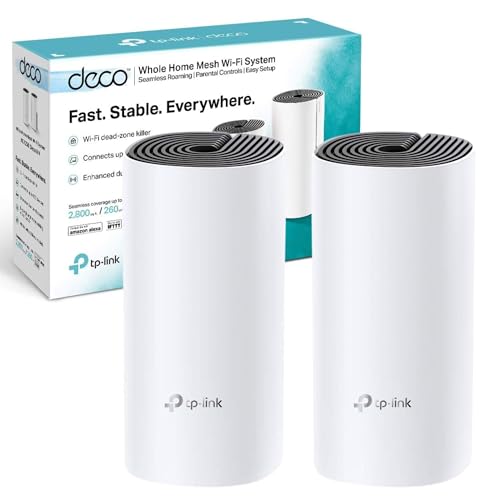 Legal · All four UK networks support Wi-Fi calling · Up to 2,800 sq ft per 2-pack · Existing home broadband/router + phone Homes where indoor mobile signal drops because WiFi itself is patchy — fixes the root cause behind unreliable Wi-Fi calling, not actual cellular strength. | Legal | All four UK networks support Wi-Fi calling | Up to 2,800 sq ft per 2-pack | Existing home broadband/router + phone | £87 at Amazon as of 4 Nov 2026, 20:07 GMT · DetailsProduct prices and availability are accurate as of the date/time indicated and are subject to change. Any price and availability information displayed on Amazon.co.uk at the time of purchase will apply to the purchase of this product.In stockCheck price → |
Our verdictOur verdictResearched This is a WiFi mesh system, not a cellular booster — it can't pull in outdoor mobile signal that isn't there. What it does well is eliminate the WiFi dead zones that make Wi-Fi calling (the free, legal first fix for poor indoor signal) unreliable in back rooms and upstairs. Best for Homes where indoor mobile signal drops because WiFi itself is patchy — fixes the root cause behind unreliable Wi-Fi calling, not actual cellular strength. Good
Worth knowing
Who shouldn't buy it: Don't buy this if your actual mobile signal problem is outdoors, if there's no fixed broadband to extend, or if your existing router already reaches every room — try repositioning it first. A mesh kit only redistributes WiFi you already have; it can't create signal from nothing. And if you're weighing this for power-cut resilience: mesh units go dead with the mains unless run off a UPS or power station, whereas the mobile network itself may still be up. Read the full review → | |||||
 Legal – passive antenna, not a repeater · All major UK networks (EE, O2, Three, Vodafone) · Not a whole-building solution · A compatible 4G/5G router Rural or fringe-signal homes that already have (or are buying) a 4G/5G router or repeater and need a stronger, weatherproof outdoor antenna to feed it. | Legal – passive antenna, not a repeater | All major UK networks (EE, O2, Three, Vodafone) | Not a whole-building solution | A compatible 4G/5G router | £163.95 at Amazon as of 4 Nov 2026, 20:07 GMT · DetailsProduct prices and availability are accurate as of the date/time indicated and are subject to change. Any price and availability information displayed on Amazon.co.uk at the time of purchase will apply to the purchase of this product.In stockCheck price → |
Our verdictOur verdictResearched A well-made, well-regarded antenna from a respected manufacturer, but it is not a booster in its own right — it only helps once it is wired into a compatible router or repeater. Most households wanting a simple signal fix are better served by a self-contained booster kit. Best for Rural or fringe-signal homes that already have (or are buying) a 4G/5G router or repeater and need a stronger, weatherproof outdoor antenna to feed it. Good
Worth knowing
Who shouldn't buy it: Don't buy this if you just want a plug-in-and-go phone signal fix for one room — it's a professional-grade external antenna for pairing with a router or repeater, not a beginner product. Check Wi-Fi calling first (free, works on every major UK network) before spending on any signal hardware. | |||||
 Legal · All UK networks, 4G/5G (4x4 MIMO, 617–4200MHz) · Houses your own router outdoors · Own compatible 4G/5G router (not included) Rural or fringe-signal properties running (or planning) a dedicated 4G/5G router — installers and self-builders, not a quick household fix. | Legal | All UK networks, 4G/5G (4x4 MIMO, 617–4200MHz) | Houses your own router outdoors | Own compatible 4G/5G router (not included) | £264 at Amazon as of 4 Nov 2026, 20:07 GMT · DetailsProduct prices and availability are accurate as of the date/time indicated and are subject to change. Any price and availability information displayed on Amazon.co.uk at the time of purchase will apply to the purchase of this product.In stockCheck price → |
Our verdictOur verdictResearched This is a specialist antenna, not a plug-in booster: it needs its own 4G/5G router fitted inside its weatherproof enclosure, so it suits a considered rural install rather than emergency prep. Solidly made by a respected antenna manufacturer, but the extra kit, cost and thin UK review record mean it's a considered buy, not a default one. Best for Rural or fringe-signal properties running (or planning) a dedicated 4G/5G router — installers and self-builders, not a quick household fix. Good
Worth knowing
Who shouldn't buy it: Don't buy if you haven't tried Wi-Fi calling first — it's free and works on every UK network. This antenna only makes sense once that's ruled out and you need to feed a dedicated router at a genuinely fringe-signal outdoor location. | |||||
ⓘ As an Amazon Associate, PreparedBritain earns from qualifying purchases. We may earn a commission when you buy, or a fee when you request a quote, through our links. When two products are close, commission can decide which one we pick. A clearly better product always wins. Amazon prices come from Amazon's own product data and show the date and time they were retrieved. Prices at other retailers are checked by us, less often. Prices and stock can change at any time, so always check the retailer's price before you buy.
Before you buy
Match the route to the problem.
If calls drop indoors but your broadband is fine, you do not have a signal-hardware problem yet: switch on Wi-Fi calling, and only buy a mesh kit — from the TP-Link Deco M4 up to the Amazon eero Pro 7 — if your existing router genuinely does not reach the rooms where calls fail. If you are in a rural or fringe-coverage home and run, or could run, a 4G/5G router for broadband, a passive Poynting antenna feeding that router is usually the better fix: legal without any licence, and it improves the router's data connection — and your calls with it, via Wi-Fi calling over that connection, since the antenna feeds the router rather than your phone. The Cel-Fi GO G41 repeaters serve the remaining case — a large or solid-walled property with a usable outdoor signal, where Wi-Fi calling is impractical and there is a four-figure budget. Work through the options in that order, cheapest first.
The spec columns are chosen for this category's particular traps.
"UK legal status" carries an explicit value on every row because the products sit in different legal categories: the Cel-Fi units are Ofcom licence-exempt compliant repeaters, while the antennas and mesh systems are legal for a simpler reason — they are not repeaters at all. A passive antenna amplifies nothing, and a Wi-Fi router never touches licensed mobile spectrum. Treat any listing that claims "Ofcom approved" with suspicion: Ofcom states plainly that it will not endorse or approve particular products, so the phrase is retailer wording rather than a regulatory status — the accurate term is "licence-exempt compliant". What Ofcom does publish is a list of repeaters tested by an accredited test house against its voluntary standard, and that list is the check worth making. "Networks" matters most for the Cel-Fi range, which boosts one operator at a time, switchable in its app: a real constraint for a household split between, say, EE and O2. "Coverage" and "What it needs" set the scale of the job — donor signal and mains for a repeater, broadband for mesh, and a router with two external antenna ports for the Poynting antennas, the EPNT-4 excepted, since that one houses the router itself.
The antenna route rewards a little homework.
Poynting's range splits into forgiving omnidirectional models such as the 6 dBi XPOL-1-5G Plus, and directional panels like the 11 dBi XPOL-2-5G, which add gain but want aiming at a known mast. Three checks before ordering. Your router needs two external antenna ports, because these are 2x2 MIMO antennas with two feeds. Many UK routers take TS-9 or CRC9 sockets rather than SMA, so budget for adapters — the commonest complaint in this class. And buy the shortest cable that reaches: coax loss rises with frequency, so the 10-metre XPOL-2 gives up part of the 5G gain you are paying for against the 5-metre version. Ignore Poynting's quoted "43 km" range — a best-case link figure, not coverage. The EPNT-4 enclosure sidesteps cable loss by mounting your own router outdoors with a single Ethernet run indoors; check Poynting's router-compatibility list first.
On the mesh route, resist spec-sheet gravity
A Wi-Fi call uses a small, steady trickle of data, so the Wi-Fi 5 TP-Link Deco M4 delivers the same call quality as the far dearer Wi-Fi 7 Amazon eero Pro 7. Buy the dearer kit for multi-gigabit broadband reasons, never for calls — TP-Link's Wi-Fi 6 Deco X50 and X55 sit sensibly between the two for larger homes. Nothing on this page needs a subscription: Wi-Fi calling is free on EE, O2, Vodafone and Three, and eero's optional plan covers security extras, not calling. Two caveats. Wi-Fi calling is carrier- and handset-dependent — the four main networks all support it, but some MVNOs still do not, so check yours before buying hardware to enable it. And mesh units die with the mains: in a power cut the mobile network may still be up while your Wi-Fi is not — we cover what keeps working in a national power outage in a separate guide.
If you reach the repeater tier, go in with calibrated expectations.
The Cel-Fi GO G41 is among the most capable licence-exempt boosters sold in the UK — 100 dB of gain, serving EE, Three, O2 or Vodafone one network at a time — but it is an installer-grade product in a quote-driven channel: expect four figures for the single-antenna kit, more for the two-antenna version, and treat advertised prices as provisional until quoted. Ignore the "up to 15,000 sq ft" coverage figures in retail listings — Nextivity itself publishes no square-footage claim, and real coverage depends almost entirely on the outdoor donor signal. A single indoor antenna realistically serves one area or floor; bigger or multi-storey buildings need extra antennas or Nextivity's larger G43 or QUATRA systems. Before spending four figures, stand outside with your phone: if there is no dependable signal out there, a repeater has nothing to amplify and the money is wasted.
We verify every product's specifications against at least two independent sources, re-check its UK price and stock on a schedule where we can track it automatically, and cross-check safety-relevant claims against official guidance. Every review is labelled Researched or Used and reviewed by us: where we've bought a product, or been sent it free, and used it ourselves, its review says which; where we haven't, our verdict is a considered spec-and-evidence comparison, not a hands-on test. When two products are close, commission can decide which one we pick. A clearly better product always wins. Read our full methodology →
Related kit comparisons
Guides that go with this
The UK's old copper phone network is being switched off by January 2027. What the digital switchover means, wh…
What the loud siren means, when the government sends Emergency Alerts, what a real one looks like, and how — a…
A calm, sourced look at the 'national blackout' scenario: why it's a low-likelihood risk the grid is engineere…
Common questions
Are mobile phone signal boosters legal in the UK?
Only certain types. Under the Wireless Telegraphy (Mobile Repeater) (Exemption) Regulations 2022, Ofcom allows a repeater to be used without a licence only if it complies with one of three licence-exempt specifications: IR 2102.1, covering provider-specific static indoor repeaters such as the Nextivity Cel-Fi GO G41; IR 2102.3, covering multi-operator static indoor repeaters; and IR 2102.2, covering low-gain repeaters for in-vehicle use. Using anything else — which includes almost every cheap "GSM booster" on the marketplaces — is an offence under the Wireless Telegraphy Act 2006, and Ofcom has taken enforcement action to stem their supply. Passive antennas and mesh Wi-Fi systems sit outside the repeater rules altogether: an antenna amplifies nothing and a Wi-Fi router never transmits on mobile frequencies, so both are legal without any licence.
What is Wi-Fi calling, and why try it before buying anything?
Wi-Fi calling routes ordinary calls and texts over your broadband instead of the mobile network, using your normal number — no app, no charge. EE, O2, Vodafone and Three all support it, and it is switched on in your phone's settings. Because it bypasses the mobile signal entirely, it solves the classic "full bars in the garden, nothing in the kitchen" problem for free, which is why every product on this page should be measured against it first. Caveats: some MVNOs and older handsets do not support it, and it only works where your Wi-Fi reaches — the one problem a mesh kit genuinely fixes.
Will a signal booster work where there is no signal at all?
No. A repeater amplifies an existing outdoor signal — it cannot create one. The Cel-Fi units need a usable donor signal at their antenna, and the same physics applies to a passive Poynting antenna: it can pull in a weak fringe signal your phone cannot hold, but not a signal that is not there. If you have nothing even outdoors, check what the other networks offer — Ofcom's mobile coverage checker maps all four at your postcode — because a different SIM may be the cheapest fix, with Wi-Fi calling over broadband the fallback. Any product promising bars where none exist is the signature of the illegal, non-compliant repeaters.
Do signal boosters work for all networks at once?
The ones on this page do not, and it is worth understanding why. The specification the Cel-Fi GO G41 meets is provider-specific: it boosts one network at a time — EE, Three, O2 or Vodafone, plus the MVNOs that use them — chosen and switched in the Cel-Fi WAVE app. A household split across two networks cannot boost both simultaneously with one unit, which is worth knowing before spending four figures. Multi-network boosting is not unlawful in itself: Ofcom's rules include a multi-operator category (IR 2102.3) for compliant static indoor repeaters. But "all networks at once, whole-house coverage" is equally the standard promise of the cheap non-compliant boxes that are illegal to use, so treat the claim as a reason to check compliance carefully rather than as evidence either way. Poynting's passive antennas are wideband and network-agnostic, but they feed whichever single router they are cabled to, not your phones directly.
Why is my signal fine outside but poor inside the house?
Usually the building itself. The materials that make homes energy-efficient — foil-backed insulation, low-emissivity glazing — along with thick stone walls or steel framing, are effective at blocking the radio frequencies mobile networks use, so a property can sit in an area Ofcom's coverage checker shows as well served and still have dead rooms. That mismatch is precisely what the legal fixes address: Wi-Fi calling ignores mobile signal altogether, a Cel-Fi repeater captures the outdoor signal and re-broadcasts it indoors, and an outdoor Poynting antenna hands the signal to a router before the walls can weaken it. If indoor coverage got worse after new windows or insulation, this is almost certainly why.
Can I still call 999 if my own network has no signal?
Usually, yes. Ofcom states that 999 calls automatically roam onto any available network when you have no signal with your own operator, so an emergency call can connect through a rival operator's mast even though your own network shows nothing. EE, O2, Vodafone and Three also carry 999 calls over Wi-Fi calling, which matters in a genuine indoor not-spot. The government's Emergency Alerts service is different, though: alerts are broadcast from 4G and 5G masts and need no mobile data or Wi-Fi connection, so a household that has papered over a blackspot with Wi-Fi calling alone may not receive them — one argument for fixing the underlying signal. We explain how Emergency Alerts work in a separate guide.
Will any of this keep working in a power cut?
Mostly no, and it is worth planning for. Mesh Wi-Fi, Wi-Fi calling, a Cel-Fi repeater and an antenna-fed router all rely on mains power at your end, so they stop when the electricity does unless run from a UPS or power station. The mobile network is separate infrastructure and may stay up, so a phone with one bar of genuine signal can beat a house full of dead equipment in an outage. The same logic increasingly applies to landlines: the UK's old copper phone network is being retired, with the switch-off due to complete on 31 January 2027, so home phones move onto broadband and fail with it. We cover the digital landline switchover, and what still works in a national power outage, in separate guides.
