Your landline is going digital: the PSTN switch-off explained
The UK's old copper phone network is being switched off by January 2027. What the digital switchover means, why your phone won't work in a power cut, and what to do if you rely on a telecare alarm.
By Tom Calder · Updated 20 July 2026 · Sourced to Ofcom, GOV.UK & the PSTN Charter
What's actually happening
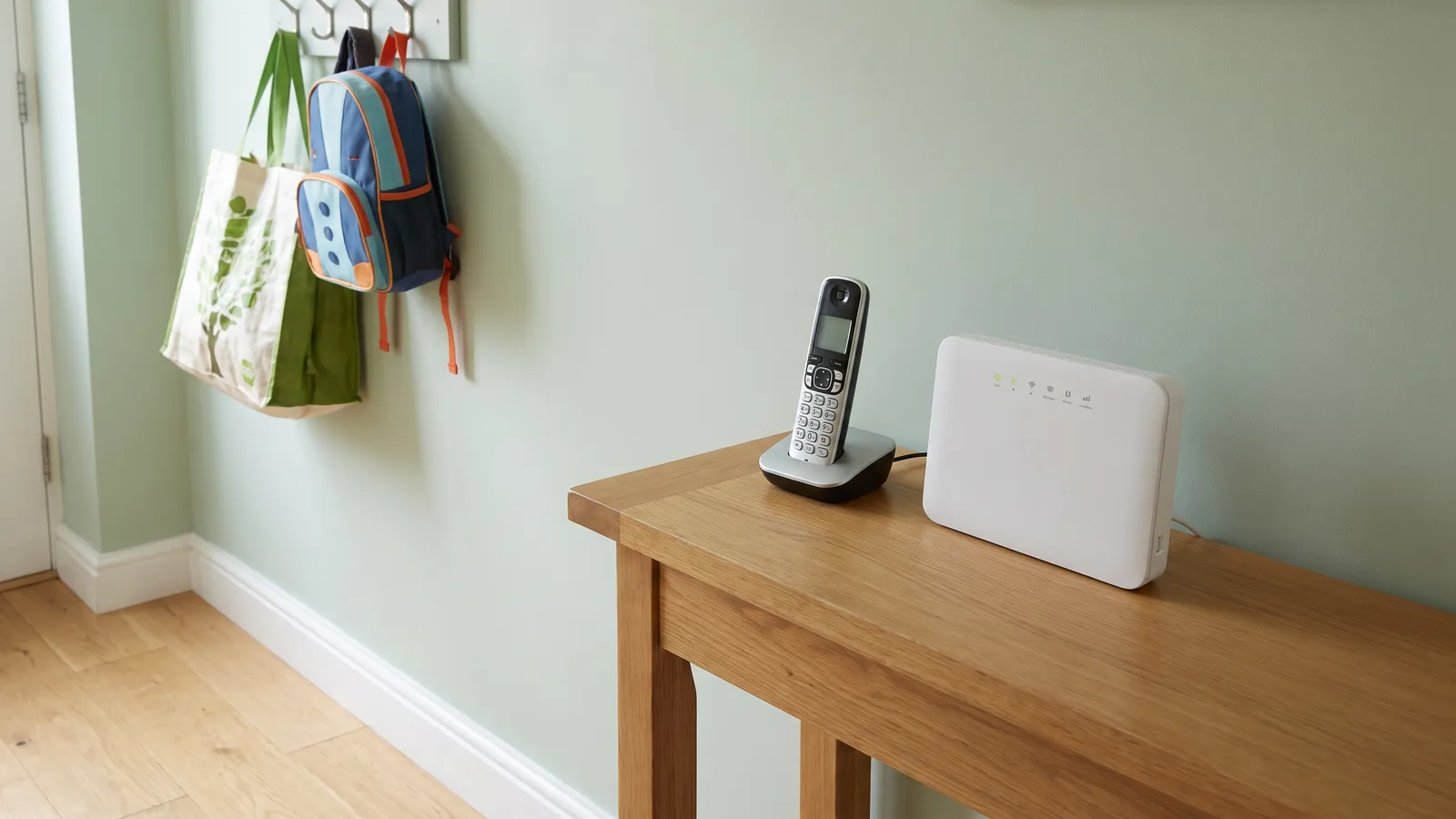
The UK's analogue Public Switched Telephone Network — the copper landline system that has carried our phone calls for over a century — is being retired. Every landline is moving to digital technology that carries calls over the internet, branded variously as Voice over IP (VoIP), Digital Voice or All-IP telephony. In practice your phone plugs into your broadband router instead of the socket in the wall.
The reason is simple: the old network has reached the end of its life. GOV.UK describes the PSTN as "failing due to lack of parts and, increasingly, environmental factors such as storms or heat related faults," and Ofcom recorded a 45% rise in PSTN incidents in 2024. The kit is genuinely wearing out.
The industry originally aimed to switch everything off by the end of 2025, but that was pushed back: providers are now working to a deadline of 31 January 2027. Migration is well advanced — the number of customers still on the old analogue network fell from 5.2 million in July 2024 to 3.2 million a year later — but it isn't finished, so millions of households have this change still to come.
The big change: your phone won't work in a power cut
This is the one consequence worth understanding. An old analogue phone drew its power from the phone line itself, so it kept working in a blackout. A digital phone connects through your router, and when the power goes off, so does the router — no power, no dial tone.
Regulators have planned for this. Ofcom requires providers to offer at least one hour of power-resilience access to the emergency services, free of charge, to any customer who needs their landline to call 999 — usually via a battery backup unit. The providers who signed the industry charter have committed to going beyond that one-hour minimum.
For most households this is a non-issue, because a mobile phone covers a power cut perfectly well. It only becomes important if the landline is someone's only way to call for help.
If you rely on a telecare or careline alarm
Pendant alarms and careline devices are the real risk area, because many were designed for the analogue line and can stop working once it's switched to digital. Under the industry's commitments, no telecare user should be migrated to a digital line until the provider, the customer or the telecare company has confirmed a compatible and functioning telecare solution is in place.
Providers must also offer free battery backup units for both the telecare device and the landline to customers who need them.
The action is straightforward but important: tell both your telecoms provider (the company on your phone bill) and your telecare or alarm company that you use a personal alarm, so a compatible device can be arranged before anything changes.
What you actually need to do
For most people: nothing. Your provider is required to contact you before migrating your line, and for a standard household the switch is seamless — the phone simply plugs into the router afterwards.
It's worth doing three quick checks anyway. Keep a mobile phone charged as your power-cut backup. If anyone in the house depends on the landline — no mobile signal at home, a telecare alarm, or medical equipment — contact the provider on your bill and ask about a free battery backup unit; you're entitled to one if you need it. And consider signing up to your energy and water companies' Priority Services Register, which flags you for extra help in an outage.
The people to look out for are elderly relatives and anyone landline-dependent — a two-minute phone call now saves a problem later.
Who's protecting vulnerable customers
The major providers — BT, Virgin Media O2, Sky, TalkTalk, Vodafone, KCOM and others — signed a voluntary PSTN Charter, first agreed in December 2023 and updated in January 2026. In it they commit not to carry out non-voluntary migrations until they are confident vulnerable people are protected, and to go beyond Ofcom's one-hour minimum for uninterrupted access to the emergency services in a power outage.
Ofcom separately requires every provider to publish and follow a clear policy for the fair treatment of vulnerable customers, and sought explicit assurances on how firms will support people who rely on telecare alarms. In other words, the safeguards exist — but they work best when the provider knows you're one of the people who needs them, which is why the phone call matters.
Common questions
When is the landline switch-off?
Providers are working to a deadline of 31 January 2027, pushed back from the original target of the end of 2025. Migration is happening in stages, so your own line may switch well before then — your provider will contact you first.
Will my phone still work in a power cut?
No — a digital landline connects through your router, so it stops working when the power (and router) goes off. Ofcom requires providers to give at least one hour of free backup access to 999 to customers who need it, usually via a battery unit, but for most people a charged mobile is the answer.
I have a careline or telecare alarm — what should I do?
Tell both your telecoms provider and your telecare/alarm company that you use a personal alarm. No telecare user should be migrated until a compatible, working solution is confirmed, and providers must offer free battery backup to those who need it.
Do I need to buy anything or do anything?
Usually nothing — your provider must contact you before migrating and the switch is seamless for a standard household. Just keep a mobile charged, and if anyone relies on the landline, ask your provider about a free battery backup unit.
Is the battery backup really free?
Yes, for customers who need it — for example those who are landline-dependent or rely on telecare. It's a regulatory requirement, not an upsell, so you should never be charged for the resilience support you're entitled to.
What if I have no mobile signal at home?
Tell your provider you're landline-dependent — that makes you eligible for power-resilience support such as a battery backup unit. It's also worth signing up to the Priority Services Register for extra help during outages.
Sources: GOV.UK — Moving landlines to digital technologies · Ofcom — Protecting customers during the migration to digital landlines · GOV.UK — Public Switched Telephone Network charter · House of Commons Library — The switch to digital landlines (CBP-9471). PreparedBritain is independent and not affiliated with HM Government.
The Emergency Kit Checklist
The GOV.UK Prepare essentials on one printable page — tick them off as you go and keep it with the kit. Free, no catch.
Download it straight away. We'll also send the occasional briefing when something genuinely matters — severe weather, live incidents, real price drops. Nothing else.
Keep reading
All planning & the national picture guides →The National Risk Register 2026, explained for households
What the UK government's 2026 risk assessment says — and the calm, practical steps every household can take.
The UK Emergency Kit List, explained item by item
The Government's recommended kit — with the best products for each item at every budget.
Is the UK government telling people to stockpile food and water?
A post claiming Britain is telling households to stockpile for war is going round. Here is what the government…