Vampire devices: the '£200' is 13 gadgets added up; turning a home off standby saves about £45
This week's 'vampire devices' headlines add up one of each of 13 gadgets to reach over £200. The Energy Saving Trust puts the saving from switching a whole home off standby at around £45 a year. We ranked the devices on the government's own measurements.
The 'over £200' in this week's vampire-device headlines matches a list the comparison site Quotezone published on 23 October: 13 appliances left on standby, from a Wi-Fi router to a coffee machine, costing £213.32 a year added together. That assumes one of each, an electric shower and tumble dryer included. It is not an official warning. The Energy Saving Trust says you can save around £45 a year in Great Britain, and £55 in Northern Ireland, by turning appliances off standby. The government's Household Electricity Survey measured 23 W of standby in an average home, about £53 a year at today's price cap on our reading. In the survey, the biggest standby loads were always-on boxes: TV set-top boxes and broadband routers. Switching off at the wall costs nothing, but leave fridges, freezers and any recorder that needs to record.
By Tom Calder · Updated 3 November 2026 · Sourced to the Energy Saving Trust, Ofgem, the government's Household Electricity Survey analysis on GOV.UK, legislation.gov.uk and DESNZ, read on 3 November 2026, with the Quotezone list the headlines repeat, and our own reading of the survey's figures at today's price cap
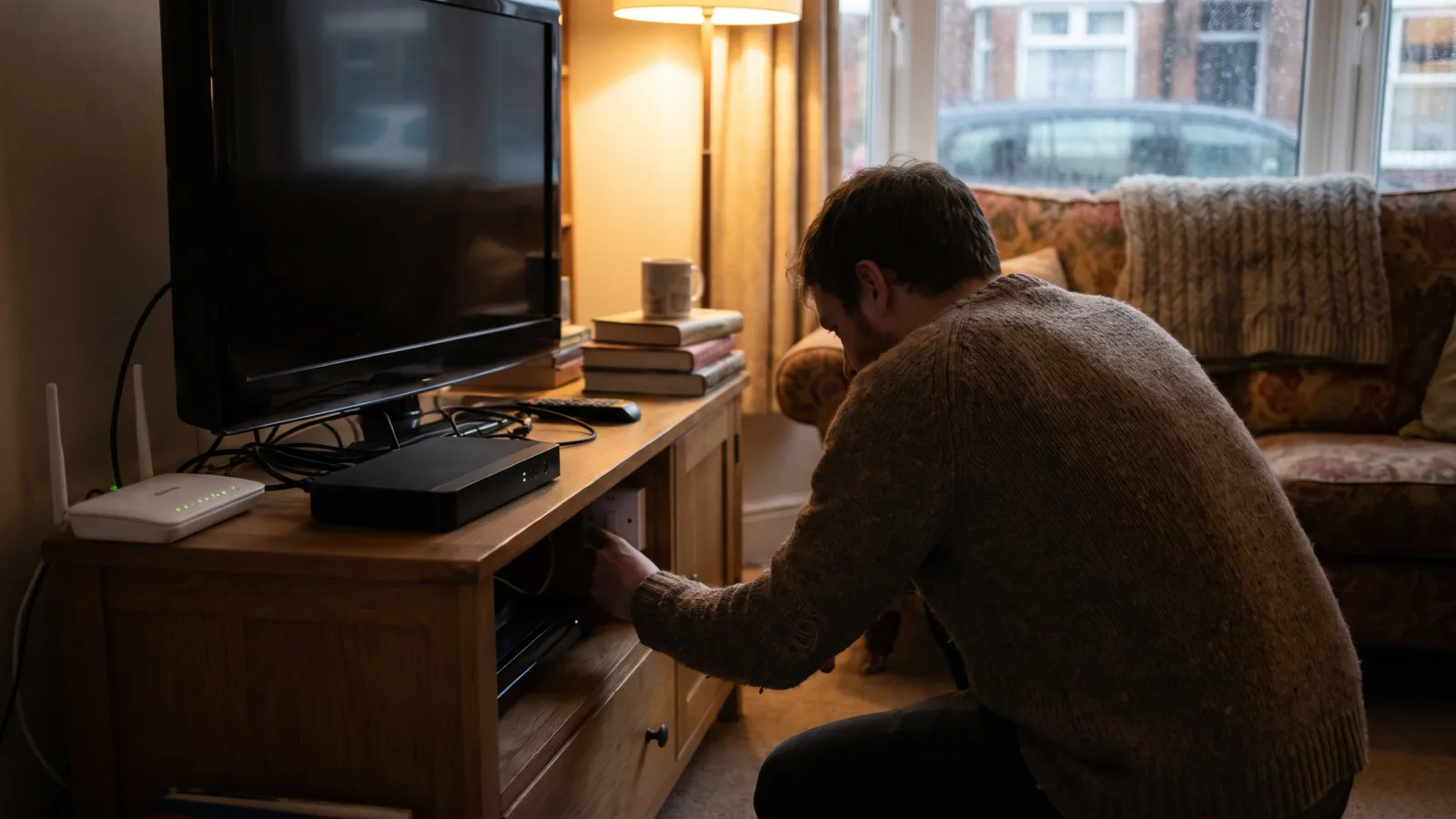
Where the £200 comes from
The 'over £200' figure in this week's headlines matches a list the price comparison site Quotezone published on 23 October. It names 13 appliances “that Brits commonly leave plugged in” and says they “could cost more than £200 a year” on standby.
The total, £213.32, is the sum of one of each: a Wi-Fi router (£34.80), a TV (£32.70), a set-top box (£26.70), a microwave (£23.20), a games console (£17.20), a computer (£15.80), smart speakers (£13.90), an electric shower (£12.60), a dishwasher (£9.80), a laptop (£7.32), a tumble dryer and a washing machine (£6.80 each) and a coffee machine (£5.70).
Quotezone's footnote says the costs were recalculated at Ofgem's current cap rate of 26.32p per kWh and rounded up to the nearest 10p, citing ClearScore and, for some items, Which?. It does not give the wattage or the hours behind each one. The warning is Quotezone's, not a government body's or a regulator's.
What official figures say a whole home's standby costs
The Energy Saving Trust's quick tips page, last updated on 6 October 2026, says: “You can save around £45 a year in GB and £55 in NI just by remembering to turn your appliances off standby mode.” That is for a whole home, not one device. Its quick tips page has the rest of its list.
The government's Household Electricity Survey measured it directly. It monitored 250 owner-occupier homes across England in 2010 and 2011, and an analysis published on GOV.UK in 2013 found standby “accounts for an average for all 250 households of 23 W, continuously”: 201 kWh a year, or 5.1% of their electricity.
At Ofgem's 26.32p per kWh, 201 kWh comes to about £53 a year, on our reading. The report itself warns its standby figures “could be biased, and higher than the real figures.” The £213 is more than four times the Energy Saving Trust's figure for a whole home.
The devices ranked by what they cost to leave on
The survey also measured average standby power device by device. We costed each at 26.32p per kWh, left on standby all year round. This is our reading of the survey's averages, not a figure the government publishes:
Sky box (18.9 W): about £44 a year. Other set-top boxes (14.1 W): about £33. Broadband modem (7.3 W) or router (7.1 W): about £16 to £17. Hi-fi (6.8 W): about £16. Laptop (3.8 W, which includes battery charging): about £9. Desktop computer (3.1 W): about £7. The games consoles measured then, Wii and PS3 (2.5 to 3.3 W): about £6 to £8.
Then the small stuff. Microwave (2.2 W): about £5. TV (1.4 W) and tumble dryer (1.4 W): about £3 each. Washing machine (1.2 W): about £3. Dishwasher (0.9 W): about £2.
The survey notes that set-top boxes and Sky boxes “do not have a standby mode, because they are always active to some degree”, which is why they top the list. These are 2010–11 devices, and some samples were small. The survey did not measure smart speakers, electric showers or today's consoles.
Home Alerts members
The full picture, for your home
Each week, what's happening across Britain set against your own address: your water company, your power network, fuel for your car and the gaps in your kit. Free for your own home. Sign up in a minute.
Start free →Britain's figures from our live trackers, 3 November.
Where the two lists differ most
TVs and microwaves. Quotezone's £32.70 for a TV works out at roughly 14 W, day and night, on our arithmetic. The survey's average TV drew 1.4 W on standby, about £3 a year, though the survey says its TV figures are among its least reliable. The Ecodesign rules made in 2021 set a basic standby limit of 0.5 W, with small allowances for extra features, for new electronic displays, including televisions, sold in Great Britain.
Quotezone's £23.20 for a microwave means roughly 10 W all year. The survey's average microwave drew 2.2 W, about £5. On routers and set-top boxes the two lists are closer: these are the devices that actually run all the time.
What to switch off, and what to leave on
The Energy Saving Trust says: “You can turn almost all electrical appliances off at the plug without upsetting their programming.” It also says: “You may need to leave some satellite and digital TV recorders plugged in so they can track any programmes you want to record.”
Fridges and freezers stay on. In the Trust's words, “some appliances, like fridges and freezers, need to be on all the time.” For anything else you're unsure about, it says to check the instructions.
In the survey, standby was 5.1% of household electricity. Our guide to lowering your electricity bill sets the £45 next to the Trust's other savings, such as drying clothes without a tumble dryer.
Tighter limits proposed for new products
The Department for Energy Security and Net Zero opened a consultation on 16 October on tighter standby limits for new products in Great Britain. It says: “Many electronic products currently draw 0.5–1 W or more in standby.”
It proposes bringing the new limits in from Q2 2027, in a single step. Responses close on 24 December. These are proposals, not law yet, and they would apply to new products, not ones already in your home.
Common questions
Do vampire devices really add over £200 to bills?
Not on the official figures for an average home. The £213.32 adds up one of each of 13 appliances, from a comparison site's list. The Energy Saving Trust says switching appliances off standby saves around £45 a year in Great Britain and £55 in Northern Ireland.
Which device costs the most to leave on standby?
In the government's Household Electricity Survey, TV set-top boxes: a Sky box averaged 18.9 W, about £44 a year at today's cap on our reading, and other set-top boxes 14.1 W, about £33. Broadband modems and routers came next, at about £16 to £17. Those were 2010–11 devices.
Can I switch my TV box off at the wall?
The Energy Saving Trust says almost all appliances can be turned off at the plug without upsetting their programming, but you may need to leave some satellite and digital TV recorders plugged in so they can record. If you're unsure, check the instructions.
What does a unit of electricity cost now?
Under Ofgem's price cap for 1 October to 31 December 2026, 26.32p per kWh on average for Direct Debit customers in England, Scotland and Wales, with a 54.83p daily standing charge. Ofgem says there is no VAT on electricity from 1 October 2026 to 31 March 2027. Rates vary by region. See our [January 2027 price cap page](/guides/january-2027-energy-price-cap) for what comes next.
Is there a legal limit on standby power?
Yes, for new products. The Ecodesign rules made in 2021 set a basic standby limit of 0.5 W, with small allowances for extra features, for new electronic displays such as televisions sold in Great Britain. The government is consulting on tighter limits for new products in Great Britain from Q2 2027; responses close on 24 December.
Sources (7)
- Energy Saving Trust, Quick tips to save energy at homelast updated 6 October 2026, read 3 November 2026
- Energy Saving Trust, Top five tips to save energy in the kitchenlast updated 6 October 2026, read 3 November 2026
- Ofgem, Energy price cap unit rates and standing charges, 1 October to 31 December 2026 (no date shown; read 3 November 2026)
- GOV.UK, Further Analysis of the Household Electricity Survey, Early Findings: Demand side management (2013; 250 homes in England, 2010–11)
- legislation.gov.uk, The Ecodesign for Energy-Related Products and Energy Information Regulations 2021, Schedule 19 (electronic displays), standby limits
- DESNZ, Updating standards for standby, networked standby and off mode power consumption: consultation (issued 16 October 2026)
- Quotezone, Vampire appliances suck over £200 worth of energy a year (23 October 2026), the list the headlines repeat
PreparedBritain is independent and not affiliated with HM Government.
See our checks first on Google. Add PreparedBritain as a preferred source and Google will show our stories to you more often in Top Stories.

Free alerts for your home
Home Alerts emails you when a power cut, a Met Office warning or a flood warning covers your postcode. Free for your own home. Sign up in a minute.
Start free →Latest from our live data
All stories → News · 2 NovCold Weather Payment opens: £25 a freezing week; last winter 40 of 71 stations triggered none
 News · 31 OctEarliest polar vortex breakdown on record forecast for November: what it means for the UK
 News · 31 OctAsda, Aldi, Tesco and Sainsbury's recalls checked: what the official notices list, and when
Keep reading
All money & bills guides →Cold Weather Payment opens: £25 a freezing week; last winter 40 of 71 stations triggered none
The Cold Weather Payment season opened on 1 November: £25 for each freezing 7-day spell at your local weather…
Autumn Budget 2026: what it means for your household, from energy bills to pensions
Every change in the 28 October Budget that touches a household: a £100 energy payment, cheaper electricity until…
Car finance compensation: where it stands and how to claim for free
Headlines say a car finance compensation update is due as a court hearing starts. The 5–6 October hearing dealt with…