Cold Weather Payment opens: £25 a freezing week; last winter 40 of 71 stations triggered none
The Cold Weather Payment season opened on 1 November: £25 for each freezing 7-day spell at your local weather station, paid automatically. Last winter 40 of 71 stations triggered none. Who qualifies, and what to do if a payment doesn't arrive.
The Cold Weather Payment season opened on 1 November and runs to 31 March 2027. GOV.UK says you get £25 for each 7-day period when the average temperature in your area is recorded as, or forecast to be, zero degrees or below over 7 consecutive days. It is usually paid to people on Pension Credit, and to some people on Universal Credit, income-related ESA or Support for Mortgage Interest, and it is paid automatically: “You do not need to apply.” Payments should arrive within 14 working days of the cold spell. If one doesn't, tell the Pension Service or Jobcentre Plus, or add a note to your Universal Credit journal. Last winter was patchy: our reading of DWP's figures shows 40 of the 71 weather stations in England and Wales triggered no payment at all. Scotland has the Winter Heating Payment instead, which doesn't depend on the weather.
By Tom Calder · Updated 2 November 2026 · Sourced to GOV.UK (DWP's Cold Weather Payment guide, postcode checker and Official Statistics), nidirect, mygov.scot and UKHSA, read on 2 November 2026, and our own reading of DWP's weather-station figures
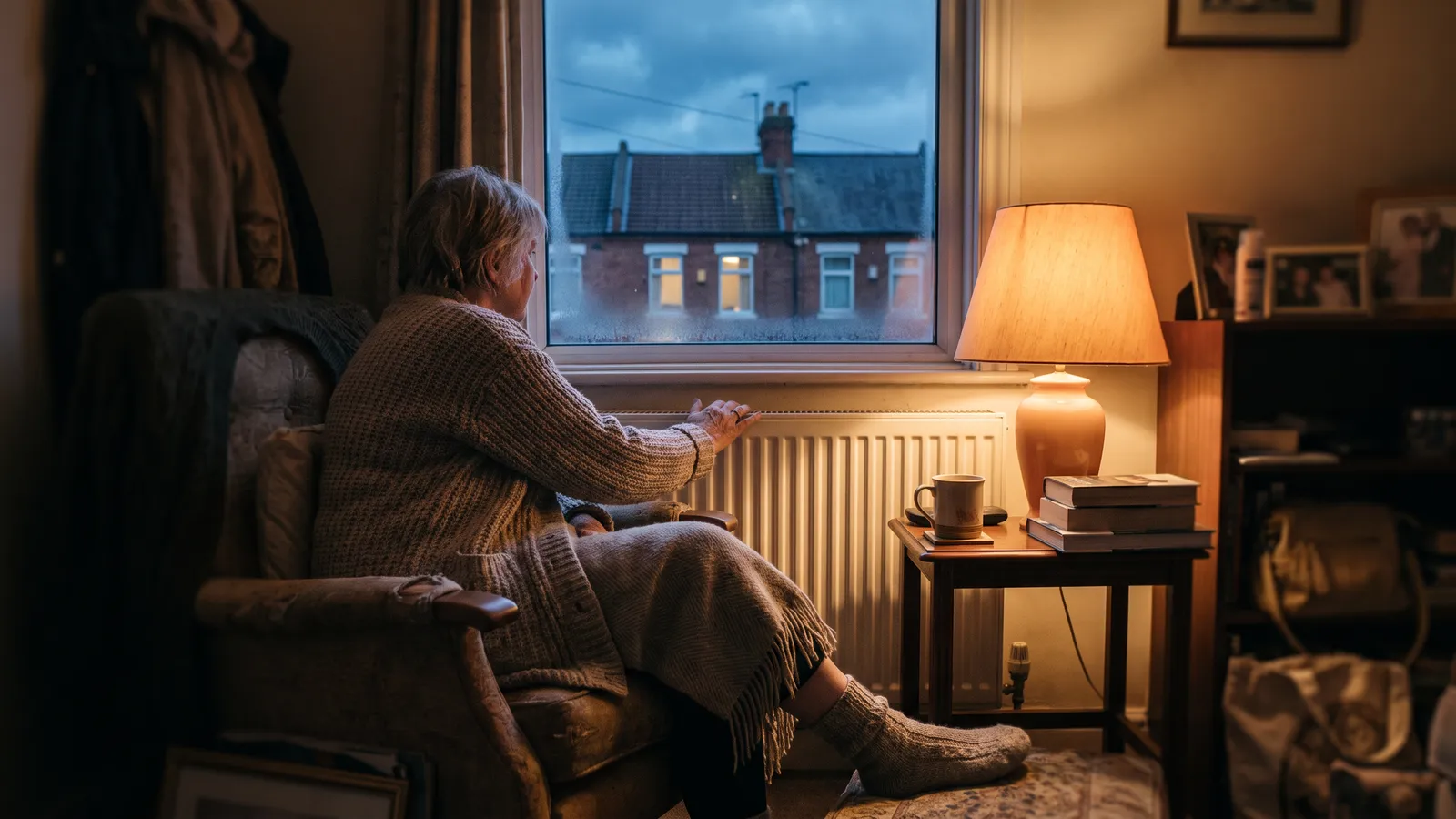
What opened on 1 November
The Cold Weather Payment season for England and Wales opened on Sunday 1 November. GOV.UK says: “You’ll get £25 for each 7-day period of very cold weather between 1 November 2026 and 31 March 2027.”
It is paid automatically to people on certain benefits. GOV.UK puts it plainly: “You do not need to apply. If you’re eligible to get Cold Weather Payments, you’ll be paid automatically.” It also says the payments do not affect your other benefits. GOV.UK notes that Cold Weather Payments are different to the Winter Fuel Payment.
We could not find a DWP announcement about this season on GOV.UK when we checked on 2 November. The facts here come from DWP's guide and statistics, nidirect, mygov.scot and UKHSA.
How a payment is triggered
Payments follow the temperature, not the calendar. GOV.UK says you get one if “the average temperature in your area is recorded as, or forecast to be, zero degrees celsius or below over 7 consecutive days.”
‘Your area’ means your weather station. DWP's methodology for last winter says the Met Office measures daily average temperatures at “a network of 71 weather stations across England and Wales”, and every residential postcode is linked to one of them. So two towns a few miles apart can get different numbers of payments in the same winter.
To see which station covers you, put your postcode into our Cold Weather Payment checker. It shows how many payments that station triggered in each of the last three winters. It uses DWP's 2025/26 postcode-to-station list until DWP publishes this season's. During a cold spell, DWP's official postcode checker shows whether a payment has been triggered for your postcode. Our Cold Weather Payment guide has the full background.
What last winter looked like, station by station
DWP's final figures for winter 2025/26, published on 8 April 2026, count 34 triggers and an estimated 1,447,000 payments across England and Wales. DWP estimated 4,416,000 people were eligible at the start of that season.
All 34 came in one cold spell around the new year. DWP's weekly table puts 17 in the week ending 2 January 2026 and 17 in the week ending 9 January; its monthly table puts 3 of them in December 2025 and 31 in January 2026. There were none in November 2025, February or March 2026.
Our reading of DWP's station table shows how uneven that was. Of the 71 stations, 40 triggered no payment all winter, 28 triggered one and 3 triggered two: Eskdalemuir, Redesdale and Shap. The winter before, 2024/25, there were 33 triggers and an estimated 1,402,000 payments, and 42 stations triggered none.
DWP's first figures for this winter, covering 1 to 27 November 2026, are due on 2 December 2026.
Home Alerts members
The full picture, for your home
Each week, what's happening across Britain set against your own address: your water company, your power network, fuel for your car and the gaps in your kit. Free for your own home. Sign up in a minute.
Start free →Britain's figures from our live trackers, 2 November.
Who gets it
GOV.UK lists four routes. Pension Credit: “You’ll usually get Cold Weather Payments if you get Pension Credit.” If you're over State Pension age on a low income and haven't checked, our Pension Credit guide explains how.
Income-related Employment and Support Allowance: usually, if you are in the work-related activity group or the support group. If you're in neither, you may still get it with a severe or enhanced disability premium, a pensioner premium, a disabled child, or a child under 5 living with you.
Universal Credit: usually, if you and any partner are not employed or ‘gainfully self-employed’, and either one of you has a health condition or disability with limited capability for work, or you have a child under 5 living with you. GOV.UK adds that you're also eligible if your claim includes a disabled child amount, whether or not you work.
Support for Mortgage Interest: usually, if you're treated as getting a qualifying benefit and have one of those same premiums, a disabled child or a child under 5 living with you.
If the cold comes and the money doesn't
GOV.UK says: “After each period of very cold weather in your area, you should get a payment within 14 working days.” It goes into the same account as your benefit payments.
If 14 working days have passed, first check the official DWP postcode checker to confirm a payment was triggered for your postcode. If it was and you think you qualify, GOV.UK says: “Tell the Pension Service or Jobcentre Plus if you think you should have got a Cold Weather Payment but you have not.” On Universal Credit, sign in and add a note to your journal; if you do not have an online account, ring the Universal Credit helpline, whose number is on letters about your claim.
Two changes need reporting. If you get Universal Credit or income-related ESA and you've had a baby, or a child under 5 has come to live with you, you need to report it. GOV.UK says: “You will not automatically get Cold Weather Payments if you do not.” GOV.UK also asks you to tell the Pension Service or Jobcentre Plus if you go into hospital, as it could affect your payment.
Scotland and Northern Ireland
In Scotland, GOV.UK says: “You cannot get Cold Weather Payments.” Instead there is the Winter Heating Payment, a single payment each winter. mygov.scot, last updated on 20 February 2026, says it is paid from December, that “the current payment is £62.00” and that it “does not depend on how cold it is.”
Northern Ireland runs its own scheme that works the same way. nidirect says it is open from 1 November 2026 to 31 March 2027 and pays £25.00 for each seven-day period of very cold weather. If a payment you expected doesn't arrive, nidirect says to tell the Northern Ireland Pension Centre or your local Jobs and Benefits office.
The cold-health alerts are a separate thing
UKHSA's Cold-Health Alerts are a different system. They cover England only, and UKHSA says the alerts are given a colour (yellow, amber or red) based on the impact the weather could have and how likely it is. Their core season is also 1 November to 31 March.
When we checked UKHSA's dashboard on 2 November, it showed “No alert” for all nine English regions, with the entries last updated on 20 February 2026. An alert doesn't trigger a payment, and a payment doesn't need an alert: if you qualify, the payment depends on the temperature at your weather station, not on alerts. Our health alerts tracker shows the current level, and our Cold-Health Alerts guide explains what each colour means at home.
Common questions
When does the Cold Weather Payment start for 2026/27?
The season opened on 1 November 2026 and runs to 31 March 2027. GOV.UK says you get £25 for each 7-day period of very cold weather in that time. A payment depends on the temperature at your local weather station, so nothing is paid until a cold spell is recorded or forecast there.
How is a Cold Weather Payment triggered?
GOV.UK says you get one when the average temperature in your area is recorded as, or forecast to be, zero degrees or below over 7 consecutive days. Your area is the weather station your postcode is linked to; DWP's methodology for last winter says there are 71 across England and Wales.
Do I need to apply for the Cold Weather Payment?
No. GOV.UK says: “You do not need to apply.” Eligible people are paid automatically. The exception: if you get Universal Credit or income-related ESA and have had a baby, or a child under 5 has come to live with you, you need to report it, or you won't get the payments automatically.
What if a cold spell happened but I wasn't paid?
Payments should arrive within 14 working days. After that, check the official DWP postcode checker to see whether your postcode triggered a payment. If it did and you think you qualify, GOV.UK says to tell the Pension Service or Jobcentre Plus. On Universal Credit, add a note to your journal, or ring the helpline if you have no online account.
Can I get the Cold Weather Payment in Scotland?
No. GOV.UK says people in Scotland cannot get Cold Weather Payments. Scotland has the Winter Heating Payment instead, a single payment each winter that mygov.scot says does not depend on how cold it is. Northern Ireland has its own Cold Weather Payment: £25.00 for each seven-day period of very cold weather.
Sources (8)
- GOV.UK — Cold Weather PaymentDWP guide: amount, trigger, eligibility, what you need to do, when you'll get paid, hospital stays; 2026/27 dates, read 2 November 2026
- DWP — Cold Weather Payment postcode checker (England and Wales)
- GOV.UK — Cold Weather Payment estimates: 2025 to 2026DWP Official Statistics, final, 8 April 2026: Tables 1, 2a and 3; background and methodology, 71 weather stations
- GOV.UK — Cold Weather Payments: 1 to 27 November 2026 (estimated), release announcement (due 2 December 2026, 9:30am)
- nidirect — Cold Weather Payment (Northern Ireland, 1 November 2026 to 31 March 2027)
- mygov.scot — Winter Heating Payment (last updated 20 February 2026)
- UKHSA — Cold-health alerts dashboardread 2 November 2026: no alert in any English region, entries updated 20 February 2026
- GOV.UK — Cold-Health Alerting system: overview (UKHSA, applies to England)
PreparedBritain is independent and not affiliated with HM Government.
See our checks first on Google. Add PreparedBritain as a preferred source and Google will show our stories to you more often in Top Stories.

Free alerts for your home
Home Alerts emails you when a power cut, a Met Office warning or a flood warning covers your postcode. Free for your own home. Sign up in a minute.
Start free →Latest from our live data
All stories → News · 31 OctEarliest polar vortex breakdown on record forecast for November: what it means for the UK
 News · 31 OctAsda, Aldi, Tesco and Sainsbury's recalls checked: what the official notices list, and when
 News · 31 OctThe 7 pet essentials are a retailer's list: the government checklist asks for food and water
Keep reading
All money & bills guides →Autumn Budget 2026: what it means for your household, from energy bills to pensions
Every change in the 28 October Budget that touches a household: a £100 energy payment, cheaper electricity until…
Car finance compensation: where it stands and how to claim for free
Headlines say a car finance compensation update is due as a court hearing starts. The 5–6 October hearing dealt with…
Heating oil: the government’s new policy, and the help each UK nation offers
The government’s 13 October 2026 decision to regulate the heating oil market for the first time, what it changes and…