The 7 pet essentials are a retailer's list: the government checklist asks for food and water
Headlines say pet owners have been told to stock up on seven essentials amid a government 72-hour warning. The list is a retailer's, Wilko's. The government's Be Ready checklist asks for pet food and bottled water for three days. We check the seven items against it and set out what official advice adds for households with animals.
The seven pet essentials in this week's headlines (food, bottled water, a first aid kit, toilet supplies, blankets, a travel carrier and toys) were shared by the retailer Wilko, not the government. The government's Be Ready checklist, launched on 22 October, asks households to be ready for 3 days, and its pet line is short: pet food and bottled water. Its water page adds that extra water might be needed for pets, but no official source gives a figure for animals: the 3 litres a day is per person. Other official advice adds a few things worth having: a carrier for cats and small animals, any medicines your pet needs, and a plan for where they would go if you had to leave home. Keep your pet's microchip details up to date too. None of it needs a shopping trip: Be Ready suggests picking items up gradually during regular shopping.
By Tom Calder · Updated 31 October 2026 · Sourced to the government's Be Ready checklist and hazard pages, the Environment Agency's personal flood plan, GOV.UK's microchipping rules and the Cabinet Office launch notice, read on 31 October 2026
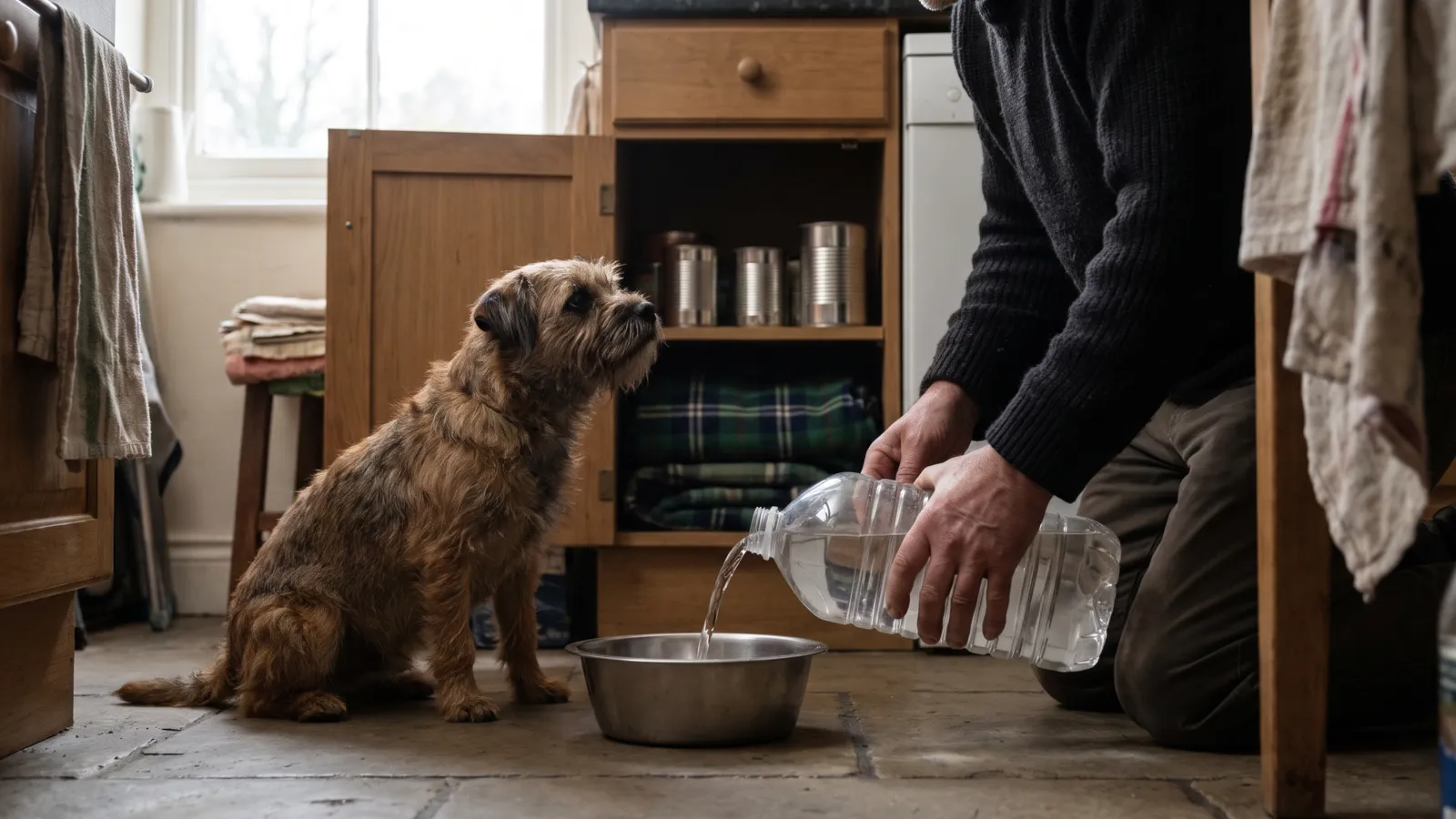
Where the seven essentials come from
The headline "Pet owners told to stock up on 7 essentials amid government's 72-hour emergency warning" ran in the Daily Record on 30 October. The seven items in it were shared by the retailer Wilko, which the article says has shared "seven things people should consider adding to their pet emergency kit". They are pet food, bottled water, a pet first aid kit, toilet supplies such as cat litter, hay, waste bags or puppy pads, blankets, a travel carrier and toys.
The "72-hour emergency warning" is the government's Be Ready campaign, which the Cabinet Office launched on 22 October. It is not a warning about a particular emergency. It asks households to be ready for 3 days, saying this "helps you manage while support reaches those most in need". The same three-day advice is used by France, Ireland and the Netherlands. Our explainer of the Be Ready checklist covers the whole list.
What the government checklist says about pets
The Be Ready checklist has a pet products line, and it reads in full: "Pet food and bottled water." Its advice on planning says to note down what you still need, "remembering items your family relies on, such as medical supplies, baby formula or pet food."
The hazard pages say the same in other words. The power cuts page says to keep at least 3 days of bottled water and non-perishable food, and to "include ready-made baby formula and pet food if needed." The water supply page lists looking after pets among the things we need water for.
The seven items, checked
Two of Wilko's seven match the government's list: pet food and bottled water. The other five, a first aid kit, toilet supplies, blankets, a carrier and toys, are the retailer's suggestions. They are not on the Be Ready checklist, though most are sensible to have and some echo other official advice below.
One line in the article needs care. Under bottled water, it says the government has advised households to keep at least three litres of water for every person. The checklist's figure is 3 litres per person per day for drinking, for 3 days, and it says more would be needed for cooking and washing. That figure is for people only.
Home Alerts members
The full picture, for your home
Each week, what's happening across Britain set against your own address: your water company, your power network, fuel for your car and the gaps in your kit. Free for your own home. Sign up in a minute.
Start free →Britain's figures from our live trackers, 2 November.
How much water for a pet?
No official source we read gives a figure for animals. Be Ready's water page says: "3 litres of drinking water per person per day for 3 days is recommended. Additional water might be needed to make up baby formula, for medical devices and for pets."
So the simplest guide is your own animal: how much its bowl gets through on a normal day, times three. If you are not sure what your pet needs, ask your vet. Our guide to storing emergency water covers keeping bottled water at home.
What official advice adds for households with animals
The Environment Agency's personal flood plan template has a section on pets. It says to think about what you would do with pets if a flood happened: where they might go, food, carriers and medicines. It adds: "If you are asked to evacuate, many centres will allow you to bring your pet. Put cats or small animals in a carrier or small box." It suggests listing the numbers of kennels, carers and vets with your other contacts. Be Ready's flooding page says to move your family, vehicles, pets and important items to safety, such as upstairs or to higher ground; our flood preparation checklist has more.
Be Ready's advice for people with assistance animals goes furthest. It suggests a grab bag in case you need to leave home quickly, containing "important documents and veterinary records, supplies of food and water, a lead/harness, necessary medicines, toys and blankets". That list is written for assistance animals, but it works as a model for any pet; our guide to grab bags explains the idea.
In hot weather, Be Ready says not to leave pets in stationary or parked cars.
Check the microchip details
A microchip carries a number that shows up whenever your dog or cat is scanned, which is how a lost pet is matched to you, as long as the details on the database are current. GOV.UK says all dogs in the UK must be microchipped and registered by 8 weeks old. In England, cats must be microchipped and registered by 20 weeks old, including cats that usually stay indoors. In Scotland, Wales and Northern Ireland, microchipping a cat is optional.
You can be fined up to £500 if a dog or cat that needs a microchip doesn't have one. You are responsible for keeping the details up to date, for example when you move house, and a dog must still wear a collar and tag with your name and address in a public place.
Building it up without a shopping trip
Be Ready's advice is to see what you already have and pick up missing items when you can during your regular shopping, to spread the cost. Wilko's spokesperson made a similar point: buying some extra food or a bag of litter after each shop can save you from panic buying.
For most households with animals, that means a few spare days of the food your pet already eats, some extra bottled water, and any regular medicines. Our kit builder sizes the Be Ready list for your household, pets included, and our household emergency plan guide has room for your vet's number.
Common questions
Has the government told pet owners to stock up on seven essentials?
No. The seven items come from the retailer Wilko. The government's Be Ready checklist, launched on 22 October 2026, has one pet line: pet food and bottled water.
What does the Be Ready checklist say about pets?
Its pet products line reads "Pet food and bottled water." It also says to note down items your family relies on, such as pet food, and its power cuts page says to include pet food if needed.
How much water should I store for my pet?
No official source gives a figure for pets. The 3 litres a day in the Be Ready checklist is per person. Be Ready's water page says additional water might be needed for pets, so base it on what your animal drinks in a normal day, for three days, and ask your vet if unsure.
Can I take my pet to an evacuation centre?
The Environment Agency's personal flood plan says many centres will allow you to bring your pet if you are asked to evacuate, and to put cats or small animals in a carrier or small box.
Does my cat need a microchip?
In England, yes: cats must be microchipped and registered by 20 weeks old, including indoor cats. In Scotland, Wales and Northern Ireland it is optional. All dogs in the UK must be microchipped by 8 weeks old.
Sources (11)
- GOV.UK Be Ready, Be ready for emergenciesthe Be Ready checklist: pet products, 3 days, 3 litres per person per day; read 31 October 2026
- GOV.UK Be Ready, Be Ready checklist (PDF, October 2026)
- GOV.UK Be Ready, Water supply interruptions or outages (additional water for pets)
- GOV.UK Be Ready, Power cuts (pet food if needed)
- GOV.UK Be Ready, Flooding (move pets to safety)
- GOV.UK Be Ready, Hot weather and heatwaves (pets in stationary cars)
- GOV.UK Be Ready, Advice for disabled persons and carers (assistance animals grab bag)
- Environment Agency, Personal flood plan (3.1 Pets and animals; evacuation centres)
- GOV.UK, Get your dog or cat microchipped
- Cabinet Office, Households encouraged to take small, simple steps to stay prepared in an emergency (22 October 2026)
- Daily Record via Yahoo Life UK, Pet owners told to stock up on 7 essentials amid government's 72-hour emergency warning (30 October 2026): the claim checked
PreparedBritain is independent and not affiliated with HM Government.
See our checks first on Google. Add PreparedBritain as a preferred source and Google will show our stories to you more often in Top Stories.

The Emergency Kit Checklist
The GOV.UK Prepare essentials on one printable page — tick them off as you go and keep it with the kit. Free, no catch.
Download it straight away. We'll also send the occasional briefing when something genuinely matters — severe weather, live incidents, real price drops. Nothing else.
Latest from our live data
All stories → News · 31 OctEarliest polar vortex breakdown on record forecast for November: what it means for the UK
 News · 31 OctAsda, Aldi, Tesco and Sainsbury's recalls checked: what the official notices list, and when
 News · 31 OctThe 'one thing' to know without a phone is your route home: Be Ready advice, not a new warning
Keep reading
All planning & the national picture guides →The 'one thing' to know without a phone is your route home: Be Ready advice, not a new warning
Headlines say the government has warned people to know one thing without a phone in a blackout. It is a line from…
Fog forecast for central and eastern England tonight: the fog-light rules and what to carry
Updated Sunday 1 November: a Met Office yellow fog warning covered eight regions of England and Wales, London and…
Rise in sales of radios and tinned foods after the call to stock up: what you actually need
Retailers told BBC Newsnight that sales of radios, torches, power banks and tinned food jumped after the…