Best long-life staples for a UK store cupboard: milk, rice, pasta, oats and oil (2026)
The government's Be Ready checklist (22 October 2026) asks every home to keep non-perishable food for 3 days that doesn't need refrigeration or cooking, and says it's best to buy food you'd usually eat. Tins cover part of that. Cupboard staples such as milk, rice, pasta, oats and oil cover the rest of a normal kitchen, and most of them are things you already buy. Here they are compared on pack size and on what each needs before you can eat it.
By Tom Calder · Updated 2 November 2026 · 7 products, all price-tracked

Our picks
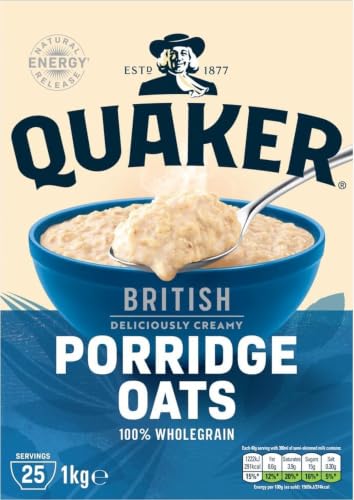 Photo: Amazon
Quaker Porridge Oats
Porridge from one bag, with nothing to open apart from the pack.
as of 2 Nov 2026, 11:07 GMT · Details
Product prices and availability are accurate as of the date/time indicated and are subject to change. Any price and availability information displayed on Amazon.co.uk at the time of purchase will apply to the purchase of this product. Photo: Amazon
by Amazon UHT Milk
Milk that keeps in the cupboard until opened.
as of 2 Nov 2026, 11:07 GMT · Details
Product prices and availability are accurate as of the date/time indicated and are subject to change. Any price and availability information displayed on Amazon.co.uk at the time of purchase will apply to the purchase of this product. Photo: Amazon
Nido Milk Powder
Milk for a store that has no room for cartons.
as of 2 Nov 2026, 11:07 GMT · Details
Product prices and availability are accurate as of the date/time indicated and are subject to change. Any price and availability information displayed on Amazon.co.uk at the time of purchase will apply to the purchase of this product.All 7 compared
Photo: AmazonOur top pickPorridge from one bag, with nothing to open apart from the pack.
as of 2 Nov 2026, 11:07 GMT · Details
Product prices and availability are accurate as of the date/time indicated and are subject to change. Any price and availability information displayed on Amazon.co.uk at the time of purchase will apply to the purchase of this product.Our verdict
Rolled oats are cooked with milk or water on the hob or in the microwave, so they need a heat source. A single kilo is many breakfasts. Any supermarket sells these.
Worth knowing: Needs a heat source and liquid
Who shouldn't buy it: Don't buy it if you eat other breakfasts: don't buy it just for the store.
Photo: AmazonRunner-upMilk that keeps in the cupboard until opened.
as of 2 Nov 2026, 11:07 GMT · Details
Product prices and availability are accurate as of the date/time indicated and are subject to change. Any price and availability information displayed on Amazon.co.uk at the time of purchase will apply to the purchase of this product.Our verdict
Sealed UHT milk is stored in a cool, dry place rather than the fridge, per the listing, which helps if the fridge is off. Once opened it needs the fridge, like fresh milk. If you drink milk every day, a few cartons from your normal shop do the same job.
Worth knowing: Needs the fridge once opened
Who shouldn't buy it: Don't buy it if you drink milk daily and your shop sells long-life cartons: buy a couple there.
Photo: AmazonAlso goodMilk for a store that has no room for cartons.
as of 2 Nov 2026, 11:07 GMT · Details
Product prices and availability are accurate as of the date/time indicated and are subject to change. Any price and availability information displayed on Amazon.co.uk at the time of purchase will apply to the purchase of this product.Our verdict
Dry milk you mix with water, so a tin gives you milk without a fridge. Allergens include milk and, per retailer listings, soya, so read the tin. A fridge-free alternative to UHT, but you'll want clean water to mix it.
Worth knowing: Needs clean water
Who shouldn't buy it: Don't buy it if you'd rather store UHT cartons: they're ready to pour.

A big bag of dry rice for households that cook it weekly.
as of 2 Nov 2026, 11:07 GMT · Details
Product prices and availability are accurate as of the date/time indicated and are subject to change. Any price and availability information displayed on Amazon.co.uk at the time of purchase will apply to the purchase of this product.Our verdict
A 5kg bag of basmati: a lot of meals for a small footprint, stored in a cool, dry place per the listing. It needs cooking, so it needs a working hob and water. Any supermarket sells rice, so buy a bag you'd use.
Worth knowing: Needs cooking and water
Who shouldn't buy it: Don't buy it if you'd use a 1kg bag: a supermarket sells the same.

A bottle of oil for cooking and dressings.
as of 2 Nov 2026, 11:07 GMT · Details
Product prices and availability are accurate as of the date/time indicated and are subject to change. Any price and availability information displayed on Amazon.co.uk at the time of purchase will apply to the purchase of this product.Our verdict
A litre of extra virgin olive oil. Filippo Berio's page gives no storage advice or shelf life, so check the bottle. It is a glass bottle, so keep it where it won't be knocked. Supermarket own-label is as good.
Worth knowing: Glass bottle
Who shouldn't buy it: Don't buy it if you have cooking oil already: a second bottle adds nothing.

Plain dried pasta in bulk.
as of 2 Nov 2026, 11:07 GMT · Details
Product prices and availability are accurate as of the date/time indicated and are subject to change. Any price and availability information displayed on Amazon.co.uk at the time of purchase will apply to the purchase of this product.Our verdict
Six 1kg packs of dried spaghetti, stored in a cool, dry place per the listing. It contains wheat. It needs boiling water, so it relies on your hob. A supermarket own-label pack is the same thing.
Worth knowing: Contains gluten
Who shouldn't buy it: Don't buy it if you buy pasta weekly: pick up a couple of extra packs instead.

Ready rice in a pouch, with no pan to wash.
as of 2 Nov 2026, 11:07 GMT · Details
Product prices and availability are accurate as of the date/time indicated and are subject to change. Any price and availability information displayed on Amazon.co.uk at the time of purchase will apply to the purchase of this product.Our verdict
Pouches of rice heated in the microwave in a couple of minutes, which suits a day when you'd rather not use the hob but the power is on. It needs electricity, so it's no use in a power cut. Dry rice is cheaper for the same food.
Worth knowing: Needs a microwave
Who shouldn't buy it: Don't buy it if you cook rice from dry: a bag is the same food.
ⓘ As an Amazon Associate, PreparedBritain earns from qualifying purchases. We may earn a commission when you buy, or a fee when you request a quote, through our links. When two products are close, commission can decide which one we pick. A clearly better product always wins. Amazon prices come from Amazon's own product data and show the date and time they were retrieved. Prices at other retailers are checked by us, less often. Prices and stock can change at any time, so always check the retailer's price before you buy.
Before you buy
Check what each staple needs before you count on it.
The Cooking needed column says what each product needs: UHT milk needs nothing until it's opened, milk powder needs clean water, and rice, pasta and oats need a heat source and water. The Be Ready checklist asks for food that doesn't need cooking, so keep some ready-to-eat tins and snacks as well. If you do cook in a power cut, use a camping stove outdoors: the NHS says not to use one indoors or inside a tent.
UHT milk keeps in the cupboard until it's opened.
The listing for the by Amazon cartons says to store them in a cool, dry place. Once opened, treat it like fresh milk: keep it in the fridge and use it within the time the carton gives. The listing doesn't state an unopened shelf life in months, so check the best-before date on the carton. Powdered milk is the alternative: Nido's tin needs only water, but clean water is the catch.
Dry staples and long-life milk carry a best-before date rather than a use-by date.
Official food-labelling guidance on GOV.UK says a best-before date is about quality: after it, food is usually safe to eat but may not be of the same quality. Use-by dates are the safety line, used on foods that go off quickly. None of the products here has a shelf life in years on its listing or maker's page, so check the date on each pack when it arrives.
Rotation keeps a store of staples cheap.
Put new packs at the back, use from the front, and check the dates as you go. Store them as the listings say, in a cool, dry place, and as Food Standards Scotland advises for a cupboard: dry and not too warm, with food off the floor and away from cleaning products. A glass bottle of oil needs a place where it won't be knocked.
Microwave pouches are convenient but depend on electricity.
The Ben's Original pouch is heated in a microwave, according to the retailer page it's described on, so it doesn't help in a power cut. Dry rice is the same food in a bigger, cheaper bag for households that can cook.
If anyone at home has a food allergy, read each pack's label, even for brands you know.
Prepacked food must show any of the 14 main allergens in its ingredients list, emphasised, for example in bold. 'May contain' warnings are voluntary, so a pack without one is no guarantee. Here, the milk and milk powder contain milk, the pasta and oats contain gluten, and retailer listings show soya in the Nido tin. Makers do change recipes, so check again when you restock.
We haven't taste-tested these products. Pack sizes come from the Amazon UK listings, and other facts come from the sources named in each product's notes; where a maker's page couldn't be read, the note says so. The Cooking needed column says what each product needs before it can be eaten. Prices are re-checked on a schedule. When two products are close, commission can decide which one we pick. A clearly better product always wins. Read our full methodology →
Related kit comparisons
Guides that go with this
The maths done for you: turn about 2,000 kcal and 3 litres of water per person per day into concrete food and …
What a 25-year shelf life really promises, which foods keep for years, what heat, air, light and damp do, the …
The FSA's rule: use-by is safety, best before is quality. Which foods are genuinely fine past the date — tins,…
How long fridge and freezer food stays safe in a power cut — with an interactive checker, from official Food S…
A genuine three-day emergency kit from one supermarket shop, for about thirty pounds — what to buy, what it co…
Common questions
Does UHT milk need to be kept in the fridge?
Not until it's opened. The listing for the by Amazon cartons says to store them in a cool, dry place. Once opened, treat it like fresh milk: keep it in the fridge and use it within the time the carton gives. Check the best-before date on each carton.
How long do dry staples like rice and pasta last?
There's no fixed answer here, and none of the products on this page gives a shelf life in years. They carry a best-before date, which is about quality rather than safety: after it, food is usually safe to eat but may not be at its best. Rotate your packs so you rarely have to find out.
Which long-life staples need no cooking?
UHT milk and olive oil need no cooking, though UHT milk needs the fridge once opened. Milk powder needs clean water. Rice, pasta and oats need a heat source and water, so pair them with ready-to-eat tins if the power might be off. The Be Ready checklist (22 October 2026) asks for food for 3 days that doesn't need refrigeration or cooking.
Can I use a camping stove indoors in a power cut?
No. The NHS says not to use a camping stove indoors or inside a tent. Cook outdoors.
Is supermarket own-label as good as branded for staples?
For a store cupboard, yes. What matters is that it's something you'll use and that it's in date. Compare the labels, including the allergens, rather than the brands.
