Best water filter straws UK (2026) — LifeStraw, Sawyer & more compared
Our pick for most UK grab bags is the LifeStraw Peak Series personal straw: cheap and tiny at 65g, rated for 4,000 litres, and it filters bacteria, parasites and microplastics. Like every hollow-fibre straw it does not remove viruses, which is usually an acceptable trade-off for UK fresh water; if you need that protection, choose a purifier bottle or add tablets. Here's how the straws, filter bottles and pocket filters compare on what they filter, how fast they flow and how long they last.
By Tom Calder · Updated 4 November 2026 · 7 products, all price-tracked

Our picks
 Photo: Water-to-Go
Water-to-Go Active Filter Bottle
Everyday + emergencies
 Photo: Amazon
Katadyn BeFree AC 0.5L
A light, fast personal filter bottle for a grab bag or a walk, with better-tasting water than a plain membrane gives.
as of 4 Nov 2026, 23:07 GMT · Details
Product prices and availability are accurate as of the date/time indicated and are subject to change. Any price and availability information displayed on Amazon.co.uk at the time of purchase will apply to the purchase of this product. Photo: Amazon
LifeStraw Go Series 650ml Filter Bottle
Everyday carry and travel where you want a normal bottle that can also filter dodgy water when needed.
as of 4 Nov 2026, 23:07 GMT · Details
Product prices and availability are accurate as of the date/time indicated and are subject to change. Any price and availability information displayed on Amazon.co.uk at the time of purchase will apply to the purchase of this product.All 7 compared
Photo: AmazonRunner-upA light, fast personal filter bottle for a grab bag or a walk, with better-tasting water than a plain membrane gives.
as of 4 Nov 2026, 23:07 GMT · Details
Product prices and availability are accurate as of the date/time indicated and are subject to change. Any price and availability information displayed on Amazon.co.uk at the time of purchase will apply to the purchase of this product.Our verdict
Katadyn's current BeFree adds an activated-carbon stage to its fast 0.1-micron membrane, so as well as removing bacteria, protozoa and microplastics it cuts chlorine and odours. At 72 g it rolls up small, and it cleans with a shake rather than a backflush kit. The soft flask is the weak point: treat it gently, and carry it as your portable option alongside stored water at home.
Worth knowing: A soft flask punctures more easily than a hard bottle
Who shouldn't buy it: You need to treat floodwater or water that may carry sewage: no hollow-fibre filter removes viruses, so boil it or use a purifier. Choose a hard-sided filter if it will be knocked about in a vehicle kit.
Read the full review →Photo: Water-to-GoOur top pickEveryday + emergencies
Our verdict
A filter bottle that also cuts viruses and some chemicals — genuine dual-use for travel and a kit.
Worth knowing: Short cartridge life vs the straws
Who shouldn't buy it: Don't buy it if you only care about emergency use — a straw filters far more litres per pound.
Read the full review →Photo: AmazonAlso goodEveryday carry and travel where you want a normal bottle that can also filter dodgy water when needed.
as of 4 Nov 2026, 23:07 GMT · Details
Product prices and availability are accurate as of the date/time indicated and are subject to change. Any price and availability information displayed on Amazon.co.uk at the time of purchase will apply to the purchase of this product.Our verdict
A well-made two-stage filter bottle: the membrane handles bacteria, parasites and microplastics for up to 4,000 litres, and the carbon stage takes the chlorine taste out of tap water. It is the most practical LifeStraw format for day-to-day use, though you pay for that convenience in weight and replacement carbon filters.
Worth knowing: Carbon filter lasts only around 100 litres, so it is an ongoing cost if used daily
Who shouldn't buy it: You only want a cheap emergency backup for the kit cupboard — a straw-style filter does the same core filtering job for roughly half the price at a third of the weight. And no filter in this class makes flood water or chemically contaminated water safe.
Read the full review →
Walkers, runners and grab-bag builders who want fast, one-handed filtering from shallow streams and ponds
as of 4 Nov 2026, 23:07 GMT · Details
Product prices and availability are accurate as of the date/time indicated and are subject to change. Any price and availability information displayed on Amazon.co.uk at the time of purchase will apply to the purchase of this product.Our verdict
A well-made pocket filter that produces about a litre a minute from even shallow sources, with genuinely easy one-handed operation. It removes bacteria and protozoa to NSF P231 standards but not viruses, so treat it as an outdoor and grab-bag tool rather than a complete purification answer.
Worth knowing: Does not remove viruses or chemicals, so unsuitable where water may be contaminated by sewage
Who shouldn't buy it: Your preparedness plan is home-based — stored tap water and boiling cover a mains interruption for far less money, and if flood water or sewage contamination is the concern you need a purifier that handles viruses, which this is not.
Sold out right now (3)
The shop says these are sold out today. We check stock every hour, and each one moves back up the list when it returns.

Grab bags & car kits
Our verdict
The default straw for a grab bag — cheap, tiny, and it filters microplastics as well as bugs.
Worth knowing: Straw-only: you drink at the source, you can't fill a bottle to carry
Who shouldn't buy it: Don't buy it if you need to carry filtered water or purify at home — get a filter bottle or a gravity filter instead.
Read the full review →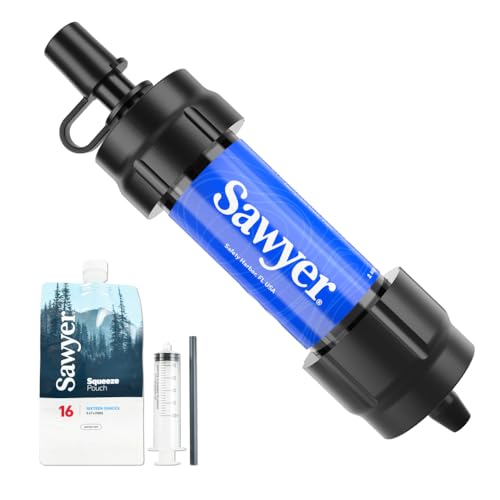
Long-term home kit
Our verdict
A 0.1-micron workhorse rated to an enormous volume — the one to keep at home.
Worth knowing: Fiddly to backflush
Who shouldn't buy it: Don't buy it if you just want a grab-and-go straw — the LifeStraw is simpler for that job.
Read the full review →
Households and travellers who want one-press purification that also removes viruses, not just bacteria
Our verdict
One of the few bottles that genuinely purifies rather than filters — an 8-second press deals with viruses, bacteria and protozoa to US EPA purifier standard. Expensive and heavy, but for a grab-bag or overseas travel it is the simplest credible option.
Worth knowing: Heavy and bulky at 450g empty — noticeable in a rucksack
Who shouldn't buy it: You only want cover for a short UK mains-water interruption — stored bottled water or a cheaper filter straw does that job for a fraction of the price; UK tap water incidents rarely involve viral risk.
Read the full review →ⓘ As an Amazon Associate, PreparedBritain earns from qualifying purchases. We may earn a commission when you buy, or a fee when you request a quote, through our links. When two products are close, commission can decide which one we pick. A clearly better product always wins. Amazon prices come from Amazon's own product data and show the date and time they were retrieved. Prices at other retailers are checked by us, less often. Prices and stock can change at any time, so always check the retailer's price before you buy.
The Emergency Water Checklist
One page: how much to store per person, the cheapest ways to store it properly, how to make uncertain water safe, and what changes in a hosepipe ban. Free, no catch.
Download it straight away. We'll also send the occasional briefing when something genuinely matters — severe weather, live incidents, real price drops. Nothing else.
Before you buy
A filter straw's job is narrow: make fresh water from a stream, beck or butt safe enough to drink on the move.
The hollow-fibre membranes in these straws (0.1–0.2 micron) reliably remove bacteria and parasites — the realistic risks in UK fresh water — but most do not remove viruses, chemicals or salt. For travel where viruses are a concern, you want a purifier bottle or tablets instead.
Three specs matter
What it filters (check for a stated micron rating and independent test standards, not marketing words), rated lifespan in litres, and flow — a straw you have to fight for every sip doesn't get used. One care note the boxes bury: once a hollow-fibre filter has been wetted, freezing can crack the fibres invisibly. If a straw has been used and then left in a frozen car or shed over winter, replace it.
Format is the real decision.
A bare straw is lightest and cheapest but you drink at the source; a filter bottle lets you carry filtered water; a small pump or squeeze filter fills pots for cooking. For a grab bag, the straw or bottle wins on weight; for a home kit, pair any of them with stored water rather than relying on filtering alone.
We verify every product's specifications against at least two independent sources, re-check its UK price and stock on a schedule where we can track it automatically, and cross-check safety-relevant claims against official guidance. Every review is labelled Researched or Used and reviewed by us: where we've bought a product, or been sent it free, and used it ourselves, its review says which; where we haven't, our verdict is a considered spec-and-evidence comparison, not a hands-on test. When two products are close, commission can decide which one we pick. A clearly better product always wins. Read our full methodology →
Related kit comparisons
Guides that go with this
How much water your household actually needs, the cheapest way to store it, how to keep it safe, and what to d…
What a boil water notice means, precisely how to make tap water safe, what you can and can't use the tap for, …
A calm, sourced answer: UK mains tap water is among the safest in the world. What the regulation says, why tas…
The ways to make water safe in an emergency — boiling, tablets and filters — what each actually removes, what …
Common questions
What's the best water filter straw in the UK?
The LifeStraw Peak Series personal straw for most people: 65g, rated for 4,000 litres, and it filters bacteria, parasites and microplastics. If you'd rather drink from a normal bottle, the Katadyn BeFree AC is a light, fast filter bottle with better-tasting water, and the Water-to-Go Active suits everyday carry. None of the straws removes viruses; for that you need a purifier such as the GRAYL GeoPress, purification tablets or boiling.
Do water filter straws remove viruses?
Mostly no. Hollow-fibre straws like the LifeStraw and Sawyer remove bacteria and parasites, but their pores are too large for viruses. In UK fresh water that's usually an acceptable trade-off; abroad, or if you need virus protection, choose a purifier (like the GRAYL) or add purification tablets or boiling.
Can I use a filter straw during a 'boil water' notice?
Follow the notice — boil. Consumer filters aren't certified as a substitute for an official boil-water notice from your water company, and boiling for one minute is the gold standard that covers everything a notice is worried about.
How long does a filter straw actually last?
Judge it by the rated litres — from a few thousand for a LifeStraw to an enormous claimed figure for the Sawyer Mini — but flow slows as the filter clogs. Backflush where the design allows, store it clean and dry, and replace any filter that has been frozen after use.
Will a straw work on floodwater or sea water?
No to sea water — nothing here removes salt. Floodwater is best avoided entirely: it commonly carries sewage and chemicals as well as microbes, and a straw only addresses the microbes. Use stored water in a flood.
Straw or filter bottle?
A straw is lighter and cheaper but ties you to the water source. A bottle filters as you drink and carries water with you, which suits everyday use and travel. If you'd actually use it week to week, the bottle earns its extra cost.
Do filter straws expire unused?
Sealed and unused, most keep for years — check the maker's stated storage life. It's used filters that need care: dry them properly, don't let them freeze, and replace them if in doubt. A filter is cheap; a stomach bug during an emergency isn't.
