How to purify water in an emergency: safe UK methods
The ways to make water safe in an emergency — boiling, tablets and filters — what each actually removes, what none of them fix, and when UK tap water needs no kit.
By Tom Calder · Updated 21 July 2026 · Sourced to the DWI, gov.uk (UKHSA) and the Food Standards Agency
Start with the contamination, not the kit
There is no single thing called "purifying" water. The right method depends entirely on what you are trying to remove, and the honest starting point is that most people reading this in the UK do not have a water problem at all — mains tap water is treated to a high standard and needs no further treatment.
Emergencies split water risks into two families. The first is microbiological: bacteria, viruses and parasites such as Cryptosporidium, which cause diarrhoea and sickness. This is what a boil-water notice is about, and it is what boiling, tablets and filters are designed to deal with. The second is chemical: nitrates, heavy metals like lead, pesticides, or fuel and solvent spills. No home method fixes those, and trying to treat them can make matters worse.
So before choosing a method, decide which problem you actually have. If a water company or council has issued guidance, follow it — it tells you which family you are dealing with and what to do.
Boiling: the method the NHS and DWI actually recommend
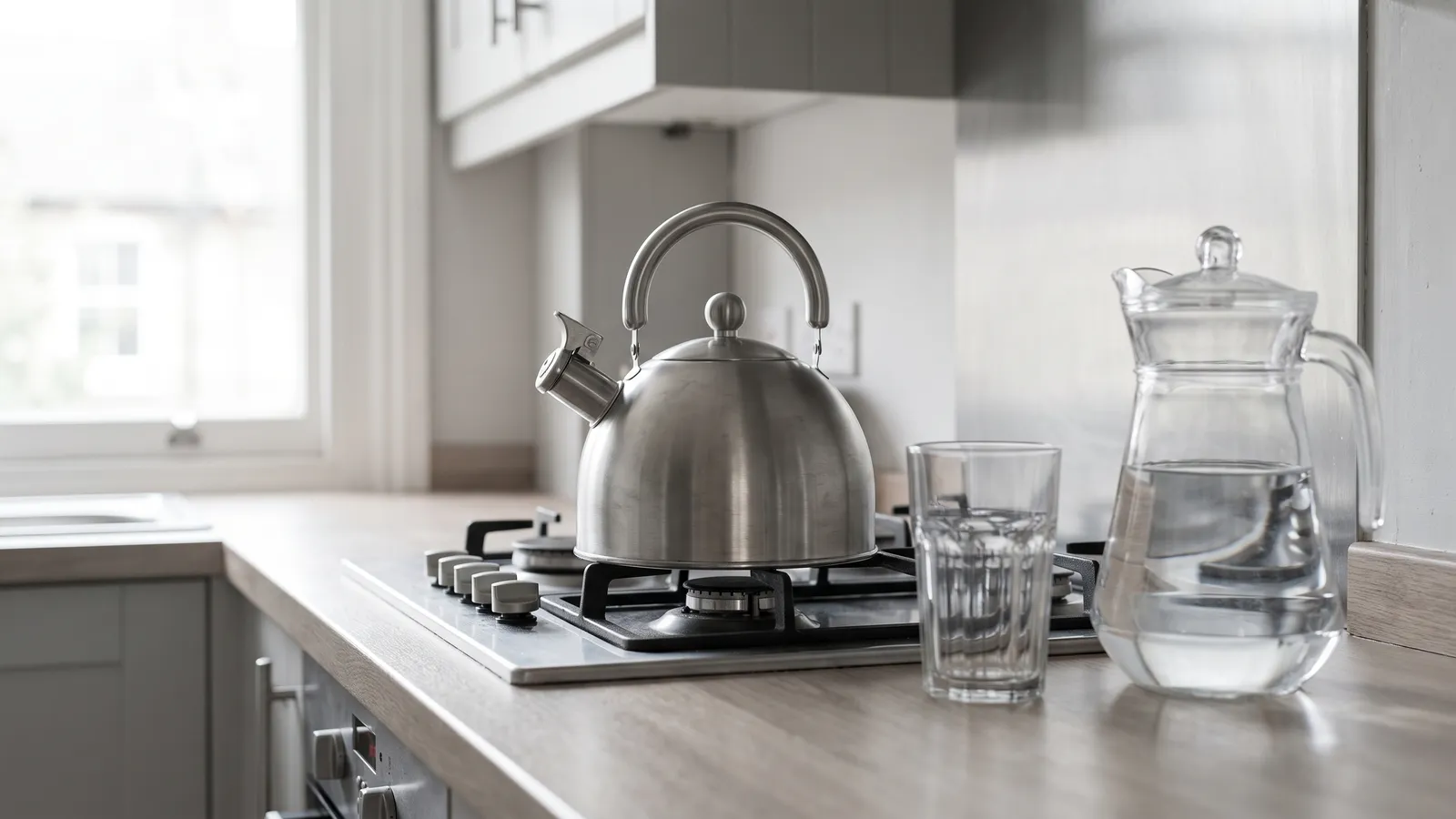
For microbiological contamination, boiling is the gold standard, and it is what UK guidance points to first. The Drinking Water Inspectorate's instruction is simple: bring the water to a rolling boil, remove it from the heat, and let it cool naturally. As it notes, most bacteria and viruses are killed well below 100°C, and boiling is also effective against parasites such as Cryptosporidium — the one that chemical tablets struggle with.
Store the cooled water in a clean, covered container in the fridge and discard anything unused after 24 hours. Use boiled-then-cooled water for drinking, brushing teeth, making ice, preparing food and cleaning baby-feeding equipment. During a mains notice you can still shower and bathe (keep it out of your mouth), wash dishes in hot water and dry them thoroughly, and flush the toilet as normal.
Two limits matter. Boiling kills organisms but removes nothing chemical — and because water evaporates as it boils, it can slightly concentrate contaminants like nitrates and lead. And boiling water scalds, so make up a batch in advance rather than being tempted to use it hot.
Chemical tablets: disinfection you can carry
Purification tablets — chlorine-based (sodium dichloroisocyanurate), chlorine dioxide, or iodine — are the pocket-sized option when you cannot boil. They disinfect reliably against bacteria and most viruses, are light, and are the mainstay of travel and off-grid use.
Their weak point is Cryptosporidium. Its oocysts are notably resistant to ordinary chlorine, which is why UK water companies rely on filtration and UV rather than chlorine alone; chlorine dioxide tablets do better but need a long contact time. So follow the dose and waiting time on the packet exactly, and pre-filter cloudy water through a cloth first, as sediment shields organisms and blunts the dose. Iodine tablets are not suitable for pregnant women, people with thyroid conditions, or prolonged use.
Tablets treat only living organisms. They do nothing for dissolved chemicals, metals or nitrates, and they leave a taste some people dislike.
Filters: straws, pumps and gravity systems
Physical filters push water through a hollow-fibre membrane, typically around 0.1 microns, that physically strains out bacteria and protozoa — including Cryptosporidium and Giardia, the very organism tablets miss. That makes filtration a strong partner to chemical treatment rather than a rival.
The catch is viruses: they are far smaller than bacteria and pass straight through most portable filters. So for genuinely unknown natural water, the belt-and-braces approach is to filter first (removing sediment and protozoa) and then chemically disinfect or boil (dealing with viruses). Straw and squeeze filters suit one person on the move; gravity systems process larger volumes hands-free and are better for a household. An activated-carbon stage improves taste and captures some chemicals, but does not remove dissolved salts, nitrates or most heavy metals.
For everyday UK tap water none of this is necessary — filters are for travel, off-grid living and unknown sources, not a temporary mains notice.
What no method fixes — and where you must not drink
Boiling, tablets and filters all target living organisms. None of them make chemically contaminated water safe. That means nitrates, lead and other heavy metals, pesticides, fuel and solvent spills, and anything radiological pass straight through — and boiling actively concentrates some of them.
There are places you should never drink from, treated or not. Do not drink flood water: it is often contaminated with sewage and chemicals, and if your mains supply is disrupted, use bottled water instead (UKHSA / Food Standards Agency). Never drink seawater — no home method removes the salt. Steer clear of water with a chemical or fuel smell, an oily sheen, or from swimming pools and industrial sources.
For any suspected chemical contamination the only safe response is a different water source — bottled, or an official alternative supply — not a filter or a pan on the hob.
A simple order to work through
Put the methods in sequence and the decision becomes easy. First, if your water company or council is providing bottled water or an official alternative supply, use that — it is the simplest safe option.
Second, if you are on mains water under a boil-water notice, boil: a rolling boil, cooled, in a clean container in the fridge, discarded after 24 hours. Third, for an unknown natural source — off-grid or abroad — filter to remove protozoa and sediment, then boil or chemically disinfect to deal with viruses. Fourth, if you suspect chemical contamination or the water has been through flooding, do not drink it and do not try to treat it; find an alternative supply. Storing a few days of clean water in advance means you rarely have to purify anything at all.
Common questions
During a boil-water notice, is boiling alone enough or do I need a filter?
Boiling alone is enough. The Drinking Water Inspectorate's advice is to bring the water to a rolling boil, let it cool naturally, and store it in a clean covered container in the fridge, discarding anything unused after 24 hours. Boiling kills bacteria, viruses and parasites including Cryptosporidium, so filters and tablets add cost without adding safety in this situation.
Do water purification tablets kill Cryptosporidium?
Not reliably. Cryptosporidium is resistant to the ordinary chlorine that most tablets use — which is why UK water companies rely on filtration and UV for it. Chlorine dioxide tablets perform better but need a long contact time, and sub-micron filters physically remove it. Boiling reliably inactivates it, so it is the safest option when you have heat.
Does boiling remove chemicals, nitrates or lead from water?
No. Boiling kills living organisms but removes nothing chemical, and because water evaporates as it boils it can actually concentrate contaminants such as nitrates and lead. For any suspected chemical contamination the only safe answer is a different source — bottled water or an official alternative supply — not boiling or filtering.
Can I make flood water safe to drink by boiling or filtering it?
No. Flood water is often contaminated with sewage and with chemicals that home treatment cannot remove. Do not drink it. If your mains supply is disrupted by flooding, use bottled water, following UK Health Security Agency and Food Standards Agency guidance.
How long can I store water once I've boiled it?
The Drinking Water Inspectorate advises keeping boiled-then-cooled water in a clean, covered container in the fridge and discarding anything not used within 24 hours. Make up a batch in advance so you are not tempted to use it while still hot, which risks scalds.
Do I need a water filter for normal UK tap water?
No. UK mains tap water is treated to a high standard and needs no further purification for safety. Filters, tablets and straws are for travel, off-grid use or unknown natural sources — not for everyday tap water or a short-term boil-water notice on a mains connection.
Sources: Drinking Water Inspectorate — Receiving a boil water notice · GOV.UK (UKHSA) — Flooding and health: advice for the public · GOV.UK / Food Standards Agency — Food safety after a flood: consumer advice · GOV.UK — Water and sanitation: public health advice during a power outage · Drinking Water Inspectorate — Learn more about your water (consumers). PreparedBritain is independent and not affiliated with HM Government.
The Emergency Water Checklist
One page: how much to store per person, the cheapest ways to store it properly, how to make uncertain water safe, and what changes in a hosepipe ban. Free, no catch.
Download it straight away. We'll also send the occasional briefing when something genuinely matters — severe weather, live incidents, real price drops. Nothing else.
Keep reading
All water guides →Is UK tap water safe to drink?
A calm, sourced answer: UK mains tap water is among the safest in the world. What the regulation says, why taste…
Boil water notices: exactly what to do
What a boil water notice means, precisely how to make tap water safe, what you can and can't use the tap for, and…
Hosepipe ban rules: what you can and can't do
What a Temporary Use Ban actually restricts, what's still allowed, the exemptions, the £1,000 fine, and how to keep…