Hosepipe ban rules: what you can and can't do
What a Temporary Use Ban actually restricts, what's still allowed, the exemptions, the £1,000 fine, and how to keep a garden alive — in plain English.
By Tom Calder · Updated 18 July 2026 · Sourced to the Water Industry Act 1991
What a hosepipe ban actually is
A hosepipe ban — formally a Temporary Use Ban under the Water Industry Act 1991 — is a restriction a water company can bring in to protect supplies during dry weather. It limits the use of a hosepipe connected to the mains for a defined list of activities.
The key word is hosepipe. The restriction is on the method — a mains-fed hose — not on the activity itself, which is why a watering can is almost always still fine.
What's restricted
The standard list of restricted uses is: watering a garden or plants with a hosepipe; washing a car, van, or boat with a hose; filling or topping up a paddling or swimming pool; filling a pond or an ornamental fountain; and cleaning windows, walls, paths, patios or other outdoor surfaces with a hose or pressure washer.
Each company publishes its own notice, and the exact wording varies slightly, so it's always worth reading yours.
What you can still do
Plenty. You can water the garden with a watering can or a bucket, wash the car with a bucket and sponge, and top up a pond by hand. You can use water that isn't from the mains — a hosepipe connected to a water butt of collected rainwater is generally fine, because a ban applies to mains water.
Drip or trickle irrigation fitted with a pressure-reducing valve and a timer is commonly permitted too, and watering newly-laid turf is sometimes exempt for a few weeks — but both depend on your company's specific notice, so check before you assume.
Exemptions
Water companies typically exempt customers on their Priority Services Register and Blue Badge holders from the ban. Businesses that use water as part of their trade are outside the scope of a domestic ban — a professional window cleaner or a garden centre can carry on — and commercial car washes are unaffected.
Exemptions differ between companies, so if you think one applies to you, confirm it against your own water company's published notice.
The fine, and how it's enforced
Breaching a Temporary Use Ban is a criminal offence under section 76 of the Water Industry Act 1991, with a fine of up to £1,000 on conviction. In practice, water companies lead with reminders and warnings rather than prosecutions, and rely heavily on neighbours reporting obvious breaches.
But the ban is law, not a polite request — so if one is in force in your area, take it seriously.
How to keep a garden alive in a ban
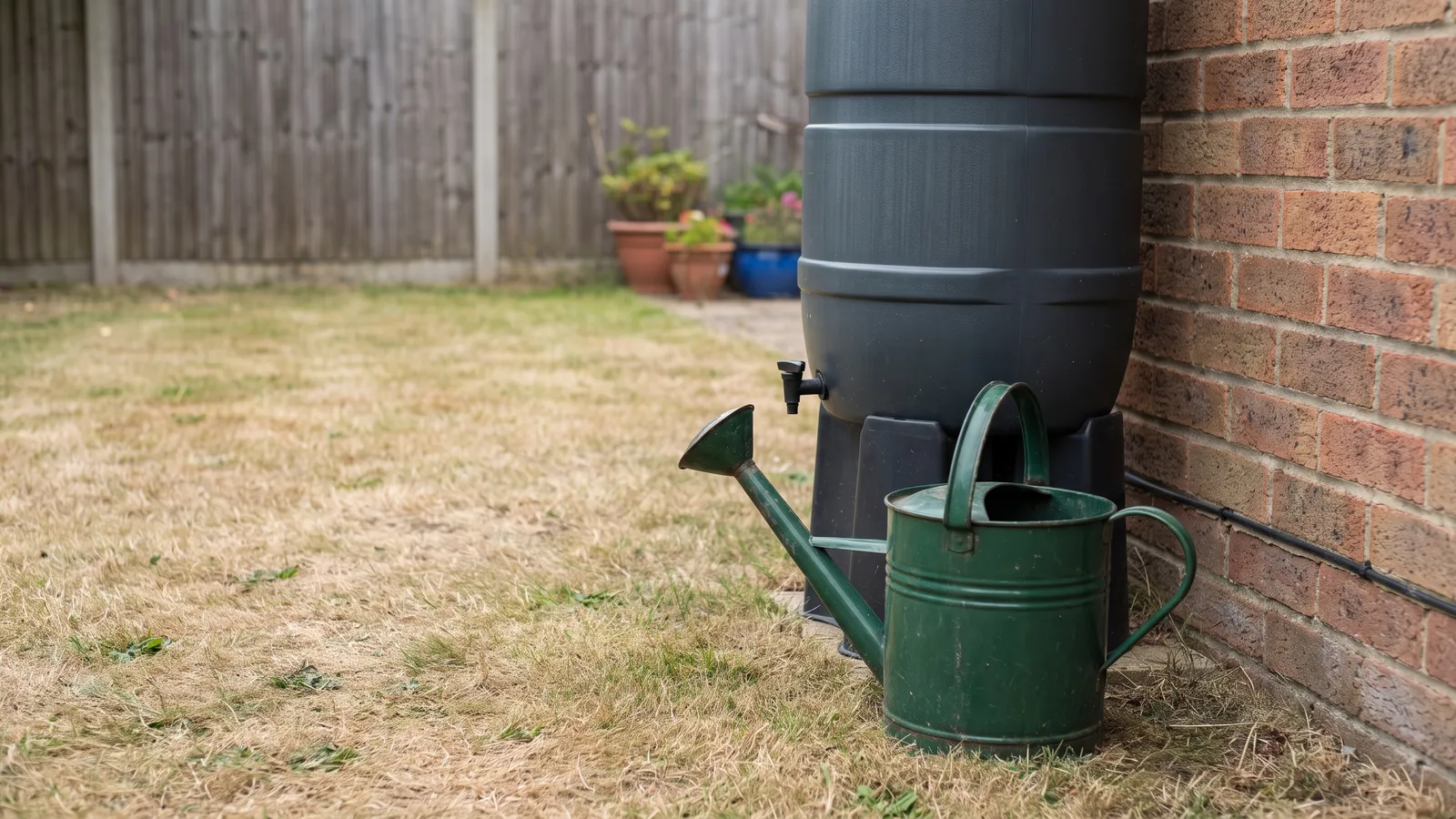
A ban doesn't have to mean a dead garden. Water early in the morning or late in the evening so less evaporates, aim water at the roots with a can rather than spraying leaves, and mulch beds to lock moisture in. A water butt on a downpipe gives you hose-free water you're allowed to use.
Grey water — from a bath or washing-up bowl — can go on ornamental plants and lawns, though not on edible crops for hygiene reasons. And don't fret about the lawn: brown grass is dormant, not dead, and it bounces back after the first proper rain.
Is a ban coming to my area, and why?
Bans follow prolonged dry weather and falling reservoir and river levels, and some areas — like the chalk-stream catchments of the south and east — are declared sooner because their rivers are especially sensitive to low flows.
You can see the current picture on our live trackers: which companies have declared a ban, and how full England's reservoirs are.
Common questions
Can I use a watering can during a hosepipe ban?
Yes. Bans restrict hosepipes fed from the mains, not watering itself. Watering cans and buckets are fine, as is washing the car with a bucket and sponge.
Can I use rainwater from a water butt with a hosepipe?
Generally yes — bans apply to mains water, so a hosepipe fed from a water butt of collected rain is normally allowed. Check your company's notice for its exact wording.
What's the fine for breaking a hosepipe ban?
Up to £1,000 — it's a criminal offence under section 76 of the Water Industry Act 1991. Companies usually warn before they prosecute, but the ban is legally enforceable.
Am I exempt from a hosepipe ban?
Water companies typically exempt Blue Badge holders and customers on their Priority Services Register, and businesses using water for their trade are outside a domestic ban. Exemptions vary by company, so confirm against your own supplier's notice.
Can I use grey water on my garden?
Yes, on ornamental plants and lawns — bath or washing-up water is fine there. Don't use grey water on edible crops, for hygiene reasons.
Will my drinking water be cut off during a hosepipe ban?
No. A ban restricts outdoor hosepipe use to protect supplies; the water from your taps continues as normal.
Sources: Water Industry Act 1991, section 76 · PreparedBritain live hosepipe ban tracker · Waterwise — saving water in the garden. PreparedBritain is independent and not affiliated with HM Government.
The Emergency Water Checklist
One page: how much to store per person, the cheapest ways to store it properly, how to make uncertain water safe, and what changes in a hosepipe ban. Free, no catch.
Download it straight away. We'll also send the occasional briefing when something genuinely matters — severe weather, live incidents, real price drops. Nothing else.
Keep reading
All water guides →How to store emergency water at home
How much water your household actually needs, the cheapest way to store it, how to keep it safe, and what to do in a…
No water coming out of your taps? What to do, your rights and compensation
No water from your taps? How to check if it's your pipe or the mains, fill up fast, find bottled water stations, and…
How to purify water in an emergency: safe UK methods
The ways to make water safe in an emergency — boiling, tablets and filters — what each actually removes, what none…