No water company will give a date for lifting its hosepipe ban. Here is what it would take
Ten English water companies still have hosepipe bans in mid-October, and none will give a date for lifting them. England has had 10% of its usual October rain so far and its reservoirs are at 54%. The National Drought Group says 120% of typical rainfall over seven months is needed for every area to leave drought; the companies say only that recovery takes autumn and winter. The Met Office gives double the normal chance of a wet October to December, but says it is too early to call drought relief.
Ten English water companies have hosepipe bans in force in the Environment Agency's report for 2 to 8 October, most since July. England has had 10% of its usual October rain so far, and reservoirs were 54% full in the week ending 6 October, 21% below average for the time of year. Not one company gives a date or a rainfall figure for lifting its ban. The National Drought Group says England needs 120% of typical rainfall over the next seven months for every area to come out of drought, and drought status is not the same thing as a ban. The Met Office says there is double the normal chance of a wet October to December, but that it is too early to say whether that brings drought relief. This is not England's lowest: September 2022 ended at 49%, against 55% this year.
By Tom Calder · Updated 15 October 2026 · Sourced to the Environment Agency, the National Drought Group, UKCEH, the Met Office and the water companies
Ten bans, and no date
Ten English water companies have a hosepipe ban in force, most since July: South East Water, Southern Water (Hampshire and the Isle of Wight only), Anglian Water (excluding Hartlepool), Affinity Water (Central and East regions), Cambridge Water, Thames Water, Essex & Suffolk Water, South West Water (excluding Bournemouth), Wessex Water and Bristol Water. The first came in July; the latest, Bristol Water’s, in late August.
October has started dry: England has had 10% of its usual October rain so far, the east and south-east 6%. The Environment Agency’s report for 2 to 8 October: “England storage was 54%, having fallen by 1.3%, and is now 21% below average for the time of year.”
No company gives a date for lifting its ban, or a rainfall figure that would. Our hosepipe-ban tracker follows the weekly report, company by company.
How dry it has been
September’s monthly report says east England has had “the driest March to September period since records began in 1871”, and the south-east “the driest 3-month July to September period since records began in 1871”. Eleven Environment Agency areas are in drought; Yorkshire was added on 9 October.
Nineteen reservoirs or reservoir groups are less than half full, eight of them exceptionally low: Abberton, Ardingly, Clatworthy, Colliford, the Dove Group, Hanningfield, the Pennines Group and Wimbleball. The agency’s supply concerns centre on Wimbleball, 18% on 4 October and now under a drought permit, and Ardingly, which serves 228,000 customers and was 22.8% full in South East Water’s 2 October update.
This is not England’s lowest. Storage ended September at 55%, 19% below the long-term average and lower than 2025’s 63%. But September 2022 ended at 49%, lower than now. Only east England is below its historic minimum for the end of September. Our drought tracker has each region.
What it would take: 120% of normal rain for seven months
On 16 September the National Drought Group said: “New research has shown we need 120% of typical rainfall over the next seven months for all areas to be considered out of drought.” In its most likely scenario, “By February, most places are back to normal”, but “Devon & Cornwall and East Anglia are expected to still be in drought by the start of April 2027”. There is “roughly a one-in-four chance that around half of the country will still be in drought next spring”.
The Environment Agency said in the same release: “A few weeks of rain cannot reverse the deficit we face from the very dry spring and summer.” The UK Centre for Ecology & Hydrology agrees: “Recovery, starting from a below-average baseline, will require above-average rainfall during autumn and winter.”
One distinction matters. Drought is a status the Environment Agency declares for an area; a hosepipe ban is each company’s own decision. A company can lift a ban while its area is still in drought, or keep one after. So the February figure is about drought status, not your ban.
Home Alerts members
The full picture, for your home
Each week, what's happening across Britain set against your own address: your water company, your power network, fuel for your car and the gaps in your kit. Free for your own home. Opening in October; the first 100 on the list get in first.
Join the list →Britain's figures from our live trackers, 21 October.
What the companies say, in their own words
Essex & Suffolk Water, on its first ban since 1997, answered directly on 3 September: “There is no specific amount of rainfall that would allow the temporary use hosepipe ban to be lifted.” And: “This recovery process typically takes place over autumn and winter.”
Thames Water, updated on 12 October: “While recent rainfall is welcome, sustained rainfall is still needed before restrictions can be lifted.” Anglian Water, updated on 15 October: “a short period of rainfall just isn’t enough on its own to end the drought”; the ground needs “a long period of steady rainfall to recover”.
South East Water: “The restrictions are likely to remain in place until we are confident that water resources have recovered.” Wessex Water: “The ban will remain in place until our water resource position stabilises.” South West Water: “We will lift the restrictions as soon as we can.” And on 6 October: “In reality, recovery takes much longer.”
Some may widen before they lift. South East Water and South West Water applied this month for non-essential use bans, which South East Water says target “commercial and non-household water use”; Southern Water is awaiting a Secretary of State decision on applications it made on 31 July.
The outlook: wetter is more likely, and too early to call
The Met Office’s three-month outlook for October to December, issued on 28 September, says: “There is double the normal chance of this period being wet overall”. It links that to “An already unprecedented El Niño event”; this morning’s story covers what the last three giant El Niños did to Britain’s winters.
The same outlook says “drought-related pressures are likely to persist in some areas” and it is “too early to say whether rainfall this autumn and early winter will provide drought relief”. The next outlook is due on 26 October.
What to do
Check your company’s page for exactly what is covered; bans are by company and sometimes by area. Our guide to the rules has what you can and cannot do.
Rain is welcome, but it does not end a ban. Watch for your company’s announcement; Home Alerts covers your water company’s ban for your postcode.
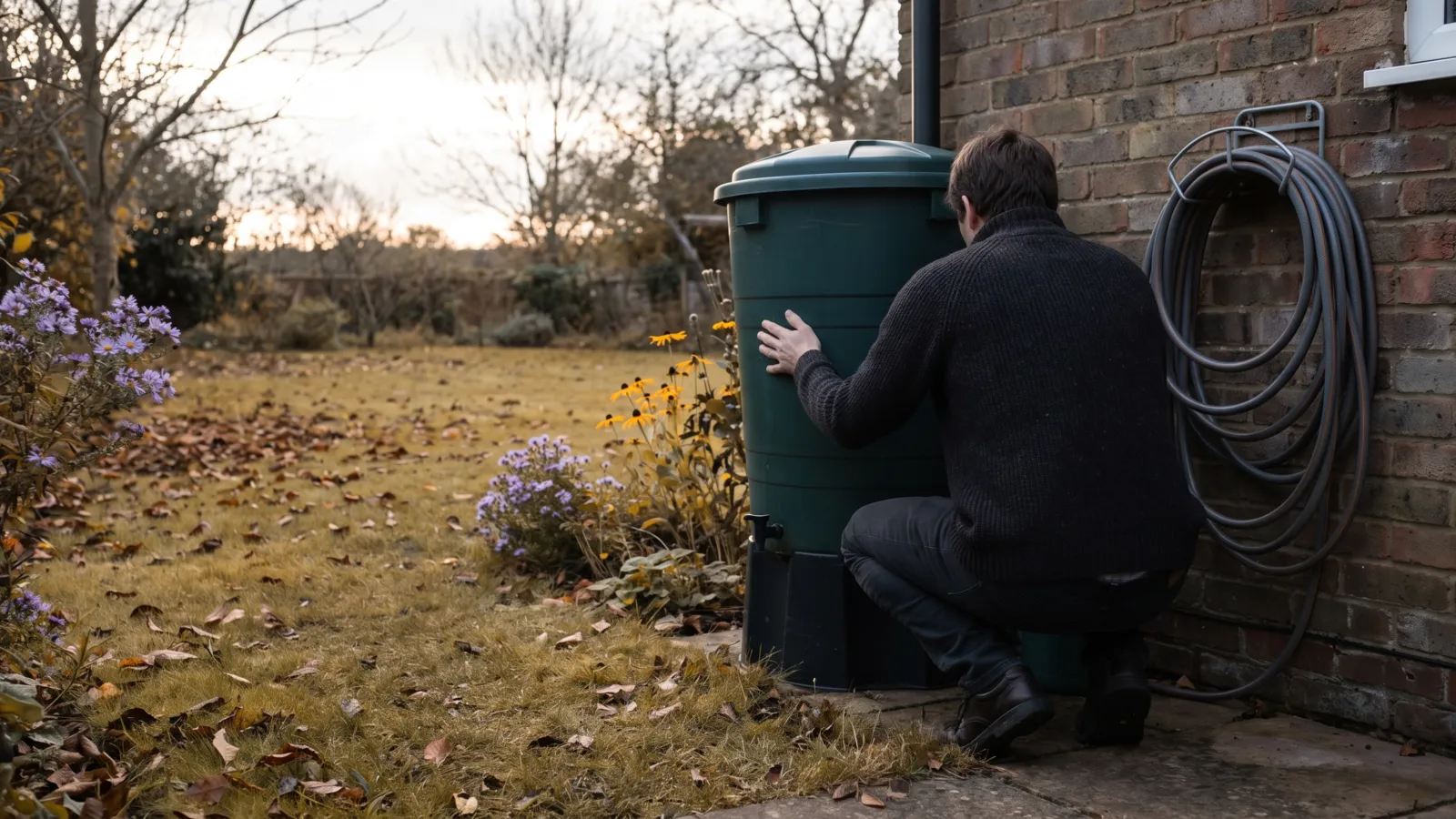
A non-essential use ban, if one is granted, is aimed at commercial and non-household water use, not at homes. A water butt and a few days of stored drinking water are sensible anyway; collecting rainwater is allowed under a ban.
Common questions
When will my hosepipe ban end?
No company gives a date. Essex & Suffolk Water says there is no specific amount of rainfall that would allow its ban to be lifted and that recovery typically takes place over autumn and winter; Thames Water says sustained rainfall is still needed; South East Water says its restrictions are likely to remain until it is confident water resources have recovered. Check your own company's page, and our tracker, which updates weekly from the Environment Agency report.
Does a wet week end it?
No. The Environment Agency said in September that "A few weeks of rain cannot reverse the deficit we face from the very dry spring and summer", and Anglian Water says a short period of rainfall is not enough on its own to end the drought; the ground needs a long period of steady rainfall. The National Drought Group puts the figure at 120% of typical rainfall over the next seven months for all areas to be out of drought.
Is this the worst drought on record?
Not for England's reservoirs as a whole. Storage ended September at 55%, against 49% at the same point in 2022. East England is below its historic minimum for the end of September, and it has had its driest March to September since records began in 1871; the south-east has had its driest July to September over the same record. These figures are for England only.
What is a non-essential use ban?
A further step beyond a hosepipe ban, which needs the approval of the Secretary of State for Environment, Food and Rural Affairs. South East Water says its application “targets commercial and non-household water use”. It applied on 2 October and South West Water on 6 October; Southern Water is awaiting a Secretary of State decision on the application it made on 31 July. It is aimed at businesses and other non-household users, not at homes.
Sources (19)
- Environment Agency — Dry weather and drought in England: 2 to 8 October 2026 (9 October 2026)
- Environment Agency — Water situation: September 2026 summary (13 October 2026)
- Environment Agency — Water situation report for England, September 2022
- Environment Agency — Water situation report for England, September 2025
- Environment Agency — Water situation report, September 2018
- GOV.UK — Government, Environment Agency and water companies step up efforts to prevent England remaining in drought by next spring (16 September 2026)
- GOV.UK — England's reservoirs continue to feel drought strain after sixth dry month of 2026 (2 October 2026)
- GOV.UK — Drought permit granted to support Wimbleball reservoir (8 October 2026)
- UK Centre for Ecology & Hydrology — Hydrological summary, September 2026
- UK Centre for Ecology & Hydrology — Hydrological summary, August 2026
- Met Office — 3-month outlook, October to December 2026, for contingency planners (28 September 2026)
- Thames Water — Hosepipe ban (updated 12 October 2026)
- Essex & Suffolk Water — How much does it need to rain before the hosepipe ban is lifted? (3 September 2026)
- Essex & Suffolk Water — Temporary Use Ban
- Anglian Water — Hosepipe restrictions (updated 15 October 2026)
- South East Water — Sussex hosepipe restrictions FAQs
- South East Water — Change to current hosepipe restrictions (2 October 2026)
- Wessex Water — Hosepipe ban
- South West Water — Hosepipe ban
PreparedBritain is independent and not affiliated with HM Government.
See our checks first on Google. Add PreparedBritain as a preferred source and Google will show our stories to you more often in Top Stories.

The Emergency Water Checklist
One page: how much to store per person, the cheapest ways to store it properly, how to make uncertain water safe, and what changes in a hosepipe ban. Free, no catch.
Download it straight away. We'll also send the occasional briefing when something genuinely matters — severe weather, live incidents, real price drops. Nothing else.
Latest from our live data
All stories →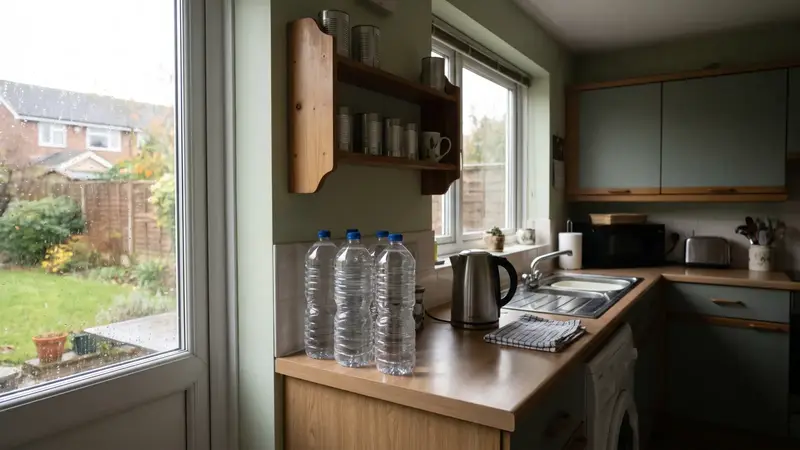 News · 21 OctOnly 4 in 100 adults have three days of bottled water at home, the government's survey shows
 News · 21 OctFood inflation held at 1.3%. Wholesale cabbage and cauliflower are up a third. Both are true
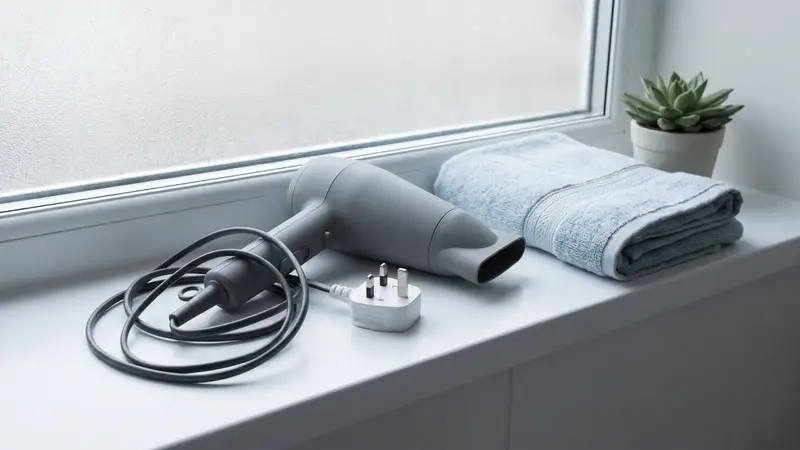 News · 21 OctAldi recall: shoppers warned of hairdryer electric shock or fire risk. How to check yours
Keep reading
All water guides →Filtered water without power or plumbing: the Weeplow Earth 8.5L gravity filter, and what its lab reports show
How the Weeplow Earth 8.5L gravity filter keeps drinking water flowing in a power cut or supply interruption, and…
No water coming out of your taps? What to do, your rights and compensation
No water from your taps? How to check if it's your pipe or the mains, fill up fast, find bottled water stations, and…
How to purify water in an emergency: safe UK methods
The ways to make water safe in an emergency — boiling, tablets and filters — what each actually removes, what none…