Food inflation held at 1.3%. Wholesale cabbage and cauliflower are up a third. Both are true
UK inflation rose to 3.5% in September from 3.1%, with motor fuels the biggest push. Food inflation did not move: 1.3% for the third month running, the lowest since 2021. At the wholesale markets of England and Wales, white cabbage is 35% dearer than a year ago and cauliflower 33%, though most of that is last autumn's low prices. What each figure shows, what has really moved, and what nobody can yet say.
The ONS said on 21 October that UK consumer price inflation (CPI) was 3.5% in the 12 months to September 2026, up from 3.1% in August and the highest since October 2025. Transport, particularly motor fuels, made the largest upward contribution: diesel averaged 192.5p a litre in September, up 10.7p in a month. Food and non-alcoholic beverages stayed at 1.3%, unchanged since July and the lowest since September 2021; vegetables including potatoes rose to 2.5%. At the wholesale markets of England and Wales, Defra's figures for the week of 12 October show white cabbage 35% dearer than a year earlier, cauliflower 33%, parsnips 26% and brown onions 24%. Most of that is last autumn's low base: cabbage, carrots and swede have barely moved since August. Brown onions are the exception, up 40% since the end of August. Pears are 12% cheaper. Feed grain and fertiliser cost more than a year ago, and England's barley and oat harvest was the smallest since 2012. How much of the wholesale rise reaches the shelves, and when, our data cannot show.
By Tom Calder · Updated 21 October 2026 · Sourced to the ONS consumer price inflation bulletin for September 2026 (published 21 October), Defra wholesale, feed-grain, price-index and harvest statistics, the European Drought Observatory and UKCEH COSMOS-UK, as held on our harvest and food tracker
UK inflation rose to 3.5% in September, led by fuel
The Office for National Statistics published its September figures at 07:00 on 21 October. The Consumer Prices Index (CPI) rose by 3.5% in the 12 months to September 2026, up from 3.1% in August. On a monthly basis prices rose 0.4%, against little change a year earlier. The ONS says it is the highest rate since October 2025.
Transport, particularly motor fuels, made the largest upward contribution. The ONS average petrol price rose 8.2p a litre between August and September, to 169.5p, the highest since August 2022. Diesel rose 10.7p, to 192.5p, the highest since July 2022. Motor fuel prices were 29.8% higher than a year earlier, against 23.0% in August. Restaurants and hotels pulled the other way, the largest partly offsetting downward contribution.
Core CPI, which leaves out energy, food, alcohol and tobacco, rose to 2.8% from 2.6%.
Food: 1.3% for the third month running, the lowest since 2021
The annual rate for food and non-alcoholic beverages was 1.3% in September, the same as in July and August. The ONS says it was last lower in September 2021, at 0.8%. Food prices fell 0.2% in the month, the same fall as in September 2025.
It has fallen for most of the year: 3.6% in January, 3.3% in February, 3.7% in March, 3.0% in April, 2.2% in May, 1.7% in June, then 1.3%. A year ago, in September 2025, it was 4.5%.
Inside the food basket, vegetables including potatoes rose to 2.5% from 2.1%, bread and cereals to 1.5% from 1.3%, and fruit eased to 1.9% from 2.2%. The ONS names tomatoes, cakes, tarts and sweet pies, other breakfast bakery products and potato crisps as pushing up, and beef, chocolate assortments and fizzy drinks as pulling down. None of the 11 food classes did much to move the headline rate.
The ONS also notes that organisations such as the Food and Drink Federation expect food inflation to arrive later and last longer, partly because squeezed household budgets, competition and retailer resistance have limited how much higher costs manufacturers can pass on. That is their expectation, not a measured figure.
Wholesale veg: dearer than a year ago, mostly because last autumn was cheap
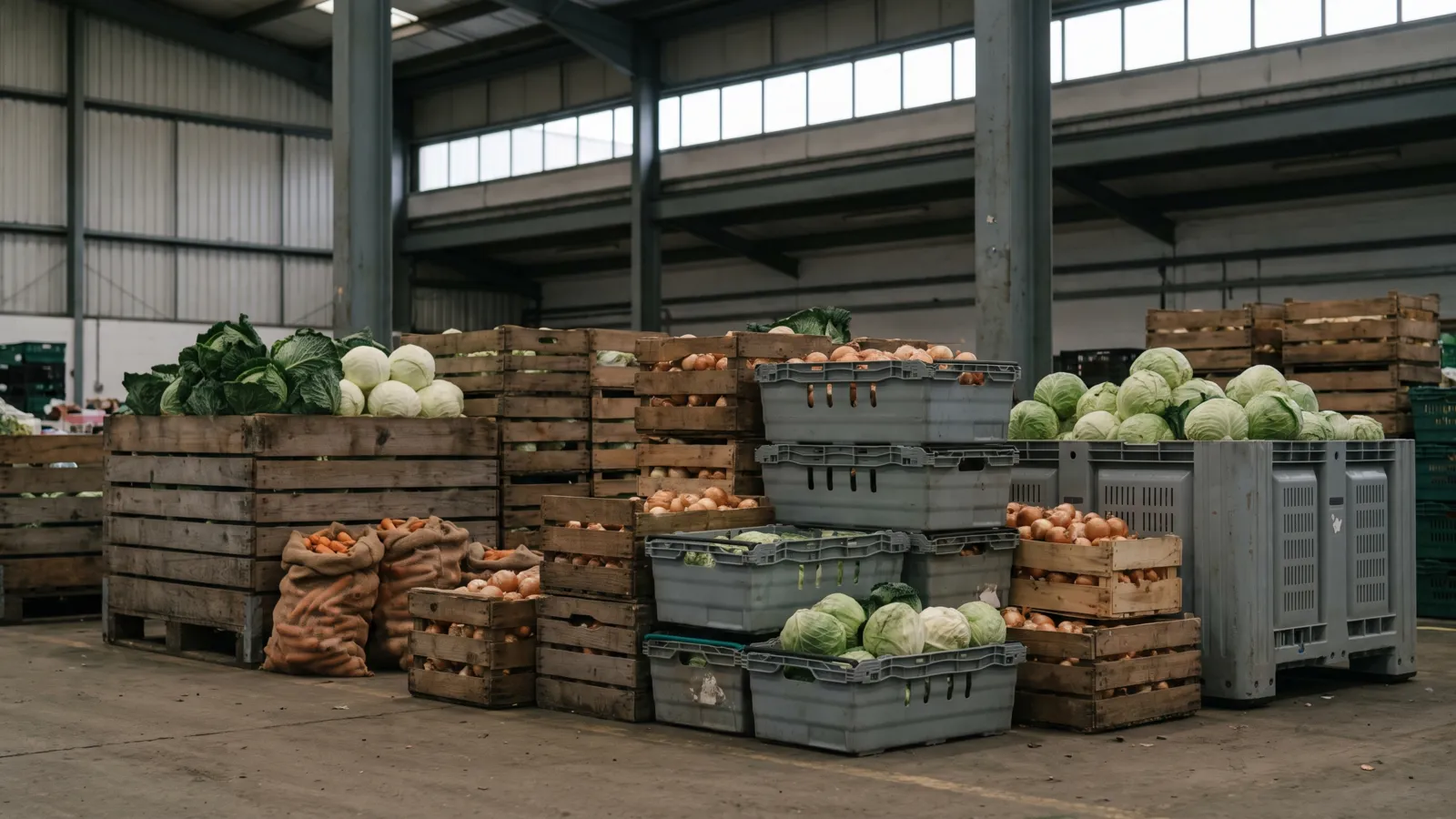
Defra publishes the average of the most usual prices paid at the wholesale markets of England and Wales. These are wholesale prices, not shop prices. For the week of 12 October 2026 against the same week of 2025: white cabbage 70p a kg against 52p (+34.6%), cauliflower £1.33 a head against £1.00 (+33.0%), parsnips £1.44 a kg against £1.14 (+26.3%), brown onions 63p against 51p (+23.5%), carrots 62p against 52p (+19.2%) and swede 29p against 25p (+16.0%). Leeks were up 10.9%, butterhead lettuce 10.4% and Gala apples 4.1%. Conference pears were 12.3% cheaper, at £1.07 against £1.22.
Most of those rises are about last year rather than this autumn. Cabbage has sat at 70p or 71p a kg since the end of August, carrots at 61p or 62p, and swede at 29p since the end of August. Cauliflower swings week to week: £2.09 a head on 31 August, £1.06 on 28 September, £1.33 on 12 October.
Brown onions are the one line with a clear recent rise: 27p a kg on 20 July, 45p on 31 August, 59p on 28 September and 63p on 12 October, up 40% in six weeks. The full series, with the dates we sample, is on our harvest and food tracker.
Home Alerts members
The full picture, for your home
Each week, what's happening across Britain set against your own address: your water company, your power network, fuel for your car and the gaps in your kit. Free for your own home. Opening in October; the first 100 on the list get in first.
Join the list →Britain's figures from our live trackers, 21 October.
Behind the farm gate: inputs cost more, farmers are not paid more overall
Defra's feed-grain prices for Great Britain show the cost side of meat, milk and eggs. In August, feed wheat averaged £197.95 a tonne, 17.9% more than a year earlier; feed barley £175.00, up 19.6% and 11.2% on July alone; soya bean meal £356.20, up 20.8%; oilseed rape £437.76, up 11.0%. These are animal-feed prices, not the wheat that goes into bread.
Defra's UK agricultural price indices for July point the same way on costs: fertilisers and soil improvers up 13.1% on a year earlier, energy and lubricants up 13.8%, and all farm inputs up 6.4%.
What farmers are paid is mixed. Farm-gate prices for fresh vegetables were 9.8% higher than a year earlier, but potatoes were 17.6% lower, and the index for all agricultural outputs was down 3.5%.
The weather behind it: dry ground and a small barley and oat harvest
Defra's provisional figures for England, published on 8 October, put spring barley production down 23.4% and oats down 29.4%, both the smallest since 2012. Wheat was up 0.8% on a higher yield from a smaller area, and oilseed rape up 43.5%. Final UK figures are due on 10 December. We covered it in England's smallest barley and oat harvest since 2012.
In the last ten days of September, 92.3% of the 65 lowland farmland points we sample across Great Britain were in a drought class on the European Drought Observatory's combined indicator, and 95.7% in England. On 19 October, 24 of the 28 COSMOS-UK soil-moisture sites in England read drier than normal. England's reservoirs were 54% full on 13 October against a long-term average of 75%, with 10 hosepipe bans in force.
What the figures can and cannot tell you
The official measure of what households pay for food is low and steady: 1.3%, the lowest since September 2021. Wholesale prices for several British vegetables are higher than a year ago, and some farm costs have risen. Both are true at once, because they measure different points in the chain.
Between the wholesale market and the shelf sit supermarket contracts, imports and retailers' own pricing, and our data does not see them. We cannot say how much of the wholesale rise will reach shop prices, or when. The thing worth watching is whether onions keep rising and whether feed costs show up in meat, milk and eggs.
For the Christmas question, see our check on Christmas shortage claims. If you want a calm buffer in the cupboard whatever prices do, how much food to store sets out what to keep in and how to rotate it.
Common questions
What was UK inflation in September 2026?
The ONS said on 21 October that CPI inflation was 3.5% in the 12 months to September 2026, up from 3.1% in August and the highest since October 2025. Motor fuels made the largest upward contribution. CPIH, which includes owner occupiers' housing costs, was 3.6%.
What is food inflation in the UK now?
1.3% in September 2026 for food and non-alcoholic beverages, unchanged from July and August and the lowest since September 2021. It was 4.5% in September 2025 and 3.6% in January 2026.
Why is food inflation low if vegetables cost more?
They measure different things. Food inflation is what households pay in shops across the whole food basket. Defra's wholesale figures cover a handful of vegetables at the markets of England and Wales, and most of their rise on last year reflects how cheap they were last autumn. Vegetables including potatoes in the shop measure rose to 2.5% in September.
Are onions getting more expensive?
At wholesale, yes. Brown onions averaged 63p a kg in the week of 12 October at the markets of England and Wales, up from 45p on 31 August and 27p on 20 July. That is a wholesale price; we cannot say how much of it reaches shop prices.
Will food prices go up?
We do not forecast prices. The ONS notes that bodies such as the Food and Drink Federation expect food inflation to arrive later and last longer. Feed and fertiliser costs are higher than a year ago, but farm-gate prices overall are down 3.5%.
Sources (9)
- ONS — Consumer price inflation, UK: September 2026 (21 October 2026)
- ONS — CPI annual rate, food and non-alcoholic beverages (D7G8, MM23)
- Defra — Wholesale fruit and vegetable prices (weekly average)
- Defra — Animal feed prices (straights)
- Defra — Agricultural price indices
- Defra — Provisional cereal and oilseed production estimates for England 2026 (8 October 2026)
- European Drought Observatory — Combined Drought Indicator
- UKCEH — COSMOS-UK soil moisture
- PreparedBritain — harvest and food tracker
PreparedBritain is independent and not affiliated with HM Government.
See our checks first on Google. Add PreparedBritain as a preferred source and Google will show our stories to you more often in Top Stories.

The Emergency Kit Checklist
The GOV.UK Prepare essentials on one printable page — tick them off as you go and keep it with the kit. Free, no catch.
Download it straight away. We'll also send the occasional briefing when something genuinely matters — severe weather, live incidents, real price drops. Nothing else.
Latest from our live data
All stories → News · 21 OctOnly 4 in 100 adults have three days of bottled water at home, the government's survey shows
 News · 21 OctAldi recall: shoppers warned of hairdryer electric shock or fire risk. How to check yours
 News · 21 OctNo planning permission needed for cross-pavement EV chargers: what changes in England
Keep reading
All food & growing guides →England's barley and oat harvests are the smallest since 2012, Defra figures show
Defra's provisional estimates give England its smallest barley and oat harvests since 2012 after a hot, dry growing…
25-year shelf life food: what really lasts, and do you need it?
What a 25-year shelf life really promises, which foods keep for years, what heat, air, light and damp do, the cost…
Will there be food shortages this Christmas? Turkeys, vegetables and prices, checked
Most years bring a “Christmas shortage” headline. As of 14 October 2026 there is no turkey supply warning, one bird…