Will there be food shortages this Christmas?
Most years bring a “Christmas shortage” headline. Here is what actually happened in 2021, 2022, 2023 and 2025, where bird flu, the drought and food prices stand as of 22 September 2026, and what a sensible household does about it.
No sign yet. As of 22 September 2026 no supermarket, trade body or government department has warned of food shortages this Christmas; the most recent Christmas shortage headline we found is last year’s, about turkeys. The UK self-declared Great Britain free of highly pathogenic bird flu in poultry on 18 May 2026, the bird flu prevention zones were lifted in Northern Ireland on 15 May and in Great Britain on 4 June, and official food inflation was 1.3 per cent in the year to August. What is real is cost: the drought and energy prices are feeding through, and food manufacturers forecast food inflation of 3.9 per cent by December.
By Tom Calder · Updated 22 September 2026 · Sourced to the ONS, GOV.UK, the Environment Agency, the Met Office, AHDB, the NFU, the FDF, the BRC, Natural Resources Wales, SEPA and DAERA
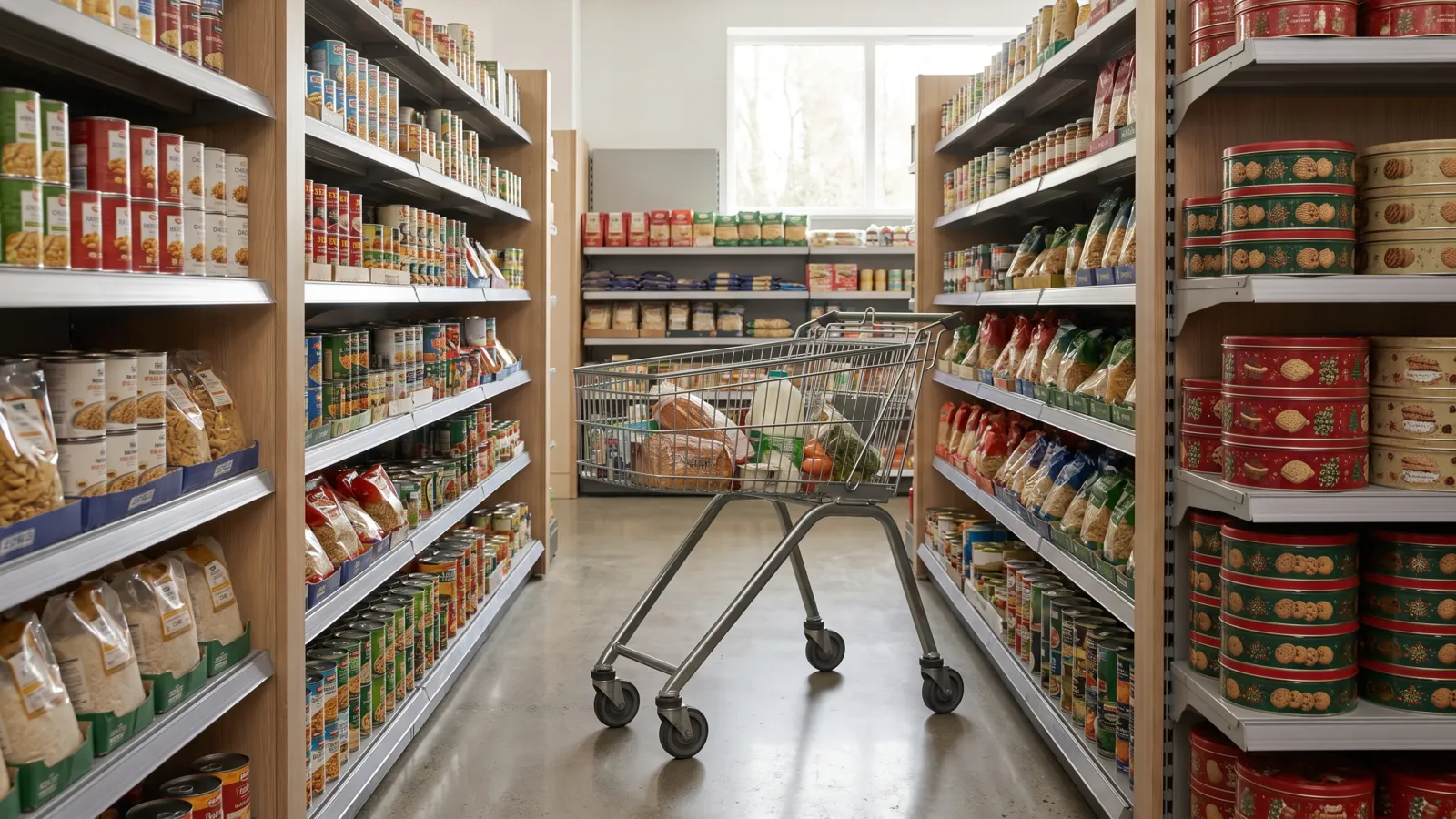
Where things stand, as of 22 September 2026
Start with the birds, because turkeys are what the headline is usually about. On 18 May 2026 the UK self-declared Great Britain free of highly pathogenic avian influenza in poultry, and on 4 June 2026 the Avian Influenza Prevention Zone covering England, Wales and Scotland was lifted. The government’s latest update, dated 20 August 2026, still records the zone as lifted and assesses the risk to poultry as low, or very low where biosecurity is stringent. Northern Ireland’s rules are set separately by DAERA: compulsory housing there ended on 5 May 2026 and its prevention zone on 15 May 2026, after the UK’s self-declaration of freedom for Northern Ireland was published on 7 May. Bird flu is seasonal, though: the 2025–26 season’s first UK case came in Northern Ireland on 9 October 2025, and England’s on 11 October. The honest position on turkeys is not “no risk” but “no warning yet, and the time to look is from October”.
On prices, the official measure is calmer than the headlines. The ONS put food and non-alcoholic drink inflation at 1.3 per cent in the year to August 2026, unchanged from July and its lowest since September 2021; overall inflation was 3.1 per cent (published 16 September 2026). The retailers’ BRC-NIQ Shop Price Index, which tracks shelf prices rather than the whole basket, had food at 2.8 per cent in August (published 1 September 2026); the two are different measures. The Food and Drink Federation, which represents manufacturers, forecast on 9 September 2026 that food and non-alcoholic drink inflation would reach 3.9 per cent in December. In April it had forecast at least 9 per cent by the end of the year, so its forecast has come down since spring, though it still expects food prices to rise as energy, transport and packaging costs work through.
We found no statement from the BRC, the FDF, Defra or any supermarket about food availability this Christmas; the FDF’s report is about prices, not supply.
What actually happened in past Christmases
2021 set the formula. A lorry-driver shortage the Road Haulage Association put at more than 100,000 in June 2021 met a carbon dioxide crisis: in September 2021 CF Fertilisers halted production at two UK plants because of the price of gas, taking with it around 60 per cent of the UK’s carbon dioxide, used primarily by the food sector, for example to stun pigs and poultry before slaughter and in food packaging. On 21 September 2021 the government agreed three weeks of “limited financial support” so that CF could restart its Billingham plant. The same autumn the driver shortage reached fuel deliveries, and a rush to fill up left forecourts in some areas short. The fuel industry said on 26 September 2021 that the problems were “due to temporary spikes in customer demand, not a national shortage of fuel”.
2022 came closest of recent Christmases to a genuine shortage, and it was specific. The British Poultry Council told MPs on 29 November 2022 that around 600,000 of the 1.2 to 1.3 million free-range birds usually reared for Christmas, about half, had been directly affected by the UK’s largest bird flu outbreak to that point, and that just over one million of the 8.5 to 9 million turkeys produced for Christmas had died or been culled. A poultry farmer told the same committee there would be “a big, big shortage of free range British turkeys on the shelves this year”. In November 2022 Lidl limited shoppers to three boxes of eggs and Asda to two. But Sainsbury’s ordered extra turkeys as a buffer, and Tesco said it expected to have enough. Free-range was short; turkey was not.
2023’s worry was weather. October 2023 brought around twice the month’s average rainfall to parts of eastern England and eastern Scotland, and about one and a half times the average across the UK as a whole (Met Office). On 27 November 2023 LBC reported that the potato crop could be the lowest on record and quoted a Lincolnshire grower: “There won’t be enough broccoli to supply the Christmas dinner demand”. Sprouts, said Chris Gedney, chief executive of T H Clements, one of the UK’s largest sprout suppliers, were likely to be smaller. The British Poultry Council had said on 23 October 2023: “We do not foresee a turkey shortage this year.” Retailers might have to draw on potatoes from cold storage, LBC said. Christmas dinner happened.
2025 followed the template. Bird flu was confirmed in English poultry on 11 October 2025, and by the government’s update of 20 August 2026 England had recorded 79 cases in the 2025–26 season. By 22 November LBC was reporting about 300,000 birds culled, which it put at around 5 per cent of the UK Christmas poultry flock, and the British Poultry Council’s chief executive called it “a bad season, much worse than last year”. The UK produces around eight million turkeys a year. A Defra spokesperson said: “We do not anticipate any overall impact on the availability of Christmas turkeys or other seasonal poultry for consumers.” What the BRC then recorded for December 2025 was food inflation of 3.3 per cent, up from 3.0 per cent in November: a price story. Four Christmases, one pattern: a real, narrow problem in one supply chain, a headline that widens it to “Christmas dinner”, and a December in which the thing is dearer or the choice narrower, but there.
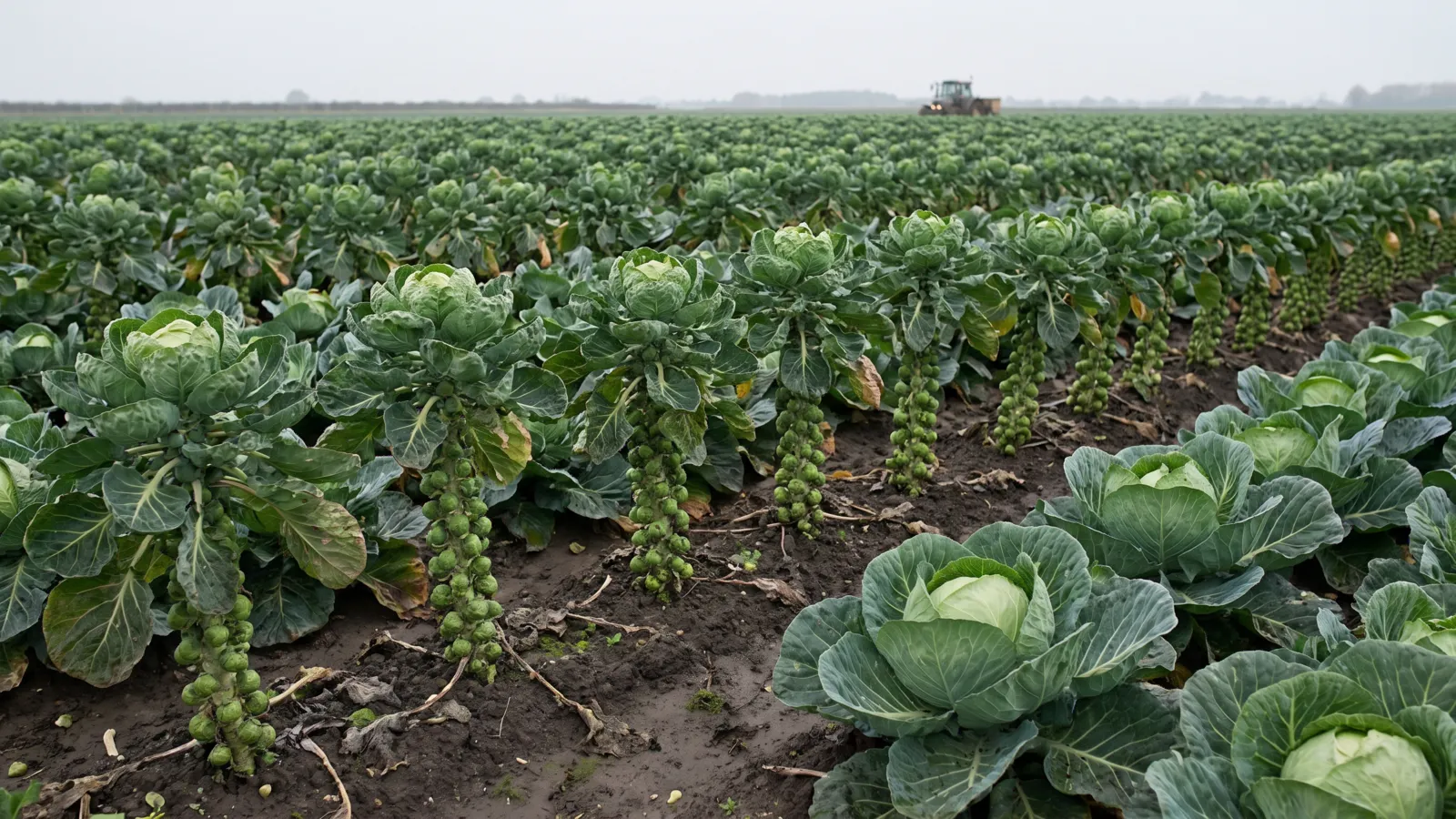
The pressures that are real this year
None of this means 2026 is free of strain. Three things are pushing on the food system. The first is drought. In its report for 11 to 17 September 2026 the Environment Agency said ten areas of England remained in drought, that reservoir storage in England was 56.1 per cent in the week ending 15 September, which it put at “19.7% below average for the time of year”, and that cereals in the east and south-east had been “substantially impacted” by heat and drought, with smaller apple crops expected. Those are England’s figures. Natural Resources Wales extended drought status to the whole of Wales on 30 July 2026 and said on 14 September that Wales remained in drought; SEPA’s water scarcity report of 17 September 2026 had five Scottish areas at significant scarcity, with dry conditions persisting in the east; we could not confirm Northern Ireland’s position. GB Potatoes, the industry body, said in August that it was not expecting as much crop as in recent years, but as of 28 August 2026 the scale of the loss was still uncertain. Estimated daily milk deliveries in Great Britain were 3.2 per cent lower in July 2026 than a year earlier; as of 22 September 2026 no retailer was rationing milk, as our milk page sets out. The NFU noted on 12 August 2026 that the UK grows 56 per cent of the vegetables it eats and 14 per cent of its fruit, so December’s shelves also depend on other countries’ harvests. Our drought tracker follows the weekly reports.
The second is energy and transport. The FDF said on 9 September 2026 that the conflict in the Middle East had pushed gas prices to more than double their February 2026 level. As of 22 September 2026 the average price of diesel was within a few pence of its UK record, for reasons our diesel page explains; there is no UK diesel shortage, and our fuel price tracker has the current figure. These costs reach food as price, slowly. The FDF’s chief executive, Karen Betts, said on 9 September 2026 that manufacturers had kept prices as low as possible “during the energy shock since the closure of the Strait of Hormuz”, adding: “But they can’t do this indefinitely.” The FDF expects the rise to run into 2027 and peak at 6.4 per cent in July 2027.
The third is the cumulative bill. The FDF said on 9 September 2026 that a grocery shop costing £100 at the start of 2020 would cost around £138.60 now. That is the number behind this year’s headlines, and it is not a shortage.
The Emergency Kit Checklist
The GOV.UK Prepare essentials on one printable page — tick them off as you go and keep it with the kit. Free, no catch.
Download it straight away. We'll also send the occasional briefing when something genuinely matters — severe weather, live incidents, real price drops. Nothing else.
What this means for your household
Plan for a dearer Christmas, not an empty one. The useful move is the boring one: spread the long-life parts of the Christmas shop across October and November as part of normal shopping, rather than buying it all in the last week when everyone else does. That is how much food to keep in anyway, and it costs nothing extra because you eat it.
If you want a particular turkey, free-range, a certain size or from a local farm, order it early: in 2022 it was free-range birds that ran short, not turkey. If bird flu returns this autumn, GOV.UK will confirm it for England, with the Scottish and Welsh governments and DAERA in Northern Ireland publishing their own updates, and this page will change with it.
Check dates before you throw anything out: use-by is the safety date, best-before is about quality. Food safety guidance comes from the Food Standards Agency in England, Wales and Northern Ireland, and from Food Standards Scotland in Scotland. If the cost of food this winter is the problem, help differs by nation: in England it is the Crisis and Resilience Fund, in Scotland the Scottish Welfare Fund, in Wales the Discretionary Assistance Fund and in Northern Ireland Discretionary Support, all covered on our Crisis and Resilience Fund page. Why British shelves gap briefly but rarely empty is on our food shortages guide.
What not to do
Don’t buy ahead of need because of a headline. The petrol queues of September 2021 came from people filling up at the same time, when there was no national shortage of fuel. Shelves can empty in hours when everyone decides to be early. A quiet extra tin a week from October is a plan; a trolley of them in December is the problem.
Don’t treat a price forecast as a supply warning. Food inflation of 3.9 per cent means a shop that cost £100 a year earlier costs about £104; it does not mean the shop is empty. And don’t treat last year’s headline as this year’s news: the most recent turkey shortage stories are dated November 2025, about last winter’s bird flu outbreak; the UK self-declared Great Britain free of the disease in poultry in May 2026, and Northern Ireland lifted its last restrictions the same month.
Common questions
Will there be a turkey shortage this Christmas?
There is no warning of one as of 22 September 2026. The UK self-declared Great Britain free of highly pathogenic bird flu in poultry on 18 May 2026; the prevention zone was lifted in Northern Ireland on 15 May and in England, Wales and Scotland on 4 June, and the government’s update of 20 August still recorded it as lifted. Bird flu is seasonal: last season’s first UK case came on 9 October 2025, so the time to check is from October.
Were there really food shortages at Christmas in past years?
Narrow ones. In 2021 a carbon dioxide and lorry-driver squeeze threatened meat processing; in 2022 bird flu directly affected about half the free-range Christmas flock and some supermarkets limited egg boxes; in 2023 rain hit potatoes and brassicas. In each case the item was dearer or the choice narrower, not absent, and Christmas dinner happened.
Is food inflation going up before Christmas?
Yes, but by less than forecast in spring. The ONS measured food inflation at 1.3 per cent in the year to August 2026, the lowest since September 2021. The Food and Drink Federation forecast on 9 September 2026 that it would reach 3.9 per cent in December, down from its April forecast of at least 9 per cent.
Has the drought caused food shortages?
Lower yields and higher costs, not shortages. The Environment Agency’s report for 11 to 17 September 2026 had ten areas of England in drought, with cereals and apples hit; the potato industry expects a smaller crop, though the scale was still uncertain in late August; estimated milk deliveries in Great Britain were 3.2 per cent lower in July than a year earlier. As of 22 September 2026 we found no retailer rationing any of them.
Should I stockpile food for Christmas?
Not because of a headline. Spreading the long-life part of the Christmas shop across October and November is sensible and costs nothing extra, and keeping a modest store of food for emergencies is worth doing in any year. Buying more than usual all at once can empty shelves, as the petrol queues of September 2021 showed.
When will we know whether there were shortages this Christmas?
The BRC’s Christmas sales figures come in its Retail Sales Monitor in mid-January (last year’s on 13 January 2026), and its Shop Price Monitor for December comes out in early January (last year’s on 6 January 2026), but they measure sales and prices, not supply. A real shortage would show sooner, as purchase limits or warnings from retailers, trade bodies or government, and this page would report it the same day.
Sources: ONS — Consumer price inflation, UK: August 2026 (16 September 2026) · Food and Drink Federation — UK food inflation forecast 2026–2027: later and longer (9 September 2026) · Food and Drink Federation — FDF revises food inflation forecast to at least 9% by the end of 2026 (1 April 2026) · Grocery Gazette — Food inflation forecast slashed to 3.9 per cent by Christmas (9 September 2026) · Asian Trader — Food inflation to hit ‘3.9 per cent’ by Christmas; Karen Betts quote in full (9 September 2026) · GOV.UK — Bird flu (avian influenza): latest situation in England (updated 20 August 2026) · DAERA — Avian influenza: latest situation in Northern Ireland (updated 14 May 2026) · Environment Agency — Dry weather and drought in England: 11 to 17 September 2026 · Natural Resources Wales — Drought status extended across all of Wales (30 July 2026) · Natural Resources Wales — Dry weather blog 2026 (entry of 14 September 2026) · SEPA — Water scarcity in Scotland (report of 17 September 2026) · AHDB — GB milk deliveries: volumes decline as high heat continues (12 August 2026) · NFU — Drought 2026: NFU support for every farming sector (12 August 2026) · Potato News Today — UK drought tightens its grip on potatoes but scale of crop losses remains uncertain (28 August 2026) · BRC-NIQ Shop Price Monitor, August 2026 (1 September 2026) · British Retail Consortium — Inflation to remain sticky in 2026 (6 January 2026) · British Retail Consortium — Christmas FAQs 2025 (10 December 2025) · British Retail Consortium — Retail Sales Monitor December: Drab Christmas, as consumers wait for sales (13 January 2026) · DESNZ — Weekly road fuel prices (updated 22 September 2026) · RAC Fuel Watch (record diesel price 199.09p, 25 June 2022) · LBC — Turkey shortages possible this Christmas after outbreak of bird flu ‘super strain’ (22 November 2025) · Food Digital — How avian flu may affect the UK’s Christmas turkey tradition; Defra spokesperson statement (26 November 2025) · Meat Management — BPC does not foresee turkey shortage this Christmas (23 October 2023) · LBC — Christmas dinner at risk amid warnings of broccoli and Cauliflower shortages and ‘smaller sprouts’ (27 November 2023) · Met Office — HadUK-Grid monthly rainfall series, UK (October 2023 against the 1991–2020 average; regional files alongside) · Reuters (via Fox News) — Half of UK’s Christmas turkeys lost to bird flu outbreak; British Poultry Council evidence to the EFRA Committee (29 November 2022) · CNBC — Avian flu threatens British food staples (16 November 2022) · GOV.UK — Government secures agreement to ensure CO2 supplies (21 September 2021) · GOV.UK — Statement following meeting between the Business Secretary and fuel industry (26 September 2021) · Food Manufacture — CO2 shortage problems not over yet: what now? (22 September 2021) · House of Lords Library — Heavy goods vehicle driver shortage (20 October 2021) · The Independent (via Yahoo Finance UK) — Cost of Christmas 2026 for UK households revealed after price rises (17 September 2026). PreparedBritain is independent and not affiliated with HM Government.
More viral headlines, checked against what was actually saidSee them all →Keep reading
All food & growing guides →Is there going to be a milk shortage in the UK?
A “milk shortage warning” is in the headlines as drought cuts what dairy farms produce. Deliveries are down a few…
Use-by vs best before: which food dates actually matter
The FSA's rule: use-by is safety, best before is quality. Which foods are genuinely fine past the date — tins, dried…
How much emergency food should you store? A per-person guide
The maths done for you: turn about 2,000 kcal and 3 litres of water per person per day into concrete food and water…