Is there going to be a milk shortage in the UK?
A “milk shortage warning” is in the headlines as drought cuts what dairy farms produce. Deliveries are down a few per cent and farm costs are up. No retailer is rationing and nobody official has warned of empty shelves. Here is the evidence.
By Tom Calder · Updated 21 September 2026 · Sourced to AHDB, the NFU, the Environment Agency and the Food Standards Agency
Who actually said what
The story is built on one producer: Bryce Cunningham, founder of Mossgiel Organic Dairy in Ayrshire, who told reporters that the drought has caused serious supply issues across the industry. He is describing something real, and his own business is seeing demand from further south. But one dairy’s order book is not a national forecast.
The farming bodies have been saying something more specific all summer. Ian Harvey, who chairs the NFU’s dairy board, said in early August that grass had stopped growing about six weeks earlier, and warned milk buyers in July that farmers were already feeding the forage they had set aside for winter. His concern was the cost of getting herds through to spring — not what shoppers will find on the shelf.
What the numbers say
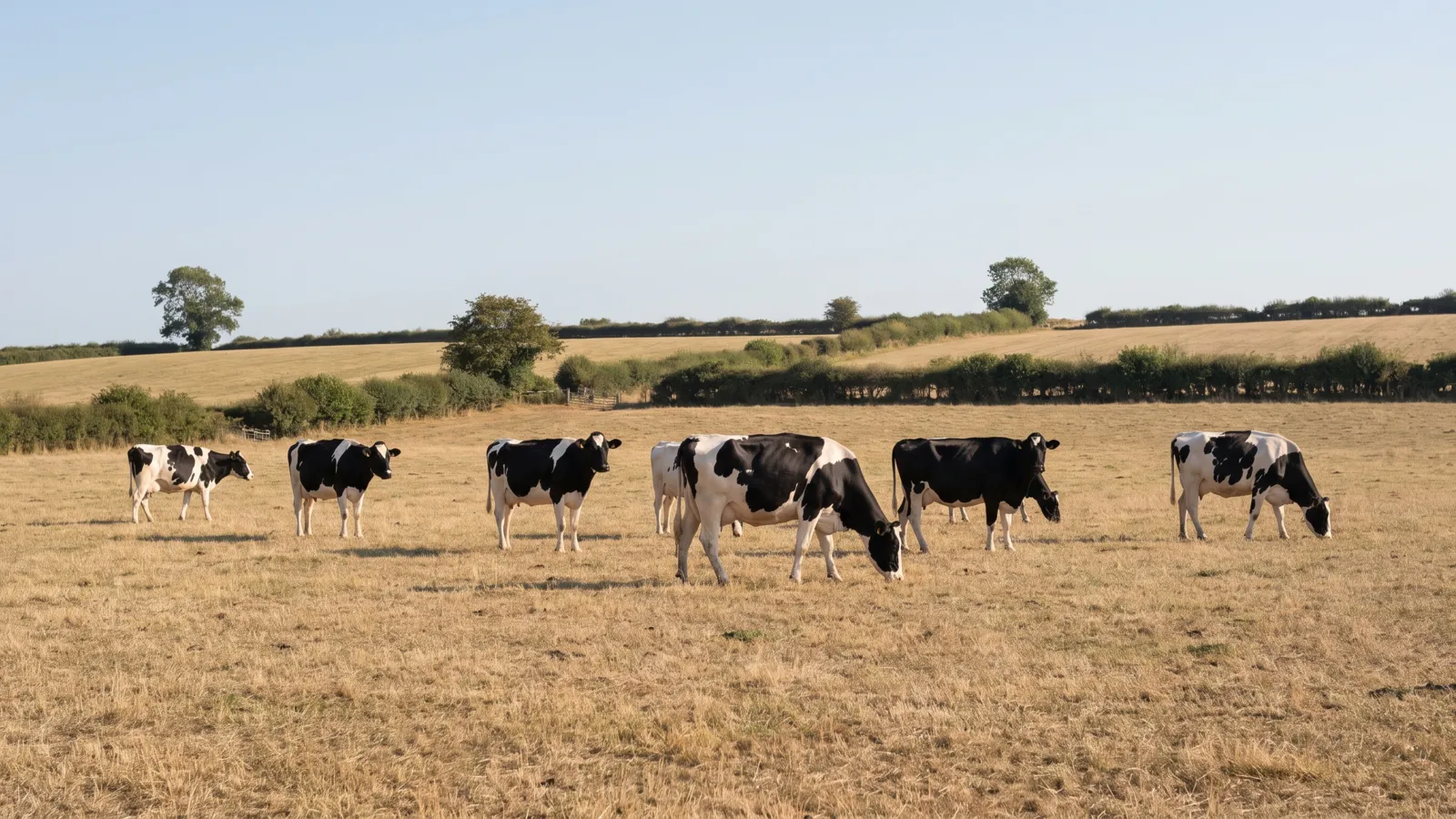
The Agriculture and Horticulture Development Board, which publishes the official delivery figures, reported in August that daily milk deliveries in July were 3.2 per cent lower than a year earlier, and 4.5 per cent lower in the week to 1 August, after the driest and sunniest July on record. Across April to July the fall was about 2 per cent.
That is a real drop, and the farms producing it are under strain. The price they are paid has started to edge back up — the UK average was 35p a litre in July, up on June but still a fifth below a year earlier, and below what milk costs many farms to produce. The big processors raised what they pay again in September.
The drought itself is not over. In its report for the week to 17 September the Environment Agency said ten of its areas remained in drought. Separately, its analysis for the National Drought Group on 15 September put the rainfall needed for every area to recover by next April at around 120 per cent of average over seven months. Our drought tracker follows those reports as they are published.
So will the shelves be empty?
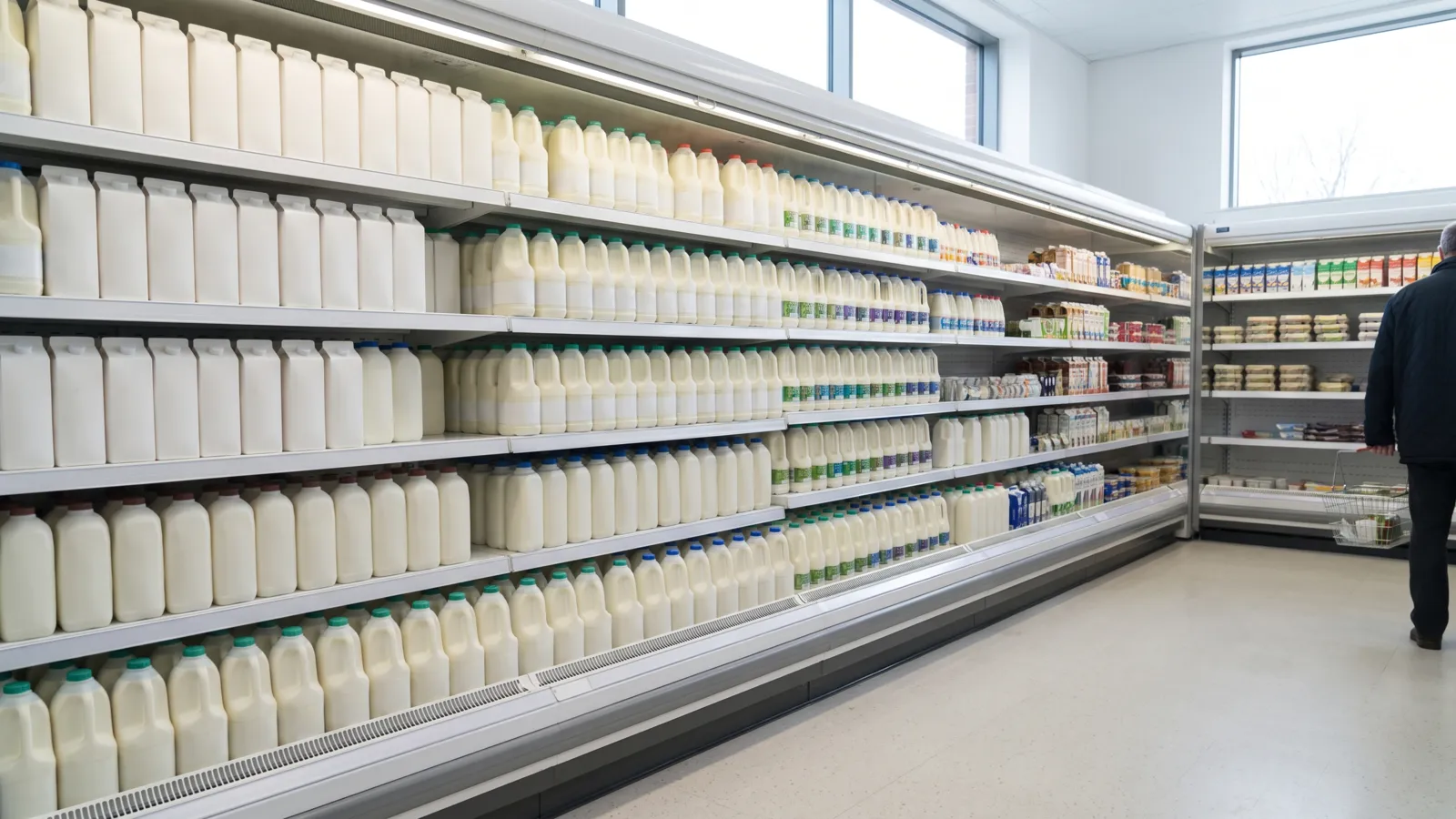
On the evidence, no. We could find no retailer rationing milk, no reports of empty shelves, and no statement from a supermarket, a processor or the government suggesting there will be. Processors are talking about tighter supply and higher prices, which is a different thing from running out.
History points the same way. The 2018 drought was as severe in many areas, deliveries fell, farmers bought in feed at painful prices — and shoppers never saw a shortage. A fall of a few per cent in production is absorbed by the system: less goes into cheese, butter and powder, and liquid milk for shops is protected because it is what retailers contract first.
What is likely is that milk gets a little dearer. That is worth knowing; it is not worth queuing for.
What is sensible, short of panic buying
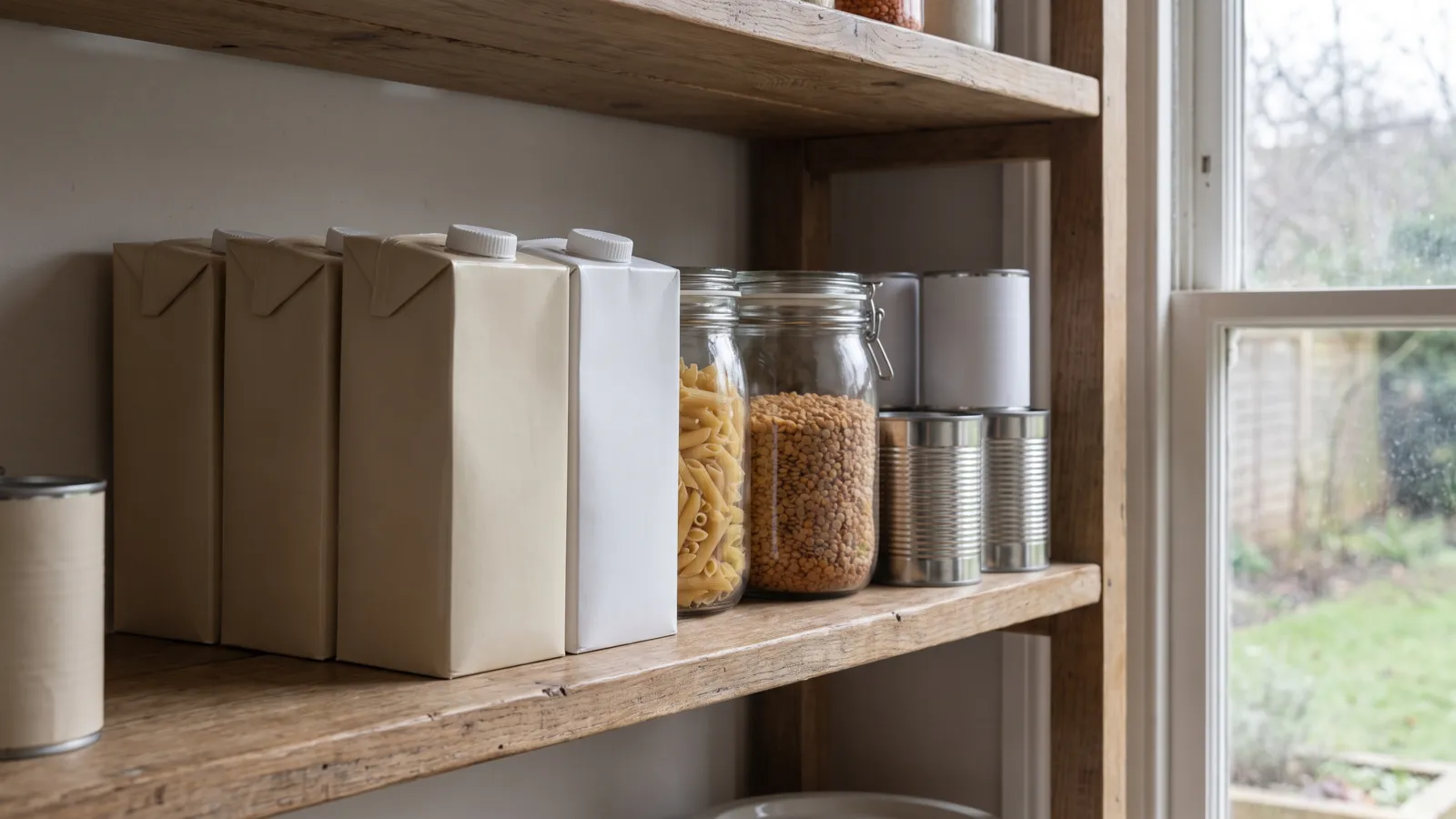
If you like to have a fallback, there are two that cost almost nothing. UHT milk keeps for months unopened in a cupboard. And fresh milk freezes: the Food Standards Agency’s advice is to freeze food before its use-by date, keep the freezer at minus 18C, defrost in the fridge and use it within 24 hours. Frozen milk separates slightly — shake it.
A carton or two of UHT at the back of the cupboard is part of an ordinary store cupboard, and useful in a power cut or a week of snow as much as anything else. It is not a reason to clear a shelf.
The Emergency Kit Checklist
The GOV.UK Prepare essentials on one printable page — tick them off as you go and keep it with the kit. Free, no catch.
Download it straight away. We'll also send the occasional briefing when something genuinely matters — severe weather, live incidents, real price drops. Nothing else.
What not to do
Don’t buy more fresh milk than you will drink. Shelves empty when everyone buys at once, not when production dips by 3 per cent; the shortage of 2020 was made in the aisle, not on the farm.
And don’t read a rise in price as a sign of scarcity. Milk is getting more expensive to produce. That reaches the shelf as pennies on a pint, slowly, not as a gap where the milk used to be.
Common questions
Is there a milk shortage in the UK?
No. Milk deliveries from farms are a few per cent lower than last year because of the drought, but no retailer is rationing and no shortages on shelves have been reported.
Who warned of a milk shortage?
The headlines rest mainly on comments from Bryce Cunningham, founder of Mossgiel Organic Dairy in Ayrshire. The NFU has warned about farms’ winter feed and costs, not about empty shelves. No official body has issued a shortage warning.
How much has milk production fallen?
AHDB reported July 2026 daily deliveries 3.2 per cent down on a year earlier, and about 2 per cent down across April to July.
Will milk prices go up?
Probably, modestly. The price paid to farmers averaged 35p a litre in July 2026 — a fifth lower than a year earlier, and below many farms’ costs — and processors raised it in September. Increases tend to reach shop prices gradually.
Can you freeze milk?
Yes. The Food Standards Agency advises freezing food before its use-by date, keeping the freezer at minus 18C, defrosting in the fridge and using within 24 hours. Shake it, as it can separate.
Sources: AHDB — GB milk deliveries: volumes decline as high heat continues (12 August 2026) · NFU — Dairy Board chair issues warning to UK milk buyers (28 July 2026) · Environment Agency — Dry weather and drought in England: 11 to 17 September 2026 · AHDB — Drought 2018: what’s happening on farm · Food Standards Agency — How to chill, freeze and defrost food safely · Defra — UK milk prices and composition of milk. PreparedBritain is independent and not affiliated with HM Government.
Keep reading
All food & growing guides →Use-by vs best before: which food dates actually matter
The FSA's rule: use-by is safety, best before is quality. Which foods are genuinely fine past the date — tins, dried…
How much emergency food should you store? A per-person guide
The maths done for you: turn about 2,000 kcal and 3 litres of water per person per day into concrete food and water…
What to sow and plant this month: the UK vegetable calendar
A month-by-month UK guide to what vegetables to sow and plant — indoors and out — from January to December. Jump to…