Use-by vs best before: which food dates actually matter
The FSA's rule: use-by is safety, best before is quality. Which foods are genuinely fine past the date — tins, dried goods, UHT, eggs — and which never are.
By Tom Calder · Updated 12 August 2026 · Sourced to the FSA, FSS & GOV.UK
Two dates, two different jobs
UK food labels carry exactly two date marks that mean anything to you as a shopper, and they do entirely different jobs. A use-by date is a safety mark, applied to perishable foods — fresh meat and fish, chilled ready meals, soft cheeses, bagged salads. Government guidance is blunt about it: use-by dates tell you when the food is no longer safe to eat. A best before date is a quality mark, applied to everything else — tins, dried goods, frozen food, long-life milk, biscuits. After it, the food is usually safe to eat but may not be at its best.
That distinction is not pedantry; it is the whole architecture of UK date labelling. The producer decides which mark a food carries based on whether it can become unsafe before it becomes unpleasant. Everything in this guide follows from which side of that line a food sits on: one date is an instruction, the other is an estimate.
Use-by: the date that is not negotiable
Do not eat, cook or freeze food after its use-by date — even if it looks and smells fine. The bacteria that cause serious food poisoning do not reliably announce themselves, which is why the Food Standards Agency is explicit that the sniff test is not safe for any food with a use-by date: you cannot smell the bugs that cause food poisoning. This is the one date on a label where your senses are not a reliable guide.
There is genuine, government-endorsed flexibility — but all of it sits on or before the date. Freezing is the big one: food frozen on or before its use-by date can safely be eaten later, because bacteria cannot grow on frozen food. Freeze the mince or the chicken on the day of its date and you have paused the clock legitimately — then defrost it in the fridge and use it within 24 hours. Cooking buys time too, with a tighter limit: cook the food before its use-by date, cool it and keep it in the fridge, and government guidance says to eat it within 48 hours — or freeze the cooked dish to eat later.
Two footnotes. Once a pack is opened, any "use within X days of opening" instruction takes over — whichever date arrives first wins. And a date can only vouch for food that has been stored as instructed: a use-by date on chicken says nothing about chicken that has sat in a warm fridge through a long power cut, which is a separate problem with its own rules.
Best before: an estimate, not an expiry
After a best before date the food is usually safe to eat; what the date predicts is when quality starts to slip — texture, flavour, colour. This is why retailers can legally sell food past its best before date, and why supermarkets and food banks routinely do at a discount. Here your senses are the right tool: the FSA's own advice is that the sniff test can be used for best before foods, because the date is about quality, not safety.
Two caveats keep this honest. The date is only accurate if the food has been stored according to the instructions on the pack — a best before date on flour kept somewhere damp promises nothing. And "usually safe" assumes intact packaging and a healthy eater, which is where the callout below comes in.
The store cupboard: tins, dried goods and long-life milk
Tins have no fixed life beyond the date. The FSA's position is that how long canned food remains acceptable after its best before date depends on the product, the storage conditions and the brand — in practice, an intact tin kept somewhere cool and dry remains safe long after the date, with quality fading well before safety does. The seal matters more than the number: bin any tin that is swollen, leaking, badly dented or rusted through, whatever its date says. And never store food in an opened tin — once air reaches the contents, tin can transfer into the food more quickly, so decant leftovers into a container and refrigerate them.
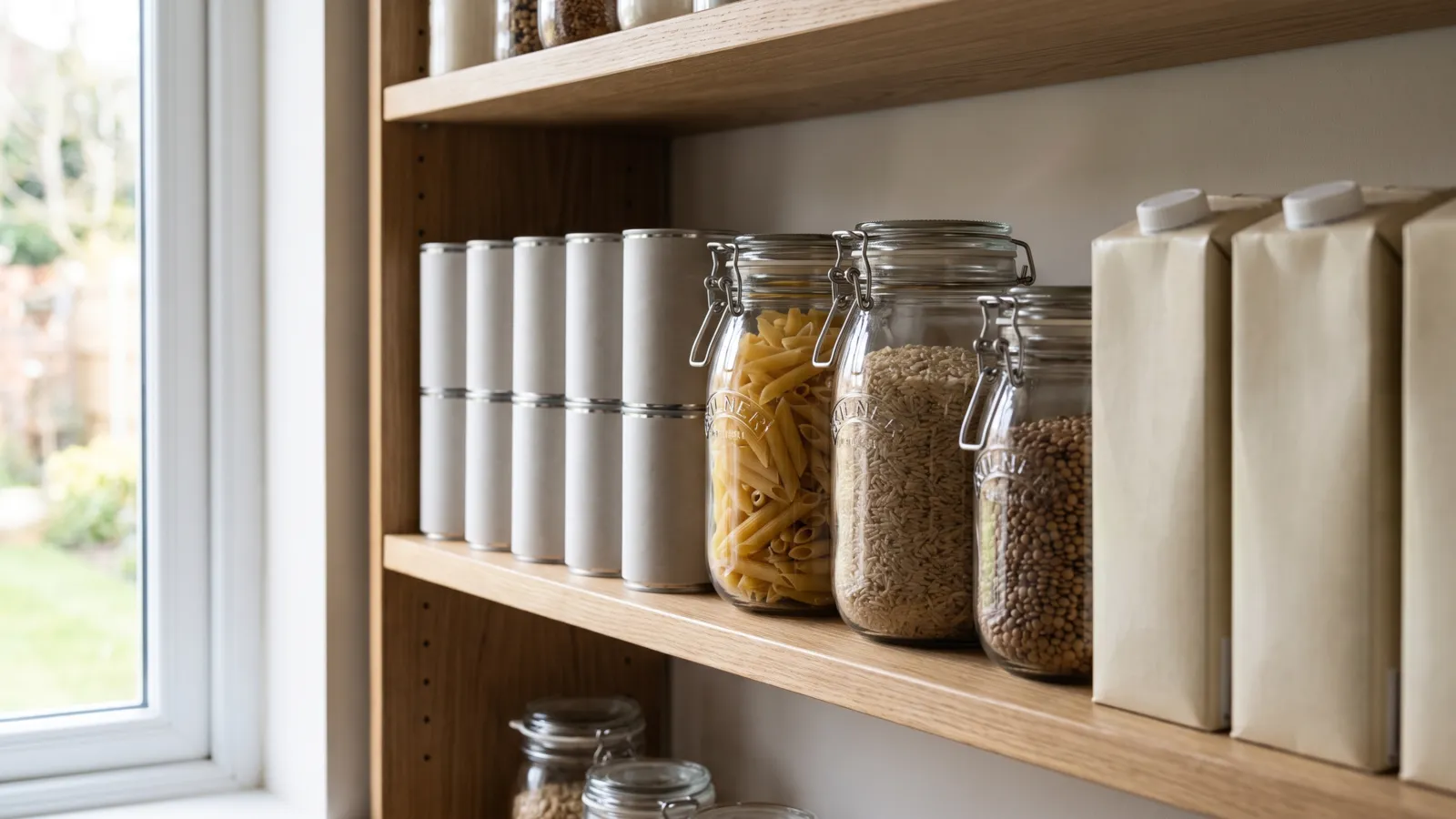
Dried staples are the most forgiving category in the kitchen. White rice, pasta, pulses, oats, sugar and salt kept dry and sealed decline in quality only, and slowly. Wholegrain rice, wholemeal flour and nuts fade faster because their natural oils oxidise — stale and dull rather than dangerous, which is exactly what best before measures. One sharp exception sits alongside them: cooked rice is a chilled food with its own rules — the FSA says keep it in the fridge for no more than a day before reheating.
UHT milk is the store cupboard's quiet workhorse: sealed, it sits happily at room temperature on a best before date months out. Opening it changes its category — from that moment follow the "once opened" instruction on the carton, keep it in the fridge, and treat it like fresh milk.
Eggs and the freezer: two special cases
Eggs carry a best before date, capped by egg marketing rules at a maximum of 28 days from the day they were laid — one of the few dates on a label with a fixed legal ceiling. The FSA's advice for eggs past that date is specific: they are safe to eat for a couple of days after the best before date if they are cooked well, with both the white and the yolk cooked thoroughly. So a hard-boiled egg or a fully baked cake, yes for a day or two; a runny yolk or homemade mayonnaise, no.
The freezer is a pause button, not a cure. Food frozen on or before its date does not become less safe in the freezer, because bacteria cannot grow on frozen food — the "use within three months" notes on packaging are there for texture and flavour. The safety rules sit at either end: freeze on or before the use-by date, defrost in the fridge, and use within 24 hours of defrosting. Freezing food already past its use-by date fixes nothing.
What this means for your emergency shelf
The practical conclusion for household resilience: build your reserve entirely from best before foods. Tins, dried goods and UHT fail gracefully — quality drifts down over months rather than safety collapsing overnight — which is why every serious store cupboard is built on them and why use-by foods cannot be stockpiled at all.
Rotation does the rest. New stock goes at the back, meals come from the front, and a twice-yearly date check — the clock changes are a convenient prompt — keeps anything from drifting years past its best. Stored that way, a week's worth of food you actually eat costs nothing extra: you are just eating your cupboard in a slightly different order.
Common questions
Can I eat yoghurt or milk after its use-by date?
No. Use-by is a safety mark, and FSA guidance is not to eat, cook or freeze any food after its use-by date — the sniff test is not reliable for these foods. Check which mark your pack actually carries, though: most fresh dairy carries a use-by date, while UHT milk and some hard cheeses carry a best before date, where quality judgement applies instead.
Can I freeze food on its use-by date?
Yes — right up to and including the date. Bacteria cannot grow on frozen food, so freezing on or before the use-by date pauses the clock legitimately. Defrost it in the fridge and use it within 24 hours of defrosting. Cooking is the other route: cook the food before its date, cool it, refrigerate it and eat it within 48 hours — or freeze the cooked dish. What you cannot do is cook or freeze food after the date has passed — freezing pauses the clock, it does not rewind it.
Are eggs safe after their best before date?
For a couple of days, yes — provided they are cooked thoroughly, with both white and yolk fully cooked, per FSA advice. Skip runny or raw uses once the date has passed. Egg best before dates are capped by law at 28 days from lay, so the date on the box is already a genuine freshness measure rather than a guess.
How long past its best before date is tinned food OK?
There is no fixed period — the FSA says it depends on the product, the storage conditions and the brand. An intact tin stored cool and dry stays safe long after the date; quality fades first. Judge the tin, not the number: bin anything swollen, leaking, badly dented or rusted through, and never store leftovers in an opened tin — decant and refrigerate.
Do 'sell by' and 'display until' dates mean anything?
Not to you. Only two date marks on UK food labels carry meaning for shoppers — use-by (safety) and best before (quality). Anything else is a stock-rotation note aimed at shop staff, which is why most retailers have phased them out. You can ignore them at home.
Does 'once opened, use within 3 days' override the date on the pack?
Yes — whichever comes first wins. Date marks assume an unopened pack stored as instructed; once you open it, the 'use within' instruction takes over. A jar with a best before date a year away still needs using within the stated days of opening, and kept in the fridge if the label says so.
Sources: Understanding food labelling: best before and use-by dates — GOV.UK (FSA guidance) · Home food fact checker — Food Standards Agency · Use-by and best-before dates — Food Standards Scotland · Eggs: trade regulations — GOV.UK. PreparedBritain is independent and not affiliated with HM Government.
The Emergency Kit Checklist
The GOV.UK Prepare essentials on one printable page — tick them off as you go and keep it with the kit. Free, no catch.
Download it straight away. We'll also send the occasional briefing when something genuinely matters — severe weather, live incidents, real price drops. Nothing else.
Keep reading
All food & growing guides →How much emergency food should you store? A per-person guide
The maths done for you: turn about 2,000 kcal and 3 litres of water per person per day into concrete food and water…
What to sow and plant this month: the UK vegetable calendar
A month-by-month UK guide to what vegetables to sow and plant — indoors and out — from January to December. Jump to…
Grow your own food: a realistic resilience guide
The calm, honest case for growing some of your own food in the UK — what a garden can and can't do, and the…