Best baby & child emergency kit UK (2026) — compared & price-tracked
A baby and child emergency kit is the under-5s layer of the household kit we cover in our main emergency kit list — the feeding, sterilising, warmth, health and carrying items a young family would need through a power cut at home or an unplanned night away. GOV.UK's Prepare guidance includes baby supplies such as nappies and formula in its recommended household kit, and specifically points to ready-made or ready-to-feed formula because you may not be able to boil water or sterilise bottles; this page is about doing that line item properly, from a few pounds for Milton sterilising tablets to a soft-structured carrier. The differences that matter here are not brand prestige but age gates and dependencies: which thermometer modes NHS guidance actually supports for a newborn, which items are inert without a consumable stored beside them, and which purchases only make sense if they earn their keep in daily use too. The useful question before buying anything is: what do we already own, and could we find it at 3am in the dark?
By Tom Calder · Updated 4 November 2026 · 15 products, all price-tracked
Our picks
 Photo: Amazon
Milton Steriliser (6 bottles)
Parents who want a no-power backup for sterilising bottles and dummies during a power cut, or as their everyday steriliser.
as of 4 Nov 2026, 19:07 GMT · Details
Product prices and availability are accurate as of the date/time indicated and are subject to change. Any price and availability information displayed on Amazon.co.uk at the time of purchase will apply to the purchase of this product. Photo: Amazon
Milton Sterilising Tablets - 2 Pack (56 Tablets Total)
Parents who cold-water sterilise day to day, or anyone who wants a power-cut backup to an electric steam steriliser.
as of 4 Nov 2026, 19:07 GMT · Details
Product prices and availability are accurate as of the date/time indicated and are subject to change. Any price and availability information displayed on Amazon.co.uk at the time of purchase will apply to the purchase of this product. Photo: Amazon
BabyBjörn Baby Carrier Harmony, 3D Mesh
Parents who need both hands free while evacuating with a baby, and want a carrier that earns its keep as everyday babywear too
as of 4 Nov 2026, 19:07 GMT · Details
Product prices and availability are accurate as of the date/time indicated and are subject to change. Any price and availability information displayed on Amazon.co.uk at the time of purchase will apply to the purchase of this product.All 15 compared
| Item | Age range | What it is | Shelf life / expiry | Pack / size | Price |
|---|---|---|---|---|---|
Birth until sterilising is no longer needed · Cold-water sterilising tub (no electricity) · Made-up solution stays sterile for 24 hours · 1 unit Parents who want a no-power backup for sterilising bottles and dummies during a power cut, or as their everyday steriliser. | Birth until sterilising is no longer needed | Cold-water sterilising tub (no electricity) | Made-up solution stays sterile for 24 hours | 1 unit | £21.99 at Amazon as of 4 Nov 2026, 19:07 GMT · DetailsProduct prices and availability are accurate as of the date/time indicated and are subject to change. Any price and availability information displayed on Amazon.co.uk at the time of purchase will apply to the purchase of this product.In stockCheck price → |
Our verdictOur verdictResearched A simple, well-proven bucket-and-tablet system that keeps working when the electricity doesn't — used on UK maternity wards for decades. It needs a little more hands-on prep than a steam steriliser, but it never fails you when the power's out. Best for Parents who want a no-power backup for sterilising bottles and dummies during a power cut, or as their everyday steriliser. Good
Worth knowing
Who shouldn't buy it: You already have a working steam or microwave steriliser and only want backup cover — a few sachets of Milton tablets and a clean lidded box (or even the bath) will do the same job without buying another unit. Read the full review → | |||||
From birth · Cold-water sterilising tablets · Unopened tablets keep well · 2 x 28-tablet packs, 56 tablets total Parents who cold-water sterilise day to day, or anyone who wants a power-cut backup to an electric steam steriliser. | From birth | Cold-water sterilising tablets | Unopened tablets keep well | 2 x 28-tablet packs, 56 tablets total | £8.25 at Amazon as of 4 Nov 2026, 19:07 GMT · DetailsProduct prices and availability are accurate as of the date/time indicated and are subject to change. Any price and availability information displayed on Amazon.co.uk at the time of purchase will apply to the purchase of this product.In stockCheck price → |
Our verdictOur verdictResearched Milton's tablets are the standard UK cold-water sterilising method and need no electricity, kettle or microwave to work — dissolve one in cold tap water and, per NHS guidance, leave feeding equipment in the solution for at least 30 minutes before use. That makes them a sensible, low-cost addition to a baby emergency kit even for families who normally use a steam steriliser. Best for Parents who cold-water sterilise day to day, or anyone who wants a power-cut backup to an electric steam steriliser. Good
Worth knowing
Who shouldn't buy it: Skip adding a spare pack if you've already stopped sterilising (NHS guidance is to continue until baby is at least 12 months old) or you don't bottle-feed or use a dummy at all. Read the full review → | |||||
0–3 years (3.2–15kg / 7–33lb, 53–100cm) · Soft-structured ergonomic baby carrier · No expiry · 1 carrier, adjustable waist belt Parents who need both hands free while evacuating with a baby, and want a carrier that earns its keep as everyday babywear too | 0–3 years (3.2–15kg / 7–33lb, 53–100cm) | Soft-structured ergonomic baby carrier | No expiry | 1 carrier, adjustable waist belt | £167.12 at Amazon as of 4 Nov 2026, 19:07 GMT · DetailsProduct prices and availability are accurate as of the date/time indicated and are subject to change. Any price and availability information displayed on Amazon.co.uk at the time of purchase will apply to the purchase of this product.In stockCheck price → |
Our verdictOur verdictResearched A well-made, hip-healthy-certified carrier that keeps both hands free for kit bags, torches or other children during an evacuation, and works just as well for ordinary daily use the rest of the year. The 3D Mesh fabric is bred for breathability rather than warmth, so add a coat or blanket layer if you're using it in a cold-weather emergency. Best for Parents who need both hands free while evacuating with a baby, and want a carrier that earns its keep as everyday babywear too Good
Worth knowing
Who shouldn't buy it: Don't buy this specifically for the kit if you already own a soft structured carrier or sling — any hands-free carrier satisfies the GOV.UK grab-and-go need. This one's worth the extra spend if you're buying your first carrier and will use it day to day, not just for the kit. | |||||
 0–3 month setting · In-ear digital thermometer · No expiry · 1 thermometer with in-box accessories Families who want fast, hygienic in-ear readings for newborns through to older children, with fever tracking in an app. | 0–3 month setting | In-ear digital thermometer | No expiry | 1 thermometer with in-box accessories | £45.45 at Amazon as of 4 Nov 2026, 19:07 GMT · DetailsProduct prices and availability are accurate as of the date/time indicated and are subject to change. Any price and availability information displayed on Amazon.co.uk at the time of purchase will apply to the purchase of this product.In stockCheck price → |
Our verdictOur verdictResearched The ThermoScan 7+ connect is a well-regarded, clinically-validated ear thermometer that's fast and gentle enough for newborns, and the Braun Family Care app is a genuinely useful way to track a feverish night rather than a gimmick. It's one of the pricier picks in this kit, so it suits households likely to get ongoing use from it, not just an emergency-only buy. Best for Families who want fast, hygienic in-ear readings for newborns through to older children, with fever tracking in an app. Good
Worth knowing
Who shouldn't buy it: Skip this if you just want a no-frills backup thermometer for the kit — Braun's own non-connected ThermoScan 7 (IRT6520) does the same core job for less. No single device replaces NHS guidance on when to seek help for a child's temperature. | |||||
 From birth · Infrared ear thermometer, pre-warmed tip · No expiry · Single thermometer with storage box Parents who want a fast, doctor-trusted ear reading that auto-adjusts from newborn through to older children and adults. | From birth | Infrared ear thermometer, pre-warmed tip | No expiry | Single thermometer with storage box | £44.85 at Amazon as of 4 Nov 2026, 19:07 GMT · DetailsProduct prices and availability are accurate as of the date/time indicated and are subject to change. Any price and availability information displayed on Amazon.co.uk at the time of purchase will apply to the purchase of this product.In stockCheck price → |
Our verdictOur verdictResearched A genuine step up from a basic digital thermometer, and it shows: readings in about three seconds and a colour-coded result matched to your child's age band, which matters when you're trying to read a wriggly toddler at 3am. It costs more than the simplest options, but it's the type most UK doctors and health visitors use themselves. Best for Parents who want a fast, doctor-trusted ear reading that auto-adjusts from newborn through to older children and adults. Good
Worth knowing
Who shouldn't buy it: If budget is the priority, a simple digital thermometer measures temperature just as validly for a fraction of the price — the Braun buys speed and convenience, not different medical advice. Either way, NHS guidance on managing a feverish child is the same regardless of which thermometer you use. Read the full review → | |||||
0–12 months (NHS sterilising guidance) · Cold-water steriliser tank, no power needed · Solution effective 24 hrs · 5L tank with lid, weighted grid, spout Households with a baby under 12 months who want a no-power backup for sterilising bottles and feeding kit during an outage. | 0–12 months (NHS sterilising guidance) | Cold-water steriliser tank, no power needed | Solution effective 24 hrs | 5L tank with lid, weighted grid, spout | £21.99 at Amazon as of 4 Nov 2026, 19:07 GMT · DetailsProduct prices and availability are accurate as of the date/time indicated and are subject to change. Any price and availability information displayed on Amazon.co.uk at the time of purchase will apply to the purchase of this product.In stockCheck price → |
Our verdictOur verdictResearched A well-established, no-electricity way to sterilise bottles and feeding kit using cold water — the same cold-water method the NHS describes for babies up to their first birthday. It only works alongside Milton's own sterilising tablets or fluid, so treat the two as a pair when stocking the kit. Best for Households with a baby under 12 months who want a no-power backup for sterilising bottles and feeding kit during an outage. Good
Worth knowing
Who shouldn't buy it: Don't buy if your baby is past 12 months and no longer using bottles or dummies — NHS guidance says routine sterilising isn't needed beyond that point. | |||||
 Approx. 3.2–20.4kg from birth to toddler · Soft-structured ergonomic baby carrier · N/A; durable item, not consumable · 1 carrier, one-size adjustable waist/torso Parents of newborns through toddlers who want a hands-free way to carry a child if they need to leave home on foot, e.g. during a prolonged power cut or evacuation. | Approx. 3.2–20.4kg from birth to toddler | Soft-structured ergonomic baby carrier | N/A; durable item, not consumable | 1 carrier, one-size adjustable waist/torso | £184.90 at Amazon as of 4 Nov 2026, 19:07 GMT · DetailsProduct prices and availability are accurate as of the date/time indicated and are subject to change. Any price and availability information displayed on Amazon.co.uk at the time of purchase will apply to the purchase of this product.In stockCheck price → |
Our verdictOur verdictResearched A well-regarded, breathable soft-structured carrier that covers newborn to toddler without a separate infant insert. A true newborn rides inward-facing only, as the other three carry positions don't unlock until 5–6 months — worth knowing given the emergency-evacuation use case. It's a genuine piece of everyday parenting kit rather than a dedicated emergency buy, so it earns its place mainly for households that don't already own a carrier. Best for Parents of newborns through toddlers who want a hands-free way to carry a child if they need to leave home on foot, e.g. during a prolonged power cut or evacuation. Good
Worth knowing
Who shouldn't buy it: You already own a well-fitted soft-structured carrier, wrap or sling — any carrier you're already used to will do the job in an emergency, so there's no need to buy this specific model just for prep. | |||||
 For childcare settings generally · HSE-guidance-based childcare first aid kit · No single fixed expiry · 11 item types, 61 pieces in total Nurseries, childminders and family homes that want a ready-made, HSE-guidance-based first aid box sized for a small childcare setting. | For childcare settings generally | HSE-guidance-based childcare first aid kit | No single fixed expiry | 11 item types, 61 pieces in total | £24.99 at Amazon as of 4 Nov 2026, 19:07 GMT · DetailsProduct prices and availability are accurate as of the date/time indicated and are subject to change. Any price and availability information displayed on Amazon.co.uk at the time of purchase will apply to the purchase of this product.In stockCheck price → |
Our verdictOur verdictResearched A sensible, no-frills childcare first aid box: child-friendly plaster sizes, a digital thermometer and instant ice pack, all in a wall-mountable case. It won't cover a large school on its own, but for a home, childminder or small nursery it's a solid one-off buy. Best for Nurseries, childminders and family homes that want a ready-made, HSE-guidance-based first aid box sized for a small childcare setting. Good
Worth knowing
Who shouldn't buy it: Don't buy this if you're kitting out a larger setting like a primary school or big nursery chain — step up to a larger BS 8599/HSE-rated kit rather than running several Mezzo boxes side by side. Also skip it if you need something portable for a grab-bag: this is a rigid wall-mounted box, not a carry kit — decant contents into a pouch or buy a smaller soft-sided kit instead. Read the full review → | |||||
 Ear mode: 6mo+ · 2-in-1 infrared ear + non-contact forehead · 1 thermometer + battery + storage case + Families who want one thermometer that covers both ear and forehead readings, with a silent mode for checking a sleeping child. | Ear mode: 6mo+ | 2-in-1 infrared ear + non-contact forehead | — | 1 thermometer + battery + storage case + | £29.99 at Amazon as of 4 Nov 2026, 19:07 GMT · DetailsProduct prices and availability are accurate as of the date/time indicated and are subject to change. Any price and availability information displayed on Amazon.co.uk at the time of purchase will apply to the purchase of this product.In stockCheck price → |
Our verdictOur verdictResearched A capable two-in-one thermometer that covers most of a family's fever-checking needs without recurring probe-cover costs. It sits at the upper end of the price range for a household thermometer, so it suits those who want both modes rather than a single-purpose device. Best for Families who want one thermometer that covers both ear and forehead readings, with a silent mode for checking a sleeping child. Good
Worth knowing
Who shouldn't buy it: Don't buy if you just want the cheapest single-mode forehead thermometer for one child — dedicated no-touch forehead thermometers do that job for roughly half the price. Read the full review → | |||||
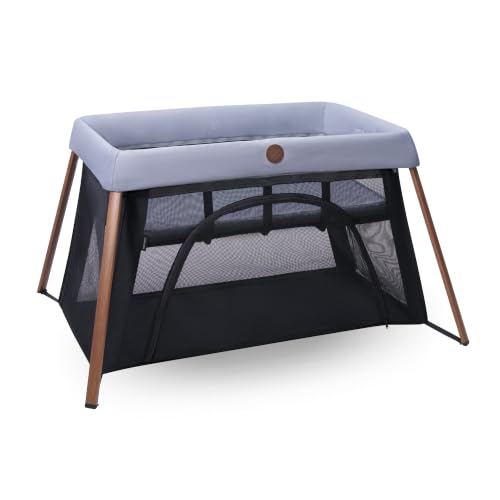 Birth–3 years (0–15kg) · 2-in-1 fold-out travel cot with two fixed sleep · No expiry · Cot with foam mattress + carry bag Families who want one cot that works as everyday travel kit and doubles as a ready sleep space if you ever need to move a baby at short notice. | Birth–3 years (0–15kg) | 2-in-1 fold-out travel cot with two fixed sleep | No expiry | Cot with foam mattress + carry bag | £169.99 at Amazon as of 4 Nov 2026, 19:07 GMT · DetailsProduct prices and availability are accurate as of the date/time indicated and are subject to change. Any price and availability information displayed on Amazon.co.uk at the time of purchase will apply to the purchase of this product.In stockCheck price → |
Our verdictOur verdictResearched A well-reviewed travel cot from an established UK nursery brand, with two sleep levels that take a baby from newborn through to toddler. It's a bigger outlay than most items in a baby emergency kit, so it earns its place best as dual-purpose kit rather than a single-use emergency buy. Best for Families who want one cot that works as everyday travel kit and doubles as a ready sleep space if you ever need to move a baby at short notice. Good
Worth knowing
Who shouldn't buy it: Don't buy this specifically for an emergency kit if you already have a usable travel cot, Moses basket, or similar — the safety point is having any familiar, safe sleep space ready, not this particular model. Read the full review → | |||||
 All ages · Compact 42-piece first aid kit in a zipped · No fixed kit expiry · 42 items, 17 x 12 x 7cm pouch, 473g One grab-and-go kit that covers minor cuts, grazes and burns for the whole family at home, in the car or on holiday. | All ages | Compact 42-piece first aid kit in a zipped | No fixed kit expiry | 42 items, 17 x 12 x 7cm pouch, 473g | £23.99 at Amazon as of 4 Nov 2026, 19:07 GMT · DetailsProduct prices and availability are accurate as of the date/time indicated and are subject to change. Any price and availability information displayed on Amazon.co.uk at the time of purchase will apply to the purchase of this product.In stockCheck price → |
Our verdictOur verdictResearched A tidy, CE-certified starter kit with a sensible mix of dressings, wipes and tools at a fair price. It's a general family kit rather than a baby-specific one, so use it alongside — not instead of — your own newborn essentials and NHS first aid guidance. Best for One grab-and-go kit that covers minor cuts, grazes and burns for the whole family at home, in the car or on holiday. Good
Worth knowing
Who shouldn't buy it: You want a kit built specifically around newborn needs (e.g. infant-specific dosing guidance or a nasal aspirator) — this is a general family kit; check contents against NHS newborn first aid guidance and add anything baby-specific yourself. Read the full review → | |||||
 3 yrs+ (not for under 36 months) · Kids' 4-colour LED torch, ~70 lumens, blink mode · No expiry · 1 torch; 2x AAA batteries included Giving a young child (3+) their own safe, low-glare torch to keep in a family emergency kit or by the bed for a power cut. | 3 yrs+ (not for under 36 months) | Kids' 4-colour LED torch, ~70 lumens, blink mode | No expiry | 1 torch; 2x AAA batteries included | £21.95 at Amazon as of 4 Nov 2026, 19:07 GMT · DetailsProduct prices and availability are accurate as of the date/time indicated and are subject to change. Any price and availability information displayed on Amazon.co.uk at the time of purchase will apply to the purchase of this product.In stockCheck price → |
Our verdictOur verdictResearched A genuinely child-friendly torch rather than a scaled-down adult one — soft colour modes, a sensible auto shut-off, and light enough for small hands. Worth having in a baby/child kit for reassurance during a blackout, but it's a comfort item, not core survival kit. Best for Giving a young child (3+) their own safe, low-glare torch to keep in a family emergency kit or by the bed for a power cut. Good
Worth knowing
Who shouldn't buy it: Skip it if your child already has a working torch, or if budget is tight — this is a nice-to-have for a child's comfort and independence, not essential kit, so prioritise water, food and warmth items first. Read the full review → | |||||
 13. Mini First Aid Kit - 90 Items Kids First Aid Kit (Plasters, Bandages, Scissors, Tweezers & Burn Gel) Babies & children (family-use kit) · Compact zip-pouch first aid kit for minor cuts · No kit-level expiry · 90-piece pouch kit Parents who want a small, kid-friendly kit for everyday cuts, grazes and bumps to keep in the changing bag, car or nursery bag. | Babies & children (family-use kit) | Compact zip-pouch first aid kit for minor cuts | No kit-level expiry | 90-piece pouch kit | £14.99 at Amazon as of 4 Nov 2026, 19:07 GMT · DetailsProduct prices and availability are accurate as of the date/time indicated and are subject to change. Any price and availability information displayed on Amazon.co.uk at the time of purchase will apply to the purchase of this product.In stockCheck price → |
Our verdictOur verdictResearched A sensibly priced kit from Mini First Aid, a UK specialist baby/child first-aid training brand with a solid reputation. It covers the minor-injury basics well with kid-sized plasters and simple tools, but it's a top-up kit rather than a full family emergency kit. Best for Parents who want a small, kid-friendly kit for everyday cuts, grazes and bumps to keep in the changing bag, car or nursery bag. Good
Worth knowing
Who shouldn't buy it: Don't buy it if you want a single kit to cover the whole family or bigger incidents — Mini First Aid's own larger Family kit (115 items) or a workplace-grade BS8599 kit gives broader cover for modest extra cost. Read the full review → | |||||
 2-6 years (sizes 2-3 to 5-6 Years) · Thermal base layer set: long-sleeve top + · No expiry · 1 top + 1 pair of leggings per set A cheap extra warmth layer to keep in the kit for toddlers and young children during a cold-house power cut or winter emergency. | 2-6 years (sizes 2-3 to 5-6 Years) | Thermal base layer set: long-sleeve top + | No expiry | 1 top + 1 pair of leggings per set | £11.89 at Amazon as of 4 Nov 2026, 19:07 GMT · DetailsProduct prices and availability are accurate as of the date/time indicated and are subject to change. Any price and availability information displayed on Amazon.co.uk at the time of purchase will apply to the purchase of this product.In stockCheck price → |
Our verdictOur verdictResearched A budget acrylic-and-viscose base layer set that does the job of keeping a small child warm without bulk, and works as an everyday layer under clothing so it doesn't sit unused in a bag. Not a technical fabric, but for a grab-bag layer that's not really the point. Best for A cheap extra warmth layer to keep in the kit for toddlers and young children during a cold-house power cut or winter emergency. Good
Worth knowing
Who shouldn't buy it: Skip it if you want one specialist thermal for extended outdoor or winter-sports use — a proper merino base layer performs better over long exposure. This is best thought of as a cheap indoor-warmth layer for the kit, not technical outdoor kit. | |||||
Sold out right now (1)
The shop says these are sold out today. We check stock every hour, and each one moves back up the list when it returns.
| Item | Age range | What it is | Shelf life / expiry | Pack / size | Price |
|---|---|---|---|---|---|
 Birth to 3 years (36 months) · Fold-out frame travel cot with tool-free 3-step · No fixed expiry · Cot frame, mattress, instruction manual Families who want one travel cot that earns its keep on holidays and doubles as baby's familiar bed if you need to decamp to a relative's or a rest centre. | Birth to 3 years (36 months) | Fold-out frame travel cot with tool-free 3-step | No fixed expiry | Cot frame, mattress, instruction manual | Out of stockCheck price → |
Our verdictOur verdictResearched A well-reviewed, quick-folding, fold-out travel cot with a newborn bassinet insert and playpen mode, so it covers birth to around age three. It is an everyday item, not an emergency-only purchase, but that dual use is exactly why it earns a place in a household kit list. Best for Families who want one travel cot that earns its keep on holidays and doubles as baby's familiar bed if you need to decamp to a relative's or a rest centre. Good
Worth knowing
Who shouldn't buy it: Don't buy one specifically for the emergency kit if you already own a travel cot or bedside crib you'd grab to take to a relative's — this only earns its place if it's the one you'd use day-to-day too. Read the full review → | |||||
ⓘ As an Amazon Associate, PreparedBritain earns from qualifying purchases. We may earn a commission when you buy, or a fee when you request a quote, through our links. When two products are close, commission can decide which one we pick. A clearly better product always wins. Amazon prices come from Amazon's own product data and show the date and time they were retrieved. Prices at other retailers are checked by us, less often. Prices and stock can change at any time, so always check the retailer's price before you buy.
Before you buy
Start by splitting the job in two, because a baby kit serves two different situations.
The first is staying put — a power cut or water outage at home — where what matters is sterilising without electricity, warmth, light and a working thermometer. The second is leaving in a hurry or decamping to relatives, where carrying and sleep take over: a hands-free carrier and somewhere familiar for the baby to sleep. Nothing here needs buying twice; it needs locating, checking and topping up — a job that belongs in the household emergency plan we cover separately. Read the age range column ruthlessly, because here it gates rather than guides: the Ledlenser KidBEAM4 torch is explicitly not for under-36-months, the Zando thermals start at age two, ear thermometer modes carry minimum ages, and a carrier's weight range decides whether a newborn can use it at all. A "baby and child" label on the box does not mean every age; the column does.
Feeding is where NHS guidance should drive the purchase.
If your baby is under 12 months and uses bottles or dummies, the NHS advises sterilising all feeding equipment, and its cold-water method is the one that still works with the power off: dissolve a sterilising tablet in cold tap water and leave everything fully submerged for at least 30 minutes — the NHS figure, and the one to follow even though Milton's packaging quotes 15 — then make the solution up fresh every 24 hours. That is why the Milton tub and tablets appear as a pair: the tub takes six standard bottles but does nothing without tablets, and the tablets carry printed expiry dates, so they join the same date rotation as the rest of the kit. Remaking solution daily also consumes clean water, which belongs in the water storage our main emergency kit list covers. Formula itself is informed, never linked — see above.
Thermometers are where spec sheets and NHS guidance part company, so anchor on the guidance.
For a baby under 4 weeks, NHS and NICE fever guidance for under-5s points to a digital thermometer under the armpit — no infrared device here is the recommended tool for a newborn, so a basic digital stick belongs in the kit regardless. From 4 weeks an in-ear reading is an accepted method, which the Braun ThermoScan 7 does well: about three seconds, with age-adjusted colour coding. Its running cost is real — a fresh hygiene cap per reading, so keep a spare box in the kit. The step-up 7+ connect adds Bluetooth and app history you may not be able to use in the exact outage you bought it for. Whatever you own, NHS advice is that 38°C or above in a baby under 3 months needs urgent medical advice — the thermometer measures; NHS 111 decides.
Carriers and cots are the big-ticket decisions, and the honest rule is dual use or don't buy.
A soft-structured carrier earns its place — hands free for bags, torches or another child where a pushchair fails — but any sling or carrier you already own covers that need. For a first buy, the Ergobaby Omni Breeze and BabyBjörn Harmony both span newborn (from 3.2kg) to toddler; carry positions are age-gated, and on the Breeze a newborn rides inward-facing only, with outward and back carries from five and six months. Follow the TICKS safer-babywearing checklist drawn up by the Consortium of UK Sling Manufacturers and Retailers, which the Lullaby Trust publishes. Travel cots such as the Venture Airpod and the Maxi-Cosi Iris2 are planned-evacuation kit, not grab-bag items at about 6kg; use only the supplied mattress, with no added bedding and nothing folded underneath it, per NHS and Lullaby Trust safer-sleep advice, and mind the Iris2 bassinet limits: six months, 9kg, or the point your baby can sit unaided or push themselves up on hands and knees — whichever comes first.
First aid, light and warmth are the affordable layer, and what matters most is what is not in the box.
None of the three first aid kits here carries a painkiller — HSE guidance recommends keeping tablets and medicines out of first aid boxes altogether — so pain relief and dosing stay a matter for NHS advice, not the pouch; the only licensed medicine anywhere in them is the 25g tube of Sudocrem in the LittleLife kit, and our home first aid kit checklist covers the household-wide version. Choose by format: the Astroplast Mezzo is a wall-mounted box for home or a childminding setting, not something a grab-bag will take, while the Mini First Aid and LittleLife pouches travel. Treat piece counts as marketing — the brand's own published breakdown for a Mini First Aid kit counts bravery stickers and a leaflet among the items. The Ledlenser KidBEAM4 gives a child their own light, with a screw-locked battery compartment and 20-minute auto shut-off, but is barred for under-36-months. The Zando thermals run age two to six and are sold by age (2-3 to 5-6 years); they are neither sold nor tested as children's nightwear under the Nightwear (Safety) Regulations 1985 — daytime layering only.
We verify every product's specifications against at least two independent sources, re-check its UK price and stock on a schedule where we can track it automatically, and cross-check safety-relevant claims against official guidance. Every review is labelled Researched or Used and reviewed by us: where we've bought a product, or been sent it free, and used it ourselves, its review says which; where we haven't, our verdict is a considered spec-and-evidence comparison, not a hands-on test. When two products are close, commission can decide which one we pick. A clearly better product always wins. Read our full methodology →
Related kit comparisons
Guides that go with this
The Government's recommended kit — with the best products for each item at every budget.
A simple, practical household emergency plan — following the government's Be Ready advice: contacts, meeting p…
A calm UK checklist for a home first aid kit — sensible quantities room by room, sourced to the NHS and Britis…
Common questions
What should a baby and child emergency kit include?
Treat it as the under-5s layer on top of the household kit covered in our main emergency kit list. Add: nappies, wipes and sacks; ready-to-feed cartons of your usual formula if you bottle-feed, rotated by date; sterilising tablets and a cold-water tub while your baby still needs feeding kit sterilised; a thermometer NHS guidance supports for your baby's age; a child-focused first aid kit; warm layers; a carrier for hands-free evacuation; and, for older children, a comfort item and their own torch. Note prescribed medicines on the kit checklist so you grab them fresh rather than storing them, and fold every dated item into one rotation routine.
Why doesn't this page link to any infant formula?
Because UK law restricts it. Assimilated Commission Delegated Regulation (EU) 2016/127 — enforced in England by the Food for Specific Groups (Information and Compositional Requirements) (England) Regulations 2016, and by equivalents in Scotland, Wales and Northern Ireland — limits advertising of first infant formula to baby-care and scientific publications and bans point-of-sale promotion and samples. (The Infant Formula and Follow-on Formula (England) Regulations 2007, still cited in a lot of older writing, were repealed in February 2020.) We extend the same no-link policy to follow-on milks for simplicity. What we can usefully tell you is practical, and it is what GOV.UK's Prepare kit list says too: if your baby is formula-fed, keep a few ready-to-feed cartons of the brand you already use in the kit and rotate them by use-by date. NHS bottle-feeding guidance notes ready-to-feed liquid formula is sterile until opened — the property that matters most in a power cut, when safely preparing powdered formula, which needs water at 70°C or hotter, may not be possible. You still need to sterilise the bottle and teat, which is why the cold-water kit here matters.
How do I sterilise baby bottles in a power cut?
Use the cold-water method the NHS describes: dissolve a sterilising tablet (or measure of fluid) in cold tap water, submerge bottles, teats and dummies completely with no air bubbles, and leave them for at least 30 minutes. Make up fresh solution every 24 hours. Milton's own packaging quotes 15 minutes; we follow the NHS figure. A 5-litre tub such as Milton's holds up to six standard bottles, but any clean lidded container works with the tablets, so the tablets — not the tub — are the essential purchase. NHS advice is to keep sterilising feeding equipment until your baby is at least 12 months old.
Which thermometer does the NHS recommend for a baby?
For a baby under 4 weeks old, NHS and NICE guidance on fever in under-5s points to a digital thermometer under the armpit — not ear or forehead devices. From 4 weeks, an infrared ear thermometer is an accepted method, which is where the Braun ThermoScan 7's age-banded colour display earns its price; note iProven sets its own ear mode at 6 months and up. Treat no-touch forehead modes as a convenience check on a sleeping child, not the reading you act on. And per NHS advice, a temperature of 38°C or above in a baby under 3 months needs urgent medical advice — contact your GP or NHS 111.
Is a baby carrier really emergency kit?
It earns its place because if you ever leave on foot — flood water, debris, stairs, a crowded rest centre — a pushchair fails where a carrier works, keeping both hands free for bags and other children. The need, though, is hands-free carrying, not a specific product: a wrap, sling or carrier you already own and fit confidently covers it. If you are buying your first anyway, dual use justifies the spend on the Ergobaby Omni Breeze or BabyBjörn Harmony. Whichever you use, follow the TICKS checklist drawn up by the Consortium of UK Sling Manufacturers and Retailers and published by the Lullaby Trust: Tight; In view at all times; Close enough to kiss; Keep chin off chest; Supported back.
Can my child sleep in thermal base layers during a power cut?
Use them as a daytime layer under normal clothes, not as pyjamas. Thermal base layer sets such as the Zando are neither sold nor tested as children's nightwear — the Nightwear (Safety) Regulations 1985 require children's nightdresses and dressing gowns to meet the BS 5722 flammability standard, and children's pyjamas to be labelled either "low flammability to BS 5722" or "keep away from fire", and a base layer goes through neither route. For sleep, NHS and Lullaby Trust safer-sleep guidance also warns against overheating and adding extra layers or bedding to a sleeping baby; a cold house is managed with a correctly dressed, monitored child, not by piling on layers at bedtime. In a travel cot, use only the supplied mattress, with no duvets, pillows or padding and nothing folded underneath it.
How often should I check and rotate a baby emergency kit?
More often than an adult kit, because two clocks run at once: expiry dates and your child's growth. Dated consumables — Milton sterilising tablets, ready-to-feed formula cartons, and the burn gel, eye wash and saline wipes inside first aid kits — all need replacing on their printed dates; in the LittleLife kit, the burn gel and eye wash are usually the shortest-dated items. Growth moves faster still: thermals come in age sizes a child soon outgrows, carriers have weight limits, and the Maxi-Cosi Iris2's bassinet level ends at six months, 9kg, or the point your baby can sit unaided or push themselves up on hands and knees — whichever comes first. A check every three to six months covers both — the clock changes make an easy reminder — with batteries, straps and buckles inspected at the same time.
