How to store emergency water at home
How much water your household actually needs, the cheapest way to store it, how to keep it safe, and what to do in a drought — from official UK guidance.
By Tom Calder · Updated 19 September 2026 · Sourced to GOV.UK, the DWI & NHS
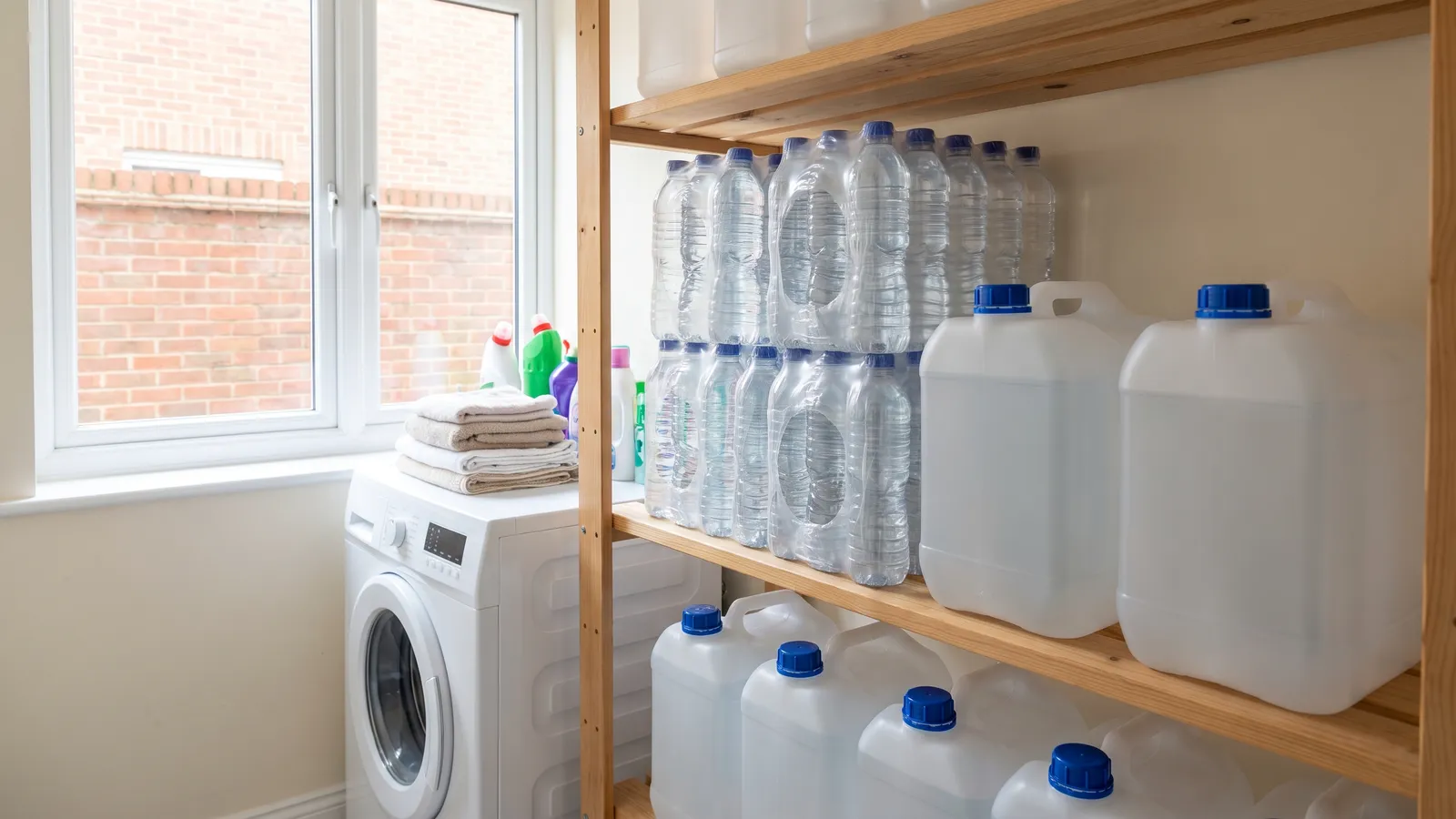
How much water you need
The figure behind official guidance is 2.5–3 litres of drinking water per person per day as a minimum, and around 10 litres per person per day once you include cooking and basic hygiene. For a family of four planning three days, that's roughly 36 litres minimum, or about 120 litres to be comfortable.
Don't forget pets — a dog or cat needs its usual daily water too — and remember babies on formula need clean water to prepare it. Our kit builder sizes it all for your exact household.
The cheapest way: sealed bottled water, rotated
Supermarket multipack bottled water is sealed, safe, date-stamped and costs pence per litre. Buy a couple of packs more than you'd normally use, store them somewhere cool and dark, and rotate them through normal drinking before their best-before dates. No special kit required, and nothing to maintain.
Keep bottles out of direct sunlight and off bare concrete floors, and away from strong-smelling chemicals like petrol or cleaning products — thin plastic can slowly pick up odours over months.
Storing more: containers
If you want more than a few packs of bottles, dedicated food-grade containers are the tidy way to do it: rigid jerry cans (10–25 litres), stackable bricks that use space efficiently, or a large bladder that fills a bathtub when a supply interruption is forecast. Look for 'food grade' and a BPA-free rating, and store filled containers somewhere cool and dark.
This is where you can genuinely overspend, so buy for the amount you'll actually store and no more.
Filling your own containers safely
If you fill your own, use food-grade containers only — never ones that have held chemicals. Wash them thoroughly, fill from the cold mains tap, seal, and label with the date. UK tap water is high quality at the tap, but it isn't treated for long-term storage the way sealed bottled water is, so treat home-filled water as a shorter-rotation store and refresh it every six months or so.
A filter is a useful complement for emergencies, not a substitute for stored water — you can't filter water you don't have.
Making water safe to drink
If you ever have to use water from an uncertain source, the safest method is a rolling boil for one minute, then letting it cool — that kills bacteria, viruses and parasites. Where boiling isn't possible, water purification tablets (chlorine or chlorine dioxide) make most water safe if you follow the dose and contact time on the pack exactly.
Filters vary: a good filter straw or bottle removes bacteria and parasites, but only some also remove viruses, so check the rating before you rely on one. During any official 'boil water' or 'do not drink' notice from your water company, follow that notice above all else.
Water in a drought or hosepipe ban
A hosepipe ban does not mean your drinking water is at risk — it restricts sprinklers and hoses to protect supplies, while the water from your taps carries on as normal. So a ban is not a reason to panic-buy bottled water.
Rainwater collected in a water butt is fine for the garden but is not safe to drink. If you want to track what's happening to supplies near you, our live trackers follow reservoir levels and every water company's ban.
Water for babies and pets
For babies, ready-to-feed liquid formula needs no water and is the simplest option to keep in an emergency store. If you use powdered formula, the NHS advises making each feed with water that has been boiled and cooled to no less than 70°C — so a way to boil water matters if there's a baby in the house.
Pets need their normal daily water too; include theirs when you size your store, and keep a spare bowl in the grab bag.
Common questions
How much water should I store per person?
The WHO figure the Government cites is 2.5–3 litres of drinking water per person per day as a minimum, or about 10 litres to also cover cooking and hygiene. For three days that's roughly 9 litres per person minimum, or about 30 litres to be comfortable.
How long can I store bottled water?
Sealed shop-bought bottled water is fine until its best-before date — typically one to two years. Store it cool, dark and away from chemicals, and rotate it through normal use so it never expires in the cupboard.
Can I store tap water?
Yes, short-term, in clean food-grade containers — label them and refresh every six months or so. For longer storage with no maintenance, sealed bottled water is the safer, simpler option.
How do I make water safe to drink in an emergency?
Boil it at a rolling boil for one minute and let it cool — that's the gold standard. Purification tablets are a good backup if you follow the pack's dose and timing. Always follow any official 'boil water' notice from your water company first.
Is my tap water affected by a hosepipe ban?
No. A hosepipe ban restricts sprinklers and hoses to save water; the drinking water from your taps continues as normal. It isn't a reason to buy bottled water.
Can I drink rainwater from a water butt?
No — water-butt rainwater is fine for the garden but is not treated or safe to drink. Keep stored bottled or tap water for drinking.
Sources: GOV.UK Prepare — water and supplies · Drinking Water Inspectorate — tap water quality · NHS — making up baby formula safely. PreparedBritain is independent and not affiliated with HM Government.
The Emergency Water Checklist
One page: how much to store per person, the cheapest ways to store it properly, how to make uncertain water safe, and what changes in a hosepipe ban. Free, no catch.
Download it straight away. We'll also send the occasional briefing when something genuinely matters — severe weather, live incidents, real price drops. Nothing else.
Keep reading
All water guides →No water coming out of your taps? What to do, your rights and compensation
No water from your taps? How to check if it's your pipe or the mains, fill up fast, find bottled water stations, and…
How to purify water in an emergency: safe UK methods
The ways to make water safe in an emergency — boiling, tablets and filters — what each actually removes, what none…
Is UK tap water safe to drink?
A calm, sourced answer: UK mains tap water is among the safest in the world. What the regulation says, why taste…