Boil water notices: exactly what to do
What a boil water notice means, precisely how to make tap water safe, what you can and can't use the tap for, and how it differs from a 'do not drink' notice.
By Tom Calder · Updated 20 July 2026 · Sourced to the Drinking Water Inspectorate & UKHSA
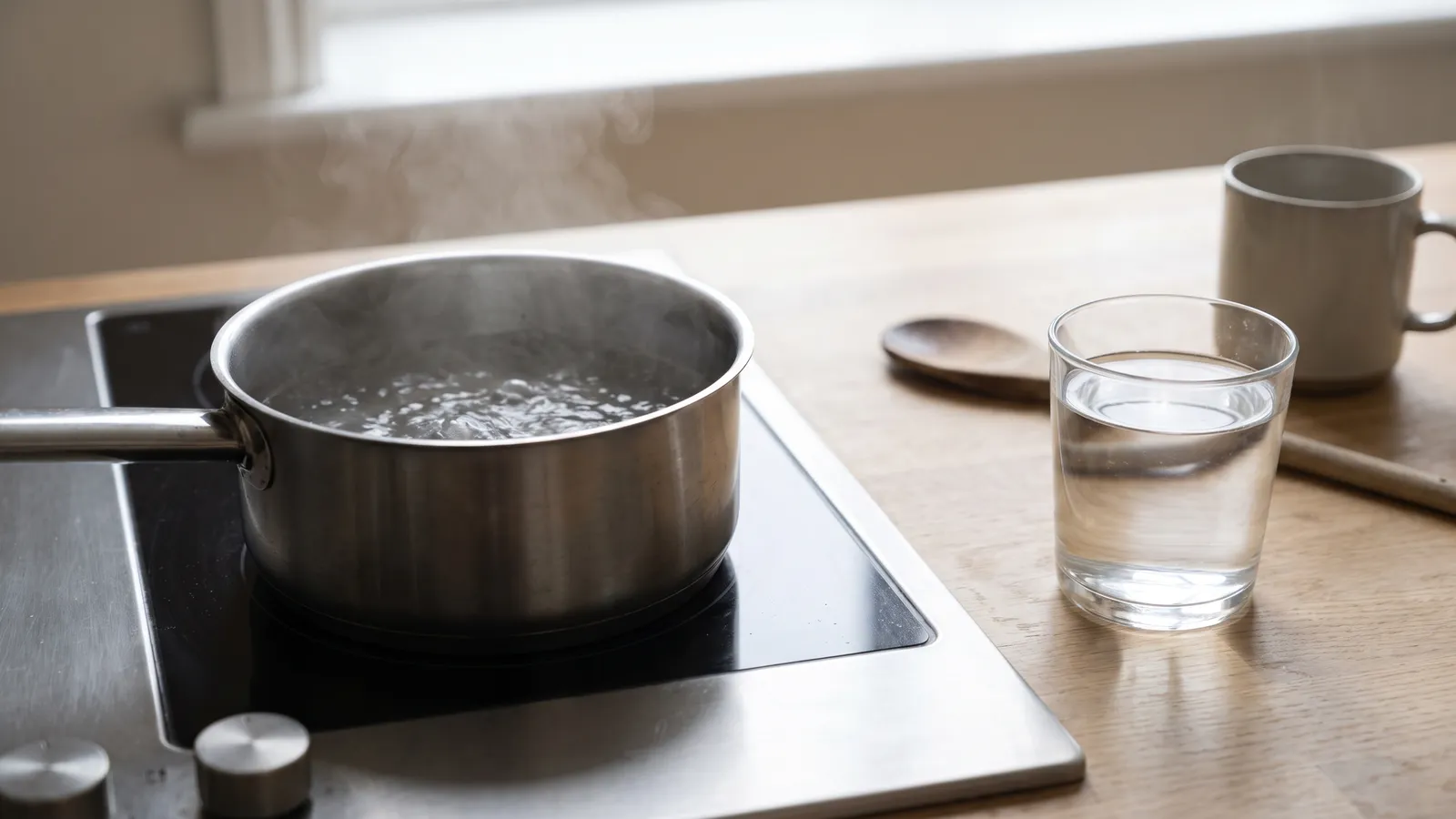
What a boil water notice is
A boil water notice is issued when the public water supply may contain harmful microorganisms — bacteria, viruses, or parasites such as Cryptosporidium. Boiling is the instruction because heat kills or inactivates these pathogens; most bacteria and viruses are killed at temperatures well below 100°C, so bringing water to the boil deals with them reliably.
It's a precaution while an incident is investigated, not a sign the whole supply has failed. The great majority of the tap's uses continue as normal — it's specifically the water you swallow that needs treating.
Exactly how to make water safe
Bring the water to the boil and then let it cool naturally. A rolling boil is sufficient — water companies, and international guidance from the CDC and WHO, commonly specify a full rolling boil for one minute at low altitude. There's no need to boil for long periods.
Store the cooled, boiled water in a clean, covered container in the fridge, and discard it after 24 hours. Two things people often get wrong: don't try to speed-cool it in a way that risks re-contamination, and remember that boiling is still required even if the water has passed through a home or jug filter — a standard filter improves taste, it doesn't make microbiologically unsafe water safe.
What to use cooled boiled (or bottled) water for
Use cooled boiled water or bottled water for anything that goes in the mouth or touches food: drinking, brushing teeth, making ice cubes, preparing food, cleaning baby feeding equipment, making up infant formula, and giving to pets.
That list is the heart of a boil notice. If you keep a few litres of stored water per person at home, you can cover the first hours comfortably while you get a pan boiling.
What the tap is still fine for
You do not need to boil water for most household uses. Under a boil notice, tap water remains safe without boiling for showering and bathing — just avoid getting water in your mouth, with extra care for young children — as well as for flushing toilets, doing laundry, and washing dishes in hot water and drying them thoroughly.
Knowing this prevents the notice from turning into a panic: normal life mostly continues, and only your drinking and food-prep water changes.
'Boil water' vs 'do not drink' vs 'do not use'
It's important not to confuse the notices. A boil water notice covers microbiological contamination that boiling fixes. A 'do not drink' notice is more serious — it's used for chemical contamination, such as hydrocarbons, where boiling will not make the water safe and may even concentrate the contaminant. Under 'do not drink', don't use the tap for drinking, teeth-cleaning, food preparation or cooking. The most serious 'do not use' notices mean not using the tap at all, with bottled or alternative supplies provided.
Always follow the specific instructions from your water company and UKHSA above all else — they define the affected area, the permitted uses, and when the notice is lifted.
It happened recently: Brixham, 2024
This isn't theoretical. On 15 May 2024, South West Water issued a boil water notice covering up to about 17,000 properties in the Alston and Hillhead areas of Brixham, Devon, after a spike in cryptosporidiosis. UKHSA laboratory-confirmed 118 cases, with over 1,000 residents reporting symptoms and two people admitted to hospital; there were no deaths. The contamination was traced to a damaged air-valve casing on private land.
It also shows the system working: in serious incidents the water company must provide alternative supplies, and South West Water distributed around 129,000 two-litre bottles, ran staffed bottled-water stations, and paid compensation to affected customers. The final notices were lifted on 8 July 2024. Boil water advice is a short-term measure while an incident is resolved — not a permanent state of affairs.
Common questions
What does a boil water notice mean?
It means the public supply may contain harmful microorganisms — bacteria, viruses or parasites like Cryptosporidium — so you should boil any water you're going to drink or use for food until the notice is lifted. Most other tap uses continue as normal.
How long do I need to boil the water?
Bring it to a full rolling boil — commonly one minute at low altitude — then let it cool naturally. Store cooled boiled water in a clean, covered container in the fridge and discard it after 24 hours.
Does putting it through a filter jug make it safe instead?
No. Boiling is still required even if the water has passed through a home or jug filter — a standard filter improves taste but doesn't make microbiologically unsafe water safe to drink.
What can I still use the tap for during a boil notice?
Without boiling, tap water is fine for showering and bathing (avoid swallowing it, and take care with young children), flushing toilets, laundry, and washing dishes in hot water dried thoroughly. Only drinking and food-prep water needs boiling.
What's the difference between 'boil water' and 'do not drink'?
A boil notice covers microbes that boiling kills. A 'do not drink' notice is for chemical contamination where boiling won't help and may concentrate the contaminant — so you must not use it for drinking, teeth, food prep or cooking, and should follow the alternative-supply instructions.
Should I stockpile bottled water when a notice is issued?
No need — in serious incidents the water company must provide alternative supplies, as happened in Brixham in 2024. Keeping a few litres of stored water per person at home is enough to bridge the first hours comfortably.
Sources: Drinking Water Inspectorate — Receiving a Boil Water Notice · UKHSA — Brixham cryptosporidium investigation · South West Water — Brixham incident updates. PreparedBritain is independent and not affiliated with HM Government.
The Emergency Water Checklist
One page: how much to store per person, the cheapest ways to store it properly, how to make uncertain water safe, and what changes in a hosepipe ban. Free, no catch.
Download it straight away. We'll also send the occasional briefing when something genuinely matters — severe weather, live incidents, real price drops. Nothing else.
Keep reading
All water guides →Hosepipe ban rules: what you can and can't do
What a Temporary Use Ban actually restricts, what's still allowed, the exemptions, the £1,000 fine, and how to keep…
How to store emergency water at home
How much water your household actually needs, the cheapest way to store it, how to keep it safe, and what to do in a…
No water coming out of your taps? What to do, your rights and compensation
No water from your taps? How to check if it's your pipe or the mains, fill up fast, find bottled water stations, and…