Heating oil help this winter: what each UK nation offers, and how to apply
Northern Ireland’s £100 card, Scotland’s £300 paid to your supplier, England’s council Crisis Payments and the £27 million top-up (with the biggest allocations), Wales’s Discretionary Assistance Fund, cheaper ways to buy oil, what to do when a delivery goes wrong, the scam pattern to watch for, and the separate £9,000 heat pump grant for off-gas homes.
Northern Ireland: a one-off £100 digital card towards oil, applied for on nidirect only, for households with net income under £30,000 or on a qualifying benefit, open until 31 March 2027. Scotland: £300 paid straight to your oil or LPG supplier through Advice Direct Scotland (0800 048 7413), for people on a means-tested benefit or in hardship with an added vulnerability, extended into winter with no fixed end date. England: no national scheme; your county or unitary council’s Crisis Payment scheme is the route, and 54 councils shared a £27 million heating oil top-up, Norfolk’s £3.06 million the largest. Wales: an emergency grant through the Discretionary Assistance Fund, applied for via an approved partner such as your council or Citizens Advice, plus a one-off £200 for oil and LPG households on Council Tax Reduction, whose last application date was set at 30 September 2026 in the councils we checked. None of it is automatic, all of it needs evidence, and the longer-term £9,000 heat pump grant is a different thing altogether.
By Tom Calder · Updated 29 September 2026 · Sourced to nidirect and the Department for Communities, Home Energy Scotland, Advice Direct Scotland and the Scottish Government, GOV.UK (the DWP, HM Treasury and the Competition and Markets Authority), the Welsh Government, the councils named, Citizens Advice, the Consumer Council for Northern Ireland, the Northern Ireland Housing Executive, OFTEC and UKIFDA
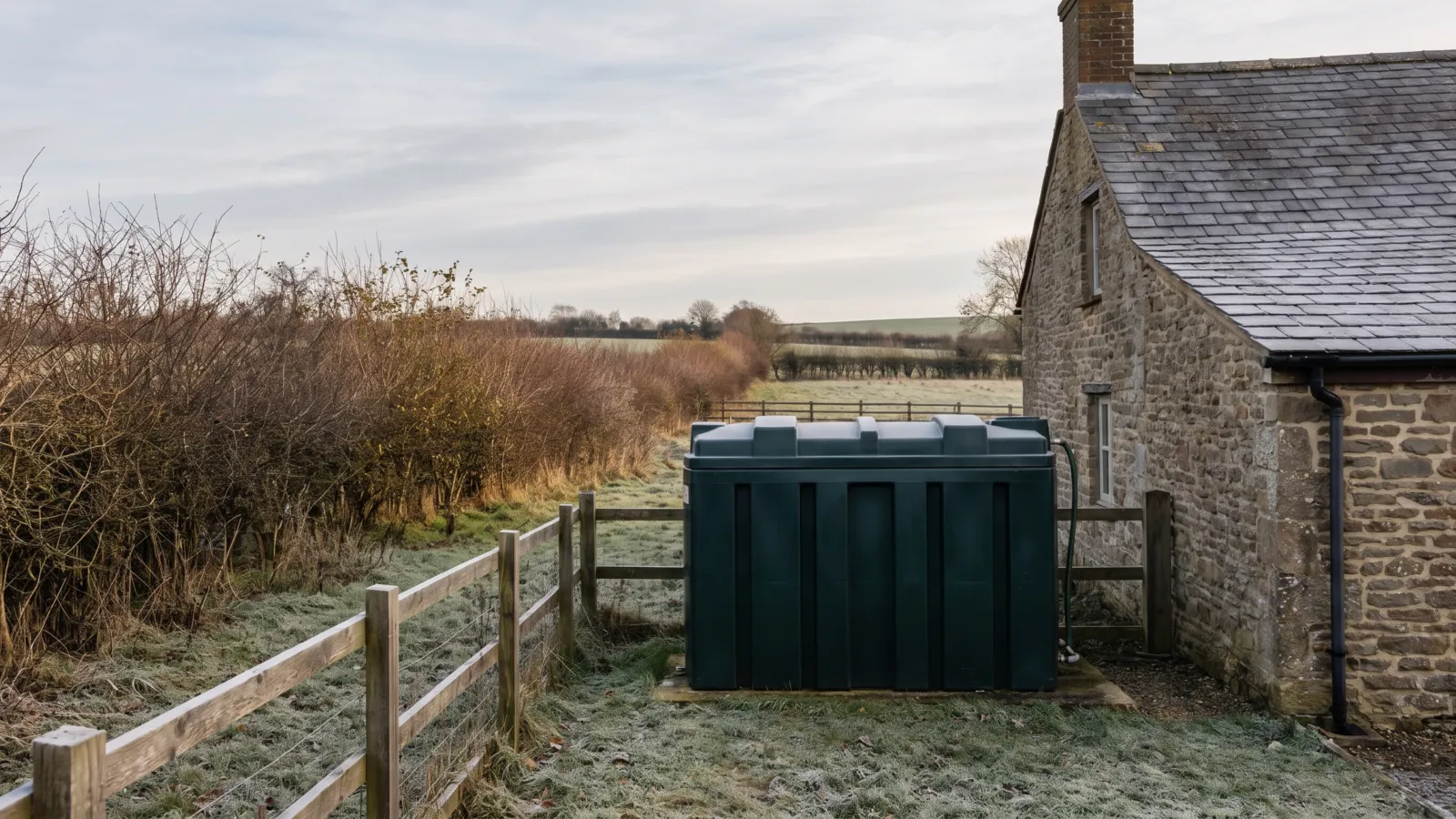
Four nations, four different schemes
About 1.5 million UK households heat with oil, according to the Competition and Markets Authority (CMA), and they sit outside the protections gas and electricity customers take for granted. In Great Britain heating oil is not covered by the energy price cap, and the CMA’s July 2026 market study found that distributors are not required to follow a specific complaints process or to offer alternative dispute resolution. Prices rose sharply in March 2026: the CMA puts a typical 500-litre order at about £320 in February and £520 in March, a 64 per cent rise, with a peak of 123p a litre in April. On 16 March 2026 the UK Government announced what it calls over £50 million of support: £27 million for England, £4.6 million for Scotland, £3.8 million for Wales and £17 million for Northern Ireland. The ministers’ letter to English councils puts the total at £53 million.
How that money reaches you depends entirely on where you live. Northern Ireland runs a national £100 card that you apply for on nidirect. Scotland pays £300 to your oil or LPG supplier through Advice Direct Scotland. England has no national scheme: each county or unitary council runs its own Crisis Payment scheme, and 54 of them received a share of the £27 million. Wales routes emergency help through the Discretionary Assistance Fund and runs a separate £200 payment whose last application date was set at 30 September 2026 in the councils we checked. Each is set out below, followed by how to buy oil more cheaply, what to do when a delivery goes wrong, the scam pattern to watch for, and the longer-term grant for leaving oil altogether.
Two things are true everywhere. Nothing is paid automatically: every scheme needs an application, and most ask for evidence such as a supplier quote, bank statements or a photo of your tank gauge. And each scheme is cash-limited or time-limited, so if you may qualify, apply before the tank is empty rather than after.
Northern Ireland: the £100 home heating oil card
The Home Heating Oil Support Scheme is a one-off £100 digital pre-paid card towards home heating oil, run by the Department for Communities (DfC). It opened for applications on 9 September 2026 and closes on 31 March 2027. You must apply; it is not sent out automatically. The only official place to apply is nidirect. Only one card is allowed for each eligible residential address (it goes to the first eligible application from that address), and oil must be your main heating source, so homes on mains gas do not qualify. The pot is £36.4 million (£17.2 million from the UK Government and £19.2 million from the Executive) and DfC expects around 340,000 households to be eligible.
There are two ways in. The income route: a single person or a couple with a net annual income below £30,000 after tax, National Insurance or pension contributions, which includes pensioners, and needs no benefit at all. The benefit route: you get Pension Credit, Universal Credit, income-related Employment and Support Allowance, Disability Living Allowance, Personal Independence Payment, Attendance Allowance, Armed Forces Independence Payment, the Constant Attendance Allowance element of Industrial Injuries Disablement Benefit, or the Constant Attendance Allowance or Mobility Supplement element of the War Pension Scheme. If you think you may be entitled to Pension Credit but have never claimed, our Pension Credit guide explains how, and it opens other help too.
You only have to meet the test on one day in one of two qualifying periods: any day from 1 to 30 April 2026, or any day from 1 to 30 November 2026. DfC’s FAQ confirms that being eligible for at least one day in either window is enough; you do not need to qualify in both. The November window had not started when we published, and none of the pages we read says whether someone who will only qualify in November can apply before 1 November or must wait. If that is you, check the online form or ring the scheme helpline on 0800 072 0266 (Monday to Friday, 9am to 4pm) rather than assuming either way. You may not be eligible if, for the whole of the qualifying period, you were in a care or nursing home, in supported housing, a hospital in-patient, in prison or outside Northern Ireland; DfC’s FAQ says the hospital, prison and care exclusions apply only if they covered the whole of both qualifying periods.
What happens after you apply. DfC aims to decide within 10 working days of your application, or of receiving any evidence it asks for. If successful, you get a message with a unique hyperlink to activate the card, by email, text or letter. You then have three months to use that link, and once activated you have until the last day of the following month to spend the card, so plan to use it in one order. You cannot check the balance and partly spent cards cannot be re-issued, so keep a note of what you spend. The card works only with oil suppliers in Northern Ireland. You may be able to use it online for orders of £100 or less, depending on the supplier; for a bigger order, phone the supplier and pay the balance another way. If DfC asks for evidence, send it within 30 days of the request or the application is disallowed; its FAQ says a photo of your oil tank is not enough to show that you heat with oil. There is no right of appeal, but you can ask for an internal review within 28 days of a disallowance notification, by phoning 0800 072 0266 or writing to the scheme, saying why you think the decision is wrong. The award does not affect your benefits and is not taxable.
If £100 is not enough to get you through, DfC’s FAQ points to Discretionary Support on 0800 587 2750. Its launch release also lists Make the Call on 0800 232 1271, which checks whether you are missing any benefits, and the Advice NI helpline on 0800 915 4604.
Scotland: £300 paid to your oil or LPG supplier
The Scottish Government’s Emergency Heating Oil Scheme provides £300 towards domestic heating oil or LPG. It opened in April 2026 for an initial six months and on 25 September 2026 the Scottish Government confirmed it has been extended into the winter, with more than 6,700 payments made so far. In March the Scottish Government said it was putting £10 million into the scheme, more than double the £4.6 million the UK Government allocated to Scotland. Home Energy Scotland says there is no fixed date for how long the extension will last and it is being kept under review, so if you may qualify, apply as soon as you need it rather than waiting for the cold.
Who can apply. The Scottish Government describes the scheme as targeted at low-income households, including those receiving means-tested benefits, and also open to people in financial hardship who are at risk of self-rationing fuel and have unavoidable heating needs. Advice Direct Scotland, which runs it, puts that in two tiers. You should automatically qualify if you get Universal Credit (it lists the Scottish Child Payment as part of UC), Housing Benefit, Income Support, income-based Jobseeker’s Allowance, income-based Employment and Support Allowance or Pension Credit. Without one of those, you may still qualify on a discretionary decision, but only if you are in financial hardship, at risk of cutting back on heating because of the cost, and have at least one additional vulnerability, such as a long-term illness or disability, a child under five or an adult over 75 in the home, a recent hospital discharge, a remote or rural location, debt, a benefit claim or appeal that is still pending, or a recent bereavement. There is no numeric income threshold, but it is not open to every oil household.
The basic conditions, from Home Energy Scotland’s page: your home is heated by oil or LPG, you pay the fuel bill, it is your main or only home, you have bought fuel on or after 1 April 2026 or are about to place an order, and no one at your address has had an award in the last three months. That three-month line appears only on Home Energy Scotland’s page; Advice Direct Scotland’s own FAQ does not state it. The two also word the fuel condition differently: Advice Direct Scotland says you have placed an order after 1 April but not yet paid for it, or you plan to order shortly. Because the money goes to the supplier rather than to you, the safest course is to apply before you pay in full.
How to apply. Online at homeheatingadvice.scot, by phone on 0800 048 7413, or by post; Advice Direct Scotland expects the phone lines to be very busy and recommends applying online. The application cannot progress until all the evidence is in: an invoice, receipt or statement from your fuel supplier, or a supplier quote less than three months old (all evidence must show your name and address and, unless stated otherwise, be dated within the last 12 months), plus a benefit letter, bank statement or portal screenshot if you are claiming through a benefit, or evidence of hardship (arrears letters, a bank statement showing consistent overdraft use, debt collection letters) if you are not. Advice Direct Scotland says it takes around five days to process and another five for the £300 to reach your oil or LPG account. The fund pays your supplier directly, and if £300 does not cover the minimum delivery (the CMA found every Scottish distributor it surveyed sets a 500-litre minimum) you arrange the balance with the supplier. It is not a loan and should not affect your benefits.
If you need help beyond oil, the Scottish Welfare Fund’s Crisis Grants, applied for through your council rather than the Scottish Government, can cover food or heating costs in an emergency. You need a low income, but you do not need to be on benefits, the grant is not repaid, and you can get up to three in 12 months unless exceptional circumstances apply. Home Energy Scotland gives free advice on 0808 808 2282, and Advice Direct Scotland runs moneyadvice.scot on 0808 196 2316 for supplier debt and energyadvice.scot on 0808 196 8660 for energy problems.
NewSee this for your own homeHome Alerts: your postcode's power cuts, warnings, floods and more, on one screen. Free for your own home, opening in October.Join the list →England: council Crisis Payments and the £27 million top-up
England has no national heating oil scheme and no national helpline. The route is the Crisis and Resilience Fund, the fund that replaced the Household Support Fund in April 2026. Every unitary authority and county council must run a scheme under it called Crisis Payment, and some counties deliver theirs through district councils or partner charities. The DWP’s guidance to councils, updated on 7 April 2026, lists energy costs for any fuel used for domestic heating, cooking or lighting, including oil or portable gas cylinders, and names a large increase in heating oil prices as an example of a qualifying crisis. Crisis Payments are not limited to people on benefits; each council decides what counts as a low income in its area. People with no recourse to public funds are generally not eligible for a Crisis Payment, though councils have other powers in some circumstances.
The top-up. On 16 March 2026 Alison McGovern MP and Dame Diana Johnson MP wrote to the leaders of 54 English councils confirming £27 million of extra Crisis and Resilience Fund money for areas with higher rates of heating oil, such as rural communities. The letter expected funding to be made available from that day to households in acute need at risk of losing immediate access to heating or hot water, and said there would be no additional conditions or reporting from central government. That does not mean no conditions at all: councils apply their own tests, and the ones below differ considerably.
Where the money went, from Annex A of the letter (our sum of the column is exactly £27,000,000): Norfolk £3,055,625; Lincolnshire £1,825,511; Suffolk £1,717,048; Cornwall £1,586,427; Devon £1,303,439; Essex £1,227,847; Somerset £1,161,216; North Yorkshire £1,061,623; Kent £998,009; Wiltshire £783,725; Shropshire £758,558; Cambridgeshire £708,003. At the other end, Wokingham received £9,636 and the Isles of Scilly £2,556. The full list of 54 is in the letter, linked in the sources. Only counties and unitary authorities appear on it; if your area is not there, you had no top-up, but you can still ask your council about an ordinary Crisis Payment for heating oil.
What the biggest recipients built. Norfolk set up the Norfolk Heating Oil Crisis Fund: grants of around £350 per household for low-income families, typically those with less than £35,000 a year coming in, with savings and outstanding debts taken into account and priority for people due to run out of oil. You apply on the council’s website with two months of bank statements, details of any debts and whether you have an oil payment plan; if you cannot apply online, 0344 800 8020 and someone completes the form with you. The news page describing it was last modified on 31 July 2026, and on 29 September the council’s Crisis and Resilience Service still listed heating oil support, and LPG, among the things it can help with. Lincolnshire gives approved households a £300 prepaid off-grid energy voucher, administered for the council by the Lincolnshire Community Foundation, if your combined household income is under £36,000, savings are under £6,000 after the cost of the oil, oil is your primary fuel, you have no mains gas, you are at risk of losing heating or hot water and you can cover any cost above £300; it is one application per household, decisions are aimed at within two working days, and the number is 01529 572575. Cornwall pays up to £300 towards energy to households on Council Tax Support or with a Severe Mental Impairment exemption, usually within seven days of approval; anyone else in hardship applies to its main Crisis and Resilience Fund scheme instead.
Devon says help for oil households is available to low-income households but not to all homes heated by oil, and applications go through your district council or Citizens Advice Devon. Mid Devon, one of those districts, has no fixed income or capital thresholds but says households with capital over £5,000 or monthly disposable income over £500 are unlikely to succeed, and it may ask for a photo or screenshot of your oil tank gauge. Shropshire received more than £750,000 (£758,558 in Annex A) and delivers its heating oil support with the charity Community Resource. Its heating oil page says you or someone in your household must get a means-tested benefit or have a household income under £36,000 for a family or £28,000 for a single person; the money you have available and any vulnerabilities are taken into account, and if you have less than 100 litres left you are referred to the council’s Welfare Support Team for urgent support, with evidence. Apply online, or ring the council on 0345 678 9012 and choose option 0 (9am to 5pm, Monday to Friday). We checked five of the 54 areas and one Devon district, not all of them, and cannot say whether every council still has a live oil-specific route or unspent budget.
How to find yours. Use GOV.UK’s find-your-local-council page (linked in the sources), then search that council’s website for ‘Crisis and Resilience Fund’ or ‘crisis payment’. If you live under a district council, it may deliver the county’s scheme, as in Devon, so try the district first. Ask specifically about help with heating oil, and have to hand a supplier quote, recent bank statements, a photo of your tank gauge and a note of your debts, because those are what the councils above ask for. Whether LPG homes qualify is council-specific: the top-up was described as being for heating oil, Lincolnshire requires oil as the primary fuel, Norfolk lists LPG among the costs its Crisis and Resilience Service can help with, and the DWP guidance mentions portable gas cylinders, so ask. Citizens Advice also says that if oil, LPG, coal or wood is your main heating, you are not on mains gas and you cannot afford fuel, your local Citizens Advice may be able to apply for help for you.
Wales: the Discretionary Assistance Fund, and the £200 off-grid payment
Emergency help with oil in Wales comes through the Discretionary Assistance Fund (DAF). Its Emergency Assistance Payment is a grant, not a loan, for essential costs including food, gas, electricity, heating oil or emergency travel, for people in extreme financial hardship. Heating oil is different from the rest of the fund: you can only apply for it through an approved partner, such as your council, a housing association or a third-sector organisation like Citizens Advice, rather than direct. To get an Emergency Assistance Payment you must be over 16, facing an unexpected emergency that leaves you unable to buy essentials, and have no other money, such as savings, and the DAF says applications take about 24 hours to process on weekdays. The general DAF rules also apply: you cannot apply if you had a grant in the last seven days or have already had three grants in the last 12 rolling months. The DAF line is 0800 859 5924, 10am to 4pm, Monday to Friday, closed on bank holidays.
In March 2026 the Welsh Government announced that the heating oil award was being temporarily raised from £500 to £750 while prices are inflated, and that oil awards could be made twice in a rolling 12 months rather than once, at least three months apart. Those figures appear in the 18 and 31 March 2026 statements; the DAF’s own guidance pages, read on 29 September, do not repeat them and give no end date. So do not count on £750: ask the partner organisation or the DAF line what the current heating oil maximum is when you apply.
The £200 off-grid payment is separate: a one-off £200 for households whose main heating is oil or LPG and who were receiving, or successfully applied for, the Council Tax Reduction Scheme between 1 April and 31 July 2026. Councils contact eligible households and invite them to apply, usually with a heating oil or LPG invoice or receipt from the last 12 months and a bank statement, and the Welsh Government gave six months from the scheme’s launch to claim. In Wrexham and Pembrokeshire the last date for applications was set at 30 September 2026, and Pembrokeshire says payments will be made no later than 31 October; Bridgend’s page gives no closing date. If you have an invitation letter and have not applied, do it now. If you were on Council Tax Reduction in that window and never heard from your council, one call is worth making, but after 30 September expect the scheme to be closed unless your council says otherwise. If you are not on Council Tax Reduction and think you should be, our Council Tax Reduction guide covers how to claim; it is the gateway to help like this.
For advice, the Welsh Government points to Nest, its Warm Homes scheme, on 0808 808 2244 for free advice and home improvements for low-income households, and to Advicelink Cymru on 0800 702 2020 to check what support you can claim.
Cheaper oil: buying clubs, timing and order size
Citizens Advice’s standing advice: get at least three quotes so you can compare prices; order when you can wait, since delivery in a few weeks is usually cheaper than an urgent delivery; check for extra fees or service charges before you order; and buy in summer or early autumn if you can, when prices are usually lower. That window is closing as we publish, but it is the habit to build for next year. Citizens Advice also says a larger order may be cheaper per litre than several small ones if your tank has room. The Consumer Council for Northern Ireland gives the opposite advice to vulnerable consumers or anyone whose tank is already low: shop around, consider ordering a smaller quantity than usual, and agree the price including VAT and the delivery timeframe with the distributor before you commit. Both are right for different people; the question is whether you are buying for the year or buying to get through the month.
Order size is constrained anyway. The CMA found most distributors in Great Britain set a 500-litre minimum, though some offer 100 to 350 litres or go lower in extenuating circumstances; over half of Welsh distributors offered a minimum below 500 litres, every Scottish distributor surveyed required 500, and in Northern Ireland distributors’ minimums range from 100 to 200 litres. The CMA has recommended a review of the rules on minimum order volumes so people can buy less in volatile periods; that is a recommendation, not a change. Whatever you do, the Consumer Council says not to rely on 20-litre emergency drums from forecourts as a regular top-up, because they are very expensive; they are for emergencies only.
Oil clubs. An oil club means buying at the same time as other people nearby so the distributor makes one trip and offers a better price; Citizens Advice notes you can set one up yourself. Northern Ireland has a ready-made one: the Housing Executive’s Oil Savings Network (the Consumer Council calls it the Northern Ireland Oil Buying Network), which negotiates discounted prices with suppliers for its members every week and is open to every householder in Northern Ireland, whether you own, rent, or are a housing association or Housing Executive tenant. The Housing Executive’s Chair says members save on average £10 to £30 on 200 litres; that is a stated average in DfC’s launch release, not a published dataset. Register with your first name and postcode by emailing oilsavings@nihe.gov.uk, texting 07823 535 178 or calling 0800 111 4455 (DfC’s release gives NIenergyadvice@nihe.gov.uk, which reaches the same free advice team). The Consumer Council also publishes a weekly and daily Northern Ireland price checker with average costs for 300, 500 and 900 litres, useful for judging a quote: its survey of 24 September 2026 put the average 500-litre order at £561.83, including VAT, so the £100 card covers part of a typical delivery rather than all of it.
Spreading the cost in Northern Ireland: the Northern Ireland Oil Federation’s PayPoint budgeting card lets you pay towards your next delivery through the year in amounts from £10, and the fuel stamp scheme sells £5 oil stamps through participating retailers and some credit unions, which you collect on a card and put towards an order (the Consumer Council lists Antrim and Newtownabbey, Mid Ulster, Mid and East Antrim, Causeway Coast and Glens, Derry and Strabane, and Belfast as participating councils).
If someone in your home is 75 or over, ask your supplier to register you on UKIFDA’s Cold Weather Priority scheme. It is free, but it is not automatic, it is offered only by UKIFDA member distributors that take part (the CMA found only some members do, so check), and it does not guarantee immediate delivery: it flags you as someone who may need extra support when the temperature drops, and you must re-register if you switch supplier. The UK Government said on 16 March that it had agreed a strengthened Code of Practice and a formal Priority Customers Register with the industry; we have not verified that the register is operating, so for now ask about Cold Weather Priority by name.
Finally, protect what you have paid for. OFTEC and UKIFDA advise screening the tank with a fence, wall, trellis or planting while leaving room for servicing and deliveries, fitting closed-shackle padlocks to a Sold Secure or Secured by Design standard (bolt cutters struggle with them) without ever locking the tank vent, using an electronic gauge that alerts you if the level drops suddenly, and motion-activated lighting. The Consumer Council adds: lock the tank and boiler housing, keep gates shut, and if you are running very low do not tip the tank to get the last of the oil out, because it damages the pipes and sends years of sediment into the pump.
If something goes wrong with a delivery
Start with the fact the CMA put plainly in July 2026: heating oil distributors are not required to follow a specific complaints process or to provide alternative dispute resolution, and there is no heating oil ombudsman: the Energy Ombudsman handles complaints about gas and electricity, not oil. What exists is voluntary. Members of the trade body UKIFDA must run an in-house complaints procedure under its Code of Practice, and if a complaint is still unsettled after eight weeks it can go to UtilitiesADR, the dispute body UKIFDA retains; that covers UKIFDA members only. Citizens Advice suggests getting quotes from UKIFDA members, which have to act professionally and treat you fairly, and says that if they do not, you can complain. The government said on 16 March 2026 that it was exploring a new ombudsman or a regulator such as Ofgem, and the CMA has recommended a new, proportionate regulatory regime; neither is in force.
Cancelled orders from March 2026. If your order was cancelled when prices rose and you paid more for replacement oil, you may be owed the difference. The CMA found hundreds of customers who ordered through an intermediary website were affected, estimates they paid between £150 and £350 more for replacement oil, and on 28 August 2026 said the suppliers under review had agreed to pay compensation under its scheme, with around 800 customers already notified. Eligible customers are being contacted directly and do not need to do anything at this stage, but anyone claiming for a replacement order will need evidence such as the receipt and delivery note, so keep both. Two cautions: the CMA’s July analysis said around 1,700 customers were affected by possible breaches of contract, which is a wider figure than the number being compensated, and in July not every supplier had agreed, so the scheme covers the suppliers that joined it. On 10 September 2026 the CMA also wrote an open letter to heating oil suppliers reminding them that their contract terms must be fair and transparent.
For a dispute now, put the complaint to the distributor in writing first, keep the quote, the order confirmation and any delivery note, and ask whether it is a UKIFDA member and what its complaints procedure is. If the problem is that the price you were quoted is not the price you were charged, the Consumer Council’s advice to agree the price including VAT and the delivery timeframe before ordering is what prevents the argument, and the written confirmation is what wins it.
Scams: how the real Northern Ireland card arrives, and what no scheme asks for
The Northern Ireland scheme has a feature scammers can imitate: the genuine card arrives as a message with a hyperlink. So it matters to know the real sequence. You apply on nidirect, the only official application site. If you are successful, DfC sends a decision message with a unique activation link, by email, text or letter, and when you activate the card a one-time passcode is issued by the card supplier HUGGG, not by DfC. A link that arrives when you have not applied, or that asks you to apply anywhere other than nidirect, is not the scheme. You will never be asked for your bank details or to pay any amount of money, and DfC says a message asking for either may be a scam.
DfC’s own advice covers the other routes: scams arrive by post, phone, text, email and online; if someone contacts you claiming to be from the Department, you can choose to call back on the number you would normally use; and doorstep callers should show identification, which you can check by phoning the organisation yourself. Bogus callers should be reported to the Police Service of Northern Ireland. If you are unsure whether a message about the card is real, ring the scheme helpline on 0800 072 0266 before clicking anything.
The same pattern turns up in England. Citizens Advice warns of scammers posing as energy companies or the DWP, including texts offering a ‘heating allowance’; do not click the links or use any contact details in the message. None of the schemes on this page charges a fee, and none needs your card details to pay you. If you have already responded to something, our guide on what to do if you’ve been scammed has the reporting routes for each nation.
Longer term: the £9,000 heat pump grant for off-gas homes
This is not emergency help, and it will not warm the house this month. It is the route out of buying oil at all, and for oil homes it is currently more generous than it will be later. In England and Wales the Boiler Upgrade Scheme gives £7,500 towards an air source or ground source heat pump (£5,000 for a biomass boiler, £2,500 for an air-to-air heat pump), and until March 2027 an additional £1,500 towards an air or ground source heat pump if your property is heated by oil or LPG and has no mains gas connection. Added together that is up to £9,000, our sum; GOV.UK gives no exact day in March, so do not plan around the 31st. You must own the property and be replacing a fossil fuel system such as oil, gas, electric or LPG heating; social housing is not eligible. The installer applies on your behalf on the Ofgem website, the grant is taken off what you pay, and the heat pump must be commissioned within 120 days of the application. Our Boiler Upgrade Scheme guide has the detail, and is a heat pump worth it is the honest answer on running costs before you commit.
Scotland has its own version through Home Energy Scotland’s Grant and Loan: grant funding of up to £7,500 for a heat pump, with a further £7,500 available as an optional interest-free loan, plus a £1,500 uplift for rural and island homes. It is for homeowners, you do not need to be on benefits, funding is first come, first served and subject to availability, and work must not start until you have a written funding offer; ring 0808 808 2282 to speak to an adviser before applying.
Northern Ireland is different again. GOV.UK notes that the Boiler Replacement Scheme in Northern Ireland has closed. The Housing Executive’s Affordable Warmth Scheme offers owner-occupiers and private tenants with a total gross household income under £23,000 up to £7,500 of energy efficiency measures (up to £10,000 where solid wall insulation is needed), subject to the availability of funding; it is not open to social housing tenants. Its heating measures include replacing solid fuel, LPG or Economy 7 systems with gas or oil central heating, and boiler replacement where the boiler is at least 15 years old and the householder meets further criteria. Start with the NI Energy Advice Service on 0800 111 44 55. DfC intends its Warm Healthy Homes Fund to replace Affordable Warmth, with implementation timetabled from April 2027 after a consultation that closed on 19 August 2026, so the current rules may not last.
Common questions
Is there a government heating oil payment in England in 2026?
Not a national one. In England the help is a Crisis Payment from your county or unitary council’s Crisis and Resilience Fund scheme, which the DWP guidance says can cover a large increase in heating oil prices and is not limited to people on benefits. Fifty-four councils in areas with more oil heating shared a £27 million top-up in March 2026, from Norfolk’s £3,055,625 down to the Isles of Scilly’s £2,556, and each set its own rules: Norfolk offers grants of around £350 to households typically under £35,000 a year, Lincolnshire a £300 voucher for incomes under £36,000 with savings under £6,000, Cornwall up to £300 for people on Council Tax Support. Find your council on GOV.UK and ask about heating oil help; if you live under a district council, it may deliver the scheme.
How do I get the £100 heating oil payment in Northern Ireland?
Apply on nidirect, the only official site, before the scheme closes on 31 March 2027. You need oil as your main heating source and either a net household income below £30,000 after tax, National Insurance and pension contributions, or a qualifying benefit such as Pension Credit, Universal Credit, income-related ESA, DLA, PIP or Attendance Allowance, on at least one day in April 2026 or in November 2026. One card is allowed per address. DfC aims to decide within 10 working days and then sends a message with an activation link, valid for three months; once activated, spend the card by the end of the following month with a Northern Ireland oil supplier. The helpline is 0800 072 0266.
Who qualifies for Scotland’s £300 heating oil payment?
Households heated by oil or LPG where you pay the fuel bill and it is your main home. Advice Direct Scotland says you should automatically qualify on Universal Credit, Housing Benefit, Income Support, income-based JSA or ESA, or Pension Credit; otherwise you may qualify on a discretionary decision if you are in financial hardship, at risk of cutting back on heating, and have at least one added vulnerability, such as a disability, a child under five or an adult over 75 at home, a rural location or debt. There is no set income threshold. Home Energy Scotland’s page adds that no one at your address can have had an award in the last three months. The £300 is paid to your supplier, so apply at homeheatingadvice.scot or on 0800 048 7413 before you pay for the order if you can. The scheme has been extended into winter with no fixed end date.
Is there any heating oil help in Wales?
Yes, through the Discretionary Assistance Fund’s Emergency Assistance Payment, a grant for people in extreme financial hardship that covers heating oil. Oil applications must go through an approved partner such as your council, a housing association or Citizens Advice, not direct. In March 2026 the Welsh Government temporarily raised the oil award from £500 to £750 and allowed two oil awards in a rolling 12 months, at least three months apart, but the DAF’s current guidance pages do not repeat those figures, so ask what the maximum is when you apply (DAF line 0800 859 5924). The separate £200 payment for oil and LPG households on Council Tax Reduction had its last application date set at 30 September 2026 in the councils we checked. If you have an invitation letter, apply by then; after that date, ask your council whether it is still taking claims.
Is there an ombudsman for heating oil?
No. The CMA’s July 2026 market study found that heating oil distributors are not required to follow a specific complaints process or provide alternative dispute resolution, and the Energy Ombudsman handles complaints about gas and electricity, not oil. If your distributor is a UKIFDA member it must run an in-house complaints procedure, and an unsettled complaint can go to UtilitiesADR after eight weeks, but that is voluntary and members-only. The government said in March 2026 it was exploring an ombudsman or a regulator such as Ofgem, and the CMA has recommended a new regulatory regime; neither exists yet.
My heating oil order was cancelled in March 2026 and I paid more elsewhere. Can I get the difference back?
Possibly. The CMA secured compensation from suppliers that cancelled orders placed through an intermediary website when prices rose, estimating those customers paid £150 to £350 more for replacement oil. Eligible customers are contacted directly and do not need to do anything at this stage; around 800 had been notified by 28 August 2026. If you are claiming for a replacement order you will need evidence such as the receipt and delivery note. The scheme covers the suppliers that agreed to it, so if you have heard nothing, put your claim to the supplier in writing with your evidence.
Does the £9,000 heat pump grant have anything to do with the emergency oil help?
No. The Boiler Upgrade Scheme in England and Wales is a separate, longer-term grant: £7,500 towards an air or ground source heat pump plus, until March 2027, an extra £1,500 if your home is heated by oil or LPG with no mains gas connection, which is where the £9,000 comes from. You must own the home, the installer applies to Ofgem for you, the grant comes off the installation bill, and the system must be commissioned within 120 days. It does nothing for this winter’s oil bill. Scotland offers up to £7,500 grant plus a £7,500 interest-free loan through Home Energy Scotland, and Northern Ireland’s boiler replacement scheme has closed.
Sources (51)
- nidirect — Apply online for home heating oil support (read 29 September 2026)
- Department for Communities (NI) — Home Heating Oil Support Scheme: FAQs (read 29 September 2026)
- Department for Communities (NI) — £100 Home Heating Oil Support Scheme goes live for applications (9 September 2026)
- Consumer Council for Northern Ireland — Support with high energy costs: oil advice, Oil Savings Network, PayPoint card and fuel stamps (read 29 September 2026)
- Consumer Council for Northern Ireland — Home heating oil price checker, weekly and dailysurvey of 24 September 2026, read 29 September 2026
- Northern Ireland Housing Executive — Energy advice and the Oil Savings Network (read 29 September 2026)
- Northern Ireland Housing Executive — Affordable Warmth Scheme (read 29 September 2026)
- Department for Communities (NI) — Warm Healthy Homes Fund (read 29 September 2026)
- Home Energy Scotland — Help for households using heating oil (published September 2026)
- Scottish Government — Support extended for households in fuel hardship (25 September 2026)
- Scottish Government — Support for households using heating oil and LPG (25 March 2026)
- Advice Direct Scotland — Emergency Heating Oil Scheme: home page (read 29 September 2026)
- Advice Direct Scotland — Emergency Heating Oil Scheme: FAQs (read 29 September 2026)
- Advice Direct Scotland — Emergency Heating Oil Scheme: evidence required (read 29 September 2026)
- mygov.scot — Scottish Welfare Fund: Crisis Grants (last updated 4 June 2025)
- Home Energy Scotland — Home Energy Scotland Grant and Loan (read 29 September 2026)
- HM Treasury, GOV.UK — Over £50 million heating oil support package for the four nations (16 March 2026)
- MHCLG and DWP — Letter to council leaders: top up to the 2026/27 Crisis and Resilience Fund to support low-income heating oil households, with Annex A allocations (16 March 2026)
- DWP, GOV.UK — The Crisis and Resilience Fund: guidance for local authorities in England, 1 April 2026 to 31 March 2029 (updated 7 April 2026)
- GOV.UK — Find your local council
- Norfolk County Council — Norfolk Heating Oil Crisis Fund launched27 March 2026, last modified 31 July 2026
- Norfolk County Council — Crisis and Resilience Service: what it can help with, including heating oil and LPG (read 29 September 2026)
- Lincolnshire County Council — Crisis and Resilience Fund: heating oil payments (read 29 September 2026)
- Cornwall Council — Crisis and Resilience Fund energy support scheme (last updated 1 April 2026)
- Devon County Council — Crisis and Resilience Fund (read 29 September 2026)
- Mid Devon District Council — The Crisis and Resilience Fund and heating oil support (read 29 September 2026)
- Shropshire Council newsroom — Residents urged to apply for heating oil support through the Crisis and Resilience Fund (9 June 2026)
- Shropshire Council — Heating oil support (read 29 September 2026)
- Welsh Government — Discretionary Assistance Fund (DAF): overview (read 29 September 2026)
- Welsh Government — Discretionary Assistance Fund: how to apply (read 29 September 2026)
- Welsh Government — Discretionary Assistance Fund: eligibility (read 29 September 2026)
- Welsh Government — Discretionary Assistance Fund: what happens next (read 29 September 2026)
- Welsh Government — Discretionary Assistance Fund: contact us (read 29 September 2026)
- Welsh Government — Extra help with heating oil to deal with rising costs (18 March 2026)
- Welsh Government — Written statement: support with heating fuel costs (31 March 2026)
- Welsh Government — Thousands of Welsh households to get help with oil and LPG heating costs (31 March 2026)
- Wrexham County Borough Council — Help with fuel costs: off-grid heating fuel support (read 29 September 2026)
- Pembrokeshire County Council — Applications open for off-grid heating fuel support scheme (19 June 2026)
- Bridgend County Borough Council — Off-grid heating fuel support scheme (read 29 September 2026)
- Competition and Markets Authority, GOV.UK — CMA secures compensation for heating oil customers (28 August 2026)
- Competition and Markets Authority, GOV.UK — UK’s heating oil households need stronger protections, says CMA (15 July 2026)
- Competition and Markets Authority — Heating oil market study: final report, chapter 5 on complaints, ADR and minimum order volumes (15 July 2026)
- Competition and Markets Authority — Heating oil market study: foreword and executive summary (15 July 2026)
- Competition and Markets Authority, GOV.UK — Domestic heating oil suppliers’ use of fair terms and conditions: open letter (10 September 2026)
- Citizens Advice — Get help if you use oil, LPG, coal or wood to heat your homeEngland; read 29 September 2026, page stamp says last reviewed 24 February 2023
- UKIFDA — Cold Weather Priority initiative (read 29 September 2026)
- OFTEC with UKIFDA — Guidance on avoiding heating fuel thefts (read 29 September 2026)
- GOV.UK — Boiler Upgrade Scheme: what you can get (read 29 September 2026)
- GOV.UK — Boiler Upgrade Scheme: check if you’re eligible (read 29 September 2026)
- GOV.UK — Boiler Upgrade Scheme: how to apply (read 29 September 2026)
- GOV.UK — Boiler Upgrade Scheme: overview, including the closed Northern Ireland scheme (read 29 September 2026)
PreparedBritain is independent and not affiliated with HM Government.
The Blackout Briefing
One calm email when something genuinely matters — severe weather, live incidents, real price drops. No noise.
Keep reading
All money & bills guides →Behind on your energy bills: the grants that exist, and the write-off that doesn’t yet
What to do when you owe your energy supplier: your right to a repayment plan you can afford, the British Gas Energy…
Free Wills Month and Will Aid 2026: how to get a free or cheap will this October and November
Free Wills Month opens on 1 October 2026 for people aged 55 and over, and Will Aid follows in November for adults of…
Is an electric car cheaper to run than diesel now? The pence-per-mile numbers
Diesel passed its 2022 record on 28 September. Here is what a mile costs in a diesel, a petrol and an electric car…