How to stay warm without turning the heating on
How to stay warm at home without turning the heating on — warm the person, then the zone, then the room, with the costs per hour that make each step worth it.
By Tom Calder · Updated 26 August 2026 · Sourced to the NHS, GOV.UK & Ofgem
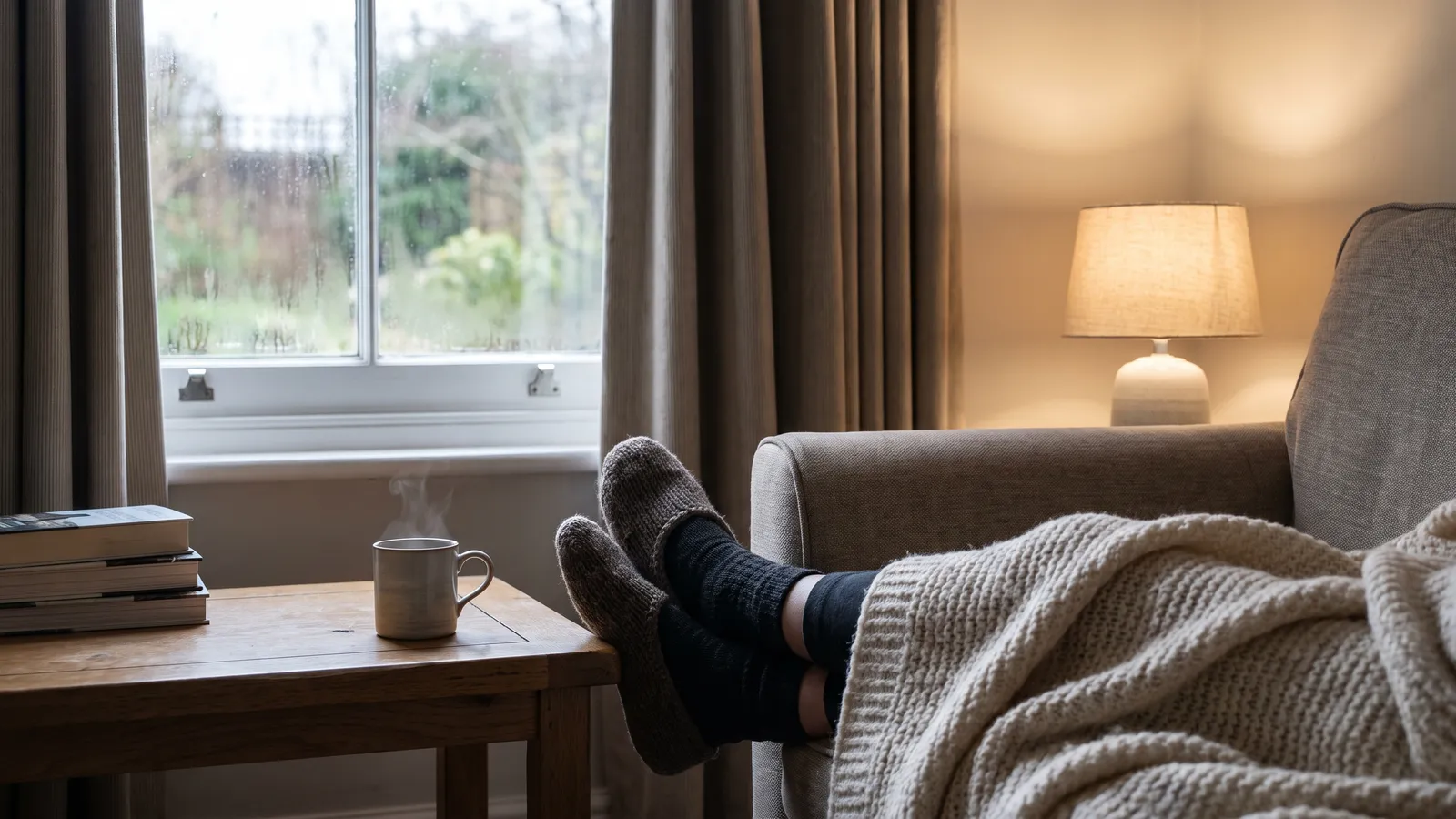
Warm the person, not the house
The cheapest heat is the heat you never lose. Before you think about the room, think about your body: several thin layers trap more warm air than one thick jumper, and the parts you feel the cold in first — feet, hands and head — are where most comfort is won or lost. A thermal base layer, warm socks, slippers and even a hat indoors do more, watt for watt, than any appliance, because they cost nothing to run.
Food and movement help too. Having at least one hot meal a day and regular hot drinks helps keep your core warm, and staying gently active where you can — even light movement around the house — generates heat. A hot water bottle or a microwavable wheat bag held against your core or feet is a safe, cheap way to feel warm within minutes.
Then warm the zone, not the empty room
If you are going to run any heat at all, heat the space around a person rather than the whole house. Pick one room to live in during the coldest hours, keep its door closed, and warm it locally. A heated throw, an electric blanket or a low-wattage heated pad warms you directly for a few pence an hour — far less than a boiler warming rooms nobody is sitting in.
Electric blankets and heated throws should carry a British or EU safety mark, be checked for damage before use, and be replaced if the fabric is frayed or scorched. Never fold one while it is switched on, and never combine an electric blanket with a hot water bottle. At night, a warm bed beats a warm house: layer your bedding and warm the bed before you get in, rather than heating the bedroom all evening.
The one line you must never cross: carbon monoxide
There is one shortcut that is never worth it. Anything built to burn fuel outdoors — a patio heater, a barbecue, a disposable BBQ or a camping stove — produces carbon monoxide, and using it indoors, in a tent, a caravan, a garage or any enclosed space can kill. The same applies to using a gas hob or oven to heat a room. Carbon monoxide is colourless and has no smell, so there is no warning: the NHS lists early symptoms as headache, dizziness, nausea, tiredness and confusion — easy to mistake for a cold, which is exactly what makes it dangerous.
If your home has any fuel-burning appliance — a gas boiler, fire or cooker — fit an audible carbon monoxide alarm that meets British Standard BS EN 50291, and test it regularly. If an alarm sounds or anyone develops those symptoms, get everyone into fresh air and do not go back inside. Call 999 if someone has collapsed or is struggling to breathe, and report a suspected gas leak or faulty appliance to the National Gas Emergency Service on 0800 111 999.
Trap the heat you have already made
Whatever warmth you generate, keep it. Draughts are the quiet thief: draught-proofing strips around external doors and windows, a brush or cover on the letterbox, and a draught excluder in an unused fireplace all keep warm air where you want it. Drawing the curtains at dusk and keeping internal doors closed helps hold warm air in — thick or lined curtains, or a thermal blind, make a real difference on a cold evening.
Close off rooms you are not using and keep their doors shut. One thing you must not block, though, is a permanent air vent or a trickle vent — these are there to prevent damp and to let fuel-burning appliances breathe safely, and sealing them can create the very carbon monoxide risk covered above. The aim is simple, reversible fixes, not making the house airtight.
Rationing heat to save money? Claim what you are owed first
Turning the heating down to save money is reasonable — improvising with risky heat because you cannot afford the bill is not, and you may not have to. The Warm Home Discount gives eligible households a one-off £150 off their electricity bill, applied automatically for many people on qualifying benefits. It is also worth checking Winter Fuel Payment, Cold Weather Payment and Pension Credit, which is the gateway to several other forms of help.
If anyone in your home is older, disabled, has a long-term health condition, or would be at serious risk in a power cut, join your energy supplier's Priority Services Register. It is free, and it means advance warning of planned cuts, priority reconnection and extra help in an emergency. Citizens Advice can work through what you are entitled to if you are not sure where to start.
Warmth is health, not a luxury
Keeping warm is not only about comfort. The NHS recommends heating the rooms you use to at least 18°C, especially if you are 65 or over, very young, or living with a heart or lung condition, because a cold home raises the risk of heart attacks, strokes and chest infections. When UKHSA and the Met Office issue a Cold-Health Alert, treat it as a signal to prioritise heating — not a moment to economise on it.
So use these ideas to stay comfortable and keep ordinary bills down, but read them as comfort measures, not a heating replacement. If cold is a genuine health risk in your home, warming properly and claiming the help available is the resilient choice — and the safe one.
Common questions
Is it cheaper to heat one room or the whole house?
If you only need to keep one person warm for a few hours, targeted heat is far cheaper — a low-wattage heater in a single closed room, or a heated throw or electric blanket warming you directly, uses a fraction of the energy of central heating running through empty rooms. Central heating is usually the most even way to warm a whole home, but it heats space you may not be using.
Can I use a gas hob or oven to heat my kitchen?
No. Burning gas to heat a room produces carbon monoxide, which is colourless, odourless and can be fatal. Hobs and ovens are designed for cooking with ventilation, not for heating a room. Use an electric heater instead, keep air vents clear, and fit an audible carbon monoxide alarm if you have any gas appliance.
Are electric blankets safe to leave on all night?
Only if the manufacturer says so. Many blankets are designed to warm the bed before you get in and then be switched off, while some newer low-voltage models are rated for all-night use. Check the label, look for a British or EU safety mark, never use a damaged blanket, and don't combine one with a hot water bottle. Replace blankets that are more than about 10 years old.
What temperature should I keep my home at in winter?
The NHS advises heating the rooms you regularly use to at least 18°C (65°F), particularly if you are over 65, have a health condition, or are not very mobile. Warmer may be more comfortable; letting rooms drop well below that raises health risks for vulnerable people, so it is not the place to make savings.
I can't afford to put the heating on — what help is there?
Check the Warm Home Discount (a one-off £150 off electricity for eligible households), plus Winter Fuel Payment, Cold Weather Payment and Pension Credit, and join your energy supplier's free Priority Services Register. Citizens Advice can check what you qualify for. Whatever you do, don't switch to unsafe heat sources such as outdoor heaters or a gas oven indoors.
Do heated clothing and USB hand warmers actually work?
For keeping a person warm, yes — they put a small amount of heat exactly where you feel the cold while using very little power. Treat them as a comfort aid rather than home heating. Buy rechargeable hand warmers from a reputable brand, and don't leave them charging unattended.
Sources: NHS — Winter vaccinations and winter health (keeping warm) · NHS — Carbon monoxide poisoning · GOV.UK — Warm Home Discount Scheme · Ofgem — Join your supplier's Priority Services Register · GOV.UK — Cold-Health Alerting system: overview (UKHSA). PreparedBritain is independent and not affiliated with HM Government.
The Emergency Kit Checklist
The GOV.UK Prepare essentials on one printable page — tick them off as you go and keep it with the kit. Free, no catch.
Download it straight away. We'll also send the occasional briefing when something genuinely matters — severe weather, live incidents, real price drops. Nothing else.
Keep reading
All weather, storms & flooding guides →Sandbags and flood barriers: where to get them, how to use them, and what works better
Where to get sandbags in the UK, how to fill and stack them correctly, and why the Environment Agency says flood…
Are portable air conditioners worth it in a UK home?
A calm, honest look at portable air con for UK homes: when a fan and night-purge is enough, the BTU sizing rule, and…
Heat-health alerts explained: what yellow, amber and red mean
What the UKHSA Heat-Health Alert colours mean, how they differ from Met Office heat warnings, and the calm,…