Best draught excluders for UK homes
Gaps around doors, windows, letterboxes and unused chimneys are one of the biggest sources of unwanted heat loss in an older UK home, and sealing them is one of the cheapest, fastest-payback home-efficiency jobs there is. This page compares eight draught-proofing products — door brushes, foam strips, letterbox covers and chimney excluders — on what they actually seal, how they fit, and UK price. Which one to choose depends entirely on where the draught is coming from: a door bottom needs a different product to a window frame, and a chimney needs a different approach again, with its own safety rule attached.
By Tom Calder · Updated 20 September 2026 · 8 products, 3 of 8 price-tracked
Before you buy
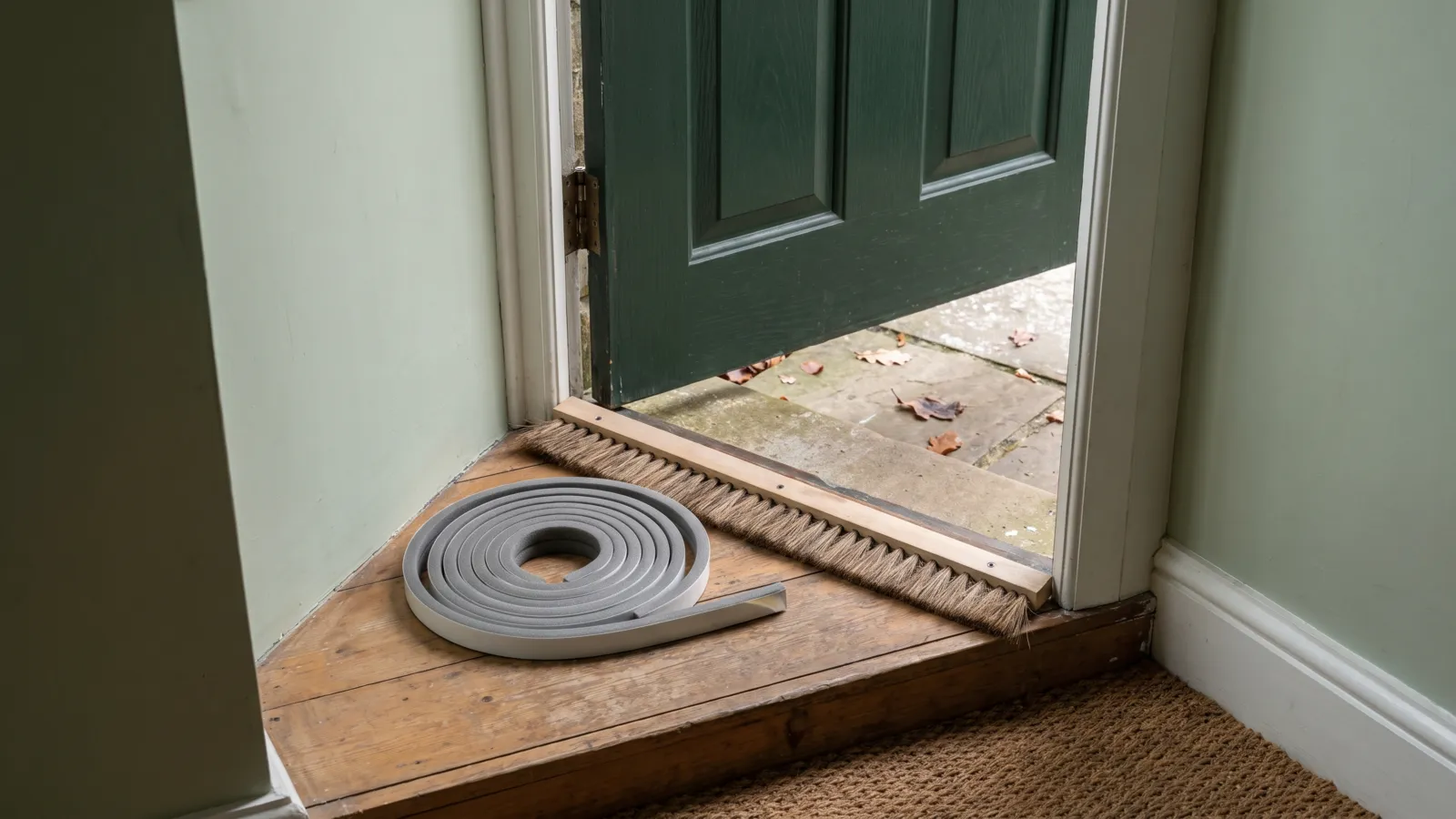
Start by measuring the gap, not the brand. Door bottoms in a typical UK home need to cope with gaps up to around 25mm, which is what a brush-strip excluder is built for; window and door frames usually need something much finer, and foam strips vary — a slim 3mm-deep strip suits gaps of 1–3mm, while a thicker 6mm strip stretches to about 5mm. Letterbox brushes need to match your existing aperture (a common internal size is around 279 x 45mm), so measure before you order rather than after.
Fitting method is the next real trade-off. Self-adhesive strips go on in minutes with no tools, which suits renters or a quick fix, but how well they hold depends on a clean, dry surface and won't necessarily last as long as a screwed fixing. Screw-fixed products — a letterbox plate, or a door brush with screw points — take a bit longer to fit but tend to be the sturdier, more permanent option, and several of the door and letterbox products here give you the choice of either.
Chimney excluders are a different job entirely and worth treating separately from the rest of the list. Size to your flue's actual depth and width before buying, and treat the fitting itself as reversible and temporary, not a permanent seal — it needs to come out before any fire is lit. A product that states this warning on its own packaging does some of that thinking for you; one that doesn't, doesn't remove the responsibility, it just leaves it with you.
On cost, nothing here is a subscription or an ongoing spend — it's a one-off fix per gap. That matches the wider picture from gov.uk and Simple Energy Advice guidance, which consistently ranks draught-proofing among the fastest-payback home-efficiency measures going. The only thing to keep working throughout is ventilation that's meant to keep working — trickle vents and extractor fans should carry on doing their job for damp and condensation control even after everything else is sealed up.
Top pick: Stormguard Chimney Inflatable Draught Excluder, Transparent, 700mm (562VV). Functionally similar to the Chimney Balloon brand's version, but this one states its own safety limit on the pack: 'ensure product is deflated and removed before lighting a fire.' That single line does a lot of the safety work for you, which is why it's the one to reach for first in this category.
| Draught excluder | Type | Coverage | Material | Fitting | Price | |
|---|---|---|---|---|---|---|
| Stormguard Chimney Inflatable Draught Excluder, Transparent, 700mm (562VV)TOP PICK | Inflatable chimney draught excluder (chimney balloon) | Up to 700mm wide x 400mm deep x 250mm high when inflated | Plastic construction | Push-fit, inflated via supplied tube; no fixings required | £17.99as of 20 Sep 2026, 12:29 BST · DetailsProduct prices and availability are accurate as of the date/time indicated and are subject to change. Any price and availability information displayed on Amazon.co.uk at the time of purchase will apply to the purchase of this product. | Check price → |
| Stormguard Sureseal 3 Self-Adhesive Foam Draught Excluder Weatherstrips, White, 7.5m 2 Pack (451VV) | Self-adhesive foam window/door strip | 15m total (two 7.5m lengths); seals variable gaps 1–3mm | Self-adhesive foam, 6mm width x 3mm depth, rectangular profile | Self-adhesive — peel and stick to door/window frame | £4.79as of 20 Sep 2026, 12:29 BST · DetailsProduct prices and availability are accurate as of the date/time indicated and are subject to change. Any price and availability information displayed on Amazon.co.uk at the time of purchase will apply to the purchase of this product. | Check price → |
| Stormguard Bottom Door Brush Draught Excluder, Black, 1m (2759V) | Door bottom brush/sweep strip | 1m length, cut to size; seals gaps up to 25mm under the door | PVC carrier with brush seal, 46mm width x 8.5mm depth | Self-adhesive and/or concealed screw fixings, both supplied | — | Check price → |
| Stormguard Brush Letter Plate, Aluminium, 338 x 75mm (8664V) | Letterbox brush plate | 338mm x 75mm plate; 279mm x 45mm internal aperture | Satin anodised aluminium construction, rust and tarnish-free finish | Screw-fit to door face over the letterbox aperture; fixings supplied | — | Check price → |
| Wickes Internal White Letter Box Draught Excluder, 78 x 338mm | Letterbox draught excluder with brush | 338 x 78mm external plate; 279 x 45mm internal aperture | PVC body with twin polypropylene brushes | Screw-fixed to the inside face of the door around the letterbox opening | £7.50Checked 20 Sep · indicative — not price-tracked | Check price → |
| Wickes White Soft Foam Draught Seal, 10m | Self-adhesive foam window/door strip | 10m roll; suitable for 1–5mm gaps | Foam, 8mm width x 6mm thickness | Self-adhesive — no release paper, cut with scissors | £8.00Checked 20 Sep · indicative — not price-tracked | Check price → |
| Stormguard Keyhole Cover | Keyhole draught cover | — | Metal, gold-effect or chrome-effect finish | Screw-fixed; hinged disc swings aside for key, springs back | £4.16as of 20 Sep 2026, 12:29 BST · DetailsProduct prices and availability are accurate as of the date/time indicated and are subject to change. Any price and availability information displayed on Amazon.co.uk at the time of purchase will apply to the purchase of this product. | Check price → |
| Chimney Balloon® draught excluder – Medium, 24" x 14" (61cm x 36cm) | Inflatable chimney draught excluder (chimney balloon) | 61cm x 36cm; suitable for flues roughly 9–14in deep and 16–24in wide | PVC-free inflatable construction | Inflated via supplied tube; pump recommended, sold separately | — | Check price → |
ⓘ As an Amazon Associate, PreparedBritain earns from qualifying purchases. We may earn a commission when you buy, or a fee when you request a quote, through our links — it never affects what we recommend. Amazon prices come from Amazon's own product data and show the date and time they were retrieved. Prices at other retailers are checked by us, less often. Prices and stock can change at any time, so always check the retailer's price before you buy.
Who it's for: The same job as any chimney balloon — sealing a genuinely unused flue — but with the safety limit stated on the product itself.
Functionally similar to the Chimney Balloon brand's version, but this one states its own safety limit on the pack: 'ensure product is deflated and removed before lighting a fire.' That single line does a lot of the safety work for you, which is why it's the one to reach for first in this category.
- On-pack warning to deflate and remove before lighting a fire
- Simple push-fit and inflate, no fixings needed
- Comes with a 1-year manufacturer guarantee
- Still requires the underlying rule to be followed: only fit in a genuinely unused or confirmed-redundant flue
- Transparent plastic construction, with no stated insulation performance beyond blocking the draught
- Fixed maximum size (up to 700 x 400 x 250mm inflated) — measure your flue opening before ordering
Don't buy if Skip this if you're not sure the flue is genuinely out of use — get it swept and confirmed redundant first, or fit a permanent vented cap instead of a temporary inflatable excluder.
as of 20 Sep 2026, 12:29 BST · Details
Product prices and availability are accurate as of the date/time indicated and are subject to change. Any price and availability information displayed on Amazon.co.uk at the time of purchase will apply to the purchase of this product.Stormguard Sureseal 3 Self-Adhesive Foam Draught Excluder Weatherstrips, White, 7.5m 2 Pack (451VV)
4.4Who it's for: Sealing several narrow window and door frame gaps (1–3mm) across a whole house in one project.
With 15m across two rolls, this is built for doing multiple openings rather than a single fix, and it's the cheapest per-metre option on this page. The slim 3mm-deep profile suits narrow, even gaps — it isn't the strip to reach for on anything wider or uneven.
- 15m total length covers several windows and doors from one pack
- Lowest price per metre of the foam strips compared here
- Manufacturer states it returns to shape after compression, so it isn't a one-squash product
- Only suited to narrow, consistent 1–3mm gaps — no help with a warped door or a wider gap
- White only — won't blend with dark or wood-finish frames
- 'Returns to original shape' and 'wipes clean' are the manufacturer's own descriptions, not independently tested claims
Don't buy if Skip this if your gaps are wider than 3mm — the thicker Wickes foam seal copes better with gaps up to 5mm.
as of 20 Sep 2026, 12:29 BST · Details
Product prices and availability are accurate as of the date/time indicated and are subject to change. Any price and availability information displayed on Amazon.co.uk at the time of purchase will apply to the purchase of this product.Stormguard Bottom Door Brush Draught Excluder, Black, 1m (2759V)
4.3Who it's for: Sealing the gap under an external or internal door where up to 25mm needs covering.
A straightforward brush-strip fix for door bottoms, with the flexibility of adhesive or screw fitting depending on your door. It's sold as a 1m length you cut down yourself rather than a pre-sized unit, so budget a few minutes with a hacksaw or scissors for a neat finish.
- Cuts to size for an exact fit on most standard UK doors
- Choice of self-adhesive or concealed screw fixing, both supplied
- Handles gaps up to 25mm — more than most foam strips can cope with
- Only sold in black — no colour-match option for white or wood-effect doors
- The 'Green Star' label on the packaging is Screwfix's own merchandising term, not an independent efficiency certification
- Sold as a 1m length to cut yourself, not pre-sized, so it takes a bit more care to fit neatly
Don't buy if Skip this if the gap you're sealing is a window frame rather than a door — a foam strip is the better tool for that job.
Stormguard Brush Letter Plate, Aluminium, 338 x 75mm (8664V)
4.2Who it's for: Replacing or covering a standard-size letterbox opening on a wood or composite front door with a durable aluminium brush plate.
The satin anodised aluminium is a step up in finish from a plastic letterbox brush, and the aperture size fits most standard UK letterboxes — but Screwfix lists it as non-fire-rated, which matters if your door has fire-door requirements.
- Rust and tarnish-free aluminium construction
- Aperture sized for most standard letterboxes (279 x 45mm)
- Satin finish reads as neutral against most door colours
- Listed as non-fire-rated by the retailer — not suitable where your door has a fire-rating requirement
- Fits to the outer door face, so it's visible from outside, not a concealed fix
- Fixed aperture size — measure your existing letterbox before ordering, as it isn't adjustable
Don't buy if Skip this if your front door is fire-rated, which is common in flats and HMOs — check with your landlord or building manager before fitting a non-fire-rated letterbox plate.
Wickes Internal White Letter Box Draught Excluder, 78 x 338mm
4.1Who it's for: A budget alternative to an aluminium letterbox brush plate that fits on the inside face of the door, so it's less visible from outside.
Same aperture size as the Stormguard aluminium version but roughly £1 cheaper and fitted from the inside face, so it's less visible from the street. The trade-off is a PVC body rather than aluminium.
- Fits to the inside face, so it's barely visible from outside
- Twin brush design for a fuller seal around the aperture
- Same aperture size as the Stormguard version, making comparison straightforward
- PVC construction rather than the Stormguard version's aluminium, so likely less durable-looking over time
- Fixed aperture size (279 x 45mm) — measure your letterbox opening before buying
- No fire-rating information stated, so the same fire-door caution applies if relevant to your building
Don't buy if Skip this if you want the letterbox brush visible and matched to external door furniture — the Stormguard aluminium version fits on the outside face instead.
Wickes White Soft Foam Draught Seal, 10m
4.0Who it's for: Slightly larger window and door frame gaps (up to 5mm) that a thinner foam strip won't fully close.
The thicker 6mm profile makes this a better match than the slimmer Stormguard foam strip for gaps up to 5mm, though you get less total length (10m vs 15m) for a slightly higher price.
- Thicker 6mm profile suits gaps up to 5mm
- No release paper to fiddle with — straightforward to apply
- Cuts easily with scissors for awkward frame shapes
- Shorter total length (10m) than the Stormguard foam strip's 15m, at a higher price
- Only suited to gaps up to 5mm — a bigger door-bottom gap needs a brush strip instead
- 'Returns to original shape' is the manufacturer's own description, not an independently tested claim
Don't buy if Skip this if you're covering a lot of ground on a budget and your gaps are on the narrower side (1–3mm) — the Stormguard foam strip gives more length for less outlay.
Stormguard Keyhole Cover
3.9Who it's for: A cheap, quick fix for draughts whistling through an external door's keyhole.
At £3 it's the cheapest item compared here and takes minutes to fit, but it's a genuinely minor addition — the sort of thing to add once you've dealt with the bigger gaps around the door and letterbox first.
- Cheapest item in this comparison
- Simple screw-fit installation with a spring-back hinged disc
- Two finish options (gold-effect or chrome-effect) to match door furniture
- Price may vary by finish and retailer — £3 is confirmed at one specialist retailer
- A minor draught source compared with a door bottom or letterbox — worth doing, but not the first fix
- No stated size — check your existing keyhole escutcheon before assuming a like-for-like fit
Don't buy if Skip this as a starting point if you haven't yet dealt with the door bottom or letterbox — tackle the bigger gaps first, then add this as a finishing touch.
as of 20 Sep 2026, 12:29 BST · Details
Product prices and availability are accurate as of the date/time indicated and are subject to change. Any price and availability information displayed on Amazon.co.uk at the time of purchase will apply to the purchase of this product.Who it's for: Blocking draughts from a genuinely unused, capped, or professionally confirmed-redundant chimney flue.
It does the job of sealing a redundant flue and is sized for a common range of UK flue dimensions, but unlike the Stormguard equivalent on this page, its own product page carries no explicit on-pack warning against use in a flue still in service — so the safety check is entirely down to you to remember, every time.
- Sized for a specific, common UK flue range (9–14in deep, 16–24in wide)
- PVC-free inflatable construction
- Simple mouth-inflation fitting, no tools or fixings needed
- No on-pack warning against use in a working flue — you must apply the 'unused flues only' rule yourself, unlike the Stormguard version below
- A foot or hand pump is recommended for inflation but sold separately, adding to the real cost
- Even in an unused flue, gov guidance says to keep a small vent open elsewhere in it to prevent damp and condensation build-up, which this product alone doesn't address
Don't buy if Skip this if there's any doubt the flue is still connected to a working fire, boiler or stove — get it swept and confirmed redundant first, or choose the Stormguard chimney excluder instead, which states its safety warning on the packaging.
Get price-drop alerts on these
Prices for 364 tracked products are refreshed daily — last sweep 20 September 2026. Tell us which and we'll email you when one drops.
We verify every product's specifications against at least two independent sources, re-check its UK price and stock on a schedule where we can track it automatically, and cross-check safety-relevant claims against official guidance. Where we've bought and used a product ourselves we say so on its review; where we haven't, our verdict is a considered spec-and-evidence comparison, not a hands-on test — and commissions never change a ranking either way. Read our full methodology →
Guides that go with this
The NHS symptoms of carbon monoxide poisoning, the two tells that separate it from flu, the six sources in you…
The correct, official steps if you smell gas or suspect a leak — the free 24-hour emergency number, what to do…
How to stay warm at home without turning the heating on — warm the person, then the zone, then the room, with …
Common questions
How do I know what size draught excluder I need?
Measure the gap first. Door bottoms typically need to seal gaps up to around 25mm; foam strips for window and door frames suit narrower gaps of roughly 1–5mm depending on the strip's thickness; letterbox plates need to match your existing aperture (a common internal size is around 279 x 45mm); and chimney excluders need to match your flue's depth and width, so measure before you buy.
Is it safe to block up a chimney with a chimney balloon?
Only if the flue is genuinely unused — either capped, or swept and confirmed redundant by a professional. Never fit an inflatable chimney excluder in a flue that still serves a working fire, boiler or stove: cutting off the draught can stop it drawing properly and let smoke or carbon monoxide build up in the room. Even in a confirmed-unused flue, gov guidance recommends keeping a small vent open to prevent damp.
Will draught-proofing my house block ventilation I actually need?
Not if you do it correctly. Trickle vents and extractor fans should carry on working after you draught-proof doors, windows and letterboxes elsewhere. The one area to treat with real caution is a room with a fuel-burning appliance — don't seal its permanent air vent or air brick, and don't fit a chimney excluder to a flue that's still in service.
Self-adhesive or screw-fixed — which lasts longer?
Both have a place. Self-adhesive foam and brush strips go on quickly with no tools, which suits renters, but how well they hold depends on the surface being clean and dry when you apply it. Screw-fixed products — a letterbox brush plate, or a door bottom brush fitted with the screw option — are more of a proper job to fit but tend to be the sturdier long-term choice.
Is draught-proofing actually worth the money?
Government and Simple Energy Advice guidance both flag draught-proofing as one of the cheapest, fastest-payback home-efficiency measures available. The products compared here are one-off fixes rather than an ongoing cost.
Do I need a professional to fit any of these?
No — everything on this page is designed for DIY fitting with basic tools (scissors, a screwdriver, sometimes a bradawl to mark screw holes). The one exception is confirming a chimney or flue is genuinely unused before fitting a chimney excluder — that's worth a professional sweep or check rather than an assumption.
What's the difference between the two chimney excluders compared here?
Both work the same way — an inflatable balloon that blocks draughts up an unused flue — but one carries an explicit on-pack warning to deflate and remove it before lighting a fire, while the other's own product page doesn't state that warning. The underlying safety rule is identical either way: only fit in a confirmed-unused flue, and always remove before any fire is lit.