Best pipe lagging, tap covers and frost protection for UK homes (2026)
A frozen pipe that bursts as it thaws is one of the most common winter insurance claims in Britain, and most of the damage happens in the same few places: lofts, garages, outbuildings and outside taps. Water companies give the same advice every winter: lag exposed pipes, cover outside taps, know where your stopcock is and keep the heating ticking over when you are away. This page compares the products that do that job, from foam lagging to thermostatic heaters and heating cable. We have not fitted any of them ourselves; every figure is credited to the maker or a retailer's specification.
By Tom Calder · Updated 21 October 2026 · 7 products, all price-tracked
Our picks by type
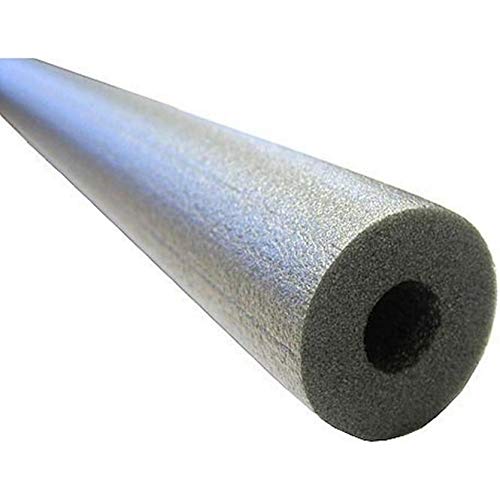 Photo: Amazon
Climaflex 22mm x 13mm
Larger 22mm feed and heating pipes in lofts, garages and boiler cupboards.
as of 21 Oct 2026, 10:37 BST · Details
Product prices and availability are accurate as of the date/time indicated and are subject to change. Any price and availability information displayed on Amazon.co.uk at the time of purchase will apply to the purchase of this product. Photo: Amazon
Flopro Tap Cover
A simple, inexpensive cover for a single outside tap.
as of 21 Oct 2026, 10:37 BST · Details
Product prices and availability are accurate as of the date/time indicated and are subject to change. Any price and availability information displayed on Amazon.co.uk at the time of purchase will apply to the purchase of this product. Photo: Amazon
Mylek 55W Tube Heater
Keeping a small garage, shed or pump room just above freezing at low running cost.
as of 21 Oct 2026, 10:37 BST · Details
Product prices and availability are accurate as of the date/time indicated and are subject to change. Any price and availability information displayed on Amazon.co.uk at the time of purchase will apply to the purchase of this product. Photo: Amazon
Elektra FreezeTec 3m
Protecting a short exposed pipe, a valve or a condensate run under lagging.
as of 21 Oct 2026, 10:37 BST · Details
Product prices and availability are accurate as of the date/time indicated and are subject to change. Any price and availability information displayed on Amazon.co.uk at the time of purchase will apply to the purchase of this product.All 7 compared
| Product | Type | Fits | Material | Power | Price |
|---|---|---|---|---|---|
Foam pipe lagging, 10 x 1m lengths · 22mm pipe, 13mm wall · Closed-cell polyethylene foam Larger 22mm feed and heating pipes in lofts, garages and boiler cupboards. | Foam pipe lagging, 10 x 1m lengths | 22mm pipe, 13mm wall | Closed-cell polyethylene foam | — | £11.05 at Amazon as of 21 Oct 2026, 10:37 BST · DetailsProduct prices and availability are accurate as of the date/time indicated and are subject to change. Any price and availability information displayed on Amazon.co.uk at the time of purchase will apply to the purchase of this product.In stockCheck price → |
Our verdictOur verdictResearched The same Climaflex foam as the 15mm pack, but for 22mm pipe and with a thicker 13mm wall. B&Q lists the matching 22mm by 13mm size in 1m lengths, which fits the 10 x 1m pack here. The thicker wall is the better choice for exposed runs. It is a ten-metre pack, so it suits a whole loft or outbuilding run rather than a single short pipe. Best for Larger 22mm feed and heating pipes in lofts, garages and boiler cupboards. Good
Worth knowing
Who shouldn't buy it: Don't buy it if you only have a short run of 15mm pipe to cover; the smaller pack is a better fit. | |||||
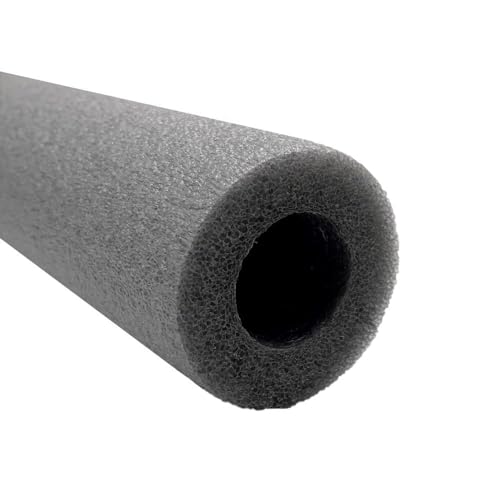 Foam pipe lagging, 5 x 1m lengths · 15mm pipe, 9mm wall · Closed-cell polyethylene foam Lagging the 15mm copper or plastic pipes in a loft, garage or under-floor void. | Foam pipe lagging, 5 x 1m lengths | 15mm pipe, 9mm wall | Closed-cell polyethylene foam | — | £6.95 at Amazon as of 21 Oct 2026, 10:37 BST · DetailsProduct prices and availability are accurate as of the date/time indicated and are subject to change. Any price and availability information displayed on Amazon.co.uk at the time of purchase will apply to the purchase of this product.In stockCheck price → |
Our verdictOur verdictResearched Climaflex is the standard slit polyethylene foam lagging that plumbers and DIY stores stock, here in a five-metre multipack for 15mm pipe. Retailer data sheets give it a conductivity of about 0.034 W/mK at 0 degrees C. It suits the long straight runs of cold supply that water companies tell people to lag in lofts, garages and outbuildings. It covers pipe runs only, so taps and tanks need their own covers. Best for Lagging the 15mm copper or plastic pipes in a loft, garage or under-floor void. Good
Worth knowing
Who shouldn't buy it: Don't buy it if your pipes are 22mm or larger, or run through a space that stays below freezing for days; check the bore and add a frost heater or trace heating. | |||||
Thermostatic tube heater · Greenhouse, garage, shed or loft · 55 W, plug-in Keeping a small garage, shed or pump room just above freezing at low running cost. | Thermostatic tube heater | Greenhouse, garage, shed or loft | — | 55 W, plug-in | £34.99 at Amazon as of 21 Oct 2026, 10:37 BST · DetailsProduct prices and availability are accurate as of the date/time indicated and are subject to change. Any price and availability information displayed on Amazon.co.uk at the time of purchase will apply to the purchase of this product.In stockCheck price → |
Our verdictOur verdictResearched A low-wattage tube heater with an adjustable thermostat and wall or floor brackets, listed by Yesss at IP44 splash resistance. At 55W it only takes the edge off the cold in a small space, which is the point: it holds a room above freezing to protect pipes, not to warm it. Use it in a socket protected by an RCD, keep it clear of stored items, and follow the maker's instructions. Best for Keeping a small garage, shed or pump room just above freezing at low running cost. Good
Worth knowing
Who shouldn't buy it: Don't buy it if you need to heat a large space or protect a pipe outside; a pipe heating cable fits better. | |||||
 Wool felt pipe lagging, 7.2m roll · 15mm and 22mm pipe (50mm wide sleeve) · Sheep wool felt, mixed fibres Lagging bends and awkward pipework in a dry loft where a foam tube will not follow the line neatly. | Wool felt pipe lagging, 7.2m roll | 15mm and 22mm pipe (50mm wide sleeve) | Sheep wool felt, mixed fibres | — | £6.69 at Amazon as of 21 Oct 2026, 10:37 BST · DetailsProduct prices and availability are accurate as of the date/time indicated and are subject to change. Any price and availability information displayed on Amazon.co.uk at the time of purchase will apply to the purchase of this product.In stockCheck price → |
Our verdictOur verdictResearched A UK-made wool felt sleeve, supplied as a 7.2m tubular roll that slips over 15mm or 22mm pipe. Retailers list it at 50mm wide and say one roll covers around three metres of pipe. It conforms to elbows and fittings better than foam, but covers far less pipe per roll, and it absorbs moisture vapour where closed-cell foam repels it. Keep it for dry indoor spaces such as lofts. Best for Lagging bends and awkward pipework in a dry loft where a foam tube will not follow the line neatly. Good
Worth knowing
Who shouldn't buy it: Don't buy it if your pipes are outdoors, in damp spaces, or in long straight runs; closed-cell foam lagging is the better and cheaper fit. | |||||
Insulated outside tap cover · Most standard outside taps A simple, inexpensive cover for a single outside tap. | Insulated outside tap cover | Most standard outside taps | — | — | £4.69 at Amazon as of 21 Oct 2026, 10:37 BST · DetailsProduct prices and availability are accurate as of the date/time indicated and are subject to change. Any price and availability information displayed on Amazon.co.uk at the time of purchase will apply to the purchase of this product.In stockCheck price → |
Our verdictOur verdictResearched A basic insulated jacket from the Flopro range that slips over an outside tap. The Flopro product page describes it as insulation to stop taps freezing over winter. Covers are a recommended first step in water-company advice, but this one is not a substitute for turning the supply off inside and draining the outside tap, which is the more reliable measure through a long freeze. Best for A simple, inexpensive cover for a single outside tap. Good
Worth knowing
Who shouldn't buy it: Don't buy it if you can isolate and drain the outside tap indoors; that protects it better than any cover. | |||||
Plug-in pipe heating cable, thermostat · Pipes up to DN50, 10 to 20mm lagging · Heating cable with install tape · 36 W, 3 m (12 W/m) Protecting a short exposed pipe, a valve or a condensate run under lagging. | Plug-in pipe heating cable, thermostat | Pipes up to DN50, 10 to 20mm lagging | Heating cable with install tape | 36 W, 3 m (12 W/m) | £57.49 at Amazon as of 21 Oct 2026, 10:37 BST · DetailsProduct prices and availability are accurate as of the date/time indicated and are subject to change. Any price and availability information displayed on Amazon.co.uk at the time of purchase will apply to the purchase of this product.In stockCheck price → |
Our verdictOur verdictResearched Elektra's FreezeTec cable has the thermostat built in and runs at 12W per metre. The maker's specification has it switching on below +3 degrees C and off above +10 degrees C, and it goes under pipe insulation of 10 to 20mm. The 3m length suits a short exposed section, such as a condensing boiler's condensate pipe or a stopcock run. Plug it into an RCD-protected socket and follow the maker's manual. Best for Protecting a short exposed pipe, a valve or a condensate run under lagging. Good
Worth knowing
Who shouldn't buy it: Don't buy it if you need to protect a pipe longer than three metres, or one wider than DN50 once lagged; pick a longer cable. | |||||
 Floor-standing frost heater · Small rooms or caravans, kept dry · 520 W, plug-in A small dry room, garage or outbuilding that needs frost protection from a floor heater. | Floor-standing frost heater | Small rooms or caravans, kept dry | — | 520 W, plug-in | £26.48 at Amazon as of 21 Oct 2026, 10:37 BST · DetailsProduct prices and availability are accurate as of the date/time indicated and are subject to change. Any price and availability information displayed on Amazon.co.uk at the time of purchase will apply to the purchase of this product.In stockCheck price → |
Our verdictOur verdictResearched A compact convector with an adjustable thermostat from 5 to 30 degrees C and a cut-out switch. Retailers list it at IP20, which means no protection from water, so keep it indoors and dry. It heats more than the tube heater here, so it suits a slightly larger space, but the 520W draw runs the meter faster. Put it on the floor, leave clearance round it, and plug it into an RCD-protected socket. Best for A small dry room, garage or outbuilding that needs frost protection from a floor heater. Good
Worth knowing
Who shouldn't buy it: Don't buy it if the space is damp, a pump house or outdoors; choose a splash-rated tube heater instead. | |||||
ⓘ As an Amazon Associate, PreparedBritain earns from qualifying purchases. We may earn a commission when you buy, or a fee when you request a quote, through our links — it never affects what we recommend. Amazon prices come from Amazon's own product data and show the date and time they were retrieved. Prices at other retailers are checked by us, less often. Prices and stock can change at any time, so always check the retailer's price before you buy.
Before you buy
Start with the free checks, because they do more than anything you can buy.
Find the stopcock, usually under the kitchen sink or where the supply enters the house, and make sure it turns; a seized stopcock on the night a pipe bursts is the real emergency. Isolate and drain outside taps for the winter if there is a valve indoors. Leave the heating on a low setting when the house is empty in a cold spell, and open the loft hatch for a while on the coldest nights so warm air reaches the tank. Only then look at what is still exposed.
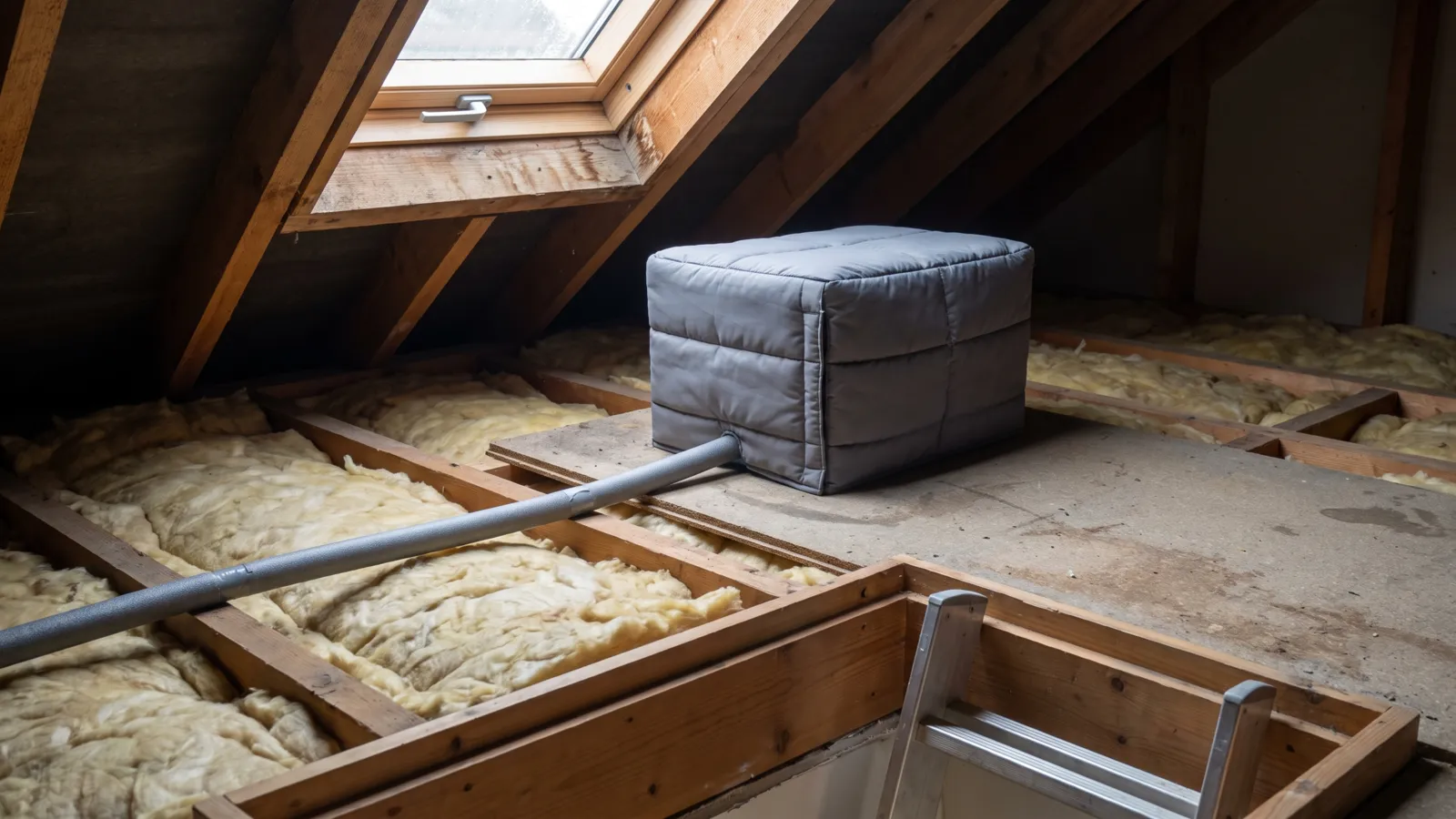
Lag whatever cold pipe runs through an unheated space.
Closed-cell polyethylene foam such as Climaflex is the standard choice: pre-slit tubes that clip over pipework already in place, sold by bore and wall thickness. Measure the pipe first: 15mm and 22mm are the common domestic sizes and a tube for one will not grip the other. Where you have a choice, the thicker wall gives more margin on a run in a garage or against an outside wall. Tape the slit shut and butt lengths tightly together, because gaps at joints and elbows are where pipes freeze. Wool felt sleeves wrap bends more neatly but suit dry lofts only.
Insulate the loft tank and the pipes around it, and leave the underside of the tank bare.
Water companies and insurers recommend a jacket on the cold water tank and lagging on every pipe in the loft, but not insulation directly beneath the tank, so a little warmth from the rooms below still reaches it. Cover outside taps with an insulated jacket if you cannot isolate them; a cover takes seconds to fit and slows the first frost, but it will not hold through a long freeze, so drain the tap as well where you can.
For a space that stays below freezing, add a little controlled heat rather than more foam.
A tube heater or small convector with a thermostat holds a garage, pump room or outbuilding just above zero and draws little power while the thermostat has it switched off. Check the ingress rating: a splash-rated unit for a damp pump house, a dry-location one only for a dry room. Plug it straight into a wall socket protected by an RCD, not an extension lead, keep it clear of stored boxes and fuel, and never use a paraffin, gas or other combustion heater for this job.
For a single exposed pipe, a thermostatic heating cable warms the pipe itself under the lagging.
Plug-in kits with a built-in thermostat switch on as the pipe nears freezing and off once it is several degrees warmer, and the maker specifies the lagging thickness that must go over them. They suit a condensate pipe, an outside supply run or a stopcock in a cold void. Use an RCD-protected socket, outdoor-rated if it is outside, follow the maker's instructions on fixing and lagging, and treat anything on fixed wiring, or trace heating across a whole building, as a job for a registered electrician.
We verify every product's specifications against at least two independent sources, re-check its UK price and stock on a schedule where we can track it automatically, and cross-check safety-relevant claims against official guidance. Every review is labelled Researched or Used and reviewed by us: where we've bought a product, or been sent it free, and used it ourselves, its review says which; where we haven't, our verdict is a considered spec-and-evidence comparison, not a hands-on test — and commissions never change a ranking either way. Read our full methodology →
Related kit comparisons
Guides that go with this
How to stop pipes freezing, thaw a frozen pipe safely, and act fast if one bursts — one of the most preventabl…
How to tell a frozen condensate pipe from a real boiler fault, thaw it safely with warm water, reset the boile…
How UK storm warnings work, what Arwen and Éowyn taught households, and the short pre-storm checklist that mat…
No heating or hot water on a cold night? The safe checks to try first, when to stop and call a Gas Safe engine…
Common questions
Does pipe lagging stop pipes freezing?
It slows freezing rather than preventing it. Foam insulation reduces how fast a pipe loses heat, so a short cold night passes without trouble, but a pipe in a space that stays below zero for days can still freeze under the foam. That is why water companies pair lagging with the other steps: heating left on low, the loft hatch opened on the coldest nights, and heat or draining for pipes in genuinely unheated spaces.
What thickness of pipe lagging do I need in the UK?
Foam lagging is sold by pipe bore and wall thickness, and the thicker wall insulates better. For pipes in an unheated loft, a garage, an outbuilding or a run along an outside wall, choose the thicker wall; the thinner wall suits pipes in spaces that stay above freezing, such as an internal cupboard. Measure the pipe first: domestic copper is mostly 15mm or 22mm, and the foam must match the bore to grip properly. Tape the slit and the joints closed.
Should I cover my outside tap or turn it off?
Both if you can. Water companies advise turning off the indoor isolating valve for the outside tap and opening the tap to drain it, which removes the water that would freeze. A cover is the fallback where there is no valve, or an extra layer on top. It fits in seconds and helps with the first frosts, but it only slows freezing, so do not rely on it alone through a long cold spell.
Can I use a tube heater or frost heater in a garage overnight?
Thermostatic tube heaters and frost-stat convectors are designed for that: they switch on at a set low temperature and hold the space just above freezing. Plug straight into a wall socket protected by an RCD, not an extension lead, keep the heater clear of stored items, cardboard and fuel, mount or stand it as the maker says, and check the ingress rating suits the room. Never use a gas, paraffin or petrol-fuelled heater or engine in a garage or any enclosed space.
Is pipe heating cable safe to fit myself?
Plug-in kits with a built-in thermostat are sold for DIY fitting under lagging, and the maker's manual sets out the fixing tape, the lagging thickness and where the thermostat must sit. Fix the cable to the pipe as the manual shows and do not cross or overlap it unless the manual says that cable allows it. Use an RCD-protected socket, outdoor-rated if outside. Anything wired into the fixed installation, or trace heating across a whole building, should be done by a registered electrician.
What should I do if a pipe has already frozen?
Turn off the stopcock first, then open the nearest cold tap so melting water has somewhere to go. Thaw gently from the tap end with a hot water bottle, towels soaked in warm water or a hairdryer on low, kept away from any dripping water, and never a blowtorch or naked flame. If the pipe has split, keep the stopcock off, keep water away from electrics and call a plumber. Our frozen and burst pipes guide covers the sequence in detail, including when to call your insurer.