Frozen and burst pipes: prevent, thaw, and act fast
How to stop pipes freezing, thaw a frozen pipe safely, and act fast if one bursts — one of the most preventable and expensive winter household disasters.
By Tom Calder · Updated 20 July 2026 · Sourced to British Gas, water companies & the ABI
Why pipes burst — and why it's worth preventing
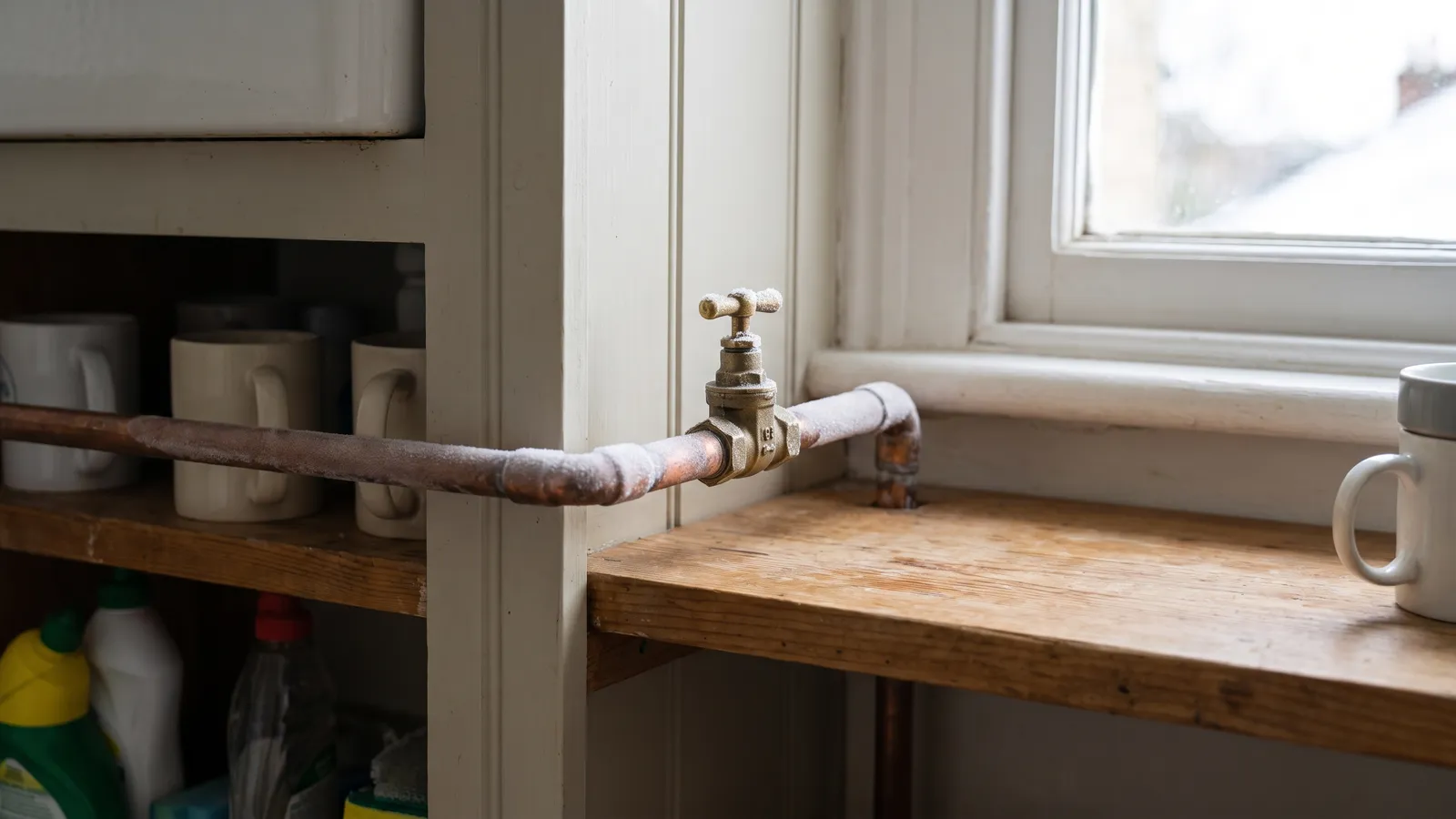
It's counter-intuitive, but a frozen pipe doesn't leak while it's frozen — it bursts when it thaws. Water expands as it freezes, and with nowhere to go the ice pushes against the pipe until it cracks or splits; then, as it melts, water pours out of the split. The risk starts at 0°C and climbs through prolonged sub-zero spells, especially for pipes in unheated lofts, garages and outdoors.
This is not a rare event to shrug off. 'Escape of water' — which includes burst and frozen pipes — is one of the most common home-insurance claims in Britain, with insurers paying out around £1.8 million every single day, and the Association of British Insurers puts the average cost of repairing a burst pipe at about £8,800. A few pounds of prevention genuinely saves a five-figure mess.
Prevention 1: keep the heat ticking over
The simplest defence is to not let the house get cold enough to freeze the pipes. In a cold snap, and especially if you go away, leave the heating on low rather than off. British Gas advises keeping the thermostat set to at least 7°C even when the house is empty — enough to keep the chill off the pipework without heating an empty home to full temperature.
It's a small running cost against the risk of a burst pipe and a ruined ceiling — comfortably the better trade.
Prevention 2: lag the pipes, and find your stopcock
Insulate exposed pipes and water tanks with cheap foam pipe lagging from any DIY shop, prioritising the coldest unheated spots where freezing starts — the loft, the garage, and any outdoor pipework. If pipes or a tank sit in an unheated loft, open the loft hatch during icy weather so warm air from the heated house below can rise and take the edge off.
Then the single most important thing: find your internal stop tap (stopcock) — usually under the kitchen sink, or where the mains pipe enters the house — and check that it actually turns before you ever need it. That one valve is what stops water flooding the house if a pipe bursts, and you don't want to be hunting for a seized-up tap in an emergency.
If a pipe freezes
Caught it before it burst? Turn the water off at the stop tap straight away, and open the nearest tap to relieve the pressure and give the melting ice somewhere to go. Then thaw the pipe gently, starting at the end closest to the tap and working back, using a hot cloth, a hot water bottle or a towel soaked in hot water.
Never use a naked flame or a blowtorch to thaw a pipe — it's dangerous and the sudden heat can crack the pipe and make things far worse.
If a pipe bursts
Act fast to limit the damage. Turn the water off at the stopcock immediately and leave it off until a plumber has repaired the pipe. Switch off the central heating (and any water heating), then open all the taps to drain the system quickly. Soak up escaping water with towels, and if any electrics might have got wet, turn the power off at the mains — never touch wet electrics.
Then call a fully qualified plumber and your insurer. Burst pipes are exactly what home insurance's 'escape of water' cover is for, so document the damage with photos before you clear up.
Common questions
Why do frozen pipes burst?
Water expands as it freezes, and with nowhere to go the ice splits the pipe. It then leaks when the ice thaws — so the damage shows up as the weather warms, not during the freeze itself. Unheated lofts, garages and outdoor pipes are most at risk.
What temperature should I keep my heating at in winter?
British Gas advises keeping the thermostat at least 7°C even when the house is empty, and leaving the heating on low during cold snaps. That's enough to keep the chill off the pipework without heating an empty home fully.
How do I stop my pipes freezing?
Lag exposed pipes and tanks with cheap foam pipe insulation, focusing on the loft, garage and outdoor pipework; open the loft hatch in icy weather to let warm air up; keep the heating ticking over; and know where your stopcock is.
Does leaving a tap dripping stop pipes freezing?
No — British Gas explicitly calls this a myth. A dripping tap doesn't reliably prevent freezing, so don't rely on it. Lagging the pipes and keeping the heat on are what actually work.
What do I do if a pipe freezes?
Turn the water off at the stop tap, open the nearest tap, and thaw the pipe gently from the tap end using a hot cloth, hot water bottle or a towel soaked in hot water. Never use a naked flame or blowtorch — it can crack the pipe.
What do I do if a pipe bursts?
Turn off the stopcock immediately, switch off the central heating, open all taps to drain the system, soak up water, and turn off the electrics at the mains if they may be wet. Then call a qualified plumber and your insurer, photographing the damage first.
Sources: British Gas — How to stop pipes freezing · Association of British Insurers — Escape of water · South West Water — Frozen and burst pipes. PreparedBritain is independent and not affiliated with HM Government.
The Emergency Kit Checklist
The GOV.UK Prepare essentials on one printable page — tick them off as you go and keep it with the kit. Free, no catch.
Download it straight away. We'll also send the occasional briefing when something genuinely matters — severe weather, live incidents, real price drops. Nothing else.
Keep reading
All weather, storms & flooding guides →Cold-Health Alerts and staying safe in cold weather
What the UKHSA Cold-Health Alert colours mean, who's most at risk in cold weather, and the practical, sourced steps…
UK Emergency Alerts: the siren on your phone, explained
What the loud siren means, when the government sends Emergency Alerts, what a real one looks like, and how — and…
Preparing for winter storms & power cuts
How UK storm warnings work, what Arwen and Éowyn taught households, and the short pre-storm checklist that matters —…