Best water leak detectors and alarms for UK homes (2026)
A water leak detector is a small sensor that sits on the floor under a sink, boiler or washing machine and raises the alarm when water touches it, often long before a damp patch would show. This page compares the three types sold in the UK: standalone battery alarms that sound a siren, smart sensors that send a phone alert through your Wi-Fi or a hub, and an automatic shut-off valve that closes the incoming supply for you. We have not fitted any of them ourselves; every figure is credited to the maker or a retailer listing, and we say which ones work without an app, a hub or internet.
By Tom Calder · Updated 21 October 2026 · 10 products, all price-tracked
Our picks by type
 Photo: Amazon
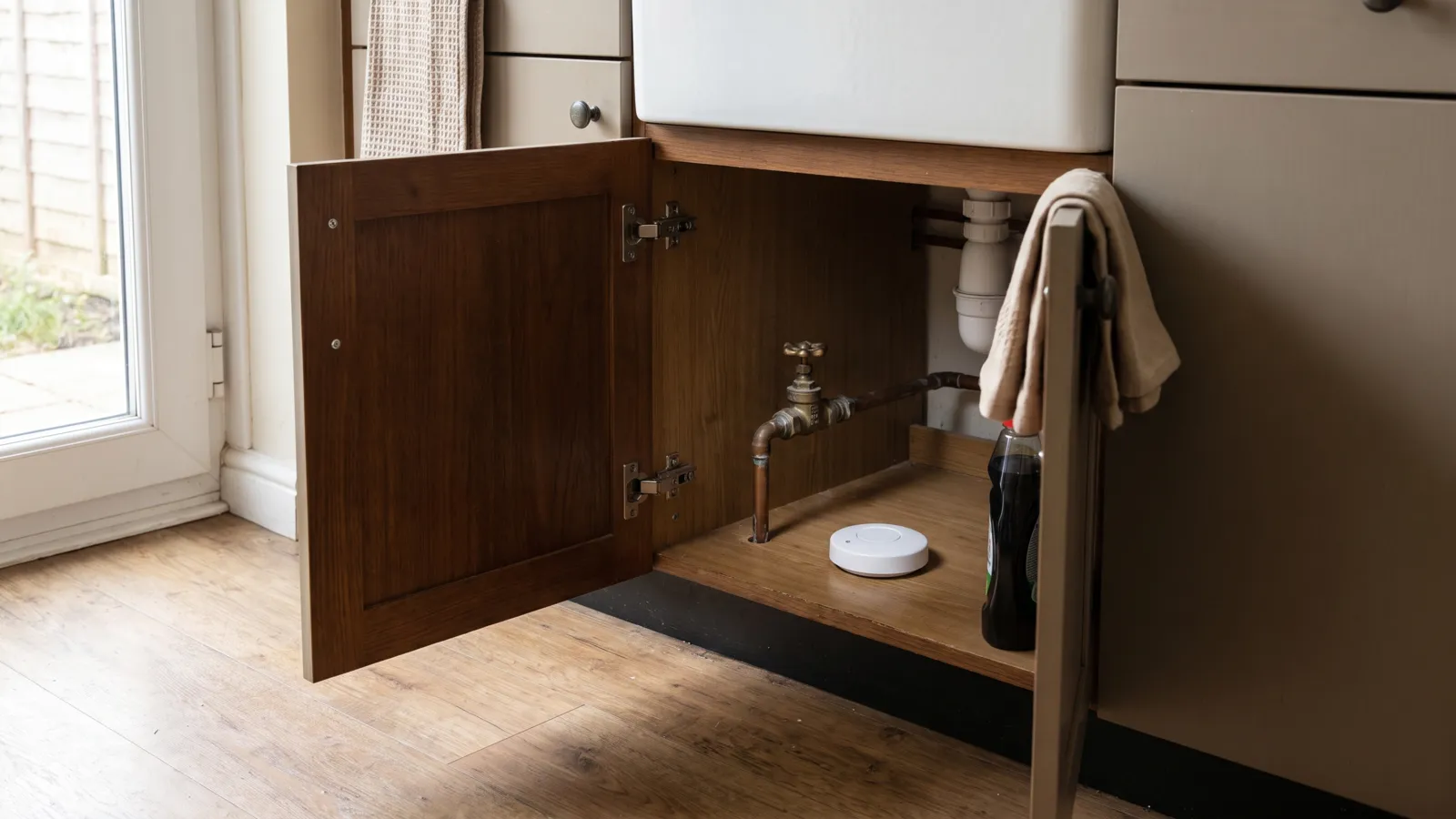
FireAngel FA7011
A battery-swappable standalone alarm from a UK safety-alarm brand.
as of 21 Oct 2026, 10:37 BST · Details
Product prices and availability are accurate as of the date/time indicated and are subject to change. Any price and availability information displayed on Amazon.co.uk at the time of purchase will apply to the purchase of this product. Photo: Amazon
SwitchBot Leak Detector
A one-sensor phone-alert setup with no hub to buy.
as of 21 Oct 2026, 10:37 BST · Details
Product prices and availability are accurate as of the date/time indicated and are subject to change. Any price and availability information displayed on Amazon.co.uk at the time of purchase will apply to the purchase of this product. Photo: Amazon
Quandify CubicSecure
Homes or landlords who want the water switched off for them while away.
as of 21 Oct 2026, 10:37 BST · Details
Product prices and availability are accurate as of the date/time indicated and are subject to change. Any price and availability information displayed on Amazon.co.uk at the time of purchase will apply to the purchase of this product.All 10 compared
| Detector | Type | Alerts | Needs a hub | Power | Price |
|---|---|---|---|---|---|
Smart Wi-Fi sensor with 1 m cable · App and email alerts, local alarm · No, joins 2.4 GHz Wi-Fi · 2 x AAA, up to 2 years (maker claim) A one-sensor phone-alert setup with no hub to buy. | Smart Wi-Fi sensor with 1 m cable | App and email alerts, local alarm | No, joins 2.4 GHz Wi-Fi | 2 x AAA, up to 2 years (maker claim) | £16.98 at Amazon as of 21 Oct 2026, 10:37 BST · DetailsProduct prices and availability are accurate as of the date/time indicated and are subject to change. Any price and availability information displayed on Amazon.co.uk at the time of purchase will apply to the purchase of this product.In stockCheck price → |
Our verdictOur verdictResearched Connects straight to home Wi-Fi and sends app and email alerts, so there is no separate hub. The variant listed here comes with a one-metre probe cable for spots such as behind a fridge or a bath. If the Wi-Fi is down, the local alarm still sounds, but you will not get a phone message. Best for A one-sensor phone-alert setup with no hub to buy. Good
Worth knowing
Who shouldn't buy it: The leak-prone spot has no Wi-Fi signal; a hub-based radio sensor or a plain alarm copes better. | |||||
 Smart sensor, drip and flood · Own 90 dB siren; app alerts via the hub · Yes, Tapo hub sold separately · 2 x AAA, replaceable Households that already have, or plan to add, a Tapo hub and want app alerts. | Smart sensor, drip and flood | Own 90 dB siren; app alerts via the hub | Yes, Tapo hub sold separately | 2 x AAA, replaceable | £17.99 at Amazon as of 21 Oct 2026, 10:37 BST · DetailsProduct prices and availability are accurate as of the date/time indicated and are subject to change. Any price and availability information displayed on Amazon.co.uk at the time of purchase will apply to the purchase of this product.In stockCheck price → |
Our verdictOur verdictResearched A small smart sensor with its own siren, which Tapo rates at up to 90 dB, that reports to a Tapo hub for phone alerts. The listing says the hub is required and sold separately, so it is only good value if you want the hub for other Tapo sensors too. With the hub in place, the hub can sound its own siren as well. Best for Households that already have, or plan to add, a Tapo hub and want app alerts. Good
Worth knowing
Who shouldn't buy it: You want a single stand-alone sensor with no hub; a battery alarm or a no-hub Wi-Fi sensor costs less to start. | |||||
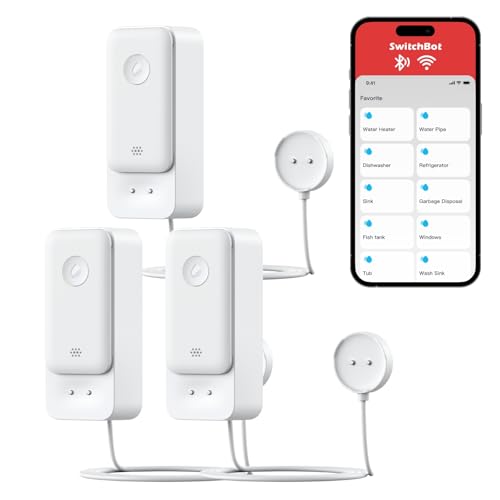 Smart Wi-Fi sensors x 3, with cable · App and email alerts, local alarm · No, joins 2.4 GHz Wi-Fi · 2 x AAA each, up to 2 years (maker claim) Covering a kitchen, utility room and bathroom in one purchase. | Smart Wi-Fi sensors x 3, with cable | App and email alerts, local alarm | No, joins 2.4 GHz Wi-Fi | 2 x AAA each, up to 2 years (maker claim) | £38.98 at Amazon as of 21 Oct 2026, 10:37 BST · DetailsProduct prices and availability are accurate as of the date/time indicated and are subject to change. Any price and availability information displayed on Amazon.co.uk at the time of purchase will apply to the purchase of this product.In stockCheck price → |
Our verdictOur verdictResearched Three of the same Wi-Fi sensors as the single pack, which suits a typical home with a washing machine, a boiler cupboard and a sink or bathroom. Each one joins your router directly, so the number of sensors is limited mainly by your Wi-Fi coverage. It is the sensible buy if you already know you want more than one. Best for Covering a kitchen, utility room and bathroom in one purchase. Good
Worth knowing
Who shouldn't buy it: You only need one spot protected; buy the single sensor instead. | |||||
Standalone floor alarm · Local alarm, 85 dB · No · 2 x AA, replaceable A battery-swappable standalone alarm from a UK safety-alarm brand. | Standalone floor alarm | Local alarm, 85 dB | No | 2 x AA, replaceable | £14.99 at Amazon as of 21 Oct 2026, 10:37 BST · DetailsProduct prices and availability are accurate as of the date/time indicated and are subject to change. Any price and availability information displayed on Amazon.co.uk at the time of purchase will apply to the purchase of this product.In stockCheck price → |
Our verdictOur verdictResearched A palm-sized disc that sounds an alarm and flashes a red light when water reaches its sensors. It uses ordinary AA batteries you can change, and FireAngel offers a one-year warranty. It is a good match for a washing machine or under-sink spot where someone is usually home. Best for A battery-swappable standalone alarm from a UK safety-alarm brand. Good
Worth knowing
Who shouldn't buy it: You need a phone notification when you are out; pick a Wi-Fi or hub-based sensor. | |||||
 Smart Zigbee sensor · App alert, hub sounds the alarm · Yes, Aqara hub sold separately Smart-home users who already run an Aqara hub and want leaks to trigger other devices. | Smart Zigbee sensor | App alert, hub sounds the alarm | Yes, Aqara hub sold separately | — | £19.99 at Amazon as of 21 Oct 2026, 10:37 BST · DetailsProduct prices and availability are accurate as of the date/time indicated and are subject to change. Any price and availability information displayed on Amazon.co.uk at the time of purchase will apply to the purchase of this product.In stockCheck price → |
Our verdictOur verdictResearched A tiny Zigbee sensor that tells an Aqara hub when water reaches it, and the hub sounds an alarm and notifies your phone. It also works as a trigger for other Aqara devices, so it suits an existing smart-home setup. As a first and only leak sensor it is the more expensive route because of the hub. Best for Smart-home users who already run an Aqara hub and want leaks to trigger other devices. Good
Worth knowing
Who shouldn't buy it: You do not already have a smart-home hub; a battery alarm or a no-hub Wi-Fi sensor is simpler. | |||||
 Standalone floor alarm · Local siren only, 85 dB · No · Sealed 10-year lithium battery A cheap fit-and-forget alarm for under a sink, boiler or washing machine. | Standalone floor alarm | Local siren only, 85 dB | No | Sealed 10-year lithium battery | £17.99 at Amazon as of 21 Oct 2026, 10:37 BST · DetailsProduct prices and availability are accurate as of the date/time indicated and are subject to change. Any price and availability information displayed on Amazon.co.uk at the time of purchase will apply to the purchase of this product.In stockCheck price → |
Our verdictOur verdictResearched A small sealed alarm that sounds a siren when its feet get wet, with no app, hub or Wi-Fi to set up. The battery is built in and not replaceable, so the whole unit is the consumable after about a decade. It suits anyone who wants the simple under-the-appliance alarm and will hear it when at home. Best for A cheap fit-and-forget alarm for under a sink, boiler or washing machine. Good
Worth knowing
Who shouldn't buy it: You are often away or the appliance is out of earshot; choose a Wi-Fi sensor that sends a phone alert. | |||||
 Smart sensor, thin disc · App alert, base station sounds up to 100 dB · Yes, X-Sense SBS50 sold separately · 2 x AAA, up to 3 years (maker claim) People who like the X-Sense app and want a loud base-station siren. | Smart sensor, thin disc | App alert, base station sounds up to 100 dB | Yes, X-Sense SBS50 sold separately | 2 x AAA, up to 3 years (maker claim) | £15.99 at Amazon as of 21 Oct 2026, 10:37 BST · DetailsProduct prices and availability are accurate as of the date/time indicated and are subject to change. Any price and availability information displayed on Amazon.co.uk at the time of purchase will apply to the purchase of this product.In stockCheck price → |
Our verdictOur verdictResearched A slim sensor with probes on top and bottom to catch drips as well as floor water. It does nothing on its own: the SBS50 base station supplies the alarm sound and the app link. Worth it if you are building an X-Sense setup, less so as your first and only sensor. Best for People who like the X-Sense app and want a loud base-station siren. Good
Worth knowing
Who shouldn't buy it: You want one product that works alone; the standalone alarms and the no-hub Wi-Fi sensor do. | |||||
 Smart Zigbee sensor · App alert, gateway can sound an alarm · Yes, Zigbee 3.0 hub or gateway · CR2477, over 5 years (maker claim) Home Assistant and Zigbee users who want a long-life battery. | Smart Zigbee sensor | App alert, gateway can sound an alarm | Yes, Zigbee 3.0 hub or gateway | CR2477, over 5 years (maker claim) | £16.87 at Amazon as of 21 Oct 2026, 10:37 BST · DetailsProduct prices and availability are accurate as of the date/time indicated and are subject to change. Any price and availability information displayed on Amazon.co.uk at the time of purchase will apply to the purchase of this product.In stockCheck price → |
Our verdictOur verdictResearched A small Zigbee sensor with raised probes that SONOFF says detect water just 0.5 mm deep. It needs a Zigbee 3.0 hub such as a SONOFF gateway or SmartThings hub. SONOFF says local Zigbee scenes can sound a gateway alarm even if the Wi-Fi is down, which suits technical users, less so a first-time buyer. Best for Home Assistant and Zigbee users who want a long-life battery. Good
Worth knowing
Who shouldn't buy it: You want something that works out of the box; the standalone alarms need no setup. | |||||
Automatic shut-off valve, ultrasonic · App alerts over Wi-Fi, closes the supply · No, uses 2.4 GHz Wi-Fi · Mains powered Homes or landlords who want the water switched off for them while away. | Automatic shut-off valve, ultrasonic | App alerts over Wi-Fi, closes the supply | No, uses 2.4 GHz Wi-Fi | Mains powered | £464.44 at Amazon as of 21 Oct 2026, 10:37 BST · DetailsProduct prices and availability are accurate as of the date/time indicated and are subject to change. Any price and availability information displayed on Amazon.co.uk at the time of purchase will apply to the purchase of this product.In stockCheck price → |
Our verdictOur verdictResearched This fits on the incoming supply and watches flow, pressure and temperature, then closes the water if it spots a leak, with alerts through the Quandify app. Quandify says the leak protection keeps working without the internet, though app alerts need Wi-Fi. Fitting a valve on the incoming main is a plumber's job, so budget for one. It is the only type here that stops the leak rather than only reporting it. Best for Homes or landlords who want the water switched off for them while away. Good
Worth knowing
Who shouldn't buy it: You want a cheap alarm for one appliance, or you cannot arrange a plumber. | |||||
 Smart sensor, water and freeze · App alert, HomeBase sounds the alarm · Yes, a compatible eufy HomeBase · 1 x CR123, up to 2 years (maker claim) Owners of a eufy HomeBase who want a leak and frost alert in the same app. | Smart sensor, water and freeze | App alert, HomeBase sounds the alarm | Yes, a compatible eufy HomeBase | 1 x CR123, up to 2 years (maker claim) | £21.99 at Amazon as of 21 Oct 2026, 10:37 BST · DetailsProduct prices and availability are accurate as of the date/time indicated and are subject to change. Any price and availability information displayed on Amazon.co.uk at the time of purchase will apply to the purchase of this product.In stockCheck price → |
Our verdictOur verdictResearched A sensor that reports to a eufy HomeBase, which sounds the alarm and pushes the phone alert. It also warns when the temperature drops below freezing, which suits a loft or an outbuilding. The HomeBase is not included, so it only makes sense if you already run eufy security gear. Best for Owners of a eufy HomeBase who want a leak and frost alert in the same app. Good
Worth knowing
Who shouldn't buy it: You do not own eufy security kit; spend on a standalone alarm or a no-hub Wi-Fi sensor. | |||||
ⓘ As an Amazon Associate, PreparedBritain earns from qualifying purchases. We may earn a commission when you buy, or a fee when you request a quote, through our links — it never affects what we recommend. Amazon prices come from Amazon's own product data and show the date and time they were retrieved. Prices at other retailers are checked by us, less often. Prices and stock can change at any time, so always check the retailer's price before you buy.
Before you buy
Start with the question that decides everything: who needs to know, and where will they be?
A standalone alarm such as the SEBSON or the FireAngel sounds a siren of around 85 dB by its maker's figure, plenty if someone is at home and the appliance is within earshot. It does nothing useful if the house is empty for a fortnight. A smart sensor adds a phone alert, the only feature that matters when you are away, and the automatic shut-off valve goes further and closes the water itself. Match the type to how often the house is empty, not to the length of the feature list.
If you want phone alerts, check what sits between the sensor and your phone.
The SwitchBot sensors join your 2.4 GHz Wi-Fi directly, so there is nothing else to buy, but the signal has to reach the cupboard. The Tapo T300, X-Sense SWS0A, Aqara, SONOFF and eufy sensors all talk to a separate hub or base station that is sold separately, and the Aqara, X-Sense and eufy sensors make no sound of their own: the hub does the shouting. Hub systems make sense when you already own one or plan several sensors; for a first and only sensor, the hub adds a second purchase and a second setup.
Be clear about what happens when the internet is down.
A standalone alarm does not care. A Wi-Fi sensor with a built-in alarm, such as the SwitchBot, can still sound locally, but the phone alert depends on the router staying online, which it will not in a power cut unless you have a battery backup for it. Hub systems vary: SONOFF says local Zigbee scenes can sound its gateway's alarm without Wi-Fi, and Quandify says the CubicSecure's leak protection keeps working offline while the app alerts need a connection. If a maker does not say, assume alerts stop when the broadband does.
Placement and batteries decide whether a sensor ever fires.
Water runs downhill and pools at the lowest point, so put the sensor flat on the floor where water would collect, not on a shelf; FireAngel notes its disc has to lie horizontal to work. Sensors with a probe cable, such as the SwitchBot variants here, reach behind a fridge or under a bath panel. Prefer replaceable AA or AAA cells over sealed units if you want to keep a sensor for years, press the test button when the clocks change, and write the install date on the back. A sealed alarm like the SEBSON is replaced whole.
An automatic shut-off valve is the only device here that stops a leak rather than reporting it, which is why it is a different kind of purchase.
The Quandify CubicSecure fits on the incoming supply by the stopcock and watches flow, pressure and temperature; cutting into the rising main is a job for a plumber, whatever a listing implies, and it needs a mains socket within reach, kept above any level water could pool at. Ask your home insurer before buying: some policies offer or reward a leak-detection device, and the Association of British Insurers lists escape of water among the most common home claims.
We verify every product's specifications against at least two independent sources, re-check its UK price and stock on a schedule where we can track it automatically, and cross-check safety-relevant claims against official guidance. Every review is labelled Researched or Used and reviewed by us: where we've bought a product, or been sent it free, and used it ourselves, its review says which; where we haven't, our verdict is a considered spec-and-evidence comparison, not a hands-on test — and commissions never change a ranking either way. Read our full methodology →
Related kit comparisons
Guides that go with this
How to stop pipes freezing, thaw a frozen pipe safely, and act fast if one bursts — one of the most preventabl…
A simple, practical household emergency plan — the official GOV.UK Prepare approach: contacts, meeting points,…
What to do after a flood in the UK: safety checks before re-entry, contaminated-water hygiene, drying out prop…
Know your risk, get warnings, and what to do before, during and after a flood — the practical checklist, sourc…
Common questions
Where should I put water leak detectors in my house?
At the places pipes and appliances most often fail and the floor would be ruined: under the kitchen sink, behind or beside the washing machine and dishwasher, under the boiler, beneath the hot water cylinder if you have one, and under a bath or shower tray where there is access. Lay the sensor flat on the floor at the lowest point, because that is where water collects. A loft tank and a first-floor bathroom are worth covering too, since water from above damages every room below.
Do water leak sensors work without Wi-Fi?
The standalone alarms do, because they only sound a siren. Wi-Fi sensors with a built-in alarm, such as the SwitchBot, can still sound locally when the router is off, but no phone alert is sent until it comes back. Hub-based sensors depend on the hub: SONOFF says its Zigbee gateway can sound an alarm from a local scene without Wi-Fi, and Quandify says the CubicSecure's shut-off keeps working offline. If a maker does not say, assume alerts need the internet, and remember a power cut takes the router down too.
Do I need a hub for a smart water leak detector?
It depends on the brand. The SwitchBot sensors on this page join your 2.4 GHz Wi-Fi directly and need no hub. The Tapo T300 needs a Tapo hub, the X-Sense SWS0A its SBS50 base station, the Aqara sensor an Aqara hub, the SONOFF sensor a Zigbee 3.0 hub, and the eufy sensor a compatible HomeBase. In each case the hub is sold separately, so price the pair, not the sensor, and only choose a hub system if you already own one or want several sensors.
Will a water leak detector lower my home insurance?
Sometimes, but not automatically. Some UK insurers offer a leak-detection device with a policy or treat one as a positive factor, and the Association of British Insurers lists escape of water among the most common home claims. Policies differ, so ask your insurer before you buy whether a particular device changes your premium or terms. Whatever they say, a detector helps your claim only if you act on it, so know where the stopcock is and turn it off as soon as an alarm sounds.
What is the difference between a leak detector and an automatic shut-off valve?
A detector tells you water is where it should not be, by siren or phone alert, and you still have to turn the stopcock. An automatic shut-off valve such as the Quandify CubicSecure fits on the incoming supply and closes it when it detects a leak, so it protects an empty house. The valve is plumbed into the rising main, a plumber's job, needs a mains socket nearby and costs considerably more. For most occupied homes, standalone alarms plus a working stopcock do the same job for less.
How long do the batteries last in a water leak alarm?
Figures on this page are the makers' claims. SEBSON rates its sealed alarm at about ten years, after which the whole unit is replaced. SwitchBot and eufy claim up to two years, X-Sense up to three, SONOFF over five on a CR2477, and Tapo's pages give between about one and a half and three years. Real life depends on use and how cold the cupboard is. FireAngel says its alarm gives a low-battery warning; whatever the brand, press the test button twice a year rather than waiting for one.
