What to do if you smell gas
The correct, official steps if you smell gas or suspect a leak — the free 24-hour emergency number, what to do, what never to do, and how carbon monoxide differs.
By Tom Calder · Updated 20 July 2026 · Sourced to National Gas, the gas networks & the HSE
The number to call: 0800 111 999
If you smell gas or suspect a leak, call the National Gas Emergency Service on 0800 111 999. It's free and staffed 24 hours a day, 7 days a week, and it's the single national number for gas emergencies across England, Scotland and Wales (Northern Ireland has its own number). Programme it into your phone now and write it on your household emergency plan — a gas scare is not the moment to be searching for it.
This is a genuine emergency service: report it, and they'll send an engineer to make the situation safe.
What to DO, straight away
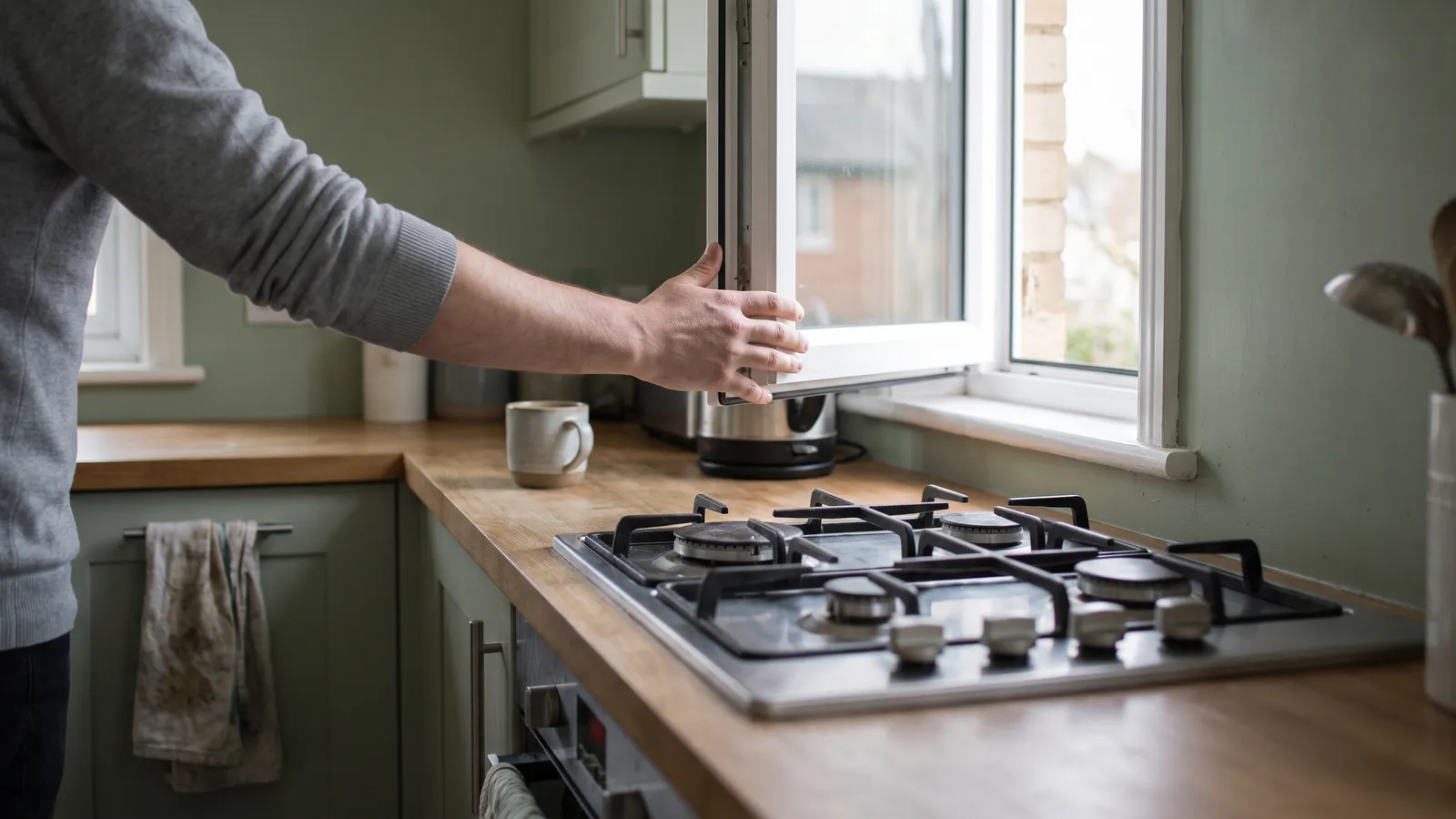
In the gas networks' own words: open doors and windows to ventilate the property. Turn off the gas supply at the meter using the emergency control handle (it turns 90 degrees) — and turn off gas appliances. Keep other people away from the area. Then get outside and call 0800 111 999.
One important exception: do not turn off the meter if it's in a cellar or basement, and do not enter a cellar to reach it — leave and call the emergency line instead.
What NEVER to do
The critical don'ts are all about avoiding a spark, which could ignite the gas. Do not turn any electrical switches on or off — including light switches. Do not smoke, strike matches, or use any naked flame. Don't use doorbells or other electrical items that could spark. And don't go back inside or use the affected appliances again until a gas engineer has given the all-clear.
Note that the network's emergency engineer makes the situation safe but doesn't repair appliances or internal pipework — that's a job for a Gas Safe registered engineer afterwards.
A different danger: carbon monoxide
Carbon monoxide (CO) poisoning is a separate hazard from the smell of natural gas — and a more insidious one. The HSE describes CO as 'a colourless, odourless, tasteless, poisonous gas' produced by the incomplete burning of fuels, which is exactly why you cannot smell it and why a CO alarm is essential. Natural gas, by contrast, has a distinctive odorant added deliberately so you can detect a leak. Around 7 people a year die from CO poisoning from poorly installed or maintained gas appliances.
Warning signs that an appliance may be producing CO include yellow or orange rather than blue flames, soot or staining around the appliance, pilot lights that keep blowing out, and increased condensation on windows. Symptoms of CO poisoning include headaches, dizziness, breathlessness, nausea and tiredness.
If a CO alarm sounds
If your CO alarm goes off or you suspect CO poisoning: stop using and switch off all appliances, open doors and windows to ventilate, get everyone out of the property, and call the National Gas Emergency Service on 0800 111 999. Don't go back in until you're told it's safe, and seek medical help — CO symptoms aren't always obvious, and getting into fresh air is the priority.
For general, non-emergency gas safety questions, the HSE runs a Gas Safety Advice Line on 0800 300 363.
Common questions
What number do I call if I smell gas?
The National Gas Emergency Service on 0800 111 999 — free and available 24 hours a day, across England, Scotland and Wales. Call it from outside the property once you've ventilated and left.
What should I do if I smell gas?
Open doors and windows, turn off the gas at the meter's emergency control handle if it's safe (not if it's in a cellar), keep people away, get out, and call 0800 111 999. Don't return until an engineer says it's safe.
What should I never do during a gas leak?
Never operate any electrical switch (including light switches), smoke, strike a match, use a naked flame, or use anything that could cause a spark — a spark could ignite the gas. Don't re-enter or use the appliances until given the all-clear.
Should I turn off the gas meter if it's in the cellar?
No — do not turn off the meter if it's in a cellar or basement, and do not enter the cellar to reach it. Leave the property and call the National Gas Emergency Service instead.
How is carbon monoxide different from a gas leak?
Carbon monoxide is colourless, odourless and tasteless, so you can't smell it — which is why a CO alarm is essential. Natural gas has a smell deliberately added so leaks can be detected. They're separate hazards needing separate precautions.
What do I do if my carbon monoxide alarm goes off?
Switch off all appliances, open doors and windows, get everyone outside, and call 0800 111 999. Don't go back in until told it's safe, and seek medical help, as CO symptoms like headache, dizziness and nausea aren't always obvious.
Sources: National Gas — Emergency Contacts · Cadent — What to do if you smell gas · HSE — Carbon monoxide awareness. PreparedBritain is independent and not affiliated with HM Government.
The Emergency Kit Checklist
The GOV.UK Prepare essentials on one printable page — tick them off as you go and keep it with the kit. Free, no catch.
Download it straight away. We'll also send the occasional briefing when something genuinely matters — severe weather, live incidents, real price drops. Nothing else.
Keep reading
All fire, gas & first aid guides →Run, Hide, Tell: the official advice for a weapons attack
The UK's official Run, Hide, Tell protocol for a firearms or weapons attack, what each step means, how to report…
Medicine shortages: how to stay safe and supplied
Medicine supply gaps are common and usually managed. The safe, calm response — order in good time, never stockpile,…
Lithium battery fires: charging e-bikes, power banks and phones safely
Why lithium batteries fail, the charging rules that prevent fires, warning signs of a failing pack, and how to…