Is the UK’s gas and electricity supply OK this winter? What NESO, National Gas, Ofgem and the government actually say
The three organisations that plan Britain’s winter energy supply all published their outlooks in October 2026. NESO expects electricity margins ‘adequate, within the Reliability Standard and comparable to recent winters’, with a 5.9 GW margin and some tight days possible in December or January. National Gas expects ‘sufficient gas capability to meet demand throughout winter 2026/27’, with a wider peak-day margin than last year. Ofgem’s ‘warning’ was a stress test: a 1-in-20 cold day plus the loss of the biggest piece of gas infrastructure, which it said ‘does not mean that a Gas Deficit Emergency is expected to occur’, and it has approved a fix. For heating oil and LPG homes the government is regulating the market for the first time, with no price cap and no start date. The rest is what suppliers and GOV.UK tell households to do.
Yes, on the published figures, with the usual winter caveats. Electricity: NESO’s Winter Outlook 2026/27 (October, corrected 27 October) puts the de-rated margin at 5.9 GW, equivalent to 9.5% of average-cold-spell peak demand, within the government’s Reliability Standard, with ‘some tight days’ most likely in December or January outside Christmas. Gas: National Gas’s Gas Winter Outlook (23 October) forecasts peak-day supply of 592 million cubic metres a day against a 1-in-20 peak demand of 493, a margin of 99, up from 83 last winter. Ofgem: its 22 October consultation said that without intervention Britain ‘could potentially face a negative supply margin’ of 5 mcm/d, but only under a 1-in-20 cold day combined with losing the Milford Haven LNG terminals, and ‘this does not mean that a Gas Deficit Emergency is expected to occur’; National Gas has negotiated an agreement with the Belgian interconnector that closes that gap, which Ofgem has approved subject to a licence change out to consultation until 20 November. Prices, not supply, are the pressure: the price cap is £1,723 a year to 31 December, and the January level is not yet published. Heating oil and LPG: the government said on 13 October it will regulate heating oil for the first time, strengthen the industry Codes of Conduct first and review 500-litre minimum orders; there is no price cap, no date, and nothing new for LPG beyond the £9,000 heat pump grant. British Gas’s own advice is a boiler service, pipes lagged, the thermostat no lower than 7°C when you are out, alarms tested and three days of essentials in reach.
By Tom Calder · Updated 3 November 2026 · Sourced to NESO’s Winter Outlook 2026/27, National Gas’s Gas Winter Outlook 2026, Ofgem’s statutory consultation and price cap pages, GOV.UK (the Department for Energy Security and Net Zero and the Competition and Markets Authority), British Gas’s published advice pages and GOV.UK Be Ready
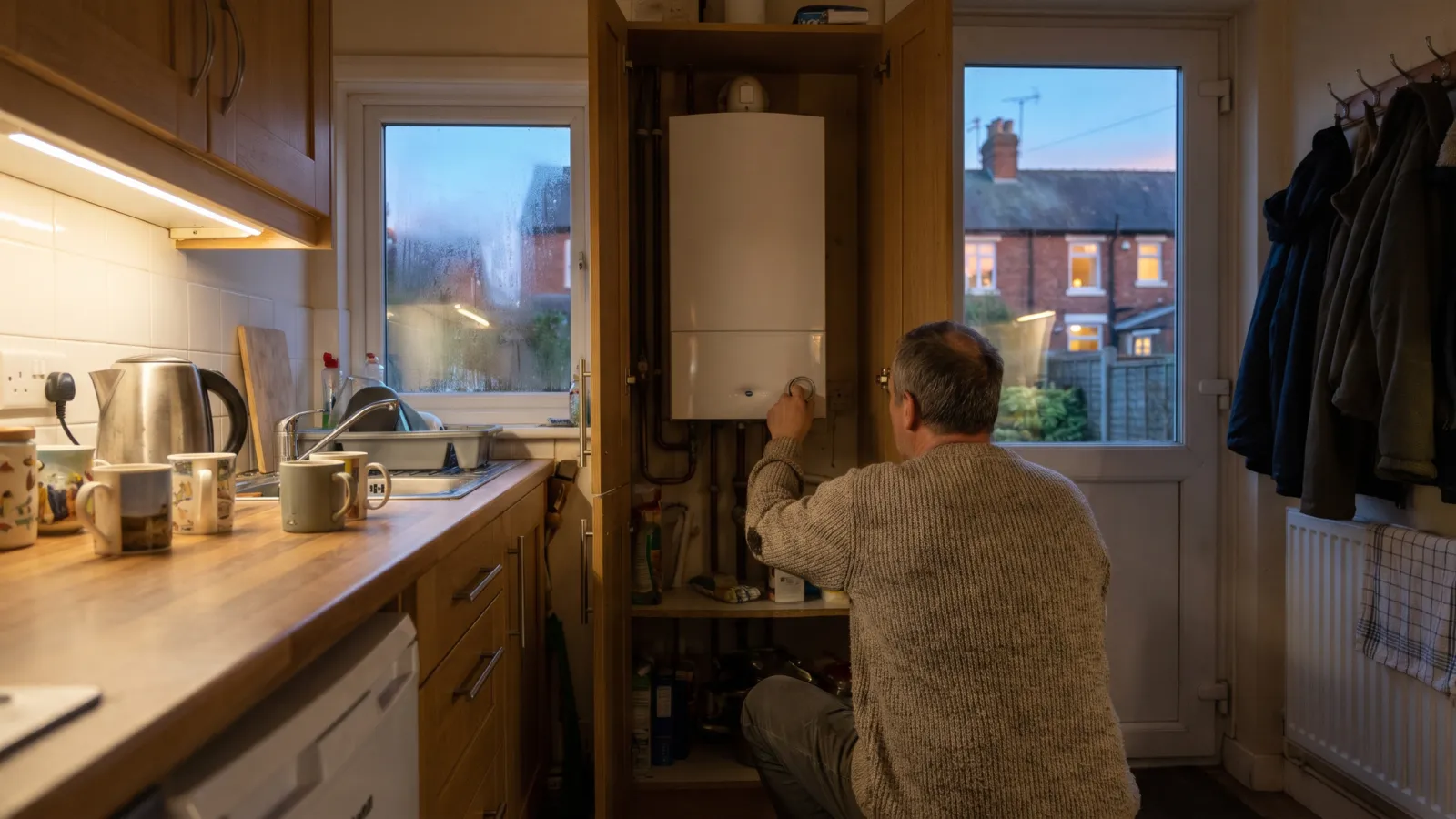
The short answer, and who says so
Three organisations plan Britain’s winter energy supply, and all three published in October 2026. NESO (the National Energy System Operator) runs the electricity system and publishes the Winter Outlook. National Gas runs the gas transmission system and publishes the Gas Winter Outlook. Ofgem regulates both and, this year, published a stress test alongside a licence change. Their conclusions are consistent: electricity margins are ‘adequate, within the Reliability Standard and comparable to recent winters’ (NESO), Britain ‘is expected to have sufficient gas capability to meet demand throughout winter 2026/27, including under these unlikely, high-stress scenarios’ (National Gas), and ‘in the vast majority of anticipated circumstances, the GB gas system will continue to deliver the gas needed to meet demand’ (Ofgem).
None of them forecasts the weather, and nor do we. What they do is model a cold winter, a very cold day and the loss of big pieces of kit, and report how much room is left. The rest of this page gives the figures and dates, then the government’s position on heating oil and LPG homes, then what British Gas tells its customers to do, then what GOV.UK tells every household to do. The power cuts this winter guide goes deeper on the electricity side, and the ‘days of gas’ headlines on storage.
Electricity: NESO’s Winter Outlook 2026/27
NESO’s full Winter Outlook, published in October 2026 and corrected on 27 October, covers November 2026 to March 2027. Its base case de-rated margin, the spare capacity it expects after an average-cold-spell peak demand and its reserve needs are met, is 5.9 GW, equivalent to 9.5% of peak demand. The loss of load expectation that goes with it is below 0.1 hours a year, against a government Reliability Standard of three hours. Last winter’s figure was 6.1 GW (10.0%). NESO says a rise in forecast peak demand ‘has been largely offset by new capacity across a range of technologies, including battery storage, gas-fired power generation and wind generation’. The margin is higher than the 5.5 GW in its June early view, which NESO attributes to a refined modelling method rather than a change in the outlook.
NESO also tests what happens when things go wrong. With peak demand at the 90th percentile, the margin falls to 4.7 GW (7.3%). With 4 GW of conventional generation or interconnector imports unavailable, it falls to 3.1 GW (5.0%), and the loss of load expectation stays under one hour. All of these sit within the Reliability Standard.
On timing: ‘We expect sufficient operational surplus throughout the winter ... There may be some tight days, most likely in December or January, excluding the Christmas period.’ The highest daily demand is most likely between mid-December and early February, and historically has never fallen in the Christmas fortnight or at a weekend. On a tight day NESO uses its ‘standard operational tools, such as system notices’. System notices include Electricity Margin Notices, which ask the market for more spare capacity; they are not a warning of cuts, and the two issued this autumn, for 28 September and 6 October, were cancelled before their windows opened (the power cuts guide logs each one).
Two things NESO flags without forecasting. Gas and power prices are ‘higher and more volatile than in recent years, reflecting the impact of the ongoing conflict in the Middle East’, though European fundamentals are ‘improved compared with 2022’. And El Niño can raise the chance of a milder, windier early winter and a colder, calmer late winter, but ‘there is no clear signal of its potential effects on Great Britain’. Our El Niño page looks at what past El Niño winters did here. The only correction in the 27 October revision was to the interconnector table: Viking Link, to Denmark, has no planned winter outages after all. The French link IFA is on reduced capacity until 12 December.
Gas: National Gas’s Gas Winter Outlook 2026
National Gas published its outlook on 23 October 2026. The figures that matter are for a 1-in-20 peak day, the highest demand Britain would expect once in 20 years. For winter 2026/27 that demand is 493 million cubic metres a day (mcm/d), up 2% on last winter’s 482. Peak-day supply capability is 592 mcm/d, up 5% from 565. The margin between the two is 99 mcm/d, against 83 last winter, an increase National Gas says is ‘largely driven by the increased supply capability from LNG’ after the South Hook and Isle of Grain terminals expanded.
The harder test is N-1: a 1-in-20 peak day plus the loss of the single largest piece of transmission infrastructure, which National Gas puts at 81 mcm/d. On that test the margin is 18 mcm/d, up from 11 last winter. National Gas notes that its storage figure excludes the Rough site, ‘given that there have been no injections over summer’, and that its import capability from Europe stays at 83 mcm/d because it ‘has facilitated arrangements to maintain import capability through Interconnector Limited’, subject to Ofgem’s approval (the next section).
Where the gas comes from is the point the ‘days of gas’ headlines miss. Britain’s supply is a mix of North Sea production and Norwegian pipelines as baseload, LNG cargoes, pipelines from Belgium and the Netherlands, and GB storage, which responds to price and in each of the last four cold snaps delivered more than 100 mcm/d. Storage stocks going into this winter are ‘comparable to the previous year’. If supply ever ran short for a prolonged period, National Gas’s tools run from buying extra gas and public appeals to the market, through contracts with large industrial users to cut demand, to a Network Gas Supply Emergency, which it says it has the tools to manage ‘in the unlikely event of it occurring’.
NewSee this for your own homeHome Alerts: your postcode's power cuts, warnings and floods, on one screen. Free for your own home. Sign up in a minute.Start free →Ofgem’s ‘winter gas supply warning’: what it actually said
The headlines that Britain ‘could run out of gas this winter’ come from a statutory consultation Ofgem published on 22 October 2026, which proposes changes to National Gas’s licence. Its sentence is this: ‘Without intervention, Great Britain could potentially face a negative supply margin in winter 2026/27 involving extremely high gas demand on a 1-in-20 cold weather day and the loss of the single largest element of GB gas infrastructure.’ The size of that shortfall is 5 mcm/d.
The scenario behind it stacks three things. Demand of 408 mcm/d, the 95th percentile of peak days since 2017 (the Beast from the East in 2018 reached 417). The loss of both LNG terminals at Milford Haven and their pipeline, which is what ‘the single largest element’ means. And the Belgian interconnector, INT, going ahead with the removal of about 25 mcm/d of import capacity it had planned for October 2026. With North Sea supply at 80, Grain LNG at 61, storage at 86 and the two European pipelines at 58, supply would be 403 mcm/d against demand of 408. Ofgem is explicit about what that means: ‘This does not mean that a Gas Deficit Emergency is expected to occur. Rather, it indicates that GB has less resilience to withstand such conditions, increasing the risk of emergency conditions.’
The intervention is negotiated and awaiting the paperwork. National Gas will enter into an agreement with Interconnector Limited to keep 61 mcm/d of capacity into Britain (36 firm and about 25 interruptible), so European import capability stays at 83 mcm/d including the Dutch BBL pipeline, and the stress scenario no longer shows a shortfall. Ofgem’s consultation is on how National Gas recovers the cost, £147.2 million over the agreement, which its impact assessment puts at £1.19 a year on each domestic gas meter account. National Gas only takes on the agreement’s liabilities once its licence is changed; the consultation closes on 20 November 2026 and Ofgem expects to publish its decision in late 2026 or early 2027. Ofgem adds that the agreement ‘does not remove the need for further measures’ in later winters, because North Sea output is falling and the Belgian and Dutch links have shed about 60 mcm/d of capacity since 2021.
Two numbers do not match between Ofgem and National Gas, and that is by design. Ofgem models a peak day at 408 mcm/d and uses demonstrated, conservative supply figures; National Gas models a 1-in-20 day at 493 mcm/d against maximum capabilities. Ofgem says so: ‘Different analytical approaches may produce different estimates of the precise supply margin.’ Both reach the same conclusion, that supply meets demand in anything short of a very rare combination of events, and both wanted the interconnector deal done.
Prices: the price cap to 31 December, and what is not covered
The pressure this winter is on bills rather than supply, as our check of the ‘one shock away’ headline found. Ofgem’s price cap for a typical dual-fuel household is £1,723 a year from 1 October to 31 December 2026, up 4% (£60), which Ofgem attributed to wholesale gas prices linked to the conflict in the Middle East. The level for January to March 2027 had not been published when we read Ofgem’s cap pages on 3 November. Ofgem’s own explainer says the cap does not protect people on a fixed tariff, on a business contract, on a heat network or using heating oil, and its April 2026 note adds that heating oil and LPG prices ‘are set by fuel markets and can change quickly’, with Ofgem not regulating heating oil in Great Britain. The energy bill help hub lists the schemes that do apply.
Government policy for heating oil and LPG homes
On 13 October 2026 the Department for Energy Security and Net Zero said it would accept the Competition and Markets Authority’s recommendation to regulate the heating oil market for the first time. Its response to the CMA’s market study agrees in principle to an authorisation regime for distributors: a system to identify heating oil households and keep a record of them, a priority service programme for vulnerable customers, a mandatory code of conduct, and enforcement and monitoring powers for Ofgem and Northern Ireland’s Utility Regulator. It says it will ‘spend time getting this right’. No date is given. Those recommendations apply to Great Britain only.
What changes first is the existing industry Codes of Conduct. The government says it will ‘work with industry to strengthen consumer protections through existing Codes of Conduct, consumer protection initiatives, and awareness of and access to dispute resolution’, working with Ofgem, UKIFDA (the UK and Ireland Fuel Distributors Association) and wider industry bodies on their ongoing review; the CMA recommendation it agreed to names UKIFDA and the Northern Ireland Oil Federation. Any code should require distributors to signpost payment plans, minimum order volumes and the reasons for them. The practice of 500-litre minimum orders will be reviewed; the government notes that regulations set no minimum, which depends on each tanker’s metering. There is no price cap: the government ‘is not proposing simply to replicate the gas and electricity price cap for heating oil’. A government-run price checker is ‘further work required’. The CMA’s separate enforcement case, in which suppliers that cancelled orders when prices surged agreed to pay compensation, remains open; the government says the CMA found 1,700 households were owed compensation.
For LPG homes the government response says nothing beyond the Boiler Upgrade Scheme, where a time-limited £9,000 grant is available to eligible off-grid homes replacing oil or LPG heating. The CMA had written to LPG suppliers in July reminding them of their obligations under consumer protection law, and that is where LPG stands. Financial support for low-income oil households is the ‘over £50 million’ announced in March 2026, delivered in England through councils’ Crisis and Resilience Fund and through the devolved governments elsewhere. The amounts, deadlines and how to apply in each nation are on the heating oil help page, which also covers what to do when a delivery goes wrong. The Boiler Upgrade Scheme guide covers the grant.
What British Gas tells its customers to do
British Gas’s winter advice lives on its advice site, The Source, and its help pages, not in press releases. We checked the ‘autumn snow warning’ headlines in October: the six items came from an undated checklist that has carried the same advice since at least 2022. That page, ‘How to prepare your home for heavy snowfall’, now shows a last-updated date of 23 October 2026 and runs to ten points. In our words: improve insulation and seal gaps around windows and doors; lag pipes and keep the thermostat at 7°C or more even when away; keep electric heaters well clear of furniture and curtains and use ones with automatic shut-off; test smoke and carbon monoxide alarms and clear vents after snow; know where the stopcock is; have the boiler serviced by a Gas Safe engineer before the cold and keep blankets, sleeping bags and warm coats handy; clear gutters, fix loose tiles and keep a shovel and salt; keep at least three days of food, water, medicines and essentials within reach, with a torch, batteries and a phone charger; check the car and keep the fuel tank about half full in snowy conditions; and agree how to stay in contact, checking on older or vulnerable neighbours.
Its frozen-pipes page, also updated 23 October, adds a yearly boiler service, lagging for outside pipework, loft and garage pipes and tanks, opening the loft hatch and cupboard doors in icy weather so warm air reaches pipes, a thermostat set to ‘at least 7°C’ even when you are not at home, and a warning that a dripping tap does not stop freezing and can freeze the drain. If you are away for more than a few days, it says to turn the water off at the stopcock.
Its ‘If your heating isn’t working’ page is the one to open on the first cold morning: check the gas, electricity and water are on; check the thermostat and timer, which may need resetting after a power cut; check the pressure gauge reads about 1 bar; check the pilot light if you have one; check for a frozen condensate pipe after very cold weather; try the reset button; bleed the radiators if only upstairs is warm. If you smell gas, British Gas says to call the Gas Emergency Service, which is 0800 111 999 in Great Britain, 24 hours a day, and 0800 002 001 in Northern Ireland. Our boiler not working in winter guide walks through the condensate pipe safely.
What households can do
Nothing on this page needs buying in a hurry, and nothing in the outlooks says to stock up on anything. GOV.UK’s Be Ready campaign lists what every household should have for a power cut, which is the way a supply problem would reach a home: a battery or wind-up torch with spare batteries (safer than candles), a battery or wind-up radio, three days of bottled water at three litres a person a day, food that needs no cooking and a tin opener, some cash, and the number 105 (03457 643643 in Northern Ireland) saved in your phone and written down. It also says to check whether your landline works without mains power, and to sign up to your supplier’s Priority Services Register if you are eligible. Our emergency kit list covers the same items; British Gas’s list also adds a carbon monoxide alarm, which GOV.UK’s power cut list does not mention.
During a cut, Be Ready says to switch off irons, ovens and electric fires, unplug TVs and computers against a surge when power returns, keep warm with layers and blankets with doors and curtains closed, keep the fridge and freezer shut, and check on neighbours. Older adults, babies and people with long-term conditions are most at risk from cold. Keeping warm without heating is the page for a boiler that fails on a cold night, and the Cold Weather Payment is paid automatically if your postcode triggers and you get a qualifying benefit.
Two things are worth not doing. Do not use a barbecue or camping stove indoors, and do not run a generator or any other engine in an enclosed space such as a garage: the NHS lists both among the causes of carbon monoxide poisoning, which can kill, and the symptoms are easy to mistake for flu. And do not read a system notice or a stress test as a forecast of cuts. The organisations that would know have said what they expect, with their margins and dates above, and we will add a dated line at the top of this page when they say something new.
Common questions
Is the UK’s gas and electricity supply OK this winter 2026/27?
On the published outlooks, yes. NESO expects electricity margins ‘adequate, within the Reliability Standard and comparable to recent winters’, with a 5.9 GW margin. National Gas expects ‘sufficient gas capability to meet demand throughout winter 2026/27, including under these unlikely, high-stress scenarios’, with a peak-day margin of 99 mcm/d. Ofgem says that ‘in the vast majority of anticipated circumstances, the GB gas system will continue to deliver the gas needed to meet demand’. Some tight electricity days are possible in December or January.
What was the Ofgem winter gas supply warning?
A stress test in Ofgem’s 22 October 2026 consultation. It found that without intervention Britain ‘could potentially face a negative supply margin’ of 5 mcm/d, but only on a 1-in-20 cold day combined with the loss of the Milford Haven LNG terminals and a cut in Belgian interconnector capacity. Ofgem said ‘this does not mean that a Gas Deficit Emergency is expected to occur’. National Gas will enter into an agreement with the interconnector to keep its capacity, which removes the modelled shortfall; Ofgem is consulting on the £147.2 million cost until 20 November.
What does NESO’s Winter Outlook say about blackouts?
It does not forecast blackouts. Its base case de-rated margin is 5.9 GW (9.5% of peak demand) with a loss of load expectation below 0.1 hours a year, within the three-hour Reliability Standard, and its sensitivities stay within the standard too. It expects ‘some tight days, most likely in December or January, excluding the Christmas period’, on which it may issue an Electricity Margin Notice asking generators for more power.
What is the UK government’s heating oil policy this winter?
On 13 October 2026 the government accepted the CMA’s recommendation to regulate heating oil for the first time. First it will strengthen the industry’s Codes of Conduct, working with Ofgem, UKIFDA and other industry bodies, improve access to dispute resolution and review 500-litre minimum orders. A full authorisation regime is agreed in principle with no date. There is no price cap. Support for low-income oil households is the ‘over £50 million’ announced in March 2026, delivered through councils in England and the devolved governments elsewhere; the heating oil help page has each scheme.
Is there a Heating Oil and LPG Code?
Not a government one. The protections heating oil customers have today are the industry Codes of Conduct run by trade bodies such as UKIFDA, which the government has said it will strengthen while a mandatory code is developed. For LPG the government response mentions only the £9,000 Boiler Upgrade Scheme grant for off-grid homes; the CMA wrote to LPG suppliers in July 2026 reminding them of their obligations under consumer protection law.
What does British Gas advise for winter?
Its advice pages, last updated 23 October 2026, say to have the boiler serviced by a Gas Safe engineer before the cold, lag pipes and tanks, keep the thermostat at 7°C or more even when out, test smoke and carbon monoxide alarms, know where the stopcock is, keep blankets and warm coats handy, and keep at least three days of food, water, medicines and essentials within reach with a torch, batteries and a phone charger. If the heating fails, check the supplies, thermostat, timer, pressure and condensate pipe before calling an engineer.
Will the price cap go up in January 2027?
Ofgem had not published the January to March 2027 level when we checked on 3 November 2026. The current cap is £1,723 a year for a typical household to 31 December 2026. Heating oil, LPG, heat networks and fixed tariffs are outside the cap.
Sources (21)
- NESO — Winter Outlook 2026/27October 2026, revised 27 October 2026; read 3 November 2026
- NESO — Winter Outlook 2026/27 report (PDF): 5.9 GW (9.5%) de-rated margin, LOLE below 0.1 hours, sensitivities, tight days most likely in December or January, Table of Corrections
- National Gas — Gas Winter Outlook 2026 (PDF, 23 October 2026): 1-in-20 peak demand 493 mcm/d, supply 592 mcm/d, margin 99 mcm/d, N-1 margin 18 mcm/d
- National Gas — National Gas publishes 2026 Gas Winter Outlook23 October 2026; press release, not read: the site blocked our fetch
- Ofgem — Gas interconnector import capability: proposed modifications to National Gas Transmission’s licence, statutory consultation22 October 2026, closes 20 November 2026
- Ofgem — Impact Assessment of arrangements to maintain gas interconnector import capability22 October 2026: £1.19 per domestic gas meter account per year
- Ofgem — Energy price cap will rise by 4% from October 2026 (26 August 2026)
- Ofgem — Energy price cap (default tariff) levelsread 3 November 2026: 1 October to 31 December 2026 is the latest period
- Ofgem — Energy price cap and standing charges explained (who the cap does not protect)
- Ofgem — Understand your energy costs if you are not protected by the energy price cap (28 April 2026)
- GOV.UK (DESNZ) — Stronger protections for heating oil customers (13 October 2026)
- GOV.UK (DESNZ) — Government response to the CMA heating oil market study (13 October 2026)
- CMA — UK’s heating oil households need stronger protections, says CMA (15 July 2026)
- CMA — Heating oil review: consumer protection enforcement case (open; last updated 10 September 2026)
- British Gas, The Source — How to prepare your home for heavy snowfall (last updated 23 October 2026)
- British Gas, The Source — How to prevent frozen pipes this winter (last updated 23 October 2026)
- British Gas, Help and support — If your heating isn’t working (undated; read 3 November 2026)
- Cornwall Council Fire and Rescue Service — Action to take if you smell gasNational Gas Emergency Service 0800 111 999
- nidirect — Gas safety and carbon monoxideNorthern Ireland gas emergency number 0800 002 001
- NHS — Carbon monoxide poisoningprevention: no barbecue or camping stove indoors, no engines in enclosed spaces
- GOV.UK Be Ready — Power cuts (read 3 November 2026)
PreparedBritain is independent and not affiliated with HM Government.
The Power Cut Action Card
One page for the kitchen drawer: what to do first, what to have ready, how long food keeps, and how to stay warm without risking carbon monoxide. Free, no catch.
Download it straight away. We'll also send the occasional briefing when something genuinely matters — severe weather, live incidents, real price drops. Nothing else.
Latest from our live data
All stories → News · 2 NovCold Weather Payment opens: £25 a freezing week; last winter 40 of 71 stations triggered none
 News · 31 OctEarliest polar vortex breakdown on record forecast for November: what it means for the UK
 News · 31 OctAsda, Aldi, Tesco and Sainsbury's recalls checked: what the official notices list, and when
Keep reading
All power cuts & energy guides →Can you use a camping stove indoors? The UK safety answer for a power cut
Can a camping or butane stove be used indoors in a UK power cut? What the NHS, fire services and the makers’ manuals…
Gas standing charges to be scrapped: what the Budget means for your energy bill
The government plans to remove standing charges from household gas bills in Great Britain for around 23 million…
Jackery's Halloween sale, checked: two bundles cost less than the power station on its own
Jackery's UK sale runs until 31 October. We put the headline deals in a basket: the Explorer 1000 v2 and 2000 v2…
