Is Britain ‘one shock away’ from an energy crisis? What the experts said, and what it means for your home
GB News says Britain is ‘one shock away’ from an energy crisis. The experts it quotes are talking about prices and the economy more than the lights going out. Here is what the official figures say about power, gas, bills and diesel this winter, and what is worth doing at home.
The warning is about cost more than supply. NESO, which runs Britain’s grid, expects the electricity system to stay secure this winter, with January the tightest month; most of Britain’s gas arrives continuously by pipe and ship, and storage met 8% of demand in winter 2024/25. The pressure is on prices: the energy price cap for Great Britain rises 4% to £1,723 on 1 October, and January forecasts range from about 9% to about 24% higher.
By Tom Calder · Updated 26 September 2026 · Sourced to NESO, DESNZ, National Gas, Ofgem, HMRC, Cornwall Insight, EDF, E.ON Next, British Gas, Fuels Industry UK, the national Fuel Finder scheme, GB News and The Telegraph
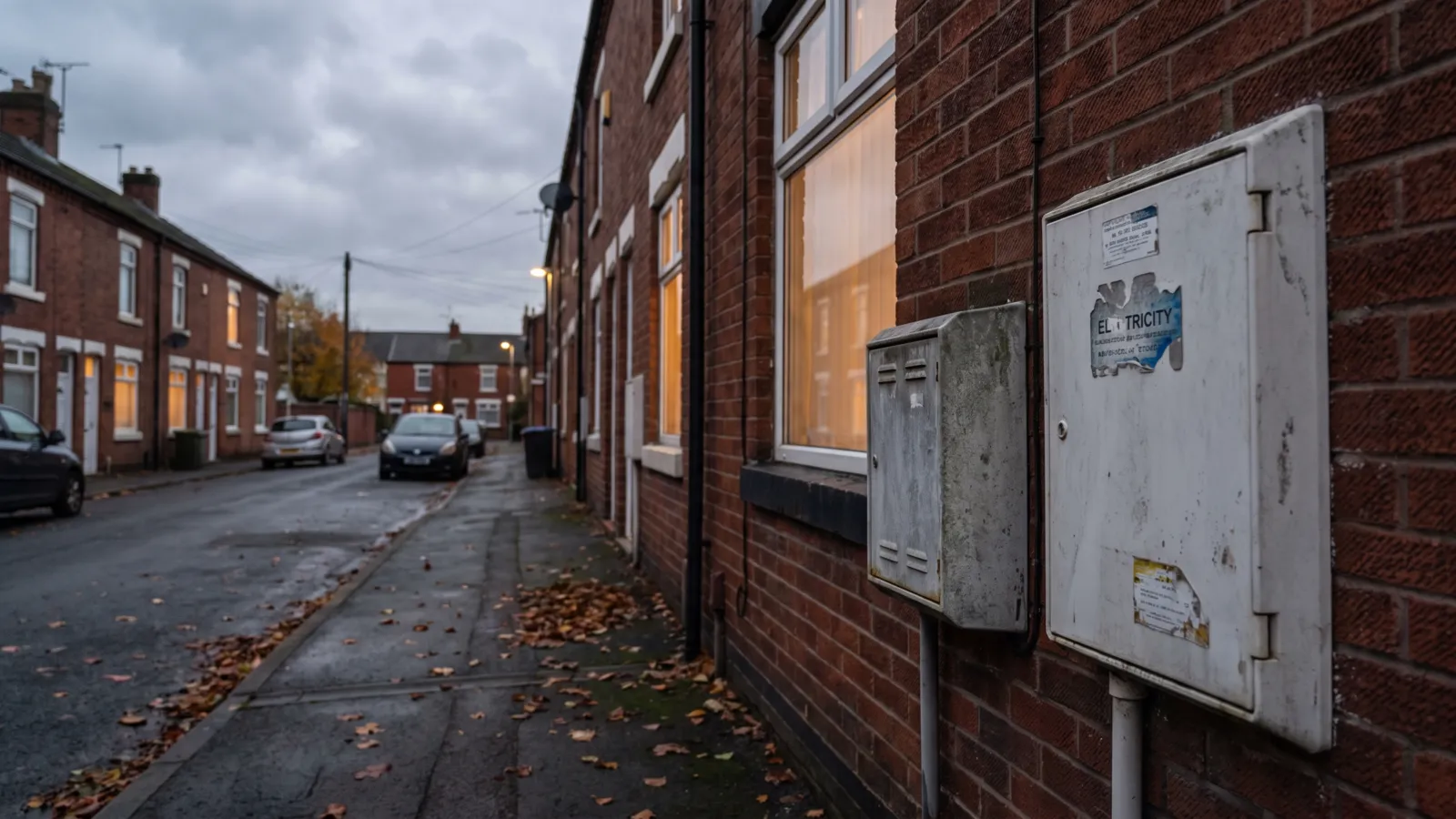
Will the lights stay on this winter?
NESO, the National Energy System Operator that balances Britain’s grid, published its early view of the coming winter and expects the electricity system to remain secure and reliable through winter 2026/27, with a de-rated margin of 5.5 GW, an 8.8% buffer over expected peak demand. It says some periods may be more finely balanced, particularly in January, and its full Winter Outlook follows in the autumn.
That is the national picture. The power cuts people actually get are local, caused by storms and faults on the lines near them, and those are far more likely than any national shortage. Our power cut tracker and Will there be power cuts this winter? cover both.
The ‘12 days of demand’ figure
The article says UK gas storage is equivalent to around 12 days of demand, against 89 days in Germany and 103 in France. That is a measure of capacity: the gas Britain’s storage sites hold when full, expressed as days of average winter demand. It is small by European standards. Great Britain has eight storage sites with a maximum capacity of 3.2 billion cubic metres (DESNZ, December 2025).
What it is not is a count of the gas Britain can get. Most gas arrives continuously: averaged over five years, 43% of supply came from the UK’s own North Sea fields, 35% by pipeline from Norway, 21% as liquefied gas by ship and 1% through the interconnectors, and storage met 8% of demand in winter 2024/25 (DESNZ). Storage was reported at about 30% full in late August 2026, against 46% a year earlier (The Telegraph, 27 August 2026). National Gas has said it will publish this winter’s gas margins in its Winter Outlook in October 2026. Our gas storage fact-check goes through it in detail.
NewSee this for your own homeHome Alerts: your postcode's power cuts, warnings, floods and more, on one screen. Free for your own home, opening in October.Join the list →Where the real pressure is: prices
Ofgem’s price cap for Great Britain rises 4% to £1,723 a year for a typical dual-fuel household paying by Direct Debit on 1 October 2026, from £1,663. VAT on household electricity in Great Britain is removed from 1 October 2026 to 31 March 2027; in Northern Ireland it stays at 5% (HMRC).
Ofgem announces the January cap by 25 November 2026, and the forecasts are spread wide. Cornwall Insight forecast £1,872, about 9% higher (26 August 2026). EDF forecast £2,098, about 22% higher, and rates its own confidence low (22 September 2026). E.ON Next forecast £2,118, about 23% higher (checked 26 September 2026), and British Gas £2,135, about 24% higher (21 September 2026). The article’s “25 per cent” and “around £427” sit just above the top of that range: a forecast, not a decision. Our January price cap guide keeps the forecasts up to date.
Diesel
The article says 55% of road diesel is imported. That is the estimate of Fuels Industry UK, the refiners’ trade body. It also quotes the economist Liam Halligan saying “about a fifth of our diesel” comes from America. In 2025 the United States supplied 31% of the UK’s diesel imports (DESNZ). Together that suggests roughly one litre of road diesel in six, a little under Halligan’s fifth, though the two figures measure slightly different things.
On 26 September 2026 diesel averaged 199.1p a litre across the 7,757 forecourts reporting to the national Fuel Finder scheme, with about a quarter at £2 or more. That is a price squeeze; we have seen no sign of a shortage. Buy as normal, keep the tank above a quarter, and don’t fill cans to hoard. Our fuel price tracker shows the cheapest forecourts near you.
The Power Cut Action Card
One page for the kitchen drawer: what to do first, what to have ready, how long food keeps, and how to stay warm without risking carbon monoxide. Free, no catch.
Download it straight away. We'll also send the occasional briefing when something genuinely matters — severe weather, live incidents, real price drops. Nothing else.
What to do at home
None of this calls for stockpiling. It does make a few small things worth doing now:
If you don’t have a working smart meter, take a meter reading on or around 30 September and send it to your supplier, so the new prices start from a real reading (how and why). If anyone at home relies on powered medical equipment, or is older or disabled, join the free Priority Services Register through your supplier or network operator. And have the basics for a local power cut in one place: a torch, a charged power bank, warm layers and the number 105 (in Northern Ireland, NIE Networks on 03457 643 643).
Common questions
Is Britain on the brink of an energy crisis?
Not a supply crisis on the official figures. NESO expects the electricity system to stay secure this winter, with January the tightest month, and most gas arrives continuously by pipe and ship. The pressure is on prices: the price cap for Great Britain rises 4% to £1,723 on 1 October, and January forecasts range from about 9% to about 24% higher.
Will there be blackouts this winter?
Nationally, NESO does not expect them: its early view for winter 2026/27 shows a 5.5 GW buffer, 8.8% over expected peak demand, with January the most finely balanced month. Local power cuts from storms and faults are far more likely. Call 105 if your power goes off (in Northern Ireland, NIE Networks on 03457 643 643).
How many days of gas does the UK have?
The ‘12 days’ figure is storage capacity: the gas Britain’s storage sites hold when full, expressed as days of average winter demand. It is small next to Germany or France. But storage met only 8% of demand in winter 2024/25; most gas comes continuously from the North Sea, Norway and ships.
How much will energy bills rise in January 2027?
Nobody knows yet: Ofgem announces the January cap by 25 November 2026. Forecasts range from £1,872 (Cornwall Insight, about 9% higher) to £2,135 (British Gas, about 24% higher), against £1,723 from 1 October.
Should I stock up on fuel or heaters?
No. We have seen no sign of a diesel or gas shortage, and storing fuel at home carries real fire risks (and, for petrol, legal limits). Keep the car above a quarter of a tank, take a meter reading on or around 30 September if you don’t have a working smart meter, and have the basics for a local power cut.
Sources (16)
- GB News, Britain ‘one shock away’ from energy crisis as global instability and spiralling prices leave UK exposed (25 September 2026, updated 26 September)
- NESO — Winter Outlook (Early View of Winter 2026/27)
- DESNZ, Statutory Security of Supply Report 2025December 2025: storage capacity, five-year supply mix
- National Gas, Understanding gas storage – beyond the headlines (30 April 2026)
- National Gas, Securing Britain’s Energy policy paperFebruary 2026: Winter Outlook margins in October 2026
- The Telegraph via Yahoo Finance, “British Gas boss warns UK risks winter fuel shortage”27 August 2026: storage about 30% full, 46% a year earlier
- Ofgem — Energy price cap will rise by 4% from October 2026 (26 August 2026)
- Ofgem — Energy price cap explainedthe cap schedule: January cap announced by 25 November 2026
- HMRC, Revenue and Customs Brief 10 (2026): temporary zero rate of VAT for domestic electricity in Great Britain
- Cornwall Insight — Bills to climb in October with worse to come in January (26 August 2026)
- EDF — Energy price cap predictions (tables updated 22 September 2026)
- E.ON Next — Price cap predictions (£2,118, checked 26 September 2026)
- British Gas — Energy price cap (updated 21 September 2026)
- DESNZ, Digest of UK Energy Statistics 2026, Chapter 3: Oil and Oil Products
- PreparedBritain, UK fuel price trackerFuel Finder all-forecourt figures, read 26 September 2026
- The Telegraph via Yahoo News, “Trump considers diesel export ban in threat to UK”22 September 2026: Fuels Industry UK, about 55% of road diesel imported
PreparedBritain is independent and not affiliated with HM Government.
Keep reading
All power cuts & energy guides →EcoFlow DELTA 3 Plus vs BLUETTI Elite 100 V2: which 1kWh power station should you buy?
Two popular 1kWh power stations, plus EcoFlow’s cheaper DELTA 3 Classic, compared on the things that actually…
EcoFlow vs BLUETTI: which power station brand for a UK home?
EcoFlow or BLUETTI for a UK home? The three matched pairs compared on capacity, output, cycles, charging,…
Will a power station run a fridge freezer, and for how long?
What a fridge freezer really draws, why a power station’s output rating decides whether the compressor starts, 1kWh…