What will the January 2027 energy price cap be? The forecasts, dated
Ofgem has not set the cap for 1 January to 31 March 2027; its published schedule says it will announce it by 25 November 2026. This page sets out the forecasts we could check at source, each with its date, next to what the regulator has actually decided.
Nobody knows yet: Ofgem has not set the January 2027 energy price cap, and its published schedule says it will announce it by 25 November 2026. The confirmed cap for 1 October to 31 December 2026 is £1,723 a year for a typical dual-fuel household paying by Direct Debit. As of 22 September 2026 the January forecasts we could check at source run from Cornwall Insight’s £1,872 (26 August) to British Gas’s £2,135 (21 September); EDF, whose £2,165 drove the mid-September headlines, lowered its forecast to £2,098 on 22 September, and the Bank of England’s 17 September letter to the Chancellor expects a rise of 24%, conditional on futures prices at 14 September. Every one of those numbers can still move.
By Tom Calder · Updated 22 September 2026 · Sourced to Ofgem, the Bank of England, GOV.UK (DESNZ, HM Treasury), Cornwall Insight, the suppliers named, and Northern Ireland’s Utility Regulator, Housing Executive and nidirect

Where things stand, as of 22 September 2026
The cap for 1 October to 31 December 2026 is £1,723 a year for a typical dual-fuel household paying by Direct Debit. Ofgem announced it on 26 August 2026: a rise of £60, or 4%, on the £1,663 cap in force until 30 September. That is a regulator’s decision, not a forecast.
The cap for 1 January to 31 March 2027 has not been set. Ofgem’s published schedule says it will be announced by 25 November 2026, and Ofgem says it may publish earlier if it needs to because of external reasons. Until then every January number is a forecast. As of 22 September 2026 the forecasts we could check at source run from £1,872 a year (Cornwall Insight, 26 August 2026) to £2,135 a year (British Gas, 21 September 2026); EDF, whose £2,165 drove the mid-September headlines, lowered its forecast to £2,098 on 22 September. The Bank of England’s letter to the Chancellor of 17 September 2026 expects a rise of 24%, conditional on futures prices at 14 September. The cap changes on 1 January, 1 April, 1 July and 1 October, so November’s figure runs for three months.
Who actually said what
Ofgem, which regulates energy in Great Britain, has said two things: the October to December 2026 cap is £1,723, and the January to March 2027 cap will be announced by 25 November 2026. On 26 August 2026 it put the October rise down to higher wholesale gas prices driven by the conflict in the Middle East and volatile global gas markets. It has published no January figure.
Cornwall Insight, the energy consultancy whose cap forecasts are widely quoted, published a January figure of £1,872 on 26 August 2026, the same day as Ofgem’s October announcement. Its principal consultant Dr Craig Lowrey said January would depend on whether the situation in the Middle East calmed over the following couple of months, and that even an end to the conflict was unlikely to bring January bills down, because gas stocks would be lower going into winter as demand rose, with European stocks already tight. “What is frustrating is these rises, as we have seen time and time again, have very little to do with what is happening in Britain,” he said.
The Bank of England added its weight on 17 September 2026. CPI inflation was 3.1% in August 2026, more than a percentage point above the 2% target, so the Governor had to write an open letter to the Chancellor. The Bank said that, conditional on futures prices at 14 September, the Ofgem cap was expected to rise by 4% in the fourth quarter of 2026 and a further 24% in the first quarter of 2027. It gave a percentage, not a pound figure, tied to market prices on one day.
The forecasts, dated
Cornwall Insight, published 26 August 2026 and calculated from close-of-play market figures on 25 August: £1,872 a year, a rise of £149, or 9%, on £1,723. As of 22 September 2026 this is its most recent published January figure. Cornwall updates its forecasts between Ofgem announcements, so a new figure could appear before November, and it says the January figure will not be confirmed until then.
EDF, forecast table updated 22 September 2026: £2,098 a year, a rise of £375, or about 22%, on £1,723, with EDF rating its confidence “low”. Its previous figure, £2,165 (dated 15 September in MoneySavingExpert’s comparison table and reported by The Independent on 17 September), was £67 higher and is the source of the £442 in the headlines. MoneySavingExpert’s table gave that rise as 25.7%, while The Independent and OilPrice.com said 30%; by our arithmetic £442 on £1,723 is about 26%, and 30% matches the gap between £2,165 and the £1,663 cap in force until 30 September, not the October cap, so we give the pounds.
E.ON Next, prediction as of 15 September 2026: £2,131 a year, a rise of £408 on £1,723 (about 24% by our arithmetic; MoneySavingExpert’s table gives 23.7%), with E.ON Next rating its confidence “lowest”, based on typical use of 2,500 kWh of electricity and 9,500 kWh of gas a year.
British Gas, updated 21 September 2026: £2,135 a year, rounded up to the nearest £5, about £412 above £1,723, with British Gas rating its own confidence “Very Low”. British Gas says it updates its forecasts every week; MoneySavingExpert’s table had it at £2,160 dated 14 September 2026: one supplier, £25 apart, a week apart.
Bank of England, letter dated 17 September 2026: a rise of 24% in the first quarter of 2027, conditional on futures prices at 14 September. The Bank gave no pound figure. Applied to £1,723, 24% is about £414, which would put the cap near £2,137; that arithmetic is ours, not the Bank’s.
How the cap is set, and why the forecasts move
The cap limits what suppliers can charge per unit of gas and electricity and per day in standing charges; £1,723 is what those limits add up to at typical use. Ofgem builds it from wholesale energy costs, network costs, policy costs (which include funding the Warm Home Discount), operating costs, a supplier margin and allowances for uncertain costs, calculated from costs observed in the period before each quarter, which is how January’s cap can be announced in November.
Wholesale costs are the part that moves. Ofgem’s own breakdown, published on 26 August 2026, puts wholesale costs at 47% of the October to December 2026 cap for a Direct Debit customer, up from 44% the quarter before. Cornwall Insight’s release the same day said the January figure will not be confirmed until November, leaving time for wholesale conditions to shift. A forecaster in August is estimating where prices will sit across the weeks Ofgem will measure; one in late September has seen more of them. That is why forecasts published in the same fortnight cluster, why they jump between months, and why none is final until Ofgem announces, by 25 November 2026.
The direction of travel is not in doubt. On 22 September the BBC reported that the wholesale price of natural gas had almost doubled in the UK and Europe since July, after disruption to oil and gas supplies through the Strait of Hormuz; the same day Ineos paused production at three chemical plants near Hull, blaming UK gas prices. Wholesale moves like that feed the cap with a lag, which is why every forecast for January is above October’s £1,723.
Two changes make comparisons with last winter less than like-for-like. From 1 July 2026 Ofgem’s typical household uses 2,500 kWh of electricity and 9,500 kWh of gas a year, down from 2,700 kWh and 11,500 kWh. That lowers the headline figure: on the old basis, Ofgem says the October cap would be £1,935 rather than £1,723, and Cornwall Insight’s January forecast would be £2,107 rather than £1,872. Ofgem calls the typical-use figure a presentational tool, but says the change also affects unit rates, because suppliers recover certain costs over fewer units. And VAT on household electricity has been removed from 1 October 2026 to 31 March 2027, so Ofgem’s £1,723 excludes VAT on electricity while still including 5% VAT on gas. The Bank of England said in its 17 September 2026 letter that the VAT change would take at least £45 off an average annual bill. The January cap sits inside that window. The Bank calls the removal temporary, and the government says it is funded for the 2026 to 2027 financial year, which ends on 31 March 2027; as of 22 September 2026 it has not said what happens after that.
The Power Cut Action Card
One page for the kitchen drawer: what to do first, what to have ready, how long food keeps, and how to stay warm without risking carbon monoxide. Free, no catch.
Download it straight away. We'll also send the occasional briefing when something genuinely matters — severe weather, live incidents, real price drops. Nothing else.
What it means for your household
If January lands near the latest supplier forecasts (EDF’s £2,098 on 22 September, E.ON Next’s £2,131 on 15 September and British Gas’s £2,135 on 21 September), a typical dual-fuel household paying by Direct Debit would pay roughly £375 to £412 a year more than under the October cap; near Cornwall Insight’s August figure, about £150. Neither is your bill: the cap is an annual figure for a typical household, useful for comparing one cap with another, and your cost depends on what you use.
The cap applies in England, Scotland and Wales. Northern Ireland is outside it: energy prices there are regulated separately by the Utility Regulator, so the January figures on this page do not apply. Within Great Britain the £1,723 is an average: Ofgem bases it on Direct Debit rates across England, Scotland and Wales, and unit rates and standing charges vary across 14 regions, so typical households in different areas pay different amounts.
If money is already tight, the help schemes matter more than any forecast, and none of them waits for the cap. Our page on help with energy bills lists them, alongside the Priority Services Register.
What you can do before January
Fixed tariffs. A fixed deal holds your unit rates for its term. They are thin on the ground: on 18 September The Independent ran “Energy bill warning as only four fixed tariffs beat October Ofgem price cap”, and the count changes as suppliers reprice. Whether one suits you is a comparison of your own numbers: the fix’s rates and standing charges against the October cap rates and the forecast range, and any exit fee. The government expects suppliers to stop charging VAT on electricity from 1 October 2026 on fixed tariffs as well as variable ones. A fix that looks good against £2,135 looks different if the cap comes in nearer £1,872. Our guide to switching energy supplier explains how to read the offers; it is not advice on which to take, and nothing on this page is.
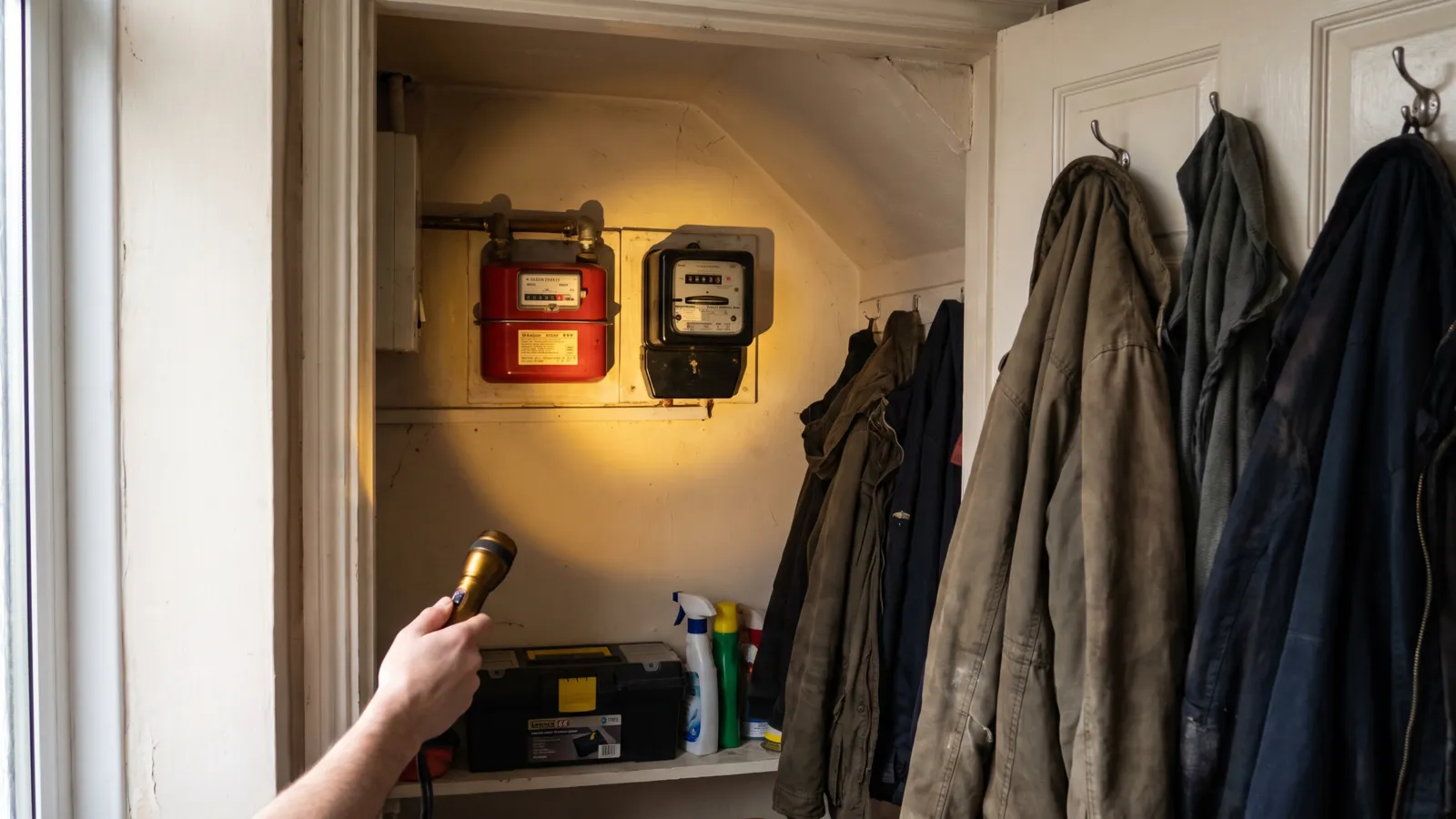
Meter readings. If you are on a standard variable tariff with a traditional meter, a reading on or close to 1 January 2027 lets your supplier bill energy used before that date at October’s rates and energy after it at January’s, rather than estimating the split. A working smart meter sends readings itself and a prepayment meter charges at the current rate as you go, so neither needs it. The routine is the one in our guide to the 1 October meter reading.
Help schemes. The Warm Home Discount reopens in October 2026: a one-off £150 off your electricity bill, applied by your supplier rather than paid to you (GOV.UK). You may be able to have it on your gas bill instead if the same supplier provides both, and prepayment customers may get it as a top-up voucher. In England and Wales most eligible households get it automatically through data matching; what counts is whether, on 23 August 2026, your supplier was in the scheme, you or your partner got a qualifying means-tested benefit, and one of you was named on the electricity bill. In Scotland, where Scottish Ministers set the eligibility under separate regulations, some households get it automatically and others must apply to their supplier. It is not available in Northern Ireland: GOV.UK points readers there to the Housing Executive’s Affordable Warmth scheme, which is a grant for insulation and heating improvements for low-income homes, not money off bills. Our pages cover the Warm Home Discount, the Winter Fuel Payment (in Scotland, the Pension Age Winter Heating Payment replaces it), the Cold Weather Payment (Scotland replaces it with its Winter Heating Payment, and Northern Ireland runs its own from 1 November 2026) and, in England, the Crisis and Resilience Fund, run by councils; Scotland has the Scottish Welfare Fund, Wales the Discretionary Assistance Fund and Northern Ireland Discretionary Support. For the low-cost side of winter, see keeping warm without heating.
What not to do
Do not treat any January figure as settled before Ofgem announces it (due by 25 November 2026). The forecasts here are honest estimates by people who watch the wholesale market for a living, and they were still moving week to week in September: EDF cut its own figure by £67 on 22 September 2026, and British Gas lowered its own by £25 between 14 and 21 September.
Do not fix, switch or cancel your Direct Debit on the strength of one headline. The £442 is one supplier’s forecast from 15 September, and that supplier has since lowered it; on 22 September 2026 the forecasts we could check at source put January between £149 (Cornwall Insight, 26 August) and £412 (British Gas, 21 September) above the October cap. Compare any offer with your own usage and the October rates, not the largest number in the news.
Do not read a price forecast as a supply warning. The forecasts are about what gas will cost: Ofgem ties the October rise to wholesale gas prices driven by the Middle East conflict, and Cornwall Insight points to global markets and low gas stocks, particularly in Continental Europe. A higher price is not the same as a shortage. And do not skip help you are entitled to because the headlines talk in averages: none of the schemes above depends on where the cap lands. The Warm Home Discount reopens in October and Cold Weather Payments cover 1 November 2026 to 31 March 2027, whatever the cap turns out to be.
Common questions
When will Ofgem announce the January 2027 energy price cap?
By 25 November 2026, according to Ofgem’s published schedule as checked on 22 September 2026; Ofgem says it may publish before then if it needs to. The cap it announces covers 1 January to 31 March 2027.
Is the £442 rise confirmed?
No. £442 was the gap between EDF’s 15 September 2026 forecast of £2,165 and the £1,723 cap that starts on 1 October, and EDF lowered that forecast to £2,098 (a £375 rise) on 22 September 2026. As of 22 September the highest forecast we could check at source is British Gas’s £2,135 (21 September), a rise of £412; the lowest is Cornwall Insight’s £1,872 (26 August), a rise of £149.
What is the energy price cap from 1 October 2026?
£1,723 a year for a typical dual-fuel household paying by Direct Debit, for 1 October to 31 December 2026, announced by Ofgem on 26 August 2026. Until 30 September 2026 it is £1,663.
Does the price cap apply in Northern Ireland?
No. Ofgem’s cap covers England, Scotland and Wales. Northern Ireland’s energy prices are regulated separately by the Utility Regulator, and the Warm Home Discount is not available there either.
Should I fix my energy tariff before January?
That depends on your usage and the offer in front of you, and this site does not give personal financial advice. Compare the fixed rates and standing charges against the October cap rates and the range of forecasts, and check the exit fee before you decide.
Why do the forecasts keep changing?
Because Ofgem sets each quarter’s cap from wholesale gas and electricity costs measured before that quarter begins, and wholesale costs make up 47% of the October to December 2026 cap (Ofgem, 26 August 2026). Each forecast is a snapshot of the market on its date, which is why every figure on this page carries one.
Sources: Ofgem — Energy price cap will rise by 4% from October 2026 (press release, 26 August 2026) · Ofgem — Changes to the energy price cap between 1 October and 31 December 2026 (26 August 2026) · Ofgem — Energy price cap (default tariff) update from 1 October 2026: summary of changes (letter, 26 August 2026) · Ofgem — Energy price cap explained · Ofgem — Energy price cap unit rates and standing charges · GOV.UK — Open letters between HM Treasury and the Bank of England, September 2026 (Governor’s and Chancellor’s letters, 17 September 2026) · Cornwall Insight — Bills to climb in October with worse to come in January (26 August 2026) · Cornwall Insight — Default Tariff Cap predictions (last updated 26 August 2026) · EDF — Energy price cap predictions (tables updated 22 September 2026) · E.ON Next — Price cap predictions (as of 15 September 2026) · British Gas — Energy price cap (updated 21 September 2026) · MoneySavingExpert — Energy price cap predictions (table updated 16 September 2026, checked 22 September 2026) · The Independent — Energy bills could rise more than £400 next year, new forecasts warn (Albert Toth, 17 September 2026) · OilPrice.com — UK Energy Bills Could Jump 25-30% From January as Gas Prices Soar (17 September 2026) · DESNZ — Breathing space on your energy bill (26 August 2026) · HM Treasury — Chancellor letter to the Treasury Select Committee: Budget 2026 date (31 July 2026) · GOV.UK — The Warm Home Discount Scheme · GOV.UK — Warm Home Discount: if you live in Scotland · DESNZ — Warm Home Discount: eligibility statement, England and Wales, 2026 to 2027 (7 August 2026) · legislation.gov.uk — The Warm Home Discount (Scotland) Regulations 2026, SI 2026/488 (made 30 April 2026) · GOV.UK — Winter Fuel Payment · GOV.UK — Cold Weather Payment · GOV.UK — Get help with the cost of living from your local council · nidirect — Cold Weather Payment · nidirect — Discretionary Support · Northern Ireland Housing Executive — Affordable Warmth Scheme · Utility Regulator (Northern Ireland) — Price regulation · BBC News — Ineos pauses production at Hull plants, blaming high UK gas prices (22 September 2026). PreparedBritain is independent and not affiliated with HM Government.
More viral headlines, checked against what was actually saidSee them all →Keep reading
All power cuts & energy guides →Will ‘time-varying’ electricity prices slash your bill? What the IFS actually said
Headlines say bills could be ‘slashed’ with time-varying prices while experts warn costs will stay high for years.…
Will there be power cuts in the UK this winter?
Winter 2026/27: the system operator expects enough electricity to meet demand, with a 5.5 GW cushion over peak. The…
Which radio actually works in a UK power cut?
Long wave closed in June 2026, and half the wind-up radios on sale here advertise an American weather band that…