Will ‘time-varying’ electricity prices slash your bill? What the IFS actually said
Headlines say bills could be ‘slashed’ with time-varying prices while experts warn costs will stay high for years. The source is a think-tank report, not an Ofgem decision. What it actually recommends, who these tariffs already suit, and what to do about the price cap rise on 1 October.
A report from the Institute for Fiscal Studies and the LSE, published on 22 September, says bills could fall if more households moved to tariffs that charge less when electricity is cheap to make, and it suggests making that the default. It is a recommendation to government, not a change to anything, and it attaches no headline saving to it. Time-of-use tariffs already exist from the big suppliers; they need a smart meter and they suit homes that can shift when they use power. The cap still rises 4 per cent on 1 October, almost all of it gas; electricity bills stay broadly stable because VAT comes off them.
By Tom Calder · Updated 22 September 2026 · Sourced to the IFS, Ofgem, Elexon, Citizens Advice and the suppliers named
Who actually said it
The report is a chapter called Electricity prices in the Institute for Fiscal Studies’ Green Budget 2026, written with the London School of Economics and funded by the Nuffield Foundation, and published on 22 September. It is analysis for the Chancellor ahead of the Budget. It is not Ofgem, not the Department for Energy Security and Net Zero, and not a consultation.
The quote the papers use is from a co-author, IFS research economist Bobbie Upton: “Encouraging greater take-up of time-varying electricity prices could lower electricity bills for consumers with minimal cost to the Government.” The “high for years” line is theirs too, from the same statement: “Looking ahead, high electricity prices look set to be with us for many years to come.” One person, one report, saying that prices are high and here is one way to bring them down a little. That is the whole story.
Ofgem has floated the same idea before. In March 2024 it opened a discussion on the future of the price cap that included “a more dynamic cap with time-of-use dependent unit rates”. That was two and a half years ago and it did not lead to a change. Nothing new has come from Ofgem this week.
What the report actually says
The argument is about cost, not fairness. The IFS says household electricity prices have risen by almost 150 per cent since 2010, driven first by gas prices, which were 63 per cent higher in real terms in early 2026 than in mid-2021, and second by the taxes and levies that pay for low-carbon generation and home retrofit schemes. Those levies made up 23 per cent of an average electricity bill in 2025 and 17 per cent by July to October 2026, partly because the government moved some costs off bills and partly because higher wholesale prices made the rest of the bill bigger.
Its point about timing is simple. Wholesale electricity prices vary a great deal by hour and by day, and by place: on a windy day in Scotland there can be so much power that the grid operator pays wind farms to switch off, while gas plants in the south of England are paid extra to run. Yet, in the report’s words, “only around 10% of households and a minority of firms face time-varying prices, despite this now being technologically feasible”. If more people paid less when power is cheap and more when it is scarce, they would shift some use, the system would need less expensive balancing, and bills overall would fall.
Balancing, the cost of keeping supply and demand matched second by second, was about 4 per cent of the average bill in 2025-26, around £40 a household, and the system operator expects it to more than double in real terms by the end of the decade. That is the £7 billion figure in the coverage.
So the IFS suggests the government should promote time-varying tariffs, including “making the default household electricity tariff time-varying”, and should tilt subsidies for heat pumps and solar panels towards the places where they help the grid most. It notes the government has already ruled out full regional pricing, known as zonal pricing, and offers these as alternatives.
What it does not say
It does not say your bill will be slashed. The report attaches no headline saving to its own recommendation, though it cites research finding savings of around £300 a year for heat-pump owners who moved their use to cheap hours. Upton’s statement says plainly that “the extent of savings would depend on how enthusiastically consumers adopted time-varying contracts and then adjusted when they consumed electricity”, and that the potential grows as more homes get electric cars and kit that shifts use automatically. Any bigger pound figure you see in the coverage came from somewhere else.
It does not change the price cap. Ofgem’s cap for 1 October to 31 December 2026 is £1,723 a year for a typical dual-fuel household paying by Direct Debit, up 4 per cent from £1,663, announced on 26 August. Almost all of that rise is gas, up 8 per cent; the government has removed VAT from domestic electricity from October, so Ofgem says electricity bills stay “broadly stable” and a home with no gas sees a rise of under 1 per cent. The cap limits unit rates and standing charges on default tariffs, including the old Economy 7 two-rate tariffs; the modern smart time-of-use tariffs are fixed-term contracts that sit outside it. Nothing in the report alters what happens on 1 October, though the IFS does suggest reforming the cap to allow more price variation in future.
And it does not create a new kind of tariff. The tariffs it wants more people on already exist.
The tariffs that exist today, and who they suit
Every large supplier sells at least one time-of-use tariff or off-peak add-on. Octopus has Agile, which follows the wholesale price half hour by half hour, Cosy, with cheap windows in the early morning, afternoon and late evening, and Go, with a cheap overnight window for charging a car. EDF sells FreePhase and GoElectric. OVO has Charge Anytime, an add-on for electric cars. British Gas has PeakSave, which halves the electricity price on Sunday daytimes as an add-on to its tariffs. All of them need a working smart meter sending half-hourly readings, and all of them are optional.
They suit a home that can move a big chunk of its electricity to the cheap hours: an electric car that charges overnight, a heat pump or storage heaters, a hot water tank on a timer, a battery. For that home the saving is real and the risk is small. They suit a home that cannot shift much less well. Citizens Advice looked at this in September 2025. It found only 2.3 per cent of households on a modern smart time-of-use tariff, warned of customers “paying more on a time-of-use tariff due to lack of understanding, or an inability to shift usage”, noted that households running medical devices that need constant electricity may not be able to use them at all, and asked Ofgem to write a Consumer Duty into the supply licence so that these products have to meet consumers’ needs. The IFS makes its own version of the point: caps on the peak prices consumers can face “could offer protection against the most extreme spikes”.
More of these tariffs are coming whatever the government decides. The industry programme that moves every smart meter onto half-hourly settlement completes in May 2027, and billing by the half hour is exactly what these tariffs need. Expect the offers to multiply next year.
What to do
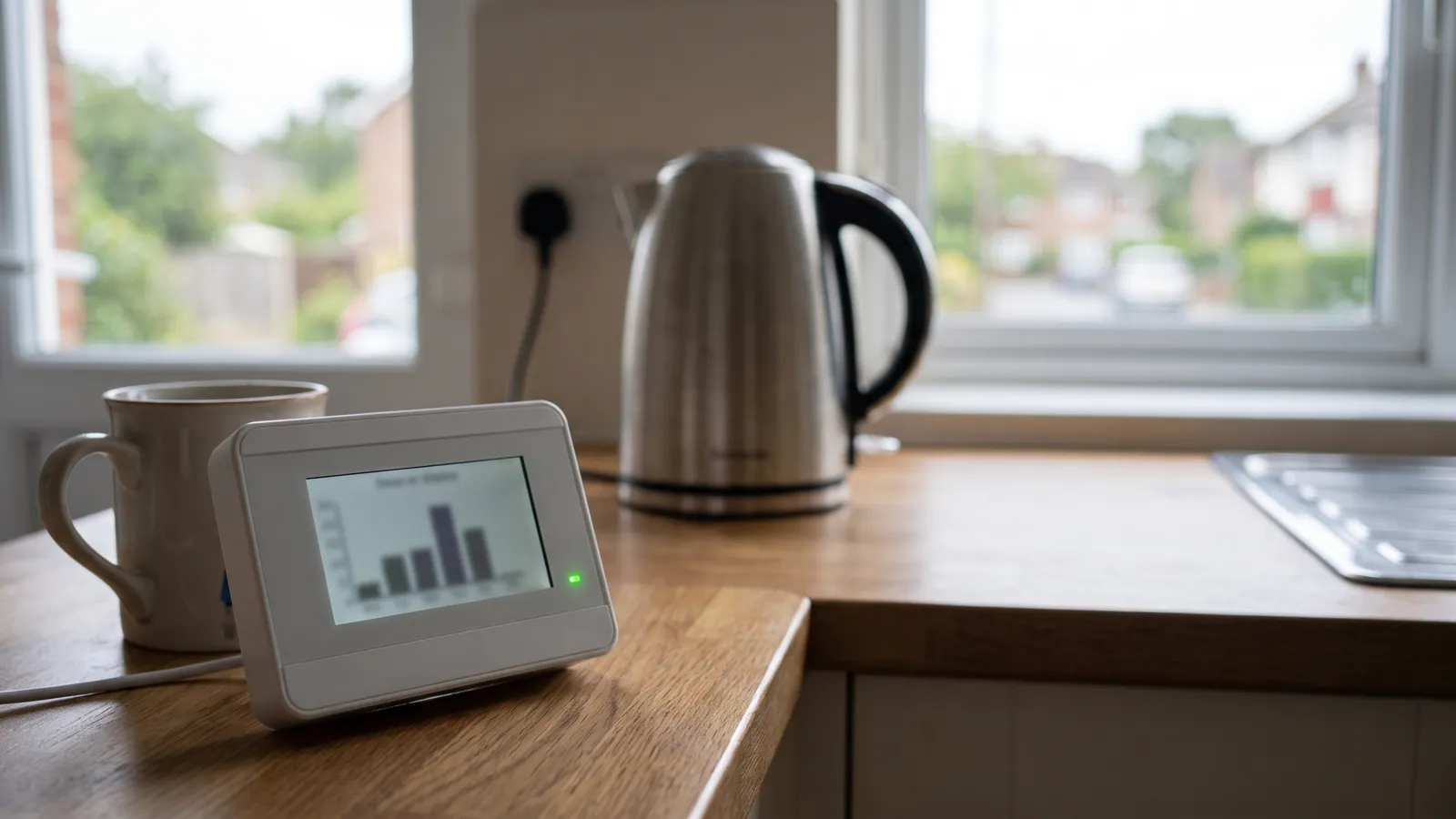
If you have an electric car, a heat pump, storage heaters or a home battery, a time-of-use tariff is worth pricing against your current one now, using your own half-hourly usage from the smart meter app rather than a supplier’s example. If you have none of those and cannot easily move your washing, dishwasher and cooking, the flat tariffs remain the sensible place to be, and the decision that matters this week is the ordinary one: whether any fixed deal beats the cap you will be on from 1 October. Our energy tariff guide sets out the rule of thumb and the five things to check.
Before any tariff decision, claim what you are owed. The Warm Home Discount is £150 off an electricity bill for those who qualify, and the Priority Services Register is free extra help if anyone at home is older, disabled or unwell. Our energy bill help page has every scheme with the official links.
What not to do
Do not switch to a wholesale-tracking tariff to chase a headline. On a cold, still evening the half-hourly price can spike well above the cap, and a home that cannot avoid using power at teatime pays it. Do not confuse the 4 per cent cap rise, which is real and dated, with a think tank’s idea about how tariffs might be designed in future. And do not expect a letter: nothing announced this week changes your tariff, moving to a time-of-use tariff is a switch you make yourself, and no government body has proposed changing that.
Common questions
Has Ofgem announced time-varying electricity prices?
No. The 22 September story is based on a chapter of the Institute for Fiscal Studies’ Green Budget, written with the LSE, which recommends the government promote time-varying tariffs and consider making one the default. Ofgem discussed a similar idea in March 2024 and has announced nothing new.
How much would a time-of-use tariff save me?
The IFS report attaches no headline figure to its recommendation, though it cites research finding around £300 a year for heat-pump owners who shifted their use. Its co-author says savings depend on how many people adopt such tariffs and how much they shift their use. Suppliers publish example savings for their own tariffs; the only number that matters is your own half-hourly usage priced on each tariff, which your smart meter app or supplier can show you.
Do I need a smart meter for a time-of-use tariff?
Yes, one that is working and sending half-hourly readings. Without it a supplier cannot bill you by the half hour. The industry programme moving all smart meters to half-hourly settlement completes in May 2027.
Is the energy price cap still going up on 1 October 2026?
Yes. Ofgem’s cap for October to December is £1,723 a year for a typical dual-fuel household paying by Direct Debit, up 4 per cent from £1,663. It caps unit rates and standing charges, not bills. Most of the rise is gas; with VAT removed from domestic electricity from October, Ofgem says electricity bills stay broadly stable. The IFS report changes none of it.
Who should avoid time-of-use tariffs?
Households that cannot move their electricity use away from the expensive hours. Citizens Advice’s 2025 report warns of people paying more through a lack of understanding or an inability to shift usage, notes that homes running medical devices needing constant power may not be able to use these tariffs at all, and asks Ofgem for a Consumer Duty in the supply licence. In our view that also covers anyone whose routine fixes when they cook, wash and heat.
Sources: IFS — Consumers’ electricity bills could fall if the government promoted time-varying prices (press release, 22 September 2026) · IFS Green Budget 2026 — Electricity prices (22 September 2026) · Press Association report as carried by LBC (22 September 2026) · Ofgem — Energy price cap will rise by 4% from October 2026 (26 August 2026) · Ofgem — Ofgem launches discussion on the future of the price cap (25 March 2024) · Elexon — Market-wide Half-Hourly Settlement · Citizens Advice — Smart timing: making time-of-use tariffs work for consumers (9 September 2025) · Octopus Energy — Agile · British Gas — PeakSave. PreparedBritain is independent and not affiliated with HM Government.
The Power Cut Action Card
One page for the kitchen drawer: what to do first, what to have ready, how long food keeps, and how to stay warm without risking carbon monoxide. Free, no catch.
Download it straight away. We'll also send the occasional briefing when something genuinely matters — severe weather, live incidents, real price drops. Nothing else.
Keep reading
All power cuts & energy guides →Will there be power cuts in the UK this winter?
Winter 2026/27: the system operator expects enough electricity to meet demand, with a 5.5 GW cushion over peak. The…
Which radio actually works in a UK power cut?
Long wave closed in June 2026, and half the wind-up radios on sale here advertise an American weather band that…
Can a power cut damage your appliances?
What really happens electrically when the power comes back on, which appliances are genuinely at risk, and how to…