Gas standing charges to be scrapped: what the Budget means for your energy bill
The government plans to remove standing charges from household gas bills in Great Britain for around 23 million homes, aiming for the end of 2027. The fixed cost moves into the price per unit, so most homes pay a little less and some pay more. What changes, when, and what it means for you.
The government is removing the standing charge from household gas bills in Great Britain for around 23 million homes. It has asked Ofgem to do it by the end of 2027 or as soon as possible after, so nothing changes on bills yet. The standing charge, about £108 a year for a typical home, will be added to the price of each unit of gas instead. The Treasury estimates around 60% of households could save an average of about £45 a year.
By Tom Calder · Updated 28 October 2026 · Sourced to HM Treasury's announcement of 28 October 2026 and Ofgem's price cap figures for 1 October to 31 December 2026, both read on 28 October 2026
What's changing
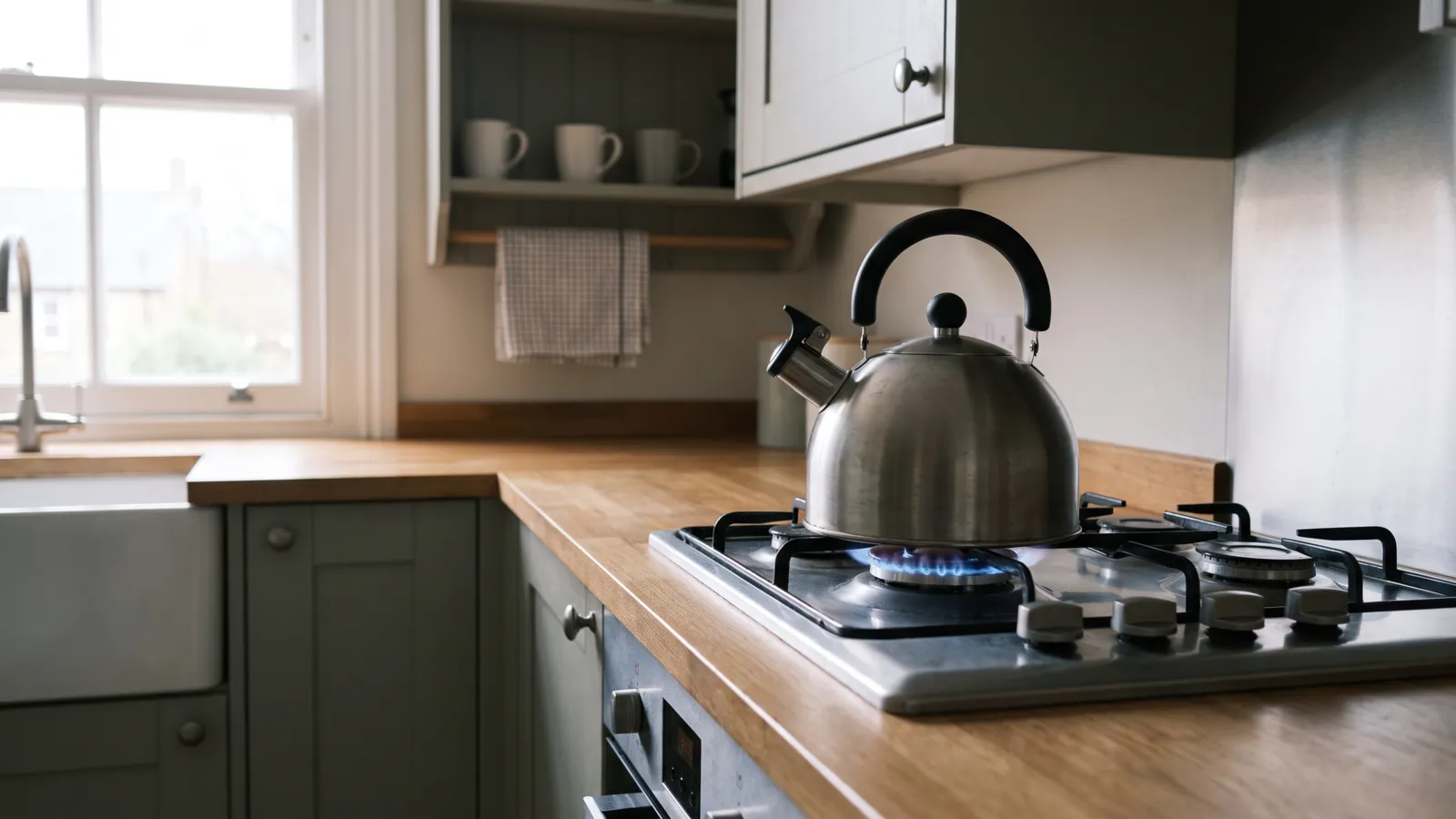
Most homes on mains gas pay two things for it: a price for each unit used, and a standing charge, a fixed daily fee paid whether or not any gas is used. In the Budget on 28 October 2026, the Chancellor said standing charges will be removed from household gas bills in Great Britain for around 23 million homes.
The government has asked Ofgem, the energy regulator, to make the change by the end of 2027 or as soon as possible after. The fixed costs that the standing charge covers won't disappear: they will be added to the unit rate, the price you pay for each kilowatt hour of gas.
The announcement covers gas only. Electricity bills keep their standing charge for now, though the Budget says electricity standing charges will be reformed too, with details next year.
It's one of several energy measures in the Budget, alongside a £100 Household Energy Payment for homes in council tax bands A to D in England and 0% VAT on electricity until July 2027.
What you pay now
Under Ofgem's price cap for 1 October to 31 December 2026, the average gas standing charge for a home paying by Direct Debit is 29.68p a day, about £108 a year, and gas costs 7.97p per kWh. Electricity has a standing charge of 54.83p a day and costs 26.32p per kWh.
Your own figures can differ: standing charges vary by region and by how you pay, and Ofgem publishes them for every region.
Home Alerts members
The full picture, for your home
Each week, what's happening across Britain set against your own address: your water company, your power network, fuel for your car and the gaps in your kit. Free for your own home. We're inviting the first 100 on the list now, and opening to everyone later in October.
Join the list →Britain's figures from our live trackers, 28 October.
Who saves, and who might pay more
Moving a fixed charge into the price per unit shifts the cost towards the homes that use the most gas. The Treasury's own estimate is that around 60% of households with a gas account could save, by an average of about £45 a year. So a sizeable minority would not see a saving, and some of those would pay more.
Homes that use little gas gain most, because they no longer pay a full daily charge for a small amount of gas. Homes that use a lot, for example larger or less well insulated homes heated by gas, are the most likely to pay more. The government says it will set out "targeted mitigation for a small number of households" in due course; it hasn't said yet who that covers or how it will work.
Homes without mains gas aren't affected.
What to do now
Nothing, for now. The change is aimed for the end of 2027 at the earliest, Ofgem still has to work out how it will be done, and your bill won't change because of it until then.
If you want a sense of where you'll land, look at your annual gas use in kilowatt hours on your bill or in your supplier's app. Ofgem currently treats 9,500 kWh a year as typical (medium) use for a home on gas, so a home using well below that is more likely to save.
Common questions
When will gas standing charges be scrapped?
The government has asked Ofgem to remove them by the end of 2027 or as soon as possible after. Nothing changes on bills yet.
Will my gas bill go down?
Probably, but not for everyone. The Treasury estimates around 60% of households with a gas account could save an average of about £45 a year. Homes that use a lot of gas are the most likely to pay more, because the fixed charge moves into the price per unit.
Are electricity standing charges being scrapped too?
No, not yet. The Budget covers household gas bills only, but says electricity standing charges will be reformed, with details next year.
How much is the gas standing charge now?
Under Ofgem's price cap for 1 October to 31 December 2026, the average is 29.68p a day for Direct Debit customers, about £108 a year. It varies by region and payment method.
Sources (4)
- HM Treasury: Budget 2026 (28 October 2026)
- HM Treasury: Chancellor abolishes standing charges on gas bills to make payments fairer (28 October 2026)
- Ofgem: energy price cap unit rates and standing charges, 1 October to 31 December 2026
- Ofgem: summary of changes to the energy price cap, 1 October to 31 December 2026 (typical use 9,500 kWh of gas a year)
PreparedBritain is independent and not affiliated with HM Government.
See our checks first on Google. Add PreparedBritain as a preferred source and Google will show our stories to you more often in Top Stories.

Budget 2026: the household guide (PDF)
Every household change in the 28 October Budget in one printable guide: energy bills, fuel, pay, pensions, savings tax, housing and what applies where you live, with the charts, worked examples and the dates to put in the diary. Free, no catch.
Download it straight away. We'll also send the occasional briefing when something genuinely matters — severe weather, live incidents, real price drops. Nothing else.
Latest from our live data
All stories → News · 28 OctAutumn Budget 2026: what it means for your household, from energy bills to pensions
 News · 28 OctJackery's Halloween sale, checked: two bundles cost less than the power station on its own
 News · 27 OctRise in sales of radios and tinned foods after the call to stock up: what you actually need
Keep reading
All power cuts & energy guides →Jackery's Halloween sale, checked: two bundles cost less than the power station on its own
Jackery's UK sale runs until 31 October. We put the headline deals in a basket: the Explorer 1000 v2 and 2000 v2…
Highland homes hit by fresh power cuts: 125 faults since Saturday, 47 still with homes off
Since Storm Boelo's first warning for Highland came into force at noon on Saturday, SSEN has listed 125 unplanned…
How to lower your electricity bill: what each step is really worth, and when power is cheapest
An electricity unit costs 26.32p and the standing charge 54.83p a day from 1 October 2026, and the price cap limits…