Autumn Budget 2026: what it means for your household, from energy bills to pensions
Every change in the 28 October Budget that touches a household: a £100 energy payment, cheaper electricity until July, gas standing charges to be scrapped, the fuel duty cut extended, the minimum wage up, a change to the triple lock and higher tax on savings. What changes, who it affects and when it starts.
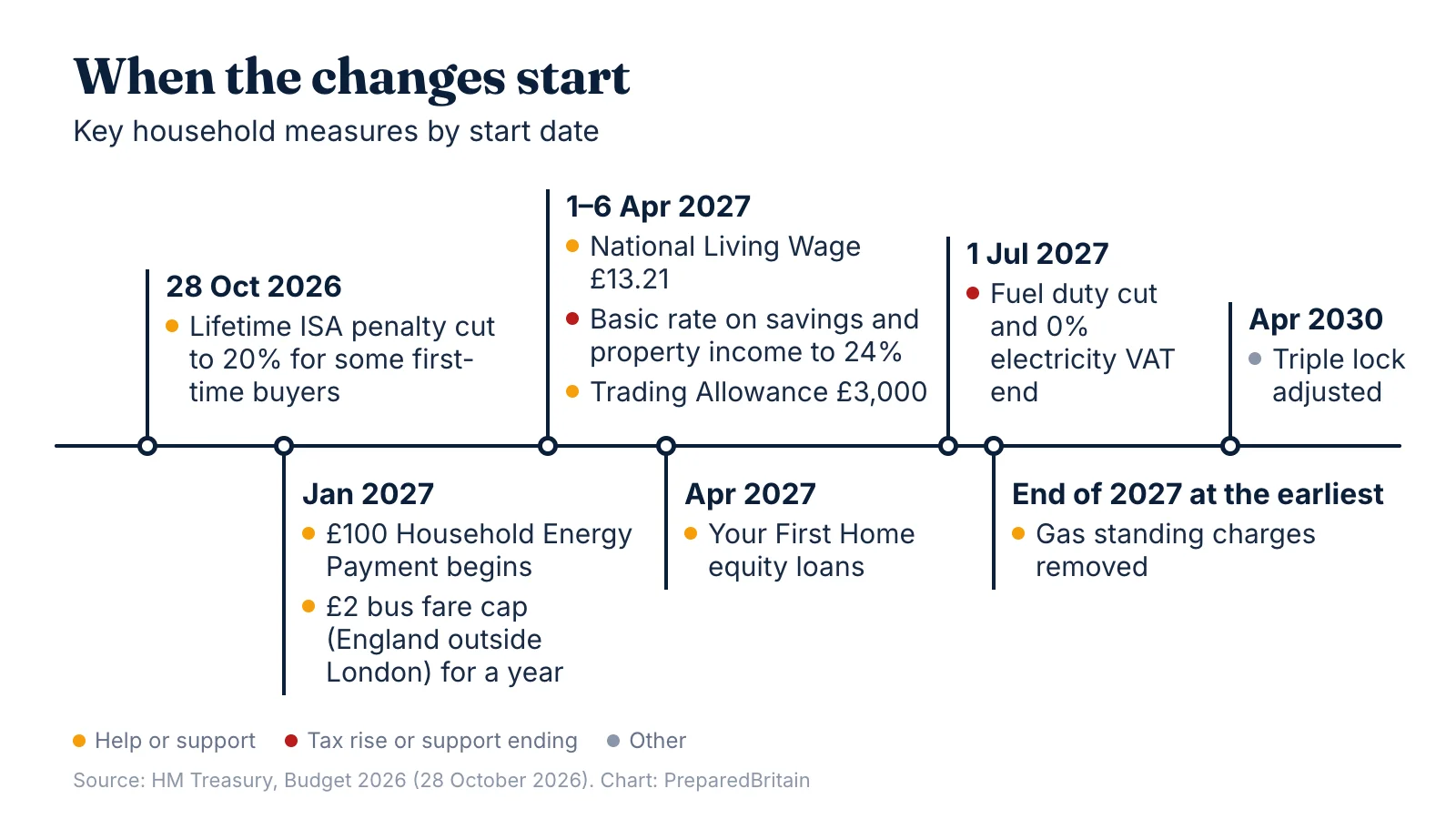
The Budget on 28 October 2026 kept the headline rates of income tax, National Insurance and VAT unchanged. For households, the main changes are: a £100 Household Energy Payment for homes in council tax bands A to D in England from January 2027; 0% VAT on household electricity in Great Britain extended to 1 July 2027, expected to take about £50 off the annual price cap figure from April; gas standing charges to be scrapped by the end of 2027 or as soon as possible after; the 5p fuel duty cut extended to 1 July 2027; the National Living Wage rising to £13.21 an hour from April 2027; and tax on savings interest rising to 24% for basic rate taxpayers from April 2027, on top of last year's planned rise. The State Pension triple lock stays until 2029 and is changed from April 2030.
By Tom Calder · Updated 28 October 2026 · Sourced to the Budget 2026 document published by HM Treasury at 13:30 on 28 October 2026, its table of policy decisions, the Treasury's gas standing charge announcement and Ofgem's current price cap figures, all read on 28 October 2026

The changes at a glance
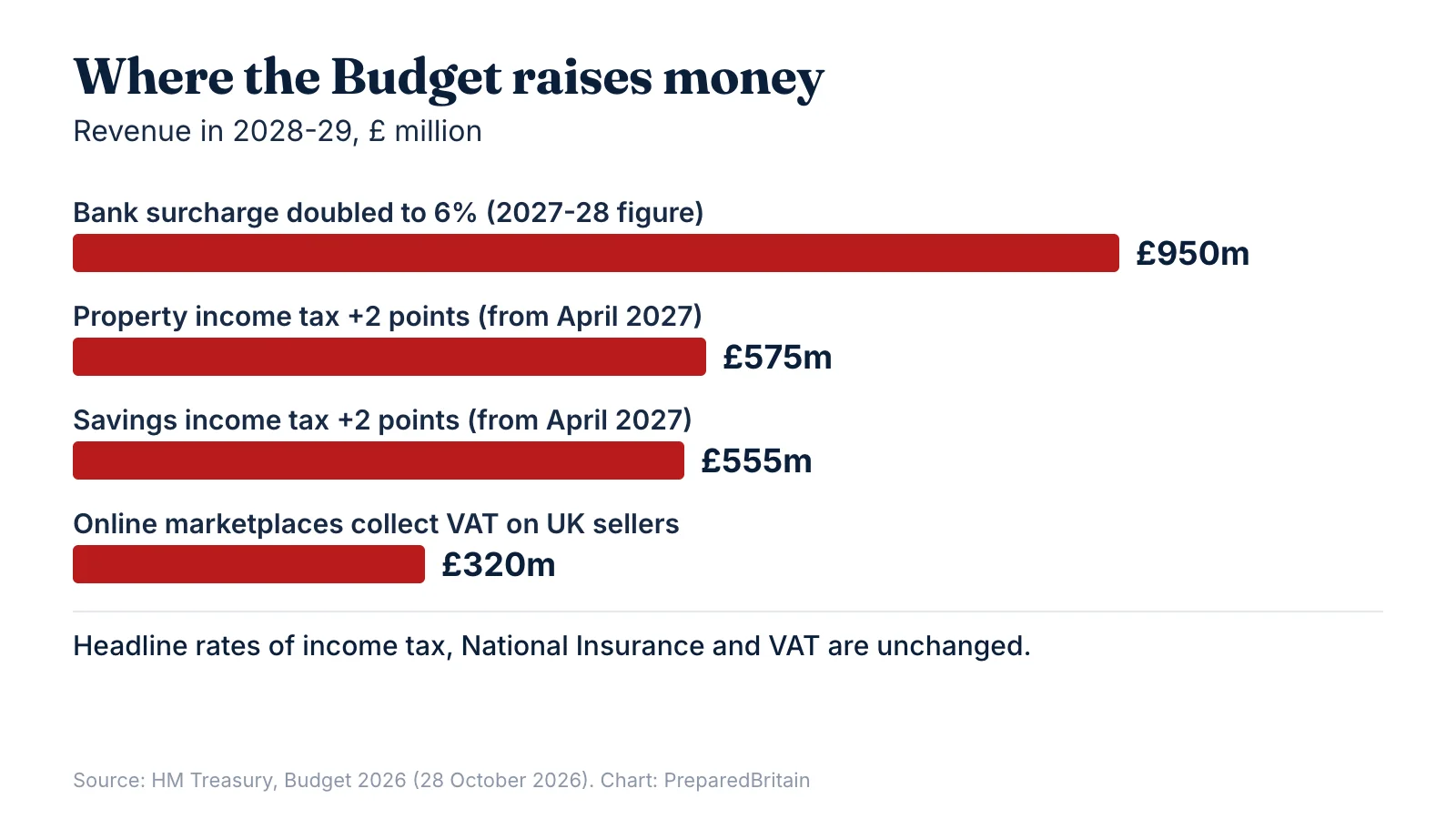
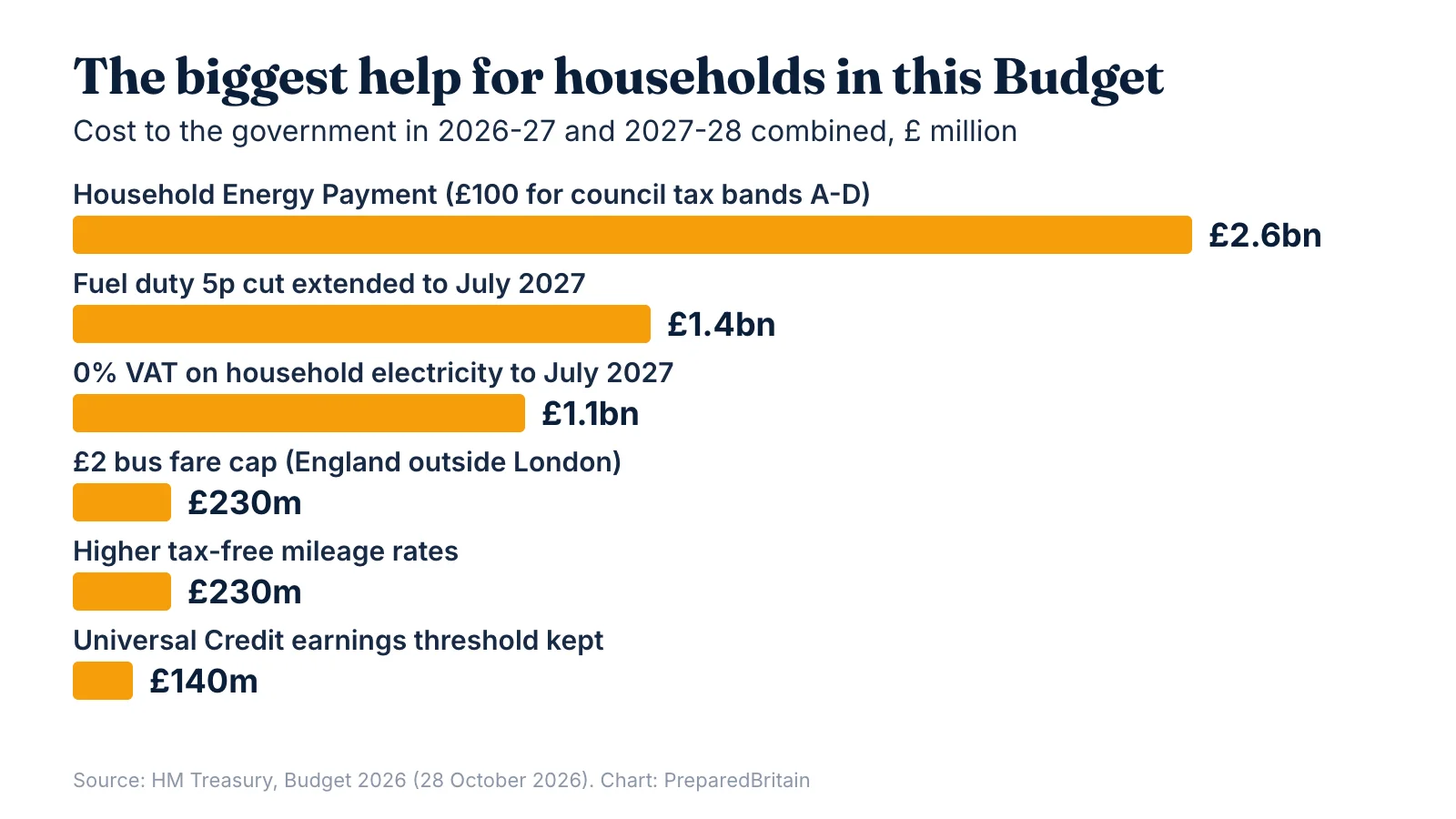
The Budget document says it "rejects broad-based tax rises": there is no increase to the headline rates of income tax, National Insurance or VAT. Most of the household measures are about energy and motoring costs, paid for in part by higher tax on banks, savings income and property income.
Each change below says who it affects and when it starts. Many don't arrive until 2027 or later, so nothing changes on most bills straight away.
Energy bills
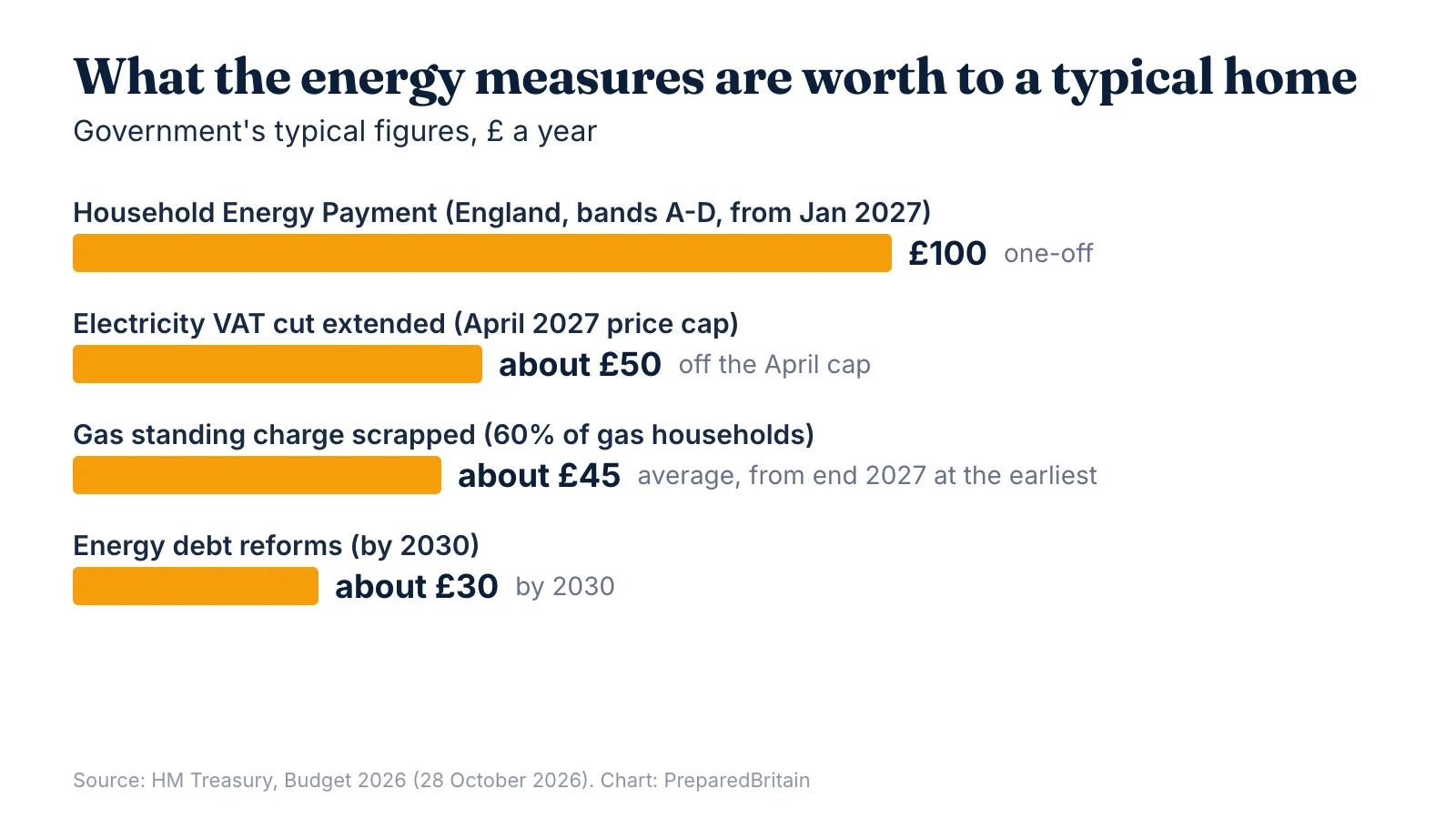
A £100 Household Energy Payment. Up to 20 million households in council tax bands A to D in England will get a £100 payment from January 2027. The Budget says it will be paid directly into bank accounts, delivered by councils through the council tax system; your council will confirm how it is paid. The Scottish, Welsh and Northern Ireland governments get a share of the funding to provide similar support. The government is also giving councils in England £100 million for further help for households hit hardest by energy bills, including some in bands above D.
Expect scam texts and emails about the £100 payment. The Budget doesn't ask anyone to apply for it, so never give your bank details or click a link in a message offering it; check your council's own website instead.
Cheaper electricity until July. The 0% rate of VAT on household electricity in Great Britain, which started on 1 October 2026, is extended to 1 July 2027. The Treasury expects it to take about £50 off the annual price cap figure from April 2027; the extension itself covers three months, April to June. In Northern Ireland, the Executive gets funding for comparable support, with the relief expected to apply from April 2027.
Gas standing charges scrapped. The government has asked Ofgem to remove standing charges from household gas bills in Great Britain, aiming for the end of 2027 or as soon as possible after. The charge is about £108 a year for a typical home; under Ofgem's current price cap it averages 29.68p a day. The cost moves into the price per unit of gas, so homes that use less gas pay less. The Treasury estimates around 60% of households with a gas account could save, by an average of about £45 a year. Because the cost moves into the unit rate, homes that use the most gas could pay more; the government says it will set out "targeted mitigation for a small number of households". Electricity standing charges will be reformed too, with details next year.
Energy debt. A new strategy for Great Britain, including a one-off targeted debt relief scheme for eligible households, is expected to save a typical household almost £30 by 2030. The government also says no new policy costs will be added to bills until a new Cost Control Framework is in place in 2027, and it has scrapped a planned new tax on gas bills (the Gas Shipper Obligation).
Fuel, driving and travel
Fuel duty cut extended. The temporary 5p a litre cut in fuel duty, due to end in January, now runs to 1 July 2027, and the planned inflation (RPI) increase is pushed back to the same date. The Budget notes diesel went above £2 a litre in October 2026. The 3.7p cut to red diesel duty is extended to 1 July 2027 as well.
Mileage rates. The temporary 55p a mile tax-free rate for the first 10,000 business miles in a car or van becomes permanent, and the rate above 10,000 miles rises from 25p to 35p from April 2027. The Treasury says someone driving 6,000 business miles saves £120 a year in tax.
£2 bus fares. Single bus fares in England outside London will be capped at £2 for a year from 1 January 2027.
Electric cars. £100 million over two years will cut the cost of local, lower-powered public chargers in Great Britain from spring 2027, worth around £150 a year to a driver without home charging who charges on the street. The new pay-per-mile Electric Vehicle Excise Duty, announced last year, still starts in April 2028.
Budget 2026: the household guide (PDF)
Every household change in the 28 October Budget in one printable guide: energy bills, fuel, pay, pensions, savings tax, housing and what applies where you live, with the charts, worked examples and the dates to put in the diary. Free, no catch.
Download it straight away. We'll also send the occasional briefing when something genuinely matters — severe weather, live incidents, real price drops. Nothing else.
Pay and work
Minimum wage. From 1 April 2027 the National Living Wage rises 3.9% to £13.21 an hour, about £910 a year more before tax for a full-time worker. The rate for 18 to 20-year-olds rises 3.9% to £11.27.
Side incomes. The Trading Allowance, the amount you can earn from small self-employed or side income without paying tax on it, triples from £1,000 to £3,000 from 6 April 2027.
Carers. People on Carer's Allowance in England and Wales will no longer lose the whole benefit for earning a penny over the weekly limit: a taper will reduce it gradually instead. It is due during 2030-31, once a new IT system is ready.
Universal Credit. The £2,500 surplus earnings threshold is kept for another year from 1 April 2027 for claimants in Great Britain.
Pensions
The triple lock until 2029. The State Pension will keep rising each year by the highest of 2.5%, inflation or earnings growth up to April 2029. The government says that raises the annual full new State Pension by more than £2,000 over the course of this Parliament.
A changed triple lock from April 2030. From April 2030 the State Pension will rise each year by the highest of 2.5%, inflation, or the amount needed to keep its value relative to earnings at the level reached in April 2029. In practice it will track earnings rather than moving ahead of them. The Treasury estimates this cuts State Pension spending by £15 billion a year by the late 2030s, and says the savings will help fund free personal care and a National Care Service in England.
No small tax bills for pensioners on the State Pension. A new Pension Tax Allowance from April 2027 means pensioners whose total income is no more than the full new State Pension won't be brought into paying tax because the State Pension has risen. It runs to April 2030.
Pension death benefits. The "two-year rule" in the taxation of pension and lump sum death benefits is removed from 28 October 2026.
Home Alerts members
The full picture, for your home
Each week, what's happening across Britain set against your own address: your water company, your power network, fuel for your car and the gaps in your kit. Free for your own home. We're inviting the first 100 on the list now, and opening to everyone later in October.
Join the list →Britain's figures from our live trackers, 28 October.
Savings and tax
No rise in the headline rates. Income tax, National Insurance and VAT rates are unchanged.
Tax on savings interest goes up, again. Last year's Budget had already set the tax rates on savings income to rise by 2 percentage points in April 2027. This Budget adds another 2 points. So from 6 April 2027, interest above your tax-free allowances will be taxed at 24% for basic rate taxpayers, 44% at the higher rate and 49% at the additional rate, across the UK. Today the rates are 20%, 40% and 45%.
It only bites on interest above your allowances: the Personal Savings Allowance is £1,000 of interest a year for basic rate taxpayers and £500 for higher rate taxpayers, and money in ISAs stays tax-free. The Budget says a basic rate taxpayer would need over £25,000 in savings outside an ISA before paying any tax on the interest.
Cash ISAs stay at £20,000. The government has decided not to reduce the cash ISA limit, which stays at £20,000 a year.
Landlords. In England, Wales and Northern Ireland, property income gets its own tax rates from 6 April 2027. Last year's Budget set them at 22%, 42% and 47%; this Budget raises them 2 points further, to 24%, 44% and 49%.
Buying a home
Your First Home. A new £4.7 billion scheme from April 2027 will offer 20% equity loans to around 70,000 first-time buyers in England, with household income caps of £110,000 outside London and £140,000 in London, and price caps set by local area.
Lifetime ISA. From 29 October 2026, the withdrawal charge falls from 25% to 20% for first-time buyers buying a home above the £450,000 price cap. From April 2029 a new First Time Buyer ISA replaces the Lifetime ISA for new savers.
High-value homes. The details of the High Value Council Tax Surcharge in England, including deferrals, discounts and exemptions, are confirmed for April 2028. It only applies to high-value properties.
Families and everyday costs
Food prices. From 26 November 2026, import tariffs will be suspended on 101 more food products, from baked beans and plant-based drinks to dried fruit and chocolate, until 31 December 2028. Together with June's package, the Treasury expects this to cut consumer costs by £245 million to £595 million.
Heating oil. Tariffs on kerosene heating oil will be suspended from 26 November 2026 until 31 December 2028, which helps homes that heat with oil, many of them in rural areas and Northern Ireland.
Parental pay. From April 2029, eligible self-employed fathers, partners and adopters in Great Britain will be able to get parental pay for the first time.
Student loans. Interest on Plan 2 and Plan 3 student loans is capped at 6% until 31 August 2027.
Scotland, Wales and Northern Ireland
Several of the headline measures are for England only. The £100 Household Energy Payment, the £2 bus fare cap, the Your First Home scheme and the High Value Council Tax Surcharge apply in England. The Scottish, Welsh and Northern Ireland governments get extra funding through the Barnett formula, which the Budget says will let them provide similar support; it doesn't say they will run the same £100 payment, so watch for their own announcements.
The Budget puts the extra Barnett funding from all its decisions at £1.3 billion between 2026-27 and 2029-30: £600 million for the Scottish Government, £450 million for the Welsh Government and £270 million for the Northern Ireland Executive.
The 0% VAT on electricity covers Great Britain; in Northern Ireland, comparable support is expected from April 2027. Removing gas standing charges and the energy debt strategy cover Great Britain. The fuel duty cut, the National Living Wage, the mileage rates, the food and heating oil tariff suspensions and the higher tax on savings interest apply across the UK. The new property income rates apply in England, Wales and Northern Ireland; Scotland isn't covered by that change.
What it means in pounds: five examples
These are our worked examples using the Budget's own figures; your own amounts will depend on your bills, income and where you live.
A pensioner couple in a band C home in England, heated by gas. They get the £100 Household Energy Payment from January 2027 and the electricity VAT cut, expected to take about £50 off the annual price cap figure from April 2027. If they use less gas than average, scrapping the standing charge should cut their gas bill from the end of 2027 at the earliest. Their State Pension keeps rising under the triple lock to 2029, and if their income is no more than the full new State Pension, the new Pension Tax Allowance means no small tax bills from April 2027.
A renting family with two children, one parent working full-time on the National Living Wage, band B in England, no car. The rise to £13.21 an hour from April 2027 is worth about £910 a year before tax. They also get the £100 payment and the electricity VAT cut, and from January 2027 their single bus fares are capped at £2 if they live outside London.
Someone who drives 6,000 business miles a year in their own car. The higher tax-free mileage rate saves them about £120 a year, and the 5p fuel duty cut stays until 1 July 2027 instead of ending in January.
A basic rate taxpayer with £40,000 in a savings account outside an ISA, earning 4% interest. That's £1,600 of interest a year. The first £1,000 is tax-free under the Personal Savings Allowance, leaving £600 taxed. At today's 20% that's £120 a year; at the 24% due from April 2027 it's £144, so £24 a year more, half of it from this Budget and half from last year's.
A basic rate landlord in England with £10,000 of rental profit. Before any other reliefs, tax at today's 20% is £2,000; at the 24% property rate from April 2027 it's £2,400, so £400 a year more, again half from each Budget.
What happens next
Most of the tax changes will be written into law through the Finance Bill 2026-27, and the government says it will shortly bring forward an Energy Independence Bill for some of the energy measures.
Ofgem now has to work out how gas standing charges will be removed, and the government will set out the targeted help for households who would otherwise pay more. Details of electricity standing charge reform are due next year.
The dates to put in the diary: the Lifetime ISA charge change from 29 October 2026; the £100 Household Energy Payment and the £2 bus fare cap from January 2027; the minimum wage, savings tax, property tax and Trading Allowance changes from April 2027; and 1 July 2027, when the fuel duty cut and the 0% VAT on electricity are due to end.
The bigger picture: prices this winter
The Office for Budget Responsibility's forecast, published alongside the Budget, explains why so much of the help is about energy. It expects inflation to rise to a quarterly peak of about 3¾% in early 2027, driven by higher energy prices, and then fall back to 2% in 2028 as energy prices drop.
Its central forecast has the Ofgem price cap peaking at around £1,875 a year for a typical home in January to March 2027. It also notes that forecasts based on more recent energy market prices put that peak nearer £2,150, so the January cap could come in higher than the OBR's own figure.
Who gains most
The Treasury's own analysis, published with the Budget, says households in the lowest income groups gain most from this Budget's decisions in 2027-28, and that the tax increases fall mostly on the highest-income households. We'll add independent analysis when it is published.
Much of the help is temporary: the electricity VAT cut and the fuel duty cut both end on 1 July 2027 unless they are extended again, and the £100 payment is a single payment.
Common questions
Will I get the £100 Household Energy Payment?
If your home is in council tax band A, B, C or D in England, the Budget says you'll get £100 from January 2027, paid directly into bank accounts through the council tax system. You don't need to reply to any text or email about it: those will be scams. Scotland, Wales and Northern Ireland get funding to provide similar support, which their governments will set out.
Is the fuel duty cut being extended?
Yes. The 5p a litre cut now runs to 1 July 2027 instead of ending in January, and the planned RPI increase is deferred to the same date.
Is the triple lock being scrapped?
No. It continues unchanged until April 2029. From April 2030 the State Pension will rise by the highest of 2.5%, inflation, or the amount needed to keep its value relative to earnings at the April 2029 level.
Is income tax going up?
The headline rates of income tax, National Insurance and VAT are unchanged. Tax on savings interest above your allowances rises to 24%, 44% and 49% from 6 April 2027 (from 20%, 40% and 45% today), and property income in England, Wales and Northern Ireland gets new rates of 24%, 44% and 49% from the same date.
When will gas standing charges go?
The government has asked Ofgem to remove them by the end of 2027 or as soon as possible after. Nothing changes on bills yet.
Sources (7)
- HM Treasury: Budget 2026 (28 October 2026)
- HM Treasury: Budget 2026 in full (all documents)
- HM Treasury: Chancellor abolishes standing charges on gas bills (28 October 2026)
- Ofgem: energy price cap unit rates and standing charges, 1 October to 31 December 2026
- HMRC: Changes to tax rates for property, savings and dividend income (26 November 2025)
- GOV.UK: Tax on savings interest (Personal Savings Allowance)
- Office for Budget Responsibility: Economic and fiscal outlook, October 2026
PreparedBritain is independent and not affiliated with HM Government.
See our checks first on Google. Add PreparedBritain as a preferred source and Google will show our stories to you more often in Top Stories.

Latest from our live data
All stories →
Keep reading
All money & bills guides →Car finance compensation: where it stands and how to claim for free
Headlines say a car finance compensation update is due as a court hearing starts. The 5–6 October hearing dealt with…
Heating oil: the government’s new policy, and the help each UK nation offers
The government’s 13 October 2026 decision to regulate the heating oil market for the first time, what it changes and…
Behind on your energy bills: the grants that exist, and the write-off that doesn’t yet
What to do when you owe your energy supplier: your right to a repayment plan you can afford, the British Gas Energy…