Home fire safety: blankets, extinguishers & alarms (2026)
Most home fires start in the kitchen, and the right response is usually a smoke alarm that wakes you and a fire blanket within reach — not a heroic stand with an extinguisher. This page covers the small amount of fire kit a home actually benefits from, and is honest about the most important safety rule: knowing when to get out instead.
By Tom Calder · Updated 20 September 2026 · 6 products, 2 of 6 price-tracked
Before you buy
Start with smoke alarms, because they're what actually save lives — by waking you in time to escape. Fit one on every level of the home, ideally interlinked so they all sound together, and test them monthly. Optical (photoelectric) alarms suit hallways and living areas; this is the single most important thing on the page.
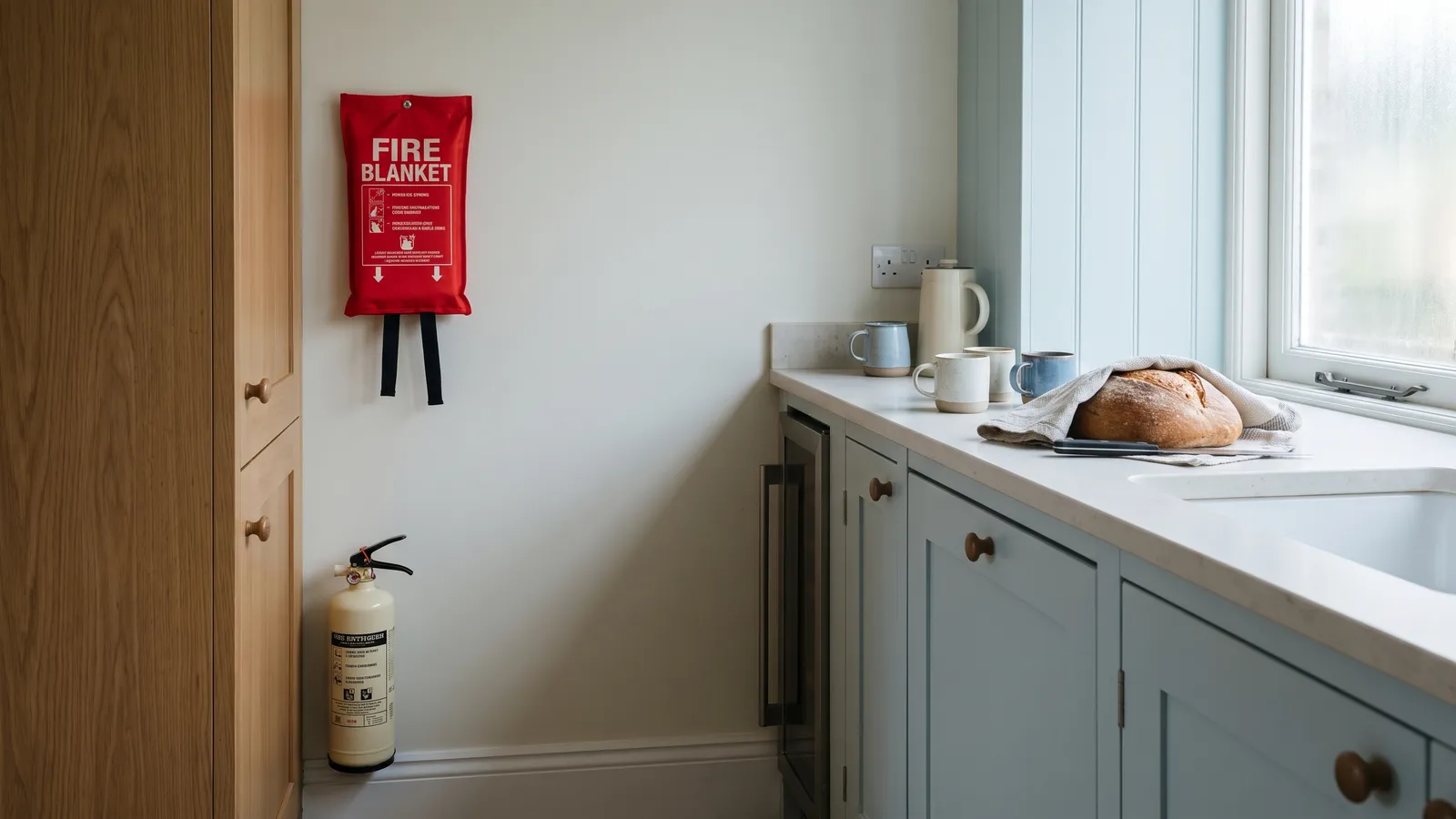
For the kitchen, a fire blanket is the most useful active item: it smothers a pan fire or a small clothing fire instantly and safely, with no mess, and needs no technique. Mount it on the wall near the exit route, not behind the hob. A modern all-fires spray (like Firexo) is a compact, easy alternative for small fires that's kinder to use than a powder extinguisher.
If you want an extinguisher, match it to the risk: ABC dry powder is the versatile all-rounder but makes a huge mess and shouldn't be used in a small enclosed space; foam suits general household use; CO2 is the one for electrical fires. Whatever you choose, it's for a small, contained fire you've caught early — and only ever if your own escape is assured.
Top pick: British Standard Fire Blanket 1m x 1m. A cheap, compact bit of kit that every kitchen should have mounted by the door. Just make sure it carries the genuine BSI Kitemark to BS EN 1869 and treat it as a first response, not a firefighting tool.
| Item | Type | Fire rating | Size | Price | |
|---|---|---|---|---|---|
| British Standard Fire Blanket 1m x 1mTOP PICK | Woven glass-fibre cloth, soft-pack with pull tabs | BS EN 1869:2019 (BSI Kitemark) | 1m x 1m | — | See price on Amazon → |
| FireAngel Optical Smoke Alarm | Optical (photoelectric) | BS EN 14604 certified | 11.8 x 11.8 x 3.2 cm | £11.98as of 20 Sep 2026, 12:29 BST · DetailsProduct prices and availability are accurate as of the date/time indicated and are subject to change. Any price and availability information displayed on Amazon.co.uk at the time of purchase will apply to the purchase of this product. | Check price → |
| Firexo All-Fires Fire Extinguisher Spray 500ml | All-fires liquid extinguisher (all 7 fire classes, incl. lithium-ion) | 3A 13B 5F (EN3) | 500ml | £32.04as of 20 Sep 2026, 12:29 BST · DetailsProduct prices and availability are accurate as of the date/time indicated and are subject to change. Any price and availability information displayed on Amazon.co.uk at the time of purchase will apply to the purchase of this product. | Check price → |
| ABC Dry Powder Fire Extinguisher 1kg | ABC dry powder (stored pressure) | 5A 34B C | 1kg | — | Check price → |
| AFFF Foam Fire Extinguisher 2 Litre | AFFF foam spray, stored pressure (BS EN3) | 5A 55B (some models 8A 55B) | 2 | — | See price on Amazon → |
| CO2 Fire Extinguisher 2kg (electrical) | CO2 (carbon dioxide) | 34B | 2kg | — | Check price → |
ⓘ As an Amazon Associate, PreparedBritain earns from qualifying purchases. We may earn a commission when you buy, or a fee when you request a quote, through our links — it never affects what we recommend. Amazon prices come from Amazon's own product data and show the date and time they were retrieved. Prices at other retailers are checked by us, less often. Prices and stock can change at any time, so always check the retailer's price before you buy.
British Standard Fire Blanket 1m x 1m
4.0Who it's for: Smothering a small, contained pan or hob fire in the kitchen before it can spread.
A cheap, compact bit of kit that every kitchen should have mounted by the door. Just make sure it carries the genuine BSI Kitemark to BS EN 1869 and treat it as a first response, not a firefighting tool.
- Inexpensive and long-lived: mount it once by the kitchen door and it needs no servicing or expiry checks, unlike an extinguisher.
- Genuine BS EN 1869:2019 Kitemarked versions are widely stocked at Screwfix, Toolstation and elsewhere from around £12.
- The right, safe response to a small pan fire, where water would be dangerous.
- The market is full of cheap imports marked only 'CE EN1869' that can fail or burn through, so you must check for the true BSI Kitemark rather than a plain CE mark.
- Single-use and easy to misdeploy under pressure; a 1m x 1m size suits a small pan, not a large hob or oven fire.
Don't buy if Don't rely on one if a fire has already spread beyond the pan or you have a chip-pan-sized blaze; a blanket only smothers small, contained fires, so if in doubt get everyone out and call 999.
FireAngel Optical Smoke Alarm
4.0Who it's for: A fit-and-forget smoke alarm for hallways, landings and living rooms.
A dependable, sensibly priced optical alarm with a sealed 10-year lithium battery, so there are no 9V cells to change and it meets BS EN 14604. The optical sensor suits landings and living areas, but it isn't the right choice immediately outside a kitchen where cooking fumes trigger false alarms.
- Sealed 10-year battery means no annual battery swaps and one clear end-of-life date.
- Optical sensing responds well to slow, smouldering fires and is certified to BS EN 14604.
- Inexpensive and widely stocked, with a test/silence button and an 8-hour low-battery hush.
- Single-sensor optical only, without the added heat sensor of FireAngel's Thermoptek (ST-622) alarms.
- Standalone unit with no wireless interlink, so alarms won't sound together across a larger home.
Don't buy if Don't buy this for a kitchen or a small flat where the only mounting spot is near the hob; an optical alarm will nuisance-trip on toast and steam, so fit a heat alarm there and site this optical unit elsewhere. If you want every alarm in the house to sound at once, choose an interlinked range instead.
as of 20 Sep 2026, 12:29 BST · Details
Product prices and availability are accurate as of the date/time indicated and are subject to change. Any price and availability information displayed on Amazon.co.uk at the time of purchase will apply to the purchase of this product.Firexo All-Fires Fire Extinguisher Spray 500ml
4.0Who it's for: A compact grab-and-use unit for the kitchen, car or caravan that covers any type of fire.
An EN3-rated compact extinguisher that genuinely tackles all fire classes, including cooking-oil and lithium-ion battery fires that most single-type home extinguishers can't. Sensible as a first-response unit, but its 500ml size means it buys time rather than replacing a full-size extinguisher.
- Covers all fire classes in one unit, including Class F cooking fats and lithium-ion battery fires that many home extinguishers can't handle
- EN3-rated (3A 13B 5F), non-toxic and biodegradable formula, with a wall/vehicle bracket included
- Small enough to keep to hand in a kitchen, car or caravan
- 500ml capacity and roughly 12 seconds of discharge is modest, so it's for a small contained fire, not a developed one
- Costs more than a basic powder or foam extinguisher of similar size
Don't buy if Don't rely on it as your only cover for a whole house or garage. For that, fit a full-size 2kg/2L extinguisher and treat this as a quick first-response grab for a contained fire.
as of 20 Sep 2026, 12:29 BST · Details
Product prices and availability are accurate as of the date/time indicated and are subject to change. Any price and availability information displayed on Amazon.co.uk at the time of purchase will apply to the purchase of this product.ABC Dry Powder Fire Extinguisher 1kg
3.5Who it's for: A compact, low-cost backup for the car, caravan, or a small flat where a larger extinguisher won't fit.
A 1kg ABC powder extinguisher is an inexpensive all-rounder that covers most common fire types, but its small charge empties in seconds and the powder makes a real mess indoors. Treat it as a supplementary unit rather than your household's main line of defence.
- Covers Class A, B and C fires plus electrical risks, so one small unit handles most common household hazards.
- Cheap and widely stocked, typically £10-15 from trade and DIY retailers.
- Compact and light enough to keep in a car, caravan, or under-stairs cupboard.
- The 1kg charge discharges in roughly 6-8 seconds, leaving little margin on anything larger than a very small fire.
- Powder is messy, can damage electronics, and clouds visibility in an enclosed room.
Don't buy if Don't rely on this as your only home extinguisher. For the kitchen, a foam or water-spray unit plus a fire blanket is cleaner and safer, and a 2kg+ model gives a more usable discharge for whole-home cover.
AFFF Foam Fire Extinguisher 2 Litre
3.5Who it's for: A car, van, or a compact second extinguisher kept near a back door or exit.
A competent, inexpensive compact extinguisher that handles everyday wood, paper and flammable-liquid fires, with a cooling action that helps prevent re-ignition. Treat it as a car, van or second-line unit rather than your main household defence, and keep a fire blanket in the kitchen.
- Covers both Class A (wood, paper, textiles) and Class B (flammable liquid) fires, so it is genuinely versatile for the size.
- Compact and light enough to keep in a car, van or by an exit without getting in the way.
- Cheap and BS EN3-tested, making it a sensible low-cost backstop or second unit.
- At 5A/55B the capacity is modest, with only around 9-12 seconds of discharge, so it is a first-response tool rather than something to fight a developed fire with.
- Traditional AFFF contains PFAS 'forever chemicals' now being phased out in the UK and EU; fluorine-free (F3) foam is the greener direction of travel.
Don't buy if Don't rely on it as your kitchen extinguisher: foam is not rated for cooking-oil (Class F) fires and must never be used on live electrics. For a chip-pan risk buy a fire blanket, and if you want one main household extinguisher a larger 6L foam or 2kg powder unit gives far more margin.
CO2 Fire Extinguisher 2kg (electrical)
3.5Who it's for: Home offices, consumer units and garages with live electrical equipment.
A dependable specialist extinguisher for electrical and flammable-liquid fires that leaves no residue and won't harm electronics. It's a sensible second extinguisher rather than a household's only one.
- Safe on live electrical equipment and leaves no messy residue to clean up
- Effective on Class B flammable-liquid fires (petrol, oil, diesel)
- Refillable steel body with a typical 5-year warranty and wall bracket included
- The discharge horn gets extremely cold and offers no cooling, so fires can reignite
- Heavy for its size and no use on wood, paper, textiles or cooking-oil (chip-pan) fires
Don't buy if You want a single all-round extinguisher for the home. A multi-purpose foam or powder unit covers far more everyday fire types. Never rely on CO2 for kitchen cooking-oil fires; use a fire blanket or wet-chemical unit instead.
Get price-drop alerts on these
Prices for 364 tracked products are refreshed daily — last sweep 20 September 2026. Tell us which and we'll email you when one drops.
We verify every product's specifications against at least two independent sources, re-check its UK price and stock on a schedule where we can track it automatically, and cross-check safety-relevant claims against official guidance. Where we've bought and used a product ourselves we say so on its review; where we haven't, our verdict is a considered spec-and-evidence comparison, not a hands-on test — and commissions never change a ranking either way. Read our full methodology →
Guides that go with this
The fire service's own advice: get out, stay out, call 999 — plus how to plan your escape, what to do if you'r…
The correct, official steps if you smell gas or suspect a leak — the free 24-hour emergency number, what to do…
Common questions
What fire safety kit does a home actually need?
In priority order: working smoke alarms on every level (the life-savers), a fire blanket in the kitchen, and optionally a small extinguisher. Alarms matter far more than extinguishers because their job is to get you out in time.
Should I try to put out a house fire myself?
Only a small fire you've caught in the first seconds, and only if your escape is assured. If a fire is spreading or there's much smoke, the fire service's advice is clear: get out, stay out, and call 999. Never risk your life for property.
What type of fire extinguisher is best for the home?
ABC dry powder is the most versatile but very messy and not for enclosed spaces; foam suits general household fires; CO2 is for electrical fires. For most homes a fire blanket plus a small foam or all-fires spray is more practical than a big powder extinguisher.
What's a fire blanket for?
Smothering a small fire — most usefully a pan fire on the hob or clothing that's caught alight — by cutting off its oxygen. It's simple, mess-free and needs no technique, which makes it the ideal first line in a kitchen. Mount it near your exit, not behind the cooker.
How many smoke alarms do I need and where?
At least one on every level of your home, ideally interlinked so they all sound together, positioned on ceilings in hallways and landings. Test them monthly and replace them (or their batteries) as the manufacturer specifies — most alarms last about ten years.
Can I put a fire blanket over any fire?
It's designed for small, contained fires like a pan or clothing fire. Don't use it on a deep-fat fryer fire that's already large, and never move a burning pan. If in any doubt, get out and call 999 rather than tackle it.