Best smoke alarms for UK homes (2026): sealed 10-year, interlinked and kitchen heat alarms
A working smoke alarm is the one piece of home safety kit every fire and rescue service asks you to have, and it matters most on nights such as a power cut with candles lit. We judge the alarms here on what you can check: the standard stated by the maker or a register, whether the battery is sealed for ten years, whether it links to other alarms, and whether it is a smoke alarm for a hallway or a heat alarm for a kitchen. We have not set any of them off ourselves; every figure is the maker's, a retailer's or an owner's, and we say which.
By Tom Calder · Updated 21 October 2026 · 9 products, all price-tracked
Our picks by job
 Photo: Amazon
Kidde 10Y29
Hallways and landings where you want a sealed 10-year alarm with no battery changes.
as of 21 Oct 2026, 10:37 BST · Details
Product prices and availability are accurate as of the date/time indicated and are subject to change. Any price and availability information displayed on Amazon.co.uk at the time of purchase will apply to the purchase of this product. Photo: Amazon
FireAngel FA6720-R
A fit-and-forget heat alarm for a kitchen, garage or loft where smoke alarms would false-alarm.
as of 21 Oct 2026, 10:37 BST · Details
Product prices and availability are accurate as of the date/time indicated and are subject to change. Any price and availability information displayed on Amazon.co.uk at the time of purchase will apply to the purchase of this product. Photo: Amazon
Aico Ei146e
A mains alarm for an electrician-fitted system, with wired or wireless linking.
as of 21 Oct 2026, 10:37 BST · Details
Product prices and availability are accurate as of the date/time indicated and are subject to change. Any price and availability information displayed on Amazon.co.uk at the time of purchase will apply to the purchase of this product.All 9 compared
Photo: AmazonBest interlinkedA mains alarm for an electrician-fitted system, with wired or wireless linking.
as of 21 Oct 2026, 10:37 BST · Details
Product prices and availability are accurate as of the date/time indicated and are subject to change. Any price and availability information displayed on Amazon.co.uk at the time of purchase will apply to the purchase of this product.Our verdict
Aico describes the Ei146e as an optical alarm best for slow, smouldering fires, mains powered with a 9V alkaline backup. Screwfix lists it as linkable by wire to other Aico alarms or wirelessly using the RadioLINK base. It is a sound choice for an electrician-fitted, interlinked system, but not a DIY job.
Worth knowing: Wireless needs a separate RadioLINK base
Who shouldn't buy it: Don't buy it if you want a no-wiring fit; sealed battery alarms need no electrician.
Photo: AmazonBest heat alarmA fit-and-forget heat alarm for a kitchen, garage or loft where smoke alarms would false-alarm.
as of 21 Oct 2026, 10:37 BST · Details
Product prices and availability are accurate as of the date/time indicated and are subject to change. Any price and availability information displayed on Amazon.co.uk at the time of purchase will apply to the purchase of this product.Our verdict
A thermistor heat alarm that triggers at 54 to 65 degrees Celsius, with a sealed 10-year lithium battery and no wiring. B&Q and Safelincs list it to BS 5446-2:2003, and FireAngel says it suits BS 5839-6 Grade F1. It pairs with a smoke alarm elsewhere in the home, rather than replacing one.
Worth knowing: Heat only, so it does not detect smoke from a smouldering fire
Who shouldn't buy it: Don't buy it if you need interlinking, for example in Scotland; the mains HW1-R links to other FireAngel mains alarms.

A mains-wired hallway alarm that can join a FireAngel heat alarm in the kitchen.
as of 21 Oct 2026, 10:37 BST · Details
Product prices and availability are accurate as of the date/time indicated and are subject to change. Any price and availability information displayed on Amazon.co.uk at the time of purchase will apply to the purchase of this product.Our verdict
A 230V optical alarm with a replaceable 9V battery for power cuts. Wickes lists it as hardwire-linkable to other FireAngel mains alarms such as the HW1-R, or wireless when bought with a separate base. It should be fitted by a qualified electrician, and suits anyone building an interlinked set from this page.
Worth knowing: Wireless linking needs a separate base that is not in the box
Who shouldn't buy it: Don't buy it if you cannot get an electrician to fit it; a sealed battery alarm needs no wiring.
Photo: AmazonBest for most homesHallways and landings where you want a sealed 10-year alarm with no battery changes.
as of 21 Oct 2026, 10:37 BST · Details
Product prices and availability are accurate as of the date/time indicated and are subject to change. Any price and availability information displayed on Amazon.co.uk at the time of purchase will apply to the purchase of this product.Our verdict
Kidde's sealed-battery optical alarm tells you when its ten years are up. Safelincs lists it as standalone, to BS EN 14604:2005 and suitable for BS 5839-6 Grade F1 installations. It suits households that want zero upkeep without interlinking.
Worth knowing: Standalone, so it will not sound other alarms
Who shouldn't buy it: Don't buy it if you live in Scotland or want interlinking; the mains Aico or FireAngel options link together.
The kitchen heat alarm in a mains-wired, interlinked set alongside the SW1-R.
Our verdict
A mains heat alarm with a thermistor sensor and a replaceable 9V backup battery. Wickes and B&Q list it to BS 5446-2:2003 and as hardwire-linkable with up to 12 other FireAngel mains alarms such as the SW1-R. It is the kitchen partner for that smoke alarm.
Worth knowing: Needs wiring, so usually an electrician
Who shouldn't buy it: Don't buy it if you want something you can fit yourself; the sealed battery FA6720-R needs no wiring.

A low-cost, dependable alarm for hallways and landings in a home with no interlinking requirement.
as of 21 Oct 2026, 10:37 BST · Details
Product prices and availability are accurate as of the date/time indicated and are subject to change. Any price and availability information displayed on Amazon.co.uk at the time of purchase will apply to the purchase of this product.Our verdict
A plain optical alarm from a long-established UK brand, run on two ordinary AA cells you change yourself. FireAngel states it meets EN 14604 and lists an 8-hour silence for low-battery chirps. It suits a rented flat or a bedroom top-up, but it is a step behind the sealed-battery models on this page for fit-and-forget protection.
Worth knowing: Batteries need replacing during its life, unlike sealed 10-year units
Who shouldn't buy it: Don't buy it if you live in Scotland or want interlinked alarms; look at the mains and interlinked options instead, or a sealed 10-year model if you dislike battery changes.
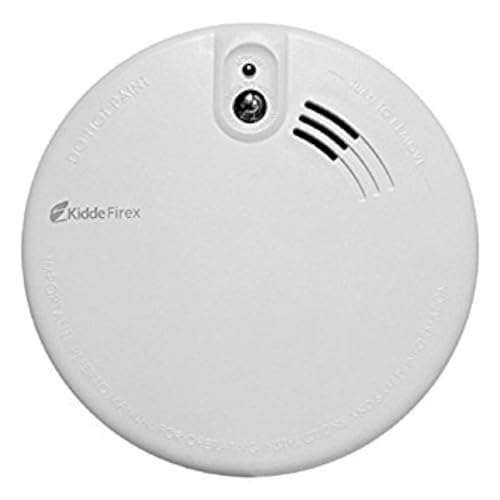
A mains-wired hardwired set using Kidde Firex alarms, including their heat alarms.
as of 21 Oct 2026, 10:37 BST · Details
Product prices and availability are accurate as of the date/time indicated and are subject to change. Any price and availability information displayed on Amazon.co.uk at the time of purchase will apply to the purchase of this product.Our verdict
Mains optical alarm with a supplied 9V backup, linkable by cable to 23 other Kidde mains alarms, optical or heat, per Wickes. Wickes lists a six-year guarantee. It suits an electrician-fitted Kidde system; it does not link wirelessly, and it will not pair with other brands.
Worth knowing: Hardwired only, so fitting needs an electrician
Who shouldn't buy it: Don't buy it if you want wireless linking or a mixed-brand set; the Aico Ei146e adds wireless via a base.

A landing or child's-bedroom alarm where a light on the escape route helps.
as of 21 Oct 2026, 10:37 BST · Details
Product prices and availability are accurate as of the date/time indicated and are subject to change. Any price and availability information displayed on Amazon.co.uk at the time of purchase will apply to the purchase of this product.Our verdict
This is FireAngel's optical alarm with a built-in light that comes on when it sounds. The maker lists a 10-year sensor life with replaceable AA batteries rated for up to three years, and suitability for BS 5839-6 Grade F2 installations. It suits households wanting the extra light; for plain budget cover the FA6615-R on this page does the core job.
Worth knowing: AA cells need replacing roughly every three years
Who shouldn't buy it: Don't buy it if you want a sealed battery or interlinked alarms; the sealed 10-year or mains models fit better.

A cheap extra alarm in a spare room, with a battery you change yourself.
as of 21 Oct 2026, 10:37 BST · Details
Product prices and availability are accurate as of the date/time indicated and are subject to change. Any price and availability information displayed on Amazon.co.uk at the time of purchase will apply to the purchase of this product.Our verdict
A basic battery optical alarm with a hush button and a 9V cell supplied. Wickes lists a three-year guarantee and EN 14604, and it is standalone. It suits a low-cost top-up where you are happy to change the 9V battery when it warns, but sealed 10-year models cost little more for much less upkeep.
Worth knowing: 9V battery needs regular replacing
Who shouldn't buy it: Don't buy it if you will forget battery changes; the sealed 10-year Kidde or FireAngel units suit better.
ⓘ As an Amazon Associate, PreparedBritain earns from qualifying purchases. We may earn a commission when you buy, or a fee when you request a quote, through our links — it never affects what we recommend. Amazon prices come from Amazon's own product data and show the date and time they were retrieved. Prices at other retailers are checked by us, less often. Prices and stock can change at any time, so always check the retailer's price before you buy.
Before you buy
Start with the standard, not the feature list.
A UK smoke alarm should be made to BS EN 14604 and a heat alarm to BS 5446-2; two here, the Aico Ei146e and the FireAngel FA6720-R, are also listed as BSI Kitemarked, meaning a third party checks production too. Each entry names where its standard is stated. You will also meet BS 5839-6, the British Standard for domestic fire detection, which grades alarms by power: Grade D is mains with battery backup, Grade F1 a sealed long-life battery, Grade F2 a replaceable battery.
Sealed ten-year or replaceable battery?
BS 5839-6 ranks sealed long-life battery alarms (Grade F1) above replaceable-battery ones (Grade F2). The fire services’ reasoning is simple: a flat or missing battery is the commonest reason an alarm fails to sound. A sealed unit cannot have its battery taken for the kids’ toys, warns you when its ten years are up, and is then replaced whole. The AA and 9V alarms here are cheaper and fine as top-ups in a spare room if you will change the cell when it chirps. For hallways and landings, sealed units are the better buy.
Interlinked alarms sound together, so a fire in the kitchen wakes you upstairs.
Linking is by cable between mains alarms, or by radio between alarms fitted with wireless bases, and all must come from one maker’s range: FireAngel, Kidde and Aico sets do not talk to each other. Mains alarms should be fitted by a qualified electrician. The law decides when you need them: in Scotland every home must have interlinked alarms (see the FAQ), in England new-build homes need mains interlinked alarms on each storey, and in Wales landlords must fit them. Existing owner-occupied homes in England and Wales have no such duty, but fire services still advise linking.
Kitchens get a heat alarm, not a smoke alarm.
Smoke alarms react to toast, steam and frying, which is why so many end up with the battery out, whereas a heat alarm triggers only when the room gets hot: FireAngel says its FA6720-R sounds at 54 to 65 degrees Celsius. It reacts more slowly and will not notice a smouldering fire, so it adds to the smoke alarms elsewhere and never replaces them. Scottish law requires one in every kitchen, and it is sensible everywhere. Most alarms sold now use an optical sensor, which fire services say is better at spotting smouldering fires and less prone to cooking false alarms.
Where to fit them, and how to look after them.
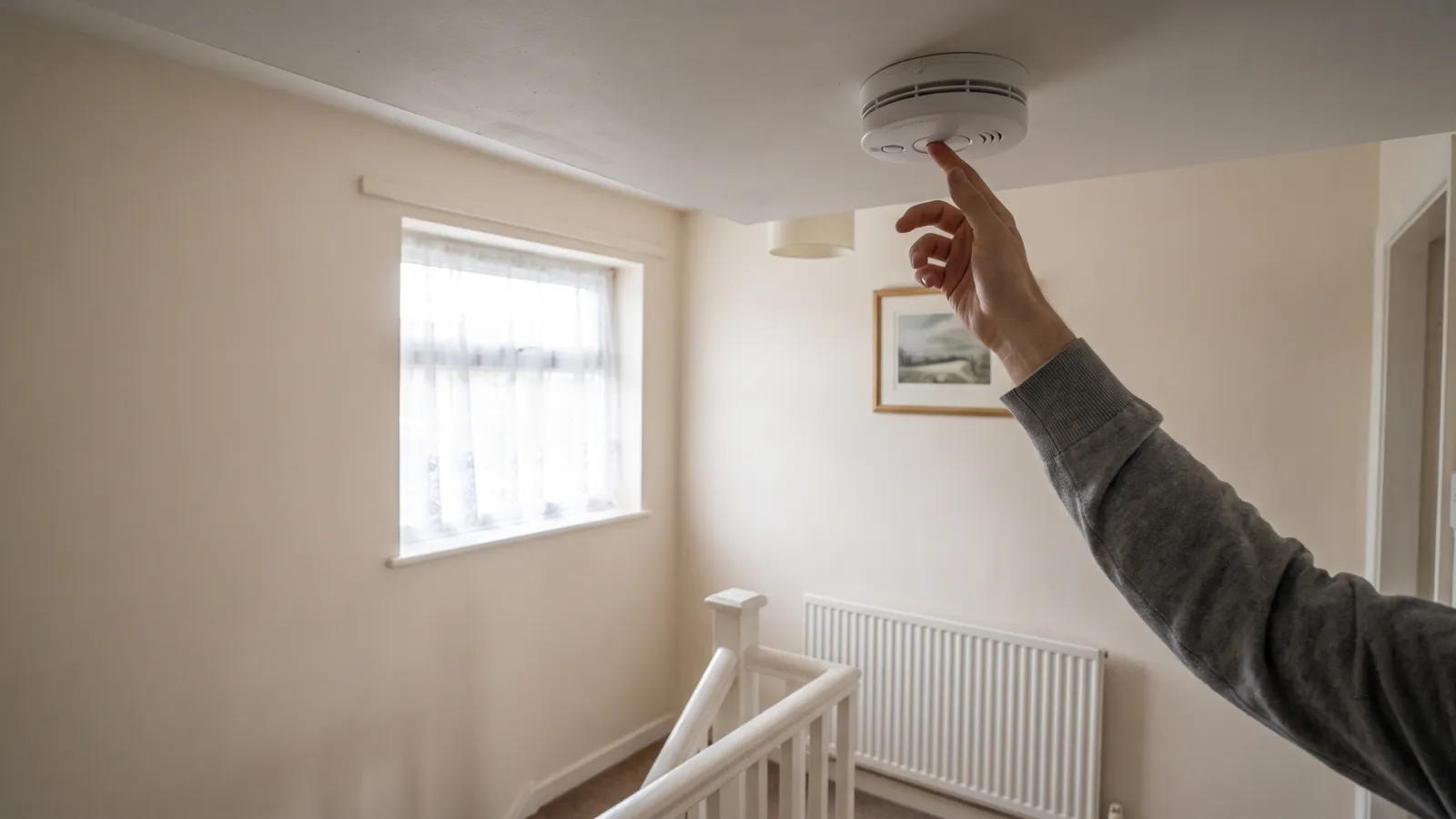
Fire services ask for a smoke alarm on every level, ideally in the hallway and on each landing, on the ceiling and at least 30 centimetres from any wall or light fitting, plus a heat alarm in the kitchen and extra smoke alarms in rooms full of electrical equipment. Test every alarm monthly by pressing the button, vacuum the vents when you dust, never paint over one, and replace every alarm after ten years whatever its battery. A battery or sealed alarm works through a power cut; a mains alarm needs its backup battery in good order.
We verify every product's specifications against at least two independent sources, re-check its UK price and stock on a schedule where we can track it automatically, and cross-check safety-relevant claims against official guidance. Every review is labelled Researched or Used and reviewed by us: where we've bought a product, or been sent it free, and used it ourselves, its review says which; where we haven't, our verdict is a considered spec-and-evidence comparison, not a hands-on test — and commissions never change a ranking either way. Read our full methodology →
Related kit comparisons
Guides that go with this
The fire service's own advice: get out, stay out, call 999 — plus how to plan your escape, what to do if you'r…
How kitchen fires start, why water on hot oil is the worst move, when a fire blanket helps, when to simply get…
The NHS symptoms of carbon monoxide poisoning, the two tells that separate it from flu, the six sources in you…
Why lithium batteries fail, the charging rules that prevent fires, warning signs of a failing pack, and how to…
Candles started 844 accidental house fires in England last year. The honest answer, the fire-service rules if …
Common questions
How many smoke alarms do I need, and where should they go?
Fire services ask for at least one smoke alarm on every level of your home, fitted to the ceiling in the hallway and on each landing, at least 30 centimetres from walls and light fittings. Add a heat alarm in the kitchen and extra smoke alarms in living rooms or bedrooms with lots of electrical equipment. Avoid bathrooms and the kitchen itself for smoke alarms, where steam and cooking fumes cause false alarms. Scotland's rules go further and are set out below.
What does Scottish law require?
Since February 2022, every home in Scotland must have interlinked alarms: a smoke alarm in the room used most during the day, one in every hallway and landing, and a heat alarm in the kitchen, all on the ceiling. Sealed long-life battery or mains alarms are both accepted. A carbon monoxide alarm is also needed where there is a fuel-burning appliance or flue. The duty sits with the owner; the Scottish Government says no one will be penalised, but check your home insurance.
Do landlords in England and Wales have to fit smoke alarms?
Yes. In England the Smoke and Carbon Monoxide Alarm Regulations require private and social landlords to fit a smoke alarm on every storey with living accommodation, a carbon monoxide alarm in any room with a fixed combustion appliance (gas cookers excepted), and to repair or replace alarms reported faulty. In Wales, landlords must fit mains-powered interlinked smoke alarms on every storey, plus a carbon monoxide alarm where there is a gas, oil or solid-fuel appliance. Neither law covers owner-occupiers, though fire services give everyone the same advice.
Is a sealed 10-year alarm better than one with replaceable batteries?
For most homes, yes. The battery cannot be taken out or forgotten, the maker states a ten-year life for sensor and cell together, and the unit tells you when it has reached the end. BS 5839-6:2019 ranks sealed alarms above replaceable-battery ones and no longer recommends replaceable-battery alarms for rented homes. The trade-off is that you replace the whole alarm at ten years, which fire services ask you to do with any alarm anyway. Replaceable-battery alarms remain a cheap top-up if you will really change the cell.
Can I fit a mains or interlinked alarm myself?
Battery and sealed alarms are a two-screw job anyone can do. Mains alarms connect to your household wiring, so the makers and fire services say they should be fitted by a qualified electrician, and some electrical work must be notified under the Building Regulations in England and Wales, which a registered electrician handles. Wireless interlinking avoids running cables between rooms, but on most mains alarms here it needs a separate radio base bought with each alarm. Interlinked alarms must all be from one maker's compatible range.
Why does my smoke alarm keep beeping or going off for no reason?
If it sounds, check for fire or smoke first; if in doubt, get out. A chirp every minute or so is almost always a low battery, or on a sealed alarm the end-of-life warning, meaning replace the unit. Short unexplained alarms are usually dust, bathroom steam or cooking fumes reaching an alarm sited too near the kitchen. Vacuum the vents, use the hush button or move the alarm, and fit a heat alarm in the kitchen. Never leave the battery out.