Lithium battery fires: charging e-bikes, power banks and phones safely
Why lithium batteries fail, the charging rules that prevent fires, warning signs of a failing pack, and how to dispose of batteries safely in the UK.
By Tom Calder · Updated 12 August 2026 · Sourced to London Fire Brigade, OPSS & the NFCC
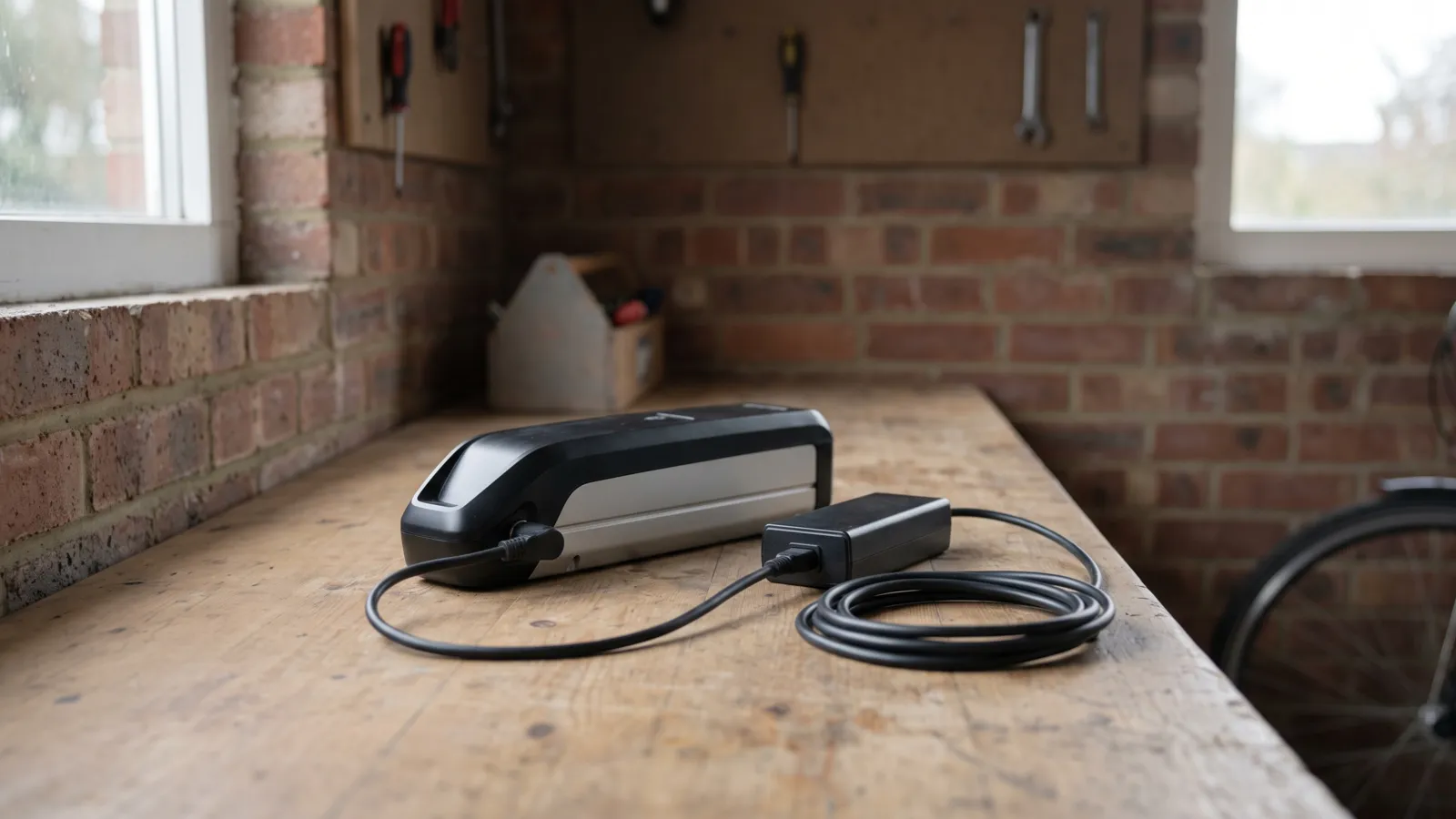
Why lithium batteries catch fire — and why most never do
Lithium-ion cells pack a great deal of energy into a small space. That is what makes a phone last all day and an e-bike climb hills — and it is also why a failing cell is serious. When a cell is damaged, overcharged by an incompatible charger or badly made in the first place, it can enter thermal runaway: a chemical reaction in which the cell heats itself faster than it can shed the heat, vents flammable gas and ignites, often taking the neighbouring cells with it. A thermal-runaway fire is not like a dropped candle. It develops in seconds, produces jets of flame and toxic gas, and can reignite after it appears to be out.
Keep the scale in mind. Tens of millions of lithium-ion devices are charged in UK homes every day without incident, and failures in branded products used with their own chargers are genuinely rare. But the fires that do happen cluster tightly around a few causes. The Office for Product Safety and Standards was notified of 211 e-bike and e-scooter fires by UK fire services in 2024; London Fire Brigade alone attended a record 206 in 2025, and five people have died in London in these fires since 2023. That clustering is, in a way, useful news: the risk is concentrated, and concentrated risk can be managed.
The charging rules that matter
Charging puts cells under the most stress, and a large share of battery fires start on charge. Three rules do most of the work. Use only the charger supplied with the device, or an identical replacement from the manufacturer — a mismatched or "universal" charger can push more current than the pack is built to take, which London Fire Brigade identifies as a common cause of overheating. Unplug once charging is complete rather than leaving packs topped up for days. And charge while you are awake and at home, so a problem is noticed in seconds rather than discovered by a smoke alarm at 3am.
Location matters as much as equipment. Never charge an e-bike, e-scooter or any large battery in a hallway, on a landing or anywhere on your escape route: fire-service guidance is blunt that a battery failing by the front door can cut off your only way out. Charge on a hard, flat surface — not a bed, sofa or carpet — keep devices uncovered so heat can escape, and make sure there is a working smoke alarm covering the room where charging happens.
Conversion kits and cheap packs — where the risk actually sits
The fire-service data is unusually clear about where these fires come from. In OPSS's 2024 figures, 45% of e-bike fires involved bikes converted with an aftermarket kit, and converted bikes also showed the highest share of fires that started on charge. London Fire Brigade points to the same pattern: poorly made or non-compliant batteries, mismatched chargers and cheap packs bought through online marketplaces, with conversion kits heavily represented. The government has since issued statutory guidelines setting out the safety mechanisms lithium-ion e-bike batteries must contain — including batteries sold for use with conversion kits.
The practical reading: if you want an e-bike, buy a complete one from an established brand through a retailer you can trace. If you are converting a bike, have the kit fitted professionally and buy the battery and charger together, from the same reputable manufacturer — never a bargain "compatible" pack. Treat second-hand batteries with real suspicion: you cannot see a past drop, soaking or deep discharge from the outside. The same logic applies in miniature to power banks — branded, certified, and from a seller who will still exist next year.
How to spot a failing battery
Failing lithium batteries usually give warning. Stop using — and stop charging — any battery that is swelling or bulging out of shape; feels hot when it is not working hard (warmth during charging is normal, too hot to comfortably touch is not); gives off a sweet, chemical or metallic smell; hisses, crackles or leaks; or suddenly charges much more slowly or drains much faster than it used to. A battery that has taken a hard knock deserves the same caution even if it looks fine.
If you see any of these signs, do not put the battery on charge "to test it". If it is safe to do so, move it outside, away from buildings, cars and anything flammable, and never press or puncture a swollen pack. Contact the retailer or manufacturer about a replacement, and report a suspected unsafe product to Trading Standards through the Citizens Advice consumer service.
If a battery vents or catches fire: get out
A failing pack often hisses and produces white or grey vapour just before igniting. If that happens, do not pick it up, do not throw water over it and do not try to carry it outside. Water and household extinguishers cannot stop thermal runaway — the reaction generates its own heat inside the cells, and fire crews use very large volumes of water mainly to cool everything around the battery. Get everyone out, close doors behind you and call 999. Then stay out: packs can reignite minutes or even hours after the flames die down.
This is the one part of the subject where preparation means a plan rather than a product: know your way out, keep escape routes clear — which is exactly why you never charge on one — and make sure everyone in the household knows the drill.
Disposal: never in the bin
Lithium batteries must never go in household rubbish or your kerbside recycling bin. Crushed in a collection lorry or buried at a waste site, they short-circuit and ignite — battery fires in refuse vehicles and at recycling centres are now common enough that the National Fire Chiefs Council has called for improved battery disposal as part of its lithium-ion safety recommendations. A fire in a moving refuse lorry puts the crew at risk and can force a burning load to be dumped in the street.
Instead: take loose batteries to the collection points at supermarkets and larger shops — under GOV.UK rules, any shop selling more than 32kg of batteries a year must take waste portable batteries back free of charge. Tape over the terminals of loose lithium cells first. Small electricals with built-in batteries — vapes, earbuds, electric toothbrushes — go to electrical recycling, not the bin. For e-bike and e-scooter packs, use your council's household waste recycling centre or a retailer take-back scheme, and if the pack is damaged or swollen, ring the site first so staff can handle it safely.
Common questions
Is it safe to charge my phone overnight?
The risk from a branded phone with its own charger is very low — modern phones manage charging electronically and stop drawing significant current once full. Fire services' blanket best practice is still to charge while you're awake, and following it costs nothing. If you do charge overnight, manage heat and detection: charge on a hard surface such as a bedside table, never under a pillow or on bedding, and make sure your smoke alarms work. The strict charge-while-awake rule matters most for larger packs — power banks, e-bikes and e-scooters.
Should I unplug a power bank once it's charged?
Yes. Leaving a pack plugged in for days serves no purpose and keeps the cells under low-level stress, which is why London Fire Brigade advises unplugging chargers when charging is complete. Charge it on a hard surface rather than a sofa or bed, and avoid leaving it on charge when nobody is home.
How do I dispose of a swollen battery in the UK?
Do not bin it and do not charge it again. Store it somewhere cool away from anything flammable — ideally outside, under cover — and take it to your council household waste recycling centre, phoning ahead to say the pack is damaged so staff can handle it safely. Some manufacturers and retailers also take failed packs back. Never post a damaged battery.
Are e-bike conversion kits legal in the UK?
Fitting a kit is legal provided the finished bike meets the electrically assisted pedal cycle rules: a motor with a continuous rated power of no more than 250 watts, assistance that cuts out at 15.5mph, and a rider aged 14 or over. The concern is safety rather than legality — OPSS found conversions were involved in 45% of e-bike fires reported in 2024. If you convert, have the kit professionally fitted and buy a battery and charger made for each other by a reputable manufacturer.
Can water put out a lithium battery fire?
Not in any quantity you can deliver at home. Thermal runaway generates its own heat inside the cells, so a bucket of water or a household extinguisher will not stop it — fire crews use hundreds of litres mainly to cool the surroundings. If a battery catches fire indoors, get out, close doors behind you and call 999.
My e-bike battery gets warm when charging — is that normal?
Mild warmth during charging or after a hard ride is normal. The warning signs are different: heat when the battery is idle, a pack too hot to comfortably touch, swelling, or a chemical smell. London Fire Brigade also advises letting a battery cool to room temperature before putting it on charge — charging a hot pack straight after a ride adds unnecessary stress.
Sources: London Fire Brigade — How to charge e-bikes and e-scooters safely · London Fire Brigade — Record number of e-bike and e-scooter fires in 2025 · OPSS — Fires in e-bikes and e-scooters, 2024 (GOV.UK) · GOV.UK — Statutory guidelines on lithium-ion battery safety for e-bikes · GOV.UK — Consumer products: recycling batteries and electrical waste · National Fire Chiefs Council — Lithium-ion battery safety standards warning. PreparedBritain is independent and not affiliated with HM Government.
The Emergency Kit Checklist
The GOV.UK Prepare essentials on one printable page — tick them off as you go and keep it with the kit. Free, no catch.
Download it straight away. We'll also send the occasional briefing when something genuinely matters — severe weather, live incidents, real price drops. Nothing else.
Keep reading
All fire, gas & first aid guides →How to treat a burn or scald: the first-aid steps that matter
The NHS first-aid sequence for burns and scalds: cool under running water for at least 20 minutes, no ice or creams,…
What should be in a home first aid kit: a UK checklist
A calm UK checklist for a home first aid kit — sensible quantities room by room, sourced to the NHS and British Red…
Carbon monoxide poisoning: the symptoms and the six sources in your home
The NHS symptoms of carbon monoxide poisoning, the two tells that separate it from flu, the six sources in your…