Fire extinguishers for the home: which type, which size, and when not to use one (2026)
A fire extinguisher is not on the GOV.UK Prepare kit list, and the fire service's first advice for any house fire is still to get out, stay out and call 999. But a small fire caught early, in a bin or a workshop, is what a home extinguisher exists for, and the type you buy matters more than the brand. This page compares the foam, powder, CO2 and water-based all-fires units sold in the UK on their fire ratings, weight filled, stated approvals and the fires their makers say they must never touch. We haven't discharged any of them; every figure is the maker's or a UK retailer's.
By Tom Calder · Updated 21 October 2026 · 10 products, all price-tracked
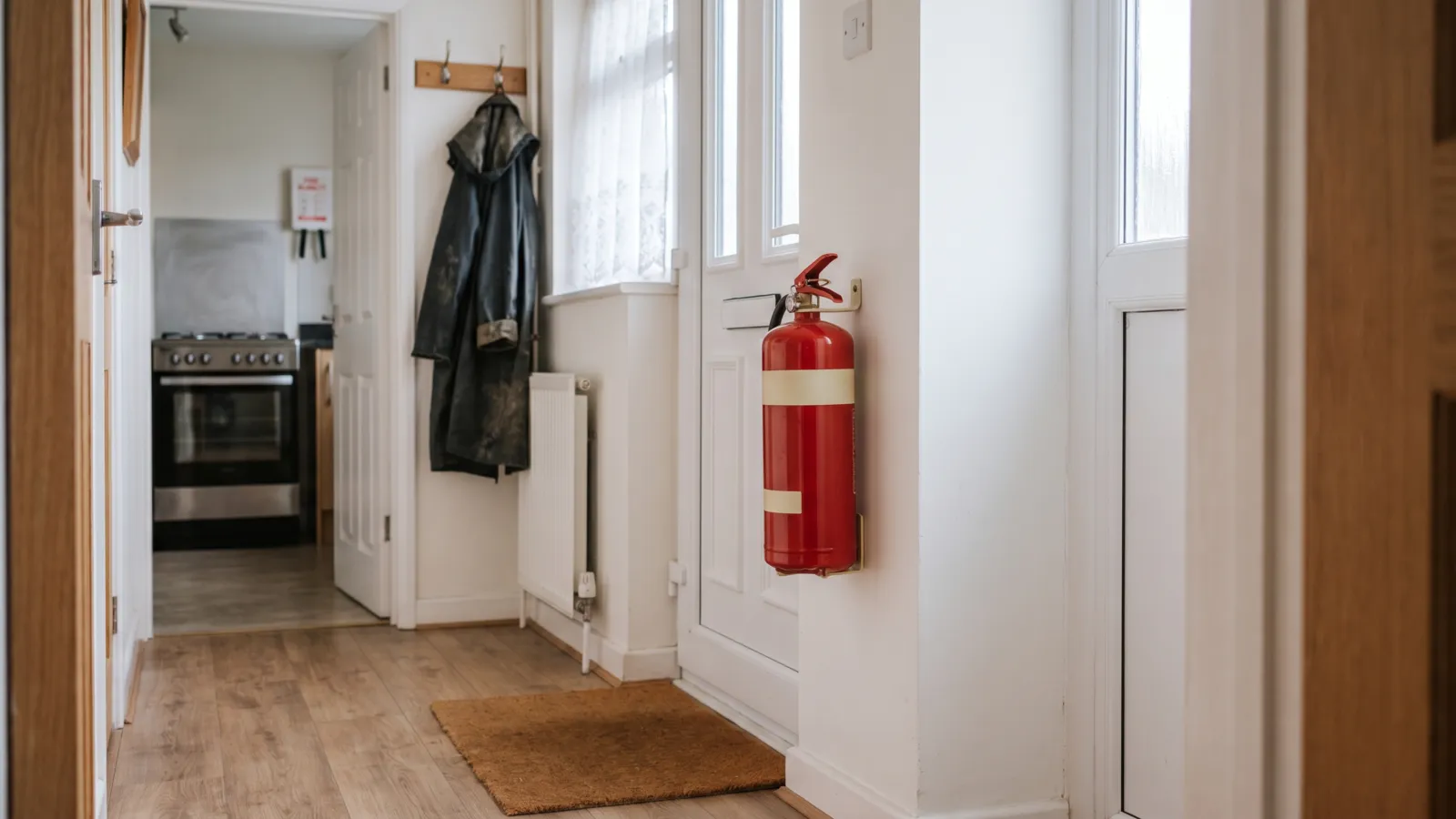
Our picks
 Photo: Amazon
Firexo 2 Litre
One home extinguisher that also covers the kitchen, where most household fires begin.
as of 21 Oct 2026, 10:37 BST · Details
Product prices and availability are accurate as of the date/time indicated and are subject to change. Any price and availability information displayed on Amazon.co.uk at the time of purchase will apply to the purchase of this product. Photo: Amazon
Firexo 6 Litre
A larger all-fires unit for a kitchen-diner, garage or outbuilding where one extinguisher has to cover everything.
as of 21 Oct 2026, 10:37 BST · Details
Product prices and availability are accurate as of the date/time indicated and are subject to change. Any price and availability information displayed on Amazon.co.uk at the time of purchase will apply to the purchase of this product. Photo: Amazon
Vigil 6 Litre Foam
A main extinguisher for a garage, workshop or large hallway where the risks are wood, paper, fuel and paint.
as of 21 Oct 2026, 10:37 BST · Details
Product prices and availability are accurate as of the date/time indicated and are subject to change. Any price and availability information displayed on Amazon.co.uk at the time of purchase will apply to the purchase of this product.All 10 compared
| Extinguisher | Type | Fire rating | Size | Price |
|---|---|---|---|---|
Water-based all-fires liquid · 13A 34B 25F · 2 litre One home extinguisher that also covers the kitchen, where most household fires begin. | Water-based all-fires liquid | 13A 34B 25F | 2 litre | £45 at Amazon as of 21 Oct 2026, 10:37 BST · DetailsProduct prices and availability are accurate as of the date/time indicated and are subject to change. Any price and availability information displayed on Amazon.co.uk at the time of purchase will apply to the purchase of this product.In stockCheck price → |
Our verdictOur verdictResearched Firexo says this water-based liquid unit is rated for solid, liquid and cooking-fat fires and is also suitable for electrical and lithium-ion battery fires. That breadth is why it suits a single spot near the kitchen better than a foam or powder unit does. It costs more than a basic foam extinguisher of similar size, but it avoids the question of which type to grab. Best for One home extinguisher that also covers the kitchen, where most household fires begin. Good
Worth knowing
Who shouldn't buy it: Skip it if you want the lowest purchase cost or only need a small car unit; a compact powder or foam model fits that better. For a pan fire, a fire blanket and getting out remain the first moves. | ||||
Water-based all-fires liquid · 34A 113B 75F · 6 litre A larger all-fires unit for a kitchen-diner, garage or outbuilding where one extinguisher has to cover everything. | Water-based all-fires liquid | 34A 113B 75F | 6 litre | £99.99 at Amazon as of 21 Oct 2026, 10:37 BST · DetailsProduct prices and availability are accurate as of the date/time indicated and are subject to change. Any price and availability information displayed on Amazon.co.uk at the time of purchase will apply to the purchase of this product.In stockCheck price → |
Our verdictOur verdictResearched The 6 litre Firexo has a far higher rating than the 2 litre and a longer discharge, so it gives more margin on a fire that has started to spread. It carries the same all-fires approach, including cooking fat. At roughly ten and a half kilograms filled it is a lot to lift quickly, and it suits a fixed spot by the door rather than a car. Best for A larger all-fires unit for a kitchen-diner, garage or outbuilding where one extinguisher has to cover everything. Good
Worth knowing
Who shouldn't buy it: Skip it if you cannot comfortably lift ten kilograms; the 2 litre all-fires unit is easier to handle. In a flat, a smaller extinguisher kept near the exit makes more sense. | ||||
AFFF foam, stored pressure · 21A 144B · 6 litre A main extinguisher for a garage, workshop or large hallway where the risks are wood, paper, fuel and paint. | AFFF foam, stored pressure | 21A 144B | 6 litre | £37.62 at Amazon as of 21 Oct 2026, 10:37 BST · DetailsProduct prices and availability are accurate as of the date/time indicated and are subject to change. Any price and availability information displayed on Amazon.co.uk at the time of purchase will apply to the purchase of this product.In stockCheck price → |
Our verdictOur verdictResearched This is the sensible step up from a 2 litre foam: a 21A 144B rating gives much more capacity on Class A and B fires. It is a lot of kit for a small flat. Because it is foam it is not for electrical or cooking-fat fires. Best for A main extinguisher for a garage, workshop or large hallway where the risks are wood, paper, fuel and paint. Good
Worth knowing
Who shouldn't buy it: Skip it if the main risk is the kitchen, or if you cannot lift nine kilograms comfortably; a 2 litre all-fires unit or a fire blanket is a better fit. | ||||
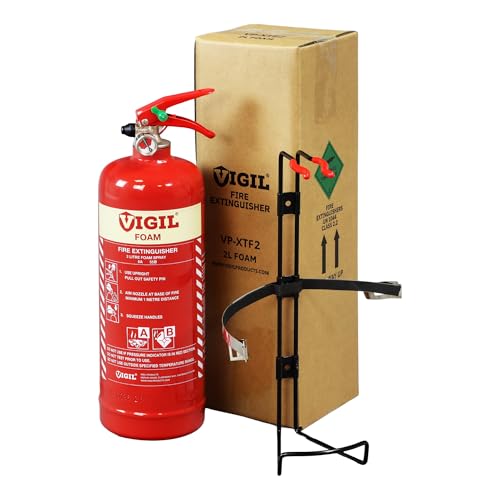 AFFF foam, stored pressure · 8A 55B · 2 litre A low-cost second extinguisher for a hallway, heated workshop or utility room where wood, paper and petrol are the likely fuels. | AFFF foam, stored pressure | 8A 55B | 2 litre | £22.02 at Amazon as of 21 Oct 2026, 10:37 BST · DetailsProduct prices and availability are accurate as of the date/time indicated and are subject to change. Any price and availability information displayed on Amazon.co.uk at the time of purchase will apply to the purchase of this product.In stockCheck price → |
Our verdictOur verdictResearched Vigil quotes 8A 55B for this unit, a step above the 5A 34B of the FSS 2 litre foam on this page, and it ships with a wall bracket. It is for solid and flammable-liquid fires only and must stay away from live electrics and cooking fat. Vigil's +5 degrees C minimum temperature rules out cold cars and sheds. Best for A low-cost second extinguisher for a hallway, heated workshop or utility room where wood, paper and petrol are the likely fuels. Good
Worth knowing
Who shouldn't buy it: Skip it for a kitchen, where cooking-fat and electrical fires are the risk; the Firexo all-fires models or a fire blanket fit better. Also skip it if it will live in an unheated space. | ||||
 ABC dry powder (stored pressure) · 8A 34B C · 1kg A compact, low-cost backup for the car, caravan, or a small flat where a larger extinguisher won't fit. | ABC dry powder (stored pressure) | 8A 34B C | 1kg | £19 at Amazon as of 21 Oct 2026, 10:37 BST · DetailsProduct prices and availability are accurate as of the date/time indicated and are subject to change. Any price and availability information displayed on Amazon.co.uk at the time of purchase will apply to the purchase of this product.In stockCheck price → |
Our verdictOur verdictResearched A 1kg ABC powder extinguisher is an inexpensive all-rounder that covers most common fire types, but its small charge empties in seconds and the powder makes a real mess indoors. Treat it as a supplementary unit rather than your household's main line of defence. Best for A compact, low-cost backup for the car, caravan, or a small flat where a larger extinguisher won't fit. Good
Worth knowing
Who shouldn't buy it: Don't rely on this as your only home extinguisher. For the kitchen, a foam or water-spray unit plus a fire blanket is cleaner and safer, and a 2kg+ model gives a more usable discharge for whole-home cover. | ||||
 AFFF foam spray, stored pressure (BS EN3) · 5A 34B · 2 A car, van, or a compact second extinguisher kept near a back door or exit. | AFFF foam spray, stored pressure (BS EN3) | 5A 34B | 2 | £28.99 at Amazon as of 21 Oct 2026, 10:37 BST · DetailsProduct prices and availability are accurate as of the date/time indicated and are subject to change. Any price and availability information displayed on Amazon.co.uk at the time of purchase will apply to the purchase of this product.In stockCheck price → |
Our verdictOur verdictResearched A competent, inexpensive compact extinguisher that handles everyday wood, paper and flammable-liquid fires, with a cooling action that helps prevent re-ignition. Treat it as a car, van or second-line unit rather than your main household defence, and keep a fire blanket in the kitchen. Best for A car, van, or a compact second extinguisher kept near a back door or exit. Good
Worth knowing
Who shouldn't buy it: Don't rely on it as your kitchen extinguisher: foam is not rated for cooking-oil (Class F) fires and must never be used on live electrics. For a chip-pan risk buy a fire blanket, and if you want one main household extinguisher a larger 6L foam or 2kg powder unit gives far more margin. | ||||
 CO2 (carbon dioxide) · 34B · 2kg Home offices, consumer units and garages with live electrical equipment. | CO2 (carbon dioxide) | 34B | 2kg | £37 at Amazon as of 21 Oct 2026, 10:37 BST · DetailsProduct prices and availability are accurate as of the date/time indicated and are subject to change. Any price and availability information displayed on Amazon.co.uk at the time of purchase will apply to the purchase of this product.In stockCheck price → |
Our verdictOur verdictResearched A dependable specialist extinguisher for electrical and flammable-liquid fires that leaves no residue and won't harm electronics. It's a sensible second extinguisher rather than a household's only one. Best for Home offices, consumer units and garages with live electrical equipment. Good
Worth knowing
Who shouldn't buy it: You want a single all-round extinguisher for the home. A multi-purpose foam or powder unit covers far more everyday fire types. Never rely on CO2 for kitchen cooking-oil fires; use a fire blanket or wet-chemical unit instead. | ||||
 ABC dry powder, stored pressure · 27A 144B C · 6kg An outbuilding, garage, caravan or workshop where a high rating matters more than a clean discharge. | ABC dry powder, stored pressure | 27A 144B C | 6kg | £33.98 at Amazon as of 21 Oct 2026, 10:37 BST · DetailsProduct prices and availability are accurate as of the date/time indicated and are subject to change. Any price and availability information displayed on Amazon.co.uk at the time of purchase will apply to the purchase of this product.In stockCheck price → |
Our verdictOur verdictResearched Vigil rates the 6kg powder unit at 27A 144B C, covering solids, liquids and gas, and lists it for temperatures down to -20 degrees C, so it copes with cold sheds and vehicles. Powder is a poor choice inside a house: a discharge can cut visibility and make breathing harder, and it leaves a corrosive mess. Treat this as an outdoor, garage or vehicle unit. Best for An outbuilding, garage, caravan or workshop where a high rating matters more than a clean discharge. Good
Worth knowing
Who shouldn't buy it: Skip it for indoor use in a home. A foam or all-fires extinguisher, or a fire blanket in the kitchen, is the better choice, and the fire service advice remains to get out and call 999. | ||||
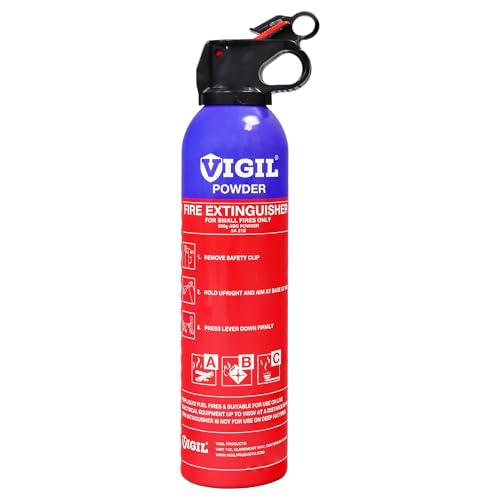 ABC dry powder, stored pressure · 5A 21B C · 600g A small unit for a car glovebox area, caravan or shed where space is tight. | ABC dry powder, stored pressure | 5A 21B C | 600g | £9.99 at Amazon as of 21 Oct 2026, 10:37 BST · DetailsProduct prices and availability are accurate as of the date/time indicated and are subject to change. Any price and availability information displayed on Amazon.co.uk at the time of purchase will apply to the purchase of this product.In stockCheck price → |
Our verdictOur verdictResearched Vigil's 600g unit is rated 5A 21B C and ships with a bracket with fixings plus a hook-and-loop strip, so it mounts in a car or caravan without drilling. Vigil says it is made to BS 6165:2019, the standard for small single-use extinguishers, rather than BS EN3, and the 21B liquid rating is modest. It is a first-response grab for a vehicle, not household cover. Best for A small unit for a car glovebox area, caravan or shed where space is tight. Good
Worth knowing
Who shouldn't buy it: Skip it as your main home extinguisher; a 2 litre or larger foam or all-fires unit gives more capacity, and powder is a poor choice indoors. | ||||
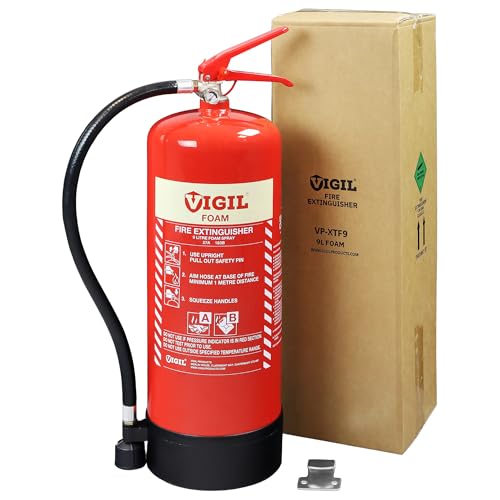 AFFF foam, stored pressure · 27A 183B · 9 litre A large garage, workshop or outbuilding with real quantities of fuel, timber or solvents. | AFFF foam, stored pressure | 27A 183B | 9 litre | £44.36 at Amazon as of 21 Oct 2026, 10:37 BST · DetailsProduct prices and availability are accurate as of the date/time indicated and are subject to change. Any price and availability information displayed on Amazon.co.uk at the time of purchase will apply to the purchase of this product.In stockCheck price → |
Our verdictOur verdictResearched The 9 litre Vigil has the top rating in the range at 27A 183B, and Vigil describes it for larger premises such as workshops. At almost fourteen kilograms filled it is too heavy for most households to use quickly. For a typical home the 6 litre or a smaller all-fires unit is the better trade of capacity against handling. Best for A large garage, workshop or outbuilding with real quantities of fuel, timber or solvents. Good
Worth knowing
Who shouldn't buy it: Skip it for any ordinary house or flat; it is more weight than a household needs, and a smaller unit someone can actually lift is safer. | ||||
ⓘ As an Amazon Associate, PreparedBritain earns from qualifying purchases. We may earn a commission when you buy, or a fee when you request a quote, through our links — it never affects what we recommend. Amazon prices come from Amazon's own product data and show the date and time they were retrieved. Prices at other retailers are checked by us, less often. Prices and stock can change at any time, so always check the retailer's price before you buy.
Before you buy
Start with the type, because each is rated for different fires.
Foam (cream label) covers Class A solids like wood and paper and Class B liquids such as petrol; Vigil says its foam units must not be used on electrical fires. ABC dry powder (blue label) adds Class C gas and works in the cold, but indoors it cuts visibility, makes breathing harder and leaves a corrosive residue, so treat it as a garage or vehicle unit. CO2 (black label) suits electrical and liquid fires but does not cool. Only the water-based all-fires units here are rated for Class F cooking fat.
Read the rating, not the litre figure.
A UK extinguisher built to BS EN3 carries a code such as 13A 34B: the number is the size of standard test fire it put out, so a 34A rating beats a 13A on wood and paper and a 144B beats a 55B on liquids. Only an F number means it is rated for cooking oil. Two extinguishers of the same size can differ a lot: the two 2-litre foam units here are rated 5A 34B and 8A 55B. Look for BS EN3 and a BSI Kitemark you can confirm, and for a pressure gauge you can check.
Weigh it before you choose it, because an extinguisher you cannot lift and aim in a hurry is no use.
The 2-litre units here are around four kilograms filled; the 6-litre and 6kg units are nine and a half to ten and a half kilograms; the 9-litre foam is nearly fourteen. For a house or flat a 2-litre unit by the kitchen door or front door is the realistic choice, with a 6-litre unit kept for a garage or workshop where fuel, timber and solvents are stored. Vigil's 600g powder unit, made to BS 6165, is a glovebox grab for a car, not household cover.
Check where it will live.
Vigil gives its foam units a minimum storage temperature of +5 degrees C, so an unheated garage, shed or car boot can take them out of their working range in a British winter; Vigil rates its powder units down to -20 degrees C, which is why powder suits vehicles and outbuildings. Mount it on its bracket at a height everyone can reach, near an exit and away from the hob, and read the instructions once before you need them. If batteries charge in your home, our lithium battery fire guide explains why an e-bike battery fire is one to leave to the fire service.
Look after it.
Household extinguishers are not covered by the servicing rules that apply to workplaces, so the upkeep is yours: glance at the gauge monthly to see the needle is in the green, check the pin and tamper seal, and replace or recharge it after any use, however brief. Owner reports on one brand here mention units arriving low on pressure, so check the gauge on delivery too. Vigil and Firexo give five-year warranties, and that is a sensible point to replace a stored-pressure unit. For disposal, ask your council or the supplier: not every recycling centre takes extinguishers, and they never go in the bin.
We verify every product's specifications against at least two independent sources, re-check its UK price and stock on a schedule where we can track it automatically, and cross-check safety-relevant claims against official guidance. Every review is labelled Researched or Used and reviewed by us: where we've bought a product, or been sent it free, and used it ourselves, its review says which; where we haven't, our verdict is a considered spec-and-evidence comparison, not a hands-on test — and commissions never change a ranking either way. Read our full methodology →
Related kit comparisons
Guides that go with this
The fire service's own advice: get out, stay out, call 999 — plus how to plan your escape, what to do if you'r…
How kitchen fires start, why water on hot oil is the worst move, when a fire blanket helps, when to simply get…
Why lithium batteries fail, the charging rules that prevent fires, warning signs of a failing pack, and how to…
Candles started 844 accidental house fires in England last year. The honest answer, the fire-service rules if …
The NHS symptoms of carbon monoxide poisoning, the two tells that separate it from flu, the six sources in you…
Common questions
Do I need a fire extinguisher at home in the UK?
There is no legal requirement for a private home, and it is not on the GOV.UK Prepare list. The fire service's priority is working smoke alarms on every floor, tested monthly, plus a planned escape route. An extinguisher is a reasonable extra for a home with a garage, workshop or log burner, as long as everyone understands it is for a small fire caught early, and that getting out and calling 999 comes first. Lithium battery fires are one to leave to the fire service.
Which type of fire extinguisher is best for a kitchen?
Not a standard foam, powder or CO2 one: none is rated for cooking fat, and Vigil says its foam must not be used on electrical fires. For a pan fire, GOV.UK fire safety advice is to take no risks: turn off the heat if it is safe, never throw water on it or move the pan, and get out, stay out and call 999. If you want an extinguisher near the kitchen, choose one with an F rating, such as the all-fires units here, or a wet chemical unit.
What do the numbers like 13A 34B mean?
They are fire ratings under BS EN3, the UK and European standard for portable extinguishers. The letter is the fuel class: A for solids such as wood and paper, B for flammable liquids, C for gas, F for cooking oils and fats. The number is the size of standard test fire the extinguisher put out, so a higher number means more capacity on that fuel. An extinguisher with no F rating should not be used on a pan fire, whatever its size.
Can I use a powder extinguisher indoors?
You can, but it is a poor choice in a home. ABC powder works on solids, liquids and gas and tolerates the cold, but a discharge in a room fills the air with fine dust that cuts visibility and makes breathing harder, and the residue is corrosive and hard to clean off electronics and soft furnishings. Insurer guidance recommends against powder indoors for those reasons. Keep powder for the garage, caravan or car, and use foam or an all-fires unit inside.
How long does a fire extinguisher last, and does it need servicing?
The workplace servicing rules in BS 5306 do not apply to a private home, so upkeep is yours. Vigil and Firexo give five-year warranties, which is a sensible replacement point for a stored-pressure household unit. In between, check monthly that the gauge needle sits in the green, the pin and seal are intact and the nozzle is clear. Replace or have it recharged after any use, even a short burst, because it will not hold pressure afterwards.
Where should I keep a fire extinguisher in the house?
By an exit, not by the hazard. You pick it up on your way out and only turn back if the fire is small and you have a clear route behind you. For most homes that means the hall near the front door or just outside the kitchen door, on the bracket the unit comes with, at a height everyone can reach. Keep foam units somewhere heated, since Vigil gives a +5 degrees C minimum for its foam; a powder unit suits the garage or car.