What should be in a survival kit? A UK household list
In the UK a survival kit is mostly a home kit: what GOV.UK Be Ready says to keep for 3 days, the grab bag, a walker’s rucksack, a winter car kit, and why to build rather than buy.
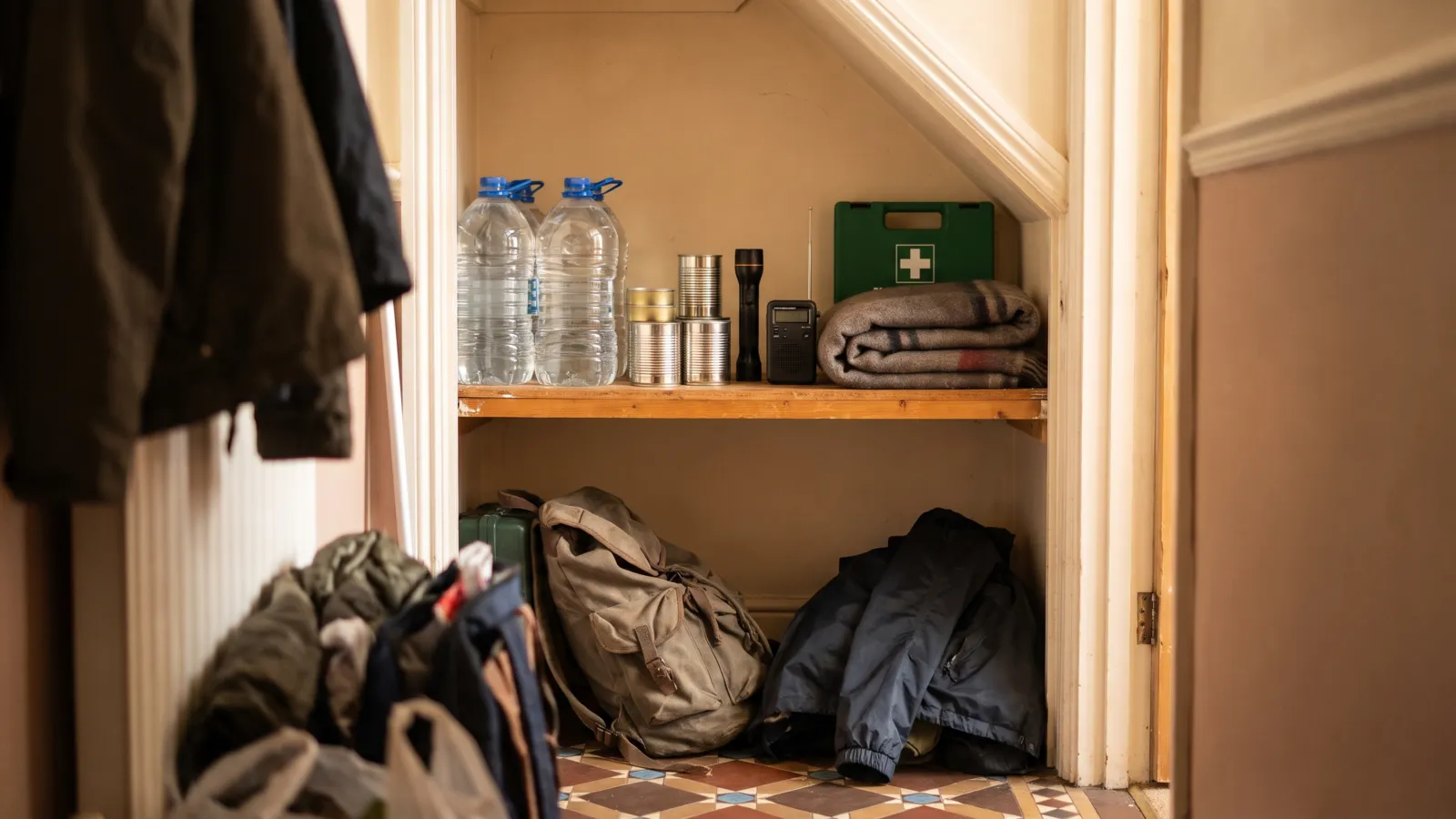
For most UK households a survival kit is a home emergency kit. GOV.UK Be Ready suggests being ready for 3 days with bottled water (3 litres per person per day for drinking), non-perishable food, a torch and spare batteries, a battery or wind-up FM radio, a charged power bank, blankets and warm clothing, a first aid kit, essential medicines, cash, copies of documents and important phone numbers, plus anything babies or pets need. A smaller grab bag covers being asked to leave home quickly. Walkers carry a different kit: AdventureSmart lists a map and compass, a torch, a whistle, a first aid kit, a charged phone, spare warm clothing and a survival bag. In the car in winter, carry warm clothes, blankets, a torch, food and drink, a shovel and a phone charger. Build it from what you have rather than buying a pre-packed survival kit, and unless you have a good reason, keep any blade that leaves the house to a non-locking folding pocketknife with a cutting edge of 3 inches or less.
By Tom Calder · Updated 4 November 2026 · Sourced to GOV.UK Be Ready, AdventureSmart, Mountain Rescue England and Wales, National Highways, the Met Office, the NHS & GOV.UK’s knife law guide
What a survival kit means in the UK
Search for survival kits and you will find tents, knives and fire steels. The UK’s official advice answers a quieter question: how a household copes for a few days if the power, water or shops are interrupted. GOV.UK Be Ready, the government’s preparedness campaign, says that being ready for 3 days helps you manage while support reaches those most in need. Most of that time is spent at home, so most of a UK survival kit lives in a cupboard, not a rucksack.
It helps to think of four kits, each for a different situation: the home kit, a grab bag in case you are asked to leave, a rucksack kit if you walk in the hills, and a car kit for winter journeys. They share a core of light, warmth, water, first aid and a way to get news, and the rest of this page takes them in turn.
Survival kit items for home: the Be Ready list
This is the list GOV.UK Be Ready gives, and it is the best answer to ‘things you need to survive’ a few days of disruption at home:
Water: bottled water for 3 days, at 3 litres per person per day for drinking. Be Ready adds that more would be needed for other tasks such as cooking and washing.
Food: non-perishable food for 3 days, with a long shelf life, that doesn’t need refrigeration or cooking.
Light: a torch and spare batteries. Be Ready says torches are safer than candles.
News: an FM radio, battery or wind-up, and a charged power bank.
Warmth: blankets, sleeping bags and warm clothing.
Health: a first aid kit or first aid items, and essential medication and medical supplies.
Hygiene: hand sanitiser, wet wipes and bathroom products.
Money and papers: cash, a mix of coins and notes, and cards; copies of IDs and documents; important phone numbers and information.
Babies and pets: baby formula, nappies and wipes; pet food and bottled water.
Survival food kits are the part people most often overbuy. Be Ready asks for food that needs neither a fridge nor cooking, which ordinary tins and packets from a supermarket meet; long-life freeze-dried meals are an option if you want food that sits untouched for years, but they need water added, which comes out of the same store as your drinking water. Our emergency food comparison covers both. For light and news, our head torch and emergency radio comparisons cover the torch and the radio, and the first aid kit comparison the medical box.
Survival packs to grab: the grab bag
The UK’s version of a survival pack is the grab bag. GOV.UK Be Ready suggests you could keep some essential items you might need to take with you if asked to leave your home quickly in a spare bag, and says you might hear some people call this a ‘grab bag’. It is a small subset of the home kit: medicines, copies of documents, phone numbers on paper, a torch, a power bank, water and warm clothing.
It isn’t a kit for living outdoors. Our guide to bug-out bags and grab bags explains where UK evacuations actually go, what the Environment Agency adds for floods, and why a grab bag stays behind in a house fire. Any rucksack you already own will do; our grab bag comparison covers the ready-made ones worth considering.
NewSee this for your own homeHome Alerts: your postcode's power cuts, warnings and floods, on one screen. Free for your own home. Sign up in a minute.Start free →Survival gear for walkers and the hills
Outdoors, the official kit lists come from the people who go out to find walkers. AdventureSmart, the campaign Mountain Rescue England and Wales points walkers to, asks three questions before a day out: am I confident I have the knowledge and skills for the day, do I know what the weather will be like, and do I have the right gear?
Its hill walking kit list puts these in the rucksack: a first aid kit; a fully charged mobile phone and portable charger in a dry bag (a ziplock freezer bag works as a cheap option); an emergency whistle; a map and compass, even if you use GPS; a torch or head torch; suncream and sunglasses; blister relief and spare laces; bottled water, a flask of hot drink and high-energy snacks; any necessary medication, with spares; spare warm clothing and spare socks; a survival bag, just in case; and emergency contact details. Add a waterproof jacket and over-trousers, an insulating layer, a hat and gloves, and boots or shoes that fit.
Mountain Rescue England and Wales says to pack a torch, make sure it’s charged before setting off, and take a spare as a back-up. It also asks you to plan your route, leave details of your start and finish points, estimated time of return and contact details, and be prepared to turn back if conditions turn against you. If you need help, dial 999 or 112, ask for Police, then Mountain Rescue, and stay where you are until the team contacts you. If you have hearing or speech difficulties, you can contact 999 by text, but you must register first: text ‘register’ to 999 and follow the instructions sent, before you need it.
For the survival bag, our emergency shelter comparison covers survival bags, bivvy bags, tarps and quick-pitch tents, and the head torch comparison the light.
A winter survival kit for the car
The winter survival kit most UK households need is the one in the boot. GOV.UK Be Ready suggests keeping an emergency kit in your vehicle in case you are delayed or stranded, which can include a torch, in-car phone chargers or a power bank, warm clothes and blankets, high-visibility clothing, jump leads, food and drink, a first aid kit and a shovel. National Highways’ list for snow and ice adds water, de-icer, an ice scraper, boots and sunglasses for the low winter sun, and says it’s worth carrying these just in case, especially if severe weather is forecast. The Met Office’s winter car kit page, which carries RAC advice, adds a paper road atlas, an empty fuel can, two warning triangles and a flask for hot drinks.
Before a winter journey, GOV.UK Be Ready says to plan your route, check the weather forecast and keep an eye on traffic updates, and never to drive through floodwater, because it can be deeper or faster flowing than it looks. Our car emergency kit checklist goes through the list line by line, and the car kit and winter driving kit comparisons cover what to buy if you don’t already own it.
Survival tools and knives: what UK law allows
Many survival lists start with a knife. None of the UK’s official lists above includes one, and the law limits what you can carry. GOV.UK says it is illegal to carry most knives or any weapons in public without a good reason. The exception is a folding pocketknife with a cutting edge no longer than 3 inches; a lock knife, one with a button, spring or catch you have to use to fold it, isn’t covered. If the knife isn’t a banned type, examples of a good reason include using it for your work, for religious reasons or as part of national costume, and if you are charged a court decides. The maximum penalty for an adult is 4 years in prison, an unlimited fine or both.
The same test applies to the blade on a multi-tool, so check whether it locks before it goes in a grab bag, a rucksack or the car. GOV.UK’s rule is about carrying a knife in public. Some types, such as zombie knives, flick knives and butterfly knives, are banned outright, and GOV.UK says it is illegal to possess one, even at home. Our bug-out bag guide sets out the law in England, Wales, Scotland and Northern Ireland in full, including why self-defence sprays are prohibited, and the multi-tools comparison notes which tools lock.
Survival water filters, fire and sleeping bags: when they earn a place
Three items from outdoor survival lists are worth thinking about separately. A survival water filter, such as a filter straw, is walking and camping kit; at home, GOV.UK Be Ready’s answer is stored bottled water, and our water filter straw comparison says what the straws do and don’t remove. Fire-starting kit matters if you camp or have a wood burner, and a couple of lighters and a box of matches kept dry cover most homes; our fire-starting comparison covers the outdoor options. Sleeping bags are on the Be Ready list itself, for warmth if the heating goes off; Be Ready warns that homes can become cold very quickly when it does, and our sleeping bag comparison covers bags for a cold house as well as a tent.
Two safety rules go with outdoor kit used at home. The NHS says do not use a barbecue or camping stove indoors or inside a tent, because of the risk of carbon monoxide poisoning; our guide to camping stoves indoors explains what to cook on in a power cut instead. And for light, Be Ready says torches are safer than candles.
Build your own survival kit, or buy one?
Start with what you already have. Most homes already own a torch, blankets, warm clothes, a first aid box and a cupboard of tins; the gaps are usually spare batteries, a battery or wind-up radio, a charged power bank, enough bottled water, cash and paper copies of documents and numbers. Gather those into one place, tell everyone at home where it is, and check it once a year: swap food and water before their dates, change flat batteries and refresh medicines.
If you buy a ready-made kit, judge it by its contents list rather than its item count, and assume you will still add the personal layer: medicines, documents, glasses, chargers and anything your children or pets need. The kit builder sizes the Be Ready list for your household, and the priced list below shows our pick for each item you don’t have.
Common questions
What should be in a survival kit in the UK?
For a home, follow GOV.UK Be Ready: enough for 3 days of bottled water (3 litres per person per day for drinking) and non-perishable food that needs no fridge or cooking, a torch and spare batteries, a battery or wind-up FM radio, a charged power bank, blankets, sleeping bags and warm clothing, a first aid kit, essential medicines, hand sanitiser, wet wipes and bathroom products, cash and cards, copies of documents, important phone numbers, and anything babies or pets need.
What are the most important survival items?
The official lists agree on a core: water, food that keeps, light, warmth, first aid and medicines, and a way to get news and stay in touch, which Be Ready puts as an FM radio and a charged power bank. Outdoors, AdventureSmart’s hill walking list adds a map and compass, a whistle, a charged phone in a dry bag, spare warm clothing and a survival bag.
What is a winter survival kit for a car?
GOV.UK Be Ready suggests a torch, in-car phone chargers or a power bank, warm clothes and blankets, high-visibility clothing, jump leads, food and drink, a first aid kit and a shovel. National Highways adds water, de-icer, an ice scraper, boots and sunglasses for the low winter sun, especially if severe weather is forecast.
Can I carry a survival knife in the UK?
Not without a good reason. GOV.UK says it is illegal to carry most knives in public without one; the exception is a folding pocketknife with a cutting edge no longer than 3 inches that isn’t a lock knife. If the knife isn’t a banned type, good reasons include using it for your work, and a court decides. The maximum penalty for an adult is 4 years in prison, an unlimited fine or both. Some types, such as zombie knives, flick knives and butterfly knives, are banned outright, even at home.
Are pre-packed survival kits worth buying?
Some are, as a starting point, but judge them by what is inside rather than the number of items. Check for a proper first aid kit, a decent torch, a radio and water, and expect to add medicines, documents, cash, chargers and anything children or pets need. If you already own a torch, blankets and a first aid box, buying the few missing items usually costs less.
Do I need a survival water filter?
At home, GOV.UK Be Ready’s answer is bottled water for 3 days, 3 litres per person per day for drinking, with more for cooking and washing. A filter straw or bottle is mainly kit for walking and camping, where you may need to drink from streams; check what a filter removes before you rely on it.
Sources (11)
- GOV.UK Be Ready — Be ready for emergencies (being ready for 3 days; the checklist: water 3 litres per person per day for drinking, non-perishable food, torch and spare batteries, FM radio, power bank, blankets, sleeping bags and warm clothing, first aid, medication, cash, documents; ‘grab bag’; torches are safer than candles; homes can become cold very quickly), read 4 November 2026
- GOV.UK Be Ready — Transport disruption and delays (vehicle emergency kit; plan your route and check the forecast; never drive through floodwater), read 4 November 2026
- AdventureSmart — the three questions, read 4 November 2026
- AdventureSmart — Hill walking kit list (clothing, footwear and rucksack essentials, including survival bag), read 4 November 2026
- Mountain Rescue England and Wales — homepage (pack a torch, charged, and a spare), read 4 November 2026
- Mountain Rescue England and Wales — Stay safe (plan your route, leave details, turn back if conditions turn against you), read 4 November 2026
- Mountain Rescue England and Wales — In case of emergency (999 or 112, Police then Mountain Rescue; stay where you are; emergencySMS registration), read 4 November 2026
- National Highways — Travelling in snow and ice (pack a winter kit), read 4 November 2026
- Met Office — Winter car kit (RAC advice), read 4 November 2026
- NHS — Carbon monoxide poisoningdo not use a barbecue or camping stove indoors or inside a tent
- GOV.UK — Selling, buying and carrying knives and weapons (good reason, folding pocketknife exception, lock knives, banned knives, penalties), read 4 November 2026
PreparedBritain is independent and not affiliated with HM Government.
The Emergency Kit Checklist
The GOV.UK Prepare essentials on one printable page — tick them off as you go and keep it with the kit. Free, no catch.
Download it straight away. We'll also send the occasional briefing when something genuinely matters — severe weather, live incidents, real price drops. Nothing else.
Latest from our live data
All stories →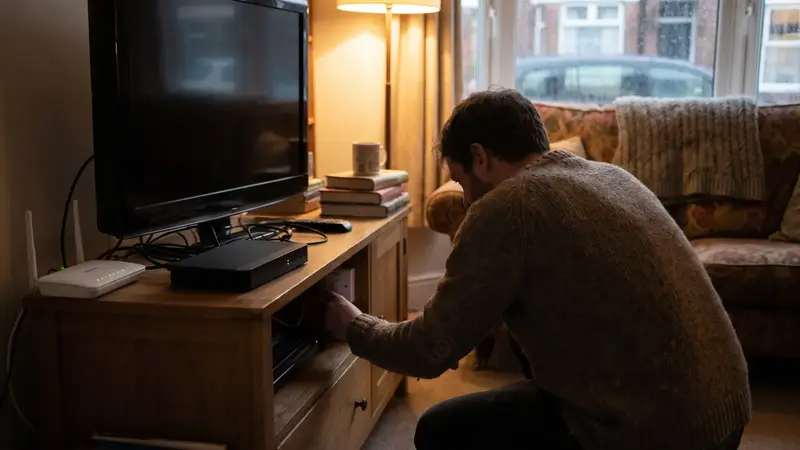 News · 3 NovVampire devices: the '£200' is 13 gadgets added up; turning a home off standby saves about £45
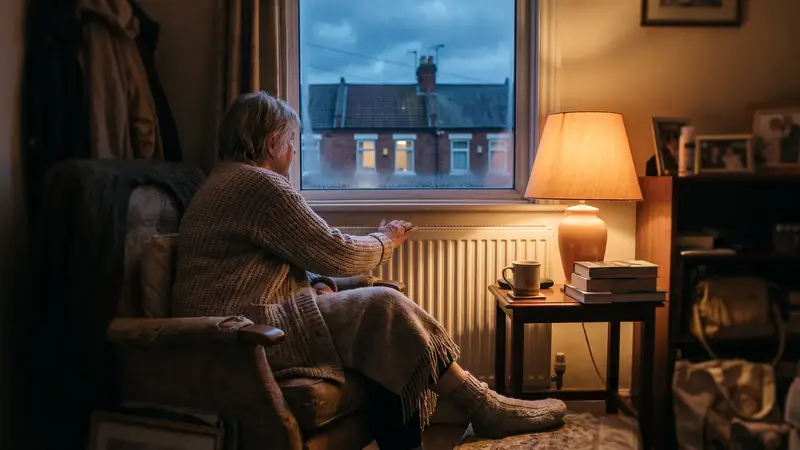 News · 2 NovCold Weather Payment opens: £25 a freezing week; last winter 40 of 71 stations triggered none
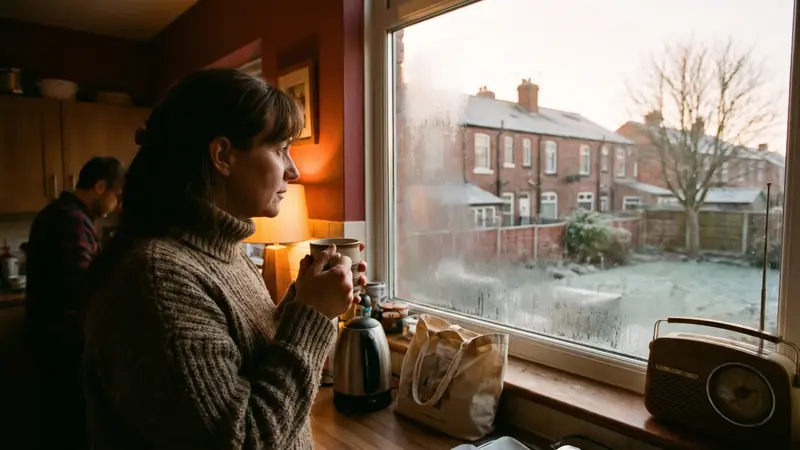 News · 31 OctEarliest polar vortex breakdown on record forecast for November: what it means for the UK
Keep reading
All planning & the national picture guides →Survival knives and the law in the UK: what you can legally carry
What UK law says about survival knives, axes and multi-tools: the 3-inch folding pocketknife rule, what counts as a…
Earliest polar vortex breakdown on record forecast for November: what it means for the UK
A polar vortex breakdown is forecast for early November, the earliest on record if it happens. We checked all 32…
The 7 pet essentials are a retailer's list: the government checklist asks for food and water
Headlines say pet owners have been told to stock up on seven essentials amid a government 72-hour warning. The list…
