How the UK responds to a national emergency
The calm, evidence-based answer to 'is anyone in charge in a crisis?' — the Civil Contingencies Act, Local Resilience Forums, COBR and the UK's structured emergency response.
By Tom Calder · Updated 20 July 2026 · Sourced to the Civil Contingencies Act & the Cabinet Office
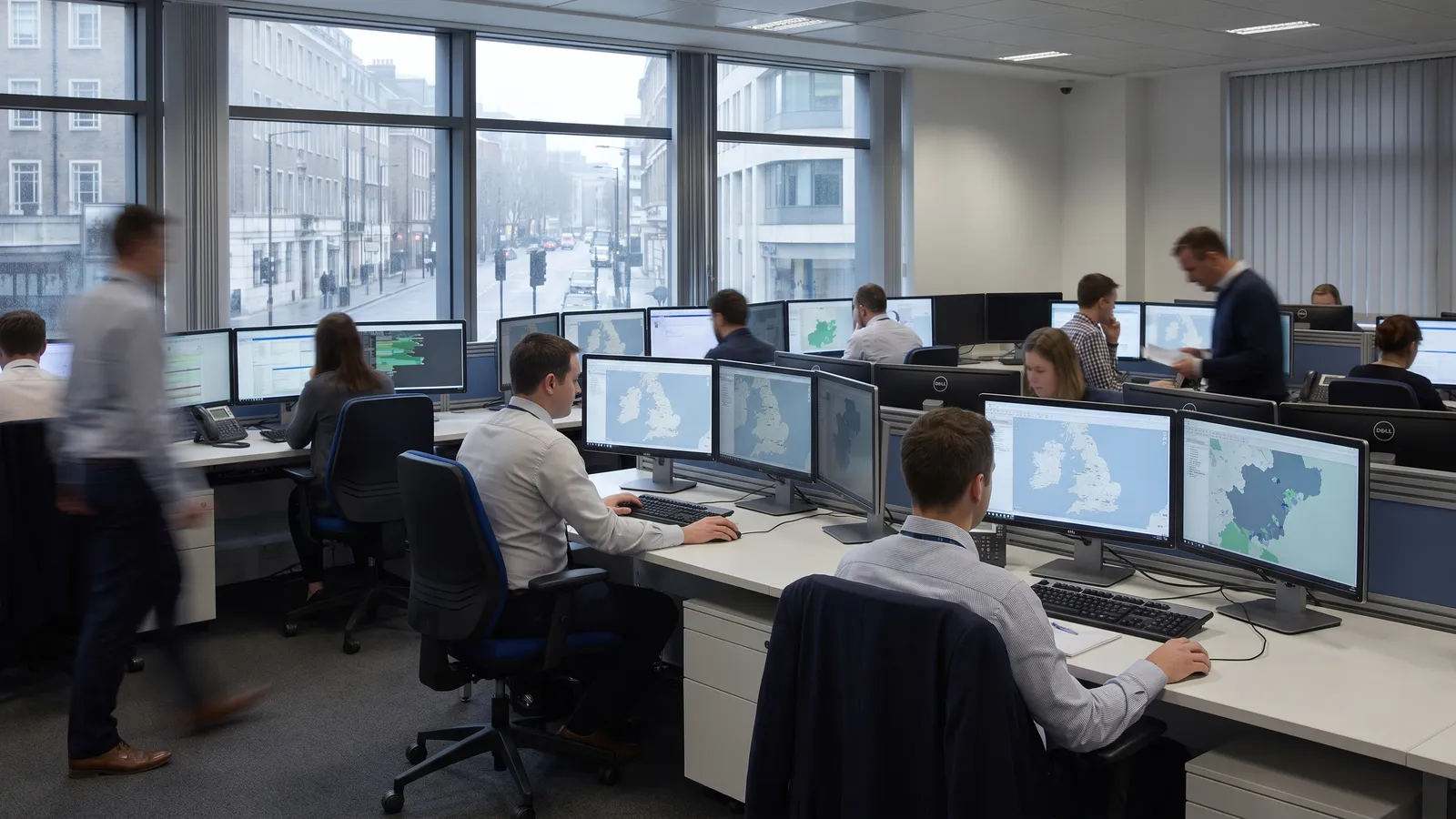
There is a system, and it's written in law
When people imagine a serious national crisis, the fear is often that nobody would be in charge. The reassuring, evidence-based reality is that the UK's response to emergencies is governed by established law, not improvisation. The Civil Contingencies Act 2004 is the single legal framework for civil protection: Part 1 sets out the duties of local responders to prepare for and respond to emergencies, and Part 2 covers emergency powers for central government.
That means the roles, duties and lines of command in an emergency are defined in advance — a standing structure that switches on, rather than something invented on the day.
The responders, and their legal duties
The Act defines 'Category 1 responders' — the organisations at the core of most emergencies: the emergency services, local authorities and NHS bodies. They carry six legal civil-protection duties: assess the risks, put emergency plans in place, put business-continuity arrangements in place, warn and inform the public, share information with other responders, and co-operate with them. These are legal obligations to prepare, not optional good intentions.
'Category 2 responders' — co-operating bodies including the Health and Safety Executive and transport and utility companies — have a duty to co-operate and share information, so the operators of critical infrastructure are formally plugged into emergency planning too.
Local Resilience Forums: preparedness in every area
This isn't only a Whitehall affair. Category 1 and 2 responders plan together through Local Resilience Forums (LRFs) — multi-agency partnerships based on police-force areas, with 38 in England and 4 in Wales. Each maintains a Community Risk Register of the highest-priority local risks, which means every part of the country has a standing body responsible for local preparedness, tailored to its own flood, industrial or other hazards.
COBR and the lead-department model
For incidents needing national coordination, the response is led from the centre through COBR (the Cabinet Office Briefing Rooms), typically chaired by a senior minister. COBR exists to keep ministers informed, coordinate the wider government response, take key decisions and agree a communications strategy.
Crucially, the UK uses a 'Lead Government Department' model: for each type of emergency, a specific department is designated in advance to lead, with local responders as the foundation and the Cabinet Office coordinating across government. Responsibility for each category of crisis is assigned before an incident — not argued over during one.
Reform, risk assessment and warning the public
The system is actively maintained. The UK Government Resilience Framework (December 2022) set out reforms to 2030 built on three principles: understanding the risks, prevention over cure, and treating resilience as a 'whole of society' effort — including strengthening Local Resilience Forums and building a UK Resilience Academy. The most serious risks are published openly in the National Risk Register (the 2023 edition assessed 89 acute risks across nine themes), so the public can see what's planned for.
And when danger is imminent, the Emergency Alerts system can warn every compatible phone in an affected area — as it did during Storm Éowyn in January 2025, reaching around 4.5 million people. The structure runs all the way from national law to the phone in your pocket.
Common questions
Is anyone actually in charge during a national emergency?
Yes. The Civil Contingencies Act 2004 sets a legal framework: local responders have defined duties, Local Resilience Forums plan for each area, COBR coordinates nationally, and a Lead Government Department is pre-assigned to head each type of emergency.
What is the Civil Contingencies Act 2004?
The UK's single legal framework for civil protection. Part 1 sets out the preparation and response duties of local responders; Part 2 covers emergency powers for central government — so responses are governed by established law rather than improvised.
What are Category 1 and 2 responders?
Category 1 responders (emergency services, local authorities, NHS bodies) carry six legal civil-protection duties. Category 2 responders (e.g. the HSE, transport and utility companies) must co-operate and share information, plugging critical infrastructure into emergency planning.
What is COBR (COBRA)?
The Cabinet Office Briefing Rooms — where senior ministers coordinate the national response to a major incident: keeping ministers informed, coordinating across government, taking key decisions and agreeing public communications.
What is a Local Resilience Forum?
A multi-agency partnership (38 in England, 4 in Wales) based on police-force areas, where responders plan together and maintain a Community Risk Register of top local risks — so every area has a body responsible for preparedness.
How would I be warned of a serious emergency?
Through the Emergency Alerts system, which sends a warning to all compatible 4G/5G phones in an affected area — used during Storm Éowyn in January 2025 to reach around 4.5 million people. Local BBC radio also carries official emergency information.
Sources: Civil Contingencies Act 2004 — legislation.gov.uk · GOV.UK — Preparation and planning for emergencies (Cabinet Office) · GOV.UK — The UK Government Resilience Framework (2022) · GOV.UK — Local resilience forums. PreparedBritain is independent and not affiliated with HM Government.
The Emergency Kit Checklist
The GOV.UK Prepare essentials on one printable page — tick them off as you go and keep it with the kit. Free, no catch.
Download it straight away. We'll also send the occasional briefing when something genuinely matters — severe weather, live incidents, real price drops. Nothing else.
Keep reading
All planning & the national picture guides →What happens in a national power outage — and how to prepare
A calm, sourced look at the 'national blackout' scenario: why it's a low-likelihood risk the grid is engineered…
How to make a household emergency plan
A simple, practical household emergency plan — the official GOV.UK Prepare approach: contacts, meeting points,…
Solar storms, the aurora and the grid: a calm UK guide
What a geomagnetic storm actually does, the G1–G5 scale, the record May 2024 aurora, and why a severe solar storm is…