The Warm Homes Loan explained: who'll qualify and what it covers from September
Who qualifies for the Warm Homes Loan, what it covers from September 2026, and how it works with the Boiler Upgrade Scheme — confirmed vs still to come.
By Tom Calder · Updated 12 August 2026 · Sourced to gov.uk & the official scheme rules
What the Warm Homes Loan actually is
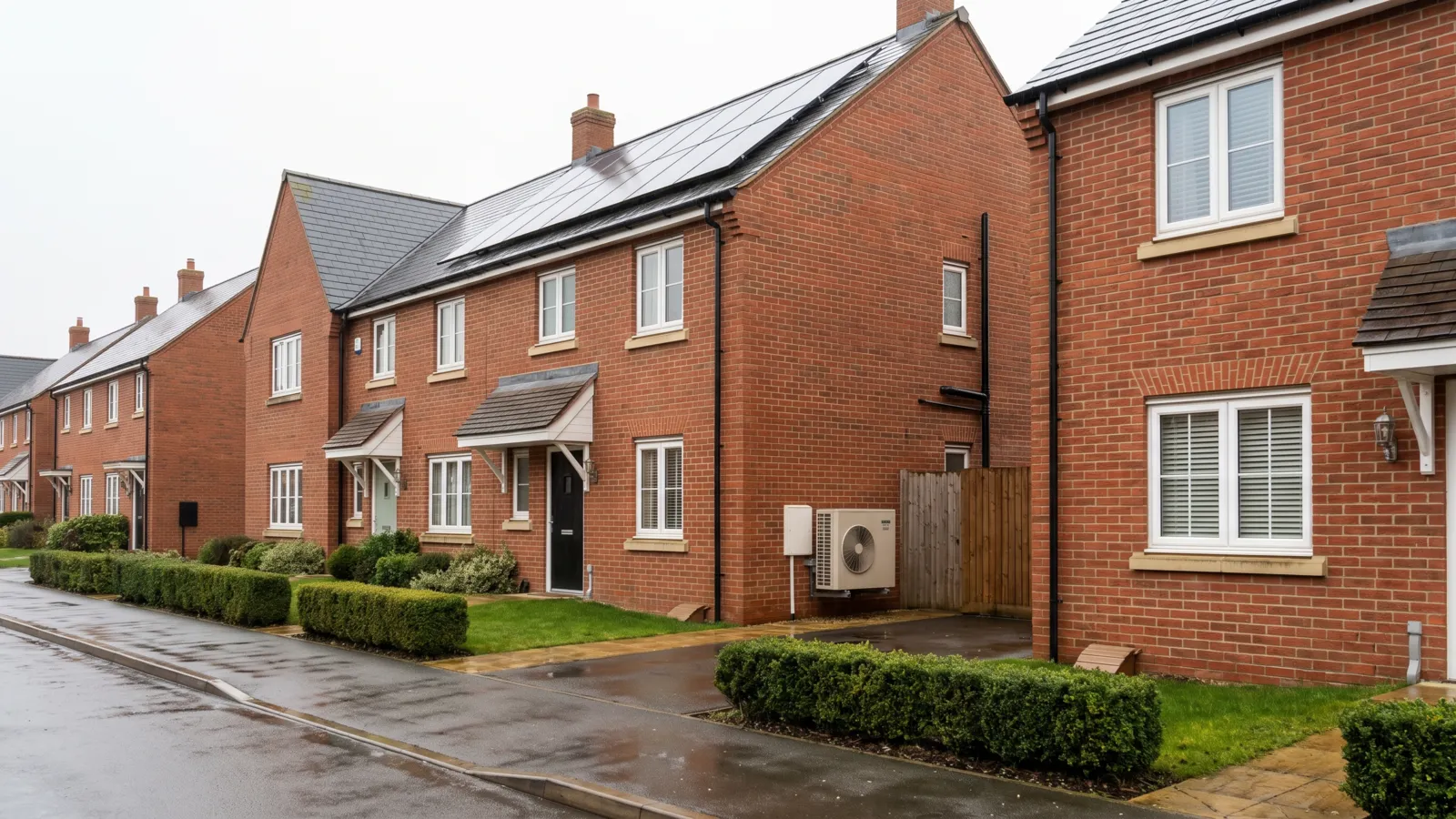
The Warm Homes Loan Scheme is the borrowing arm of the government's Warm Homes Plan, published in November 2025. It is not a grant paid to you. Instead, the government gives participating banks and finance companies a non-repayable grant of up to 20% of each eligible loan — paid in arrears, only after the installation is verified — and the scheme rules require that support to be passed on to borrowers as a lower interest rate, with clawback if the discount isn't fully passed through. The mechanism is sized to cut up to five percentage points off the lender's normal rate on terms of three to ten years, and rates can't go below zero. Lenders must be FCA-authorised, and grant support applies to loans with repayment terms of three years or longer — as ordinary unsecured personal loans, borrowing secured against the home, or point-of-sale finance arranged through an installer.
The published scheme rules set an expected launch of loans to the public in September 2026, 'once all necessary approvals are secured' — the department itself calls the timings indicative. The first lender application window has closed (GOV.UK confirmed the closure on 29 July 2026), and a second window is expected in late 2026 for onboarding in early 2027. As of August 2026, no participating lenders, products or interest rates have been announced. The Warm Homes Plan allocates up to £1.7 billion of lending, backed by £300 million of government grant capital.
Who is expected to qualify
The scheme rules name two eligible groups: owner-occupiers of existing homes, and private rented sector landlords borrowing personally. It operates UK-wide, alongside the devolved nations' own schemes. Unusually for an energy scheme, there are no income thresholds, no minimum energy-efficiency requirements and no property-type restrictions at scheme level — if you own more than one property, you can apply for a loan for each.
The catch is that eligibility on paper is not approval in practice. Lenders run their normal creditworthiness and affordability checks, and may add their own criteria — the rules give 'a requirement to evidence an Energy Performance Certificate' as an example. The scheme is explicitly aimed at households who can afford to borrow but are put off by upfront costs. If you're on a low income, this is not your route: the Warm Homes Plan directs over £5 billion of investment — grants, not loans — at low-income and social housing through the Warm Homes Local Grant and the Warm Homes Social Housing Fund.
What the loans cover — and the big gap
The eligible list is clean-energy kit, each with a loan cap: rooftop solar PV (up to £15,000), battery storage (£15,000), air-to-water heat pumps (£20,000, before any grant is deducted), ground source heat pumps (£35,000), biomass boilers for rural homes with a grant (£20,000), heat network connections, and domestic wind or micro-hydro. An EV chargepoint can be financed only as part of a solar or battery installation, never on its own. Air-to-air heat pumps are listed with a £10,000 cap but were not eligible when the rules were published — they're waiting on new MCS product and installation standards, so check the position when you apply.
The big gap: insulation, draught-proofing, windows, doors and roof repairs are not covered — the rules even bar funding insulation as part of a heat pump installation, and roofing work needed before solar goes on. Lenders may offer a separate ordinary personal loan for those jobs, but it won't carry the scheme's subsidised rate. All funded work must use MCS-certified installers and products; the government only pays the lender its grant after MCS verification of the installation.
How it stacks with the Boiler Upgrade Scheme
The loan is designed to sit on top of existing grants, not replace them. In England and Wales, the Boiler Upgrade Scheme currently pays £7,500 towards an air source or ground source heat pump, £5,000 towards a biomass boiler and £2,500 towards an air-to-air heat pump — plus an extra £1,500 on air source or ground source installations until March 2027 for homes heated by oil or LPG with no mains gas connection. The scheme rules give the intended combination explicitly: claim the BUS grant, then use a Warm Homes Loan to finance the remaining cost, with the loan cap applied before the grant is deducted. One caveat the rules flag: combining funding between the two schemes is 'subject to final approval'.
In Scotland, the loan is designed to work alongside the Scottish Government's Home Energy Scotland scheme instead. The Warm Home Discount is a different thing entirely — £150 off your electricity bill, usually applied automatically, reopening in October 2026 for winter 2026–27. Receiving it has no bearing on loan eligibility, and vice versa.
Do the cheap jobs first
The decide-first order matters more than the financing. Insulation and draught-proofing cut the amount of heat your home needs at all; a heat pump for a leaky home has to be bigger, costs more to install and more to run. Since the loan won't fund that groundwork anyway, do it before you borrow: loft top-ups, draught-proofing strips, letterbox brushes and chimney draught excluders are tens of pounds, not thousands, and they improve the economics of everything on the eligible list.
Then get real numbers. Two or three quotes from MCS-certified installers tell you the actual gap between the BUS grant and the installed price — which is the figure you'd be borrowing, and the figure to weigh against your realistic bill savings.
Confirmed vs still to come — and what to do now
Confirmed in the published scheme rules: the eligible borrower groups, the measure list and loan caps, the up-to-20% grant mechanism, the MCS requirement, and the September 2026 target. Still to come: which lenders are taking part, the actual interest rates, the individual loan products, final approval for combining loans with BUS grants, air-to-air heat pump eligibility, and caps for heat networks, wind and hydro (due before launch). Interest rates are the one that decides whether this scheme is good value — lenders set them, and none are published yet.
Sensible moves before launch: sort insulation and draught-proofing, check your BUS eligibility, and get MCS installer quotes so you know your number. Then wait for real rates before signing anything. We'll update this page the day the lender list and rates publish.
Common questions
When does the Warm Homes Loan Scheme start?
The official scheme rules set an expected launch of loans to the public in September 2026, subject to final approvals — the government describes the timings as indicative. Lender applications for the first tranche closed in July 2026, with a second application window expected in late 2026 for onboarding in early 2027. No lenders, products or rates had been announced as of August 2026.
Will Warm Homes Loans be interest-free?
Not necessarily, though 0% deals are possible in the design. The government pays lenders a non-repayable grant of up to 20% of each loan, which must be passed on by cutting the interest rate — sized to take up to five percentage points off the lender's normal rate on three-to-ten-year terms, with rates floored at zero. Actual rates are set by each lender and none have been published, so wait for real numbers before assuming 0%.
Does the Warm Homes Loan cover insulation or double glazing?
No. The eligible list is limited to heat pumps, solar PV, batteries, biomass boilers, heat network connections and micro-renewables — the rules explicitly exclude insulation, windows, doors and roof repairs, even as part of a heat pump job. Lenders may offer a separate standard personal loan for that work, without the subsidised rate.
Can I combine a Warm Homes Loan with the Boiler Upgrade Scheme grant?
That's the intended design: claim the £7,500 BUS grant for an air source or ground source heat pump, then borrow the remaining installation cost through the loan. The scheme rules note this combination is subject to final approval between the two schemes, so confirm it stands when you apply.
Can landlords get a Warm Homes Loan?
Yes. Private rented sector landlords borrowing personally are one of the two eligible groups, alongside owner-occupiers, and owners of multiple properties can apply for a loan for each property. Lending to companies or SPVs isn't allowed, and social housing is funded separately through the Warm Homes Social Housing Fund.
Do I need a particular installer to qualify?
Yes — all work financed under the scheme must use MCS-certified installers and products, and the government only pays the lender its grant after MCS verification confirms the installation. Getting quotes from MCS-certified installers now is the single most useful thing you can do before launch.
Sources: Warm Homes Loan Scheme — scheme rules (DESNZ) · Warm Homes Plan (DESNZ, November 2025) · Boiler Upgrade Scheme — what you can get (GOV.UK) · Warm Home Discount Scheme (GOV.UK). PreparedBritain is independent and not affiliated with HM Government.
The Blackout Briefing
One calm email when something genuinely matters — severe weather, live incidents, real price drops. No noise.
Keep reading
All money & bills guides →Water social tariffs: the scheme your water company runs
You can't switch water company — so the low-income scheme you can apply for depends entirely on who supplies you.…
Attendance Allowance: the benefit hundreds of thousands of older people miss
Attendance Allowance is tax-free, not means-tested help for people over State Pension age who need care or…
The Crisis and Resilience Fund: what replaced the Household Support Fund
The Household Support Fund closed in March 2026. Here's the fund that replaced it in England, what help you can get…