Is diesel rationing coming to the UK, and is there a 50mph plan?
Headlines say diesel rationing and a 50mph speed limit could return. The rationing tools are real but not new: part of a standing emergency plan, kept for a severe national shortage, whose rationing measures have not been switched on. Its published summary has no speed limit; Britain’s fuel-saving 50mph limits date from the 1970s. What the plan says, what ministers said on 28 September, and what it means at the pump.
Rationing on standby, not in use. The rationing in the headlines comes from the National Emergency Plan for Fuel, a standing DESNZ plan whose GOV.UK summary was last updated in April 2024: priority fuel for emergency and critical services, utilities, public transport and commercial vehicles supplying food and health, and a cap on what the public can buy per visit. GOV.UK says those measures would only be activated in “a severe national fuel supply shortage”, and none has been. On 28 April a DESNZ minister told the Lords it was a plan “we are not intending to implement at the moment”, and on 27–28 September DESNZ said the UK has “a diverse and resilient supply”. The published summary lists no speed limit: the 50mph line traces to a March 2026 TV report that called it “reportedly”, and Britain’s fuel-saving 50mph limits date from the 1970s. Ministers’ comments on 28 September were about prices; the Chancellor said fuel duty plans would be confirmed at the Budget. Diesel hit a record 199.18p on the RAC’s average published on 28 September. Official figures published on 29 September show white diesel stocks 13% lower at the end of July than a year earlier (provisional), but DESNZ says the UK “remains well-supplied for all oil types”, and we have seen no sign of shortages at the pumps: buy as normal and do not queue.
By Tom Calder · Updated 29 September 2026 · Sourced to DESNZ’s National Emergency Plan for Fuel summary, Hansard (5 December 1973, 25 March 2026 and 28 April 2026), DESNZ Energy Trends (29 September 2026) and DUKES, HMRC fuel duty rates, the Cabinet Office, the International Energy Agency, the RAC Foundation, the RAC, a 2021 BEIS statement, the Department for Transport, the HSE, our own fuel price tracker and the outlets named
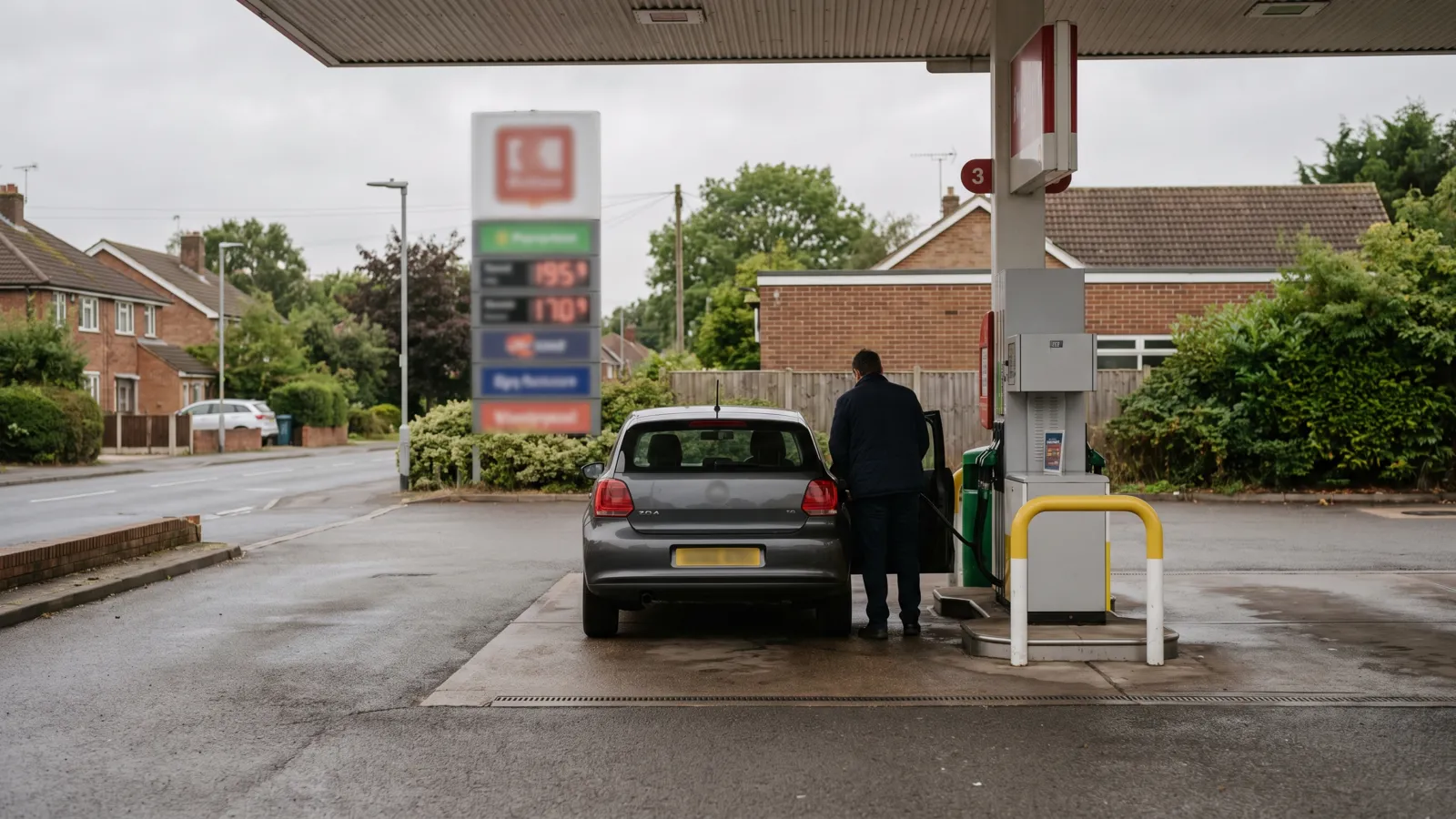
What the emergency plan actually says
The rationing tools sit in the National Emergency Plan for Fuel, produced by the Department for Energy Security and Net Zero (DESNZ). Only a summary is published: the GOV.UK page, last updated on 16 April 2024, lists ten tools. Five help industry keep fuel moving, including reserve tankers, military tanker drivers and the release of emergency oil stocks. Some of these have been used: a competition-law exemption for the fuel industry in September 2021, and emergency stocks when the UK joined the International Energy Agency’s collective release in March 2026. The other five control the supply of and demand for fuel, and “would only be activated in the event of a severe national fuel supply shortage”.
Those five are what the headlines call rationing: priority filling stations for emergency and critical service vehicles; bulk fuel directed first to critical services such as emergency services, utilities and public transport; road diesel prioritised for commercial vehicles on supply chains such as food and health; formal allocation of crude and imported products; and a Maximum Purchase Scheme capping what the public can buy per visit, possibly with shorter selling hours. The summary gives no figure for the cap; Cabinet Office guidance from November 2008 gave 15 litres, “though this is variable”. GOV.UK says the emergency powers behind these measures are “reserved for the most severe of disruptions”, with “a preference for the least invasive measure first”. This is the priority list the “confirmed by government” headlines describe; the GOV.UK summary has not been updated since April 2024, and none of the five has been activated.
Where the 50mph limit comes from
The GOV.UK summary contains no speed limit, and we found no government statement or parliamentary answer this year proposing one. LADbible wrote that the plan shows “a temporary speed limit reduction to 50mph” (28 September); the published summary does not. Brit Brief and LBC trace the 50mph line to ITV’s political correspondent Louisa James, who said on Good Morning Britain in March 2026, six months before these headlines, that the published plans included rationing and priority fuel, and “also reportedly, a temporary 50mph speed limit to reduce demand for fuel” (as quoted by LBC, 28 September). LBC also reported on 28 September that DESNZ had denied reports that a speed limit could be introduced or fuel purchases rationed.
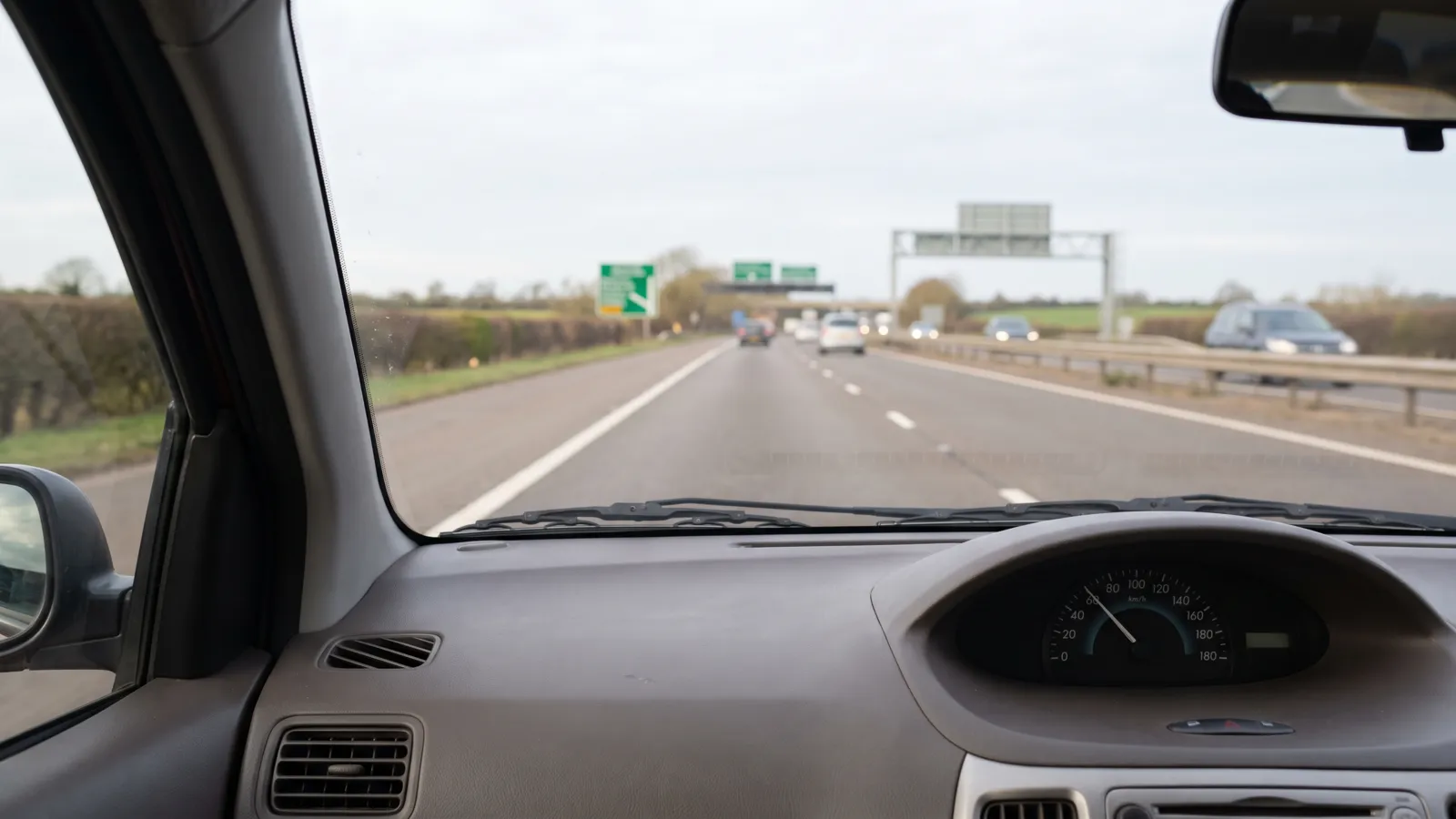
The precedent is from the 1970s, when there was a 10% cut in oil supplies and queues at the pumps. On 5 December 1973 the Secretary of State for Trade and Industry, Peter Walker, told the Commons: “A 50 mph speed limit will be imposed by order on all roads, including motorways, except where a lower limit already applies.” It was lifted on motorways at the end of March 1974 and on other roads in May; from December 1974 a 50mph limit applied again on single-carriageway roads, as an energy-saving measure, until the limits were revised in 1977. Ration books were issued from 29 November 1973 as a precaution; rationing was never brought in, and in July 1975 motorists were told they could destroy them (Hansard; RAC Foundation, 2009). The nearest thing this year is advice to governments, not a UK plan: on 20 March the International Energy Agency listed “Reduce speed limits on highways by at least 10 km/h” among ten ways to cut oil use.
Is there a shortage?
Not on the evidence published. Asked in the Lords on 28 April 2026 what plans the government had to activate the plan, Lord Whitehead, a DESNZ minister, said “the physical supply of fuel to the UK is stable”, called it “a plan that we are not intending to implement at the moment because the circumstances envisaged by that emergency plan are not in place”, and added that it “is a plan for shortages of fuels, of which there are none at the moment in the UK”. That answer is five months old. On 27 and 28 September a DESNZ spokesperson gave reporters, including LBC, the same line: “We have a diverse and resilient supply. We continue to engage with our international partners and the UK fuel industry.” LBC reported that DESNZ says forecourts are being supplied with diesel as usual.
The official stock figures are published two months in arrears, and the newest one moves the other way. DESNZ figures published on the morning of 29 September put UK stocks of white diesel, the grade sold at the pumps, at about 1.02 million tonnes at the end of July 2026, 13% less than a year earlier and 13% less than at the end of June (provisional). That is the lowest since December 2023, though above the lows of late 2022. Total UK oil stocks were 9.6 million tonnes, 10.3% less than a year earlier, mostly because less was held abroad after the March release; stocks held in the UK were 1.6% lower. The International Energy Agency’s figures, as reported by DESNZ, put the UK at 117 days of net imports across all oil in June, against the 90-day requirement, and DESNZ says “the UK remains well-supplied for all oil types from a diverse range of sources” (Energy Trends Table 3.11, 29 September 2026).
The “42 days” comes from Sky News. Its Ed Conway said the UK was “barely more at 42 days worth of imports in terms of our emergency stockpiles” of diesel, against 31 for Australia and over 1,000 for Japan (as quoted by the Daily Express, 28 September). We could not reproduce the 42 from any published official series. His words suggest diesel stocks measured against diesel imports: that is how many days of imports the stocks could replace, not how long until pumps run dry, since diesel is still refined in the UK and imported every day. It is a narrower measure than the IEA’s 117 days for all oil, so the two cannot be set side by side. The Express also reported that he said forecourt stock levels were close to normal. When reports in March said Britain had four weeks of fuel, Lord Whitehead called that “categorically untrue” (Hansard, 25 March 2026).
The risk being watched is American: the United States supplied 31% of the UK’s diesel imports in 2025 (DUKES 2026), and President Trump said on 27 September that he was looking at an export ban “very seriously”. None had been ordered by the morning of 29 September; our US export ban check follows it.
What ministers actually said on 28 September
“Ministers vow to help motorists as diesel hits record high” (The Telegraph, 28 September 2026) is about help with prices, not rationing. Emma Reynolds, Chief Secretary to the Treasury, told a CBI event at the Labour conference: “We are not powerless as government… we do have levers to pull at our disposal.” She did not say which, though The Telegraph read it as a hint on fuel duty. The Chancellor, John Healey, told ITV News that fuel duty plans would be confirmed at the Budget, and told the BBC, of a possible US ban, “we have our own stocks in the UK”.
Fuel duty is 52.95p a litre until 31 December 2026. The legal default is 55.95p from 1 January 2027 and 57.95p from 1 March, but HMRC says “the government will confirm final rates at Budget 2026”; with VAT the two steps would add about 6p a litre. As of 29 September no change to those scheduled rises, and no rationing measure, has been announced.
What to do, and what not to do
Buy fuel as you normally would. When many forecourts ran dry in September 2021, the Business Secretary said there had “always been and continues to be plenty of fuel at refineries and terminals”, and fuel companies and trade bodies said jointly that the problems were “due to temporary spikes in customer demand, not a national shortage of fuel”. The step the government announced that night was one of the plan’s supply measures, a temporary competition-law exemption so suppliers could co-ordinate deliveries (BEIS, 26 September 2021). Our fuel shortages guide explains why queues make things worse.
Keep the tank above a quarter as a habit. Do not fill cans: petrol vapour is a fire risk, and storing more than 30 litres of petrol at home means notifying your local Petroleum Enforcement Authority (HSE). Shop around: at 00:15 on 29 September our fuel price tracker had supermarket diesel at 197.3p a litre against 214.9p at motorway services, with diesel at £2 or more at 30.2% of the 7,680 forecourts selling it. And you need no law to slow down: at 70mph a car uses about 10% more fuel than at 60mph (Department for Transport, 2011).
What would change this verdict
The verdict is dated 29 September 2026. It would change if DESNZ activated any of the plan’s rationing measures, if the government ordered a temporary national speed limit, or if DESNZ reported supply problems at terminals or forecourts. A US export ban would not change it on its own: we would expect that to reach households first as a higher price. White diesel stocks fell in July; we will add DESNZ’s August figures when they are published on 29 October.
Common questions
Is the UK going to ration diesel?
Nothing has been announced. Rationing tools, including a cap on how much the public can buy per visit, sit in the National Emergency Plan for Fuel, which GOV.UK says would only be activated in the event of a severe national fuel supply shortage. On 28 April 2026 a DESNZ minister, Lord Whitehead, told the Lords it was a plan “we are not intending to implement at the moment”, and on 27–28 September DESNZ said the UK has “a diverse and resilient supply”. None of the plan’s rationing measures is in force as of 29 September 2026.
Is a 50mph speed limit coming in?
It is not in the published summary of the government’s emergency fuel plan, which lists no speed limit, and LBC reported on 28 September that DESNZ had denied reports that one could be introduced. The 50mph line in this week’s headlines traces to an ITV report from March 2026 that called it “reportedly”. The last 50mph limits imposed to save fuel were in the 1970s: on all roads, including motorways, from December 1973, and on single-carriageway roads from December 1974 until 1977.
Who would get fuel first if rationing started?
Under the plan’s published summary: emergency and critical service vehicles, at designated filling stations; bulk deliveries to critical services such as emergency services, utilities and public transport; and road diesel for commercial vehicles on key supply chains such as food and health. The public would face a maximum purchase per visit and possibly shorter selling hours; the summary sets no figure, and 2008 guidance gave 15 litres, “though this is variable”. None of this is in force.
Does the UK only have 42 days of diesel left?
It is not a count of days until the pumps run dry. Sky News’s Ed Conway said the UK’s emergency diesel stocks equalled about 42 days of imports, and we could not reproduce that figure from published official data. It measures how many days of imports the stocks could replace, while UK refineries and imports keep supplying diesel every day. It is a narrower measure than the International Energy Agency’s 117 days of net imports for all oil in June, so the two should not be compared. Official figures show white diesel stocks at the end of July 2026 were 13% lower than a year earlier (provisional), and DESNZ says the UK “remains well-supplied for all oil types”.
Will the government cut fuel duty?
Nothing has been announced. Diesel duty is 52.95p a litre until 31 December 2026 and is set by default to rise to 55.95p in January and 57.95p in March 2027, but HMRC says final rates will be confirmed at Budget 2026. On 28 September the Chief Secretary to the Treasury said the government has “levers to pull”, and the Chancellor said fuel duty plans would be confirmed at the Budget.
Sources (24)
- DESNZ, National Emergency Plan for Fuel: summary of response tools (updated 16 April 2024)
- Hansard, House of Lords, National Emergency Plan for Fuel, Private Notice Question answered by Lord Whitehead (28 April 2026)
- Hansard, House of Lords, Fuel Supplies: War in Iran, answered by Lord Whitehead25 March 2026; the “four weeks” claim and “a price crisis and not a supply crisis”
- Hansard, House of Commons, Fuel Supplies, statement by Peter Walker, Secretary of State for Trade and Industry (5 December 1973, vol 865)
- RAC Foundation, The 1973–1975 Energy Crisis and its Impact on TransportDavid Parish, 2009; the 1970s speed limits and ration books
- Cabinet Office, Business continuity management for fuel shortagesguidance dated November 2008; on GOV.UK since 16 February 2011
- DESNZ, Energy Trends: oil and oil products, Table 3.11 stocks of petroleum and commentarypublished 29 September 2026; end-July 2026, provisional
- DESNZ, ET 3.11 September 2026 workbook
- IEA, Oil stocks of IEA countriesdays of net imports; source of DESNZ’s 117-day figure for June 2026
- DESNZ, Digest of UK Energy Statistics (DUKES) 2026, Chapter 3 (published 30 July 2026)
- HMRC, Amended Fuel Duty rates: 2026 to 2027 (22 May 2026)
- International Energy Agency, Sheltering From Oil Shocks: summary20 March 2026; the ten options, including lower highway speed limits
- BEIS, Statement following meeting between the Business Secretary and fuel industry26 September 2021; Business Secretary’s statement and joint industry statement
- Department for Transport, Save money on your holiday driving26 July 2011; fuel use at 60mph and 70mph
- HSE, If you store petrol at home, or at a club/association or similar premises (the 30-litre notification threshold)
- RAC Fuel Watch, UK average pricesdiesel 199.18p, published 28 September 2026; record 199.09p, 25 June 2022
- Bloomberg, “Trump Says He’s ‘Very Seriously’ Looking at Diesel Export Ban” (27 September 2026)
- PreparedBritain, UK fuel price trackerFuel Finder all-forecourt figures, read 00:15 on 29 September 2026
- LBC, “Government stresses ‘diversity and resilience’ of fuel supply as diesel prices spike”28 September 2026; DESNZ statement and denial; Louisa James’s March 2026 Good Morning Britain remarks
- The Telegraph via Yahoo News, “Ministers vow to help motorists as diesel hits record high”28 September 2026; Reynolds and Healey quotes
- Brit Brief, “Diesel rationing and 50mph speed limit plans could return as prices hit record high”27 September 2026; the headline checked here
- Daily Express via MSN, “Diesel rationing and new 50mph speed limit plan on table for all of UK” (27 September 2026)
- Daily Express via AOL, “Drivers with diesel cars issued ‘42-day’ warning”28 September 2026; reports Sky News’s Ed Conway, the origin of the 42-day figure
- LADbible, “Government confirms who gets first priority on fuel as rationing and 50mph speed limit proposed” (28 September 2026)
PreparedBritain is independent and not affiliated with HM Government.
The Blackout Briefing
One calm email when something genuinely matters — severe weather, live incidents, real price drops. No noise.
Keep reading
All money & bills guides →Is the US about to ban diesel exports, and what would it mean for UK pump prices?
Headlines say European diesel is surging because Trump is weighing a ban on US exports. The price move is real:…
Do you need to take a meter reading before 1 October?
The energy price cap rises to £1,723 on 1 October 2026. If you have a working smart meter you need do nothing. If…
Why is diesel so expensive — and does the 60mph rule really save fuel?
Diesel has passed its all-time record. Here is why it is diesel in particular, how much of a litre is tax, whether…