Best composters for the garden & kitchen (2026)
Composting is the quiet engine of growing your own: it turns kitchen scraps and garden waste into free, rich soil food, cuts what goes in your bin, and closes the loop on the veg you grow. Here's how the main types compare — from a simple converter bin most people should start with, to the faster and small-space options.
By Tom Calder · Updated 20 September 2026 · 6 products, 2 of 6 price-tracked
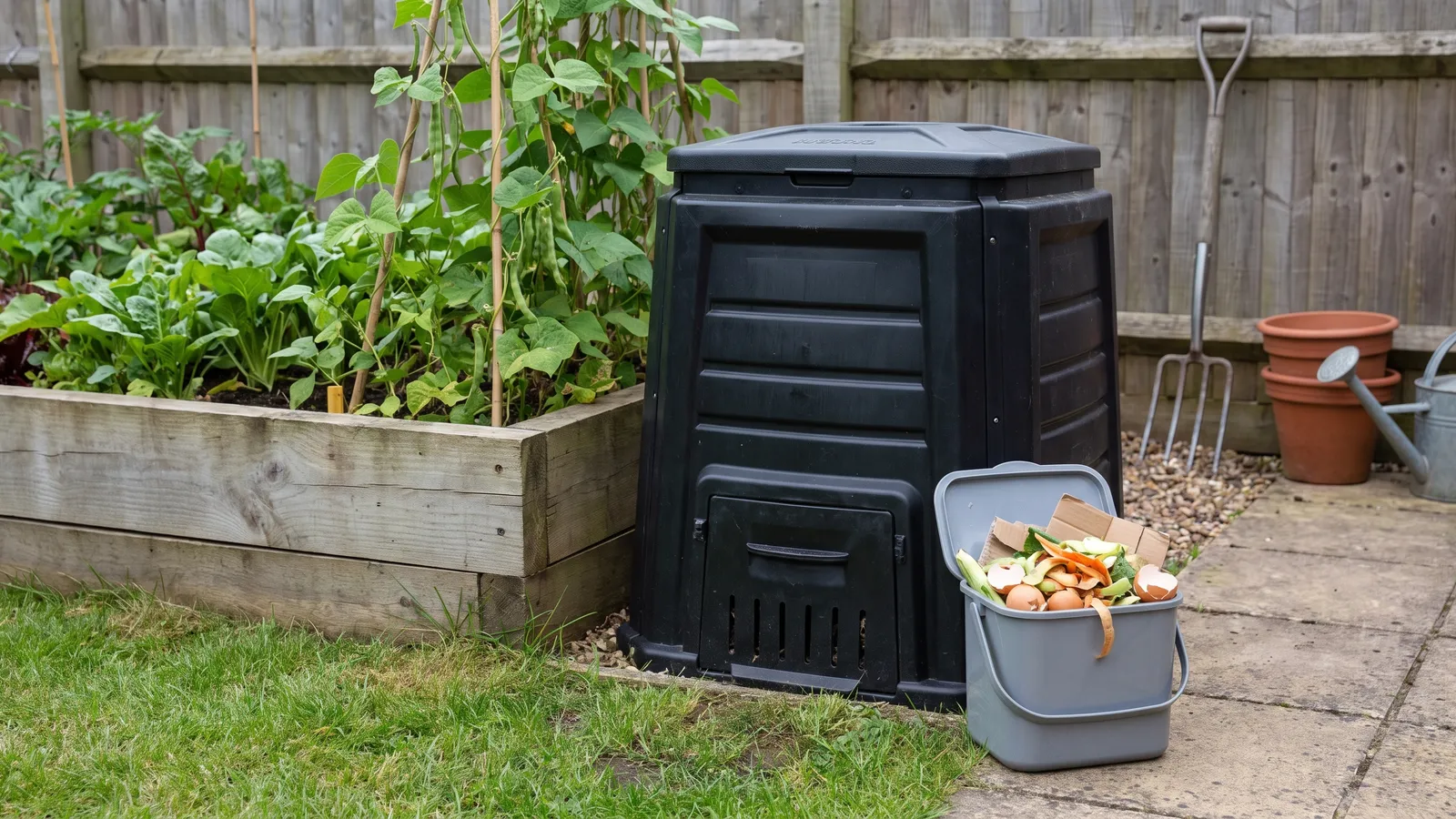
Before you buy
Match the type to your situation. A converter ('Dalek') bin is the cheap, do-everything default for a garden. A hot composter (like a HOTBIN) is insulated so it composts far faster — weeks not months — and can take cooked food, useful if you generate a lot of waste. A tumbler makes turning easy and speeds things up. A wormery or bokashi bin suits flats and courtyards with no garden, handling kitchen waste indoors or on a balcony.
Know what goes in — and what doesn't. All systems take fruit and veg peelings, garden prunings, grass, cardboard and coffee grounds; the balance of 'greens' (nitrogen) and 'browns' (carbon) is what makes good compost. Standard cold bins should NOT take cooked food, meat or dairy (they attract vermin) — but hot composters and bokashi are designed to. Match your waste stream to the system.
Think about siting and speed. A garden bin wants a spot on soil (so worms get in) that's easy to reach with a kitchen caddy. Speed varies hugely: a cold bin takes 6–12 months, a tumbler or hot bin a few weeks to a couple of months. Buy the capacity you'll actually fill — an oversized bin that never heats up composts slowly, so two smaller bins (one filling, one maturing) often beats one huge one.
Top pick: Green Johanna Food Waste Composter. A well-made, vermin-resistant hot composter that handles the food waste ordinary 'dalek' bins can't, and a repeat Which? and Gardeners' World Best Buy. It earns its price only if you'll use that extra capability, and the optional insulating jacket is really needed for reliable results through a UK winter.
| Composter | Capacity | Type | Compost speed | Price | |
|---|---|---|---|---|---|
| Green Johanna Food Waste ComposterTOP PICK | 330 L | Hot composter (accepts cooked food, meat & fish) | 4-6 months | — | Check price → |
| HOTBIN Mk2 Hot Composter | 200 L | Insulated aerated hot composter | Compost in ~30-90 days | £255.00Checked 20 Sep · indicative — not price-tracked | Check price → |
| Blackwall 220L Compost Converter | 220 L | Static open-base converter (recycled plastic) | Slow — cold/static, typically 6–12 months | £59.99as of 20 Sep 2026, 12:29 BST · DetailsProduct prices and availability are accurate as of the date/time indicated and are subject to change. Any price and availability information displayed on Amazon.co.uk at the time of purchase will apply to the purchase of this product. | Check price → |
| Bokashi Kitchen Composting Bin (pair) | 16 L | Anaerobic fermenter (indoor, sealed) | ~2 wks to ferment, then 2-4 wks buried in soil | — | See price on Amazon → |
| Worm Composter (Wormery) | 75 L | Stacking-tray vermicomposter (worms + tap for liquid feed) | Slow — usable castings in about 2-3 months | — | See price on Amazon → |
| Dual-Chamber Compost Tumbler | 140 L | Dual-chamber rotating tumbler (freestanding, off-ground) | ~6-8 weeks per batch with regular turning | £58.63as of 20 Sep 2026, 12:29 BST · DetailsProduct prices and availability are accurate as of the date/time indicated and are subject to change. Any price and availability information displayed on Amazon.co.uk at the time of purchase will apply to the purchase of this product. | Check price → |
ⓘ As an Amazon Associate, PreparedBritain earns from qualifying purchases. We may earn a commission when you buy, or a fee when you request a quote, through our links — it never affects what we recommend. Amazon prices come from Amazon's own product data and show the date and time they were retrieved. Prices at other retailers are checked by us, less often. Prices and stock can change at any time, so always check the retailer's price before you buy.
Green Johanna Food Waste Composter
4.3Who it's for: Households wanting to compost cooked food, meat and fish - not just peelings and garden waste.
A well-made, vermin-resistant hot composter that handles the food waste ordinary 'dalek' bins can't, and a repeat Which? and Gardeners' World Best Buy. It earns its price only if you'll use that extra capability, and the optional insulating jacket is really needed for reliable results through a UK winter.
- Takes cooked food, meat and fish as well as garden waste, with secure hatches and a solid base that keep rats and foxes out
- Made in the UK from 100% recycled plastic with a five-year guarantee and a genuine 10-year-plus lifespan
- Consistent Best Buy record (Which? 2021, Gardeners' World) and a free compost aerator included
- Walls are fairly thin, so the £64-79 insulating jacket is more or less essential for hot composting over winter - a real extra cost
- Roughly £140 is a big step up from a basic council compost bin
Don't buy if You only compost veg peelings and garden trimmings - a cheap standard cone or 'dalek' bin does that job just as well for a fraction of the price. The Johanna's premium is only worth paying if you specifically need to deal with cooked food, meat and fish.
HOTBIN Mk2 Hot Composter
4.2Who it's for: Households of 3-5 with steady kitchen and garden waste wanting fast compost year-round in a small footprint.
A genuinely effective insulated hot bin that keeps working through winter and handles cooked food and small bones a cold heap can't. It's a big outlay and needs regular feeding to stay hot, so it rewards households that compost consistently.
- Holds 40-60C even in winter, producing usable compost in weeks rather than a year or more
- Sealed design with a bio-filter lid and leachate tap takes cooked food, meat and small bones that ordinary bins can't
- Compact 55cm footprint and a repeated BBC Gardeners' World Best Buy, so it suits smaller UK gardens
- Roughly ten times the price of a standard council compost bin
- Needs a steady ~5kg of waste a week plus ongoing bulking agent and shredded paper to stay hot, so it's more hands-on
Don't buy if Don't buy if you produce only a little waste or want a fill-and-forget bin; below about 5kg a week it won't stay hot and a cheap cold composter will do the same job for far less.
Blackwall 220L Compost Converter
4.0Who it's for: Households wanting a cheap, no-fuss garden bin for everyday kitchen and garden waste.
A sensible, well-proven budget composter: UK-made from recycled plastic, no assembly, and often cheaper still through a council scheme. It won't produce compost quickly, but for most gardens it does the job reliably for years.
- Very affordable, and frequently subsidised to around £18–£32 through local-council composting schemes
- UK-made from recycled plastic with a 5-year guarantee and no assembly needed
- Wide front hatch makes it easy to remove finished compost from the base
- Cold/static design means composting is slow — expect roughly 6–12 months
- Open bottom sits on soil; on a patio or hard surface you'll need to buy the optional base plate, and the open base offers little defence against rodents
Don't buy if you want compost fast or a pest-resistant setup — a tumbler or an enclosed hot bin suits you better; and skip it if you'll site it on a hard surface without adding the base plate.
as of 20 Sep 2026, 12:29 BST · Details
Product prices and availability are accurate as of the date/time indicated and are subject to change. Any price and availability information displayed on Amazon.co.uk at the time of purchase will apply to the purchase of this product.Bokashi Kitchen Composting Bin (pair)
3.9Who it's for: Flat-dwellers and gardeners wanting to compost all food waste, including cooked scraps and meat, indoors year-round.
A practical way to turn a fortnight's kitchen scraps into a soil improver without an outdoor heap, and the pair lets one bin ferment while you fill the other. It rewards a bit of routine rather than fit-and-forget convenience.
- Handles cooked food, dairy and small amounts of meat that ordinary cold compost bins can't
- Sealed anaerobic fermentation keeps it near-odourless and pest-free, so it's genuinely usable in a kitchen or flat
- Twin design gives a continuous cycle: fill one while the other ferments for two weeks
- The fermented output isn't finished compost - it still needs burying in soil or adding to a heap to break down
- Ongoing cost and faff of Bokashi bran, plus draining the liquid every few days
Don't buy if Don't buy if you have no garden bed, allotment or wormery to bury the pre-compost in - the fermented waste needs soil to finish, so it's little use to someone with only a balcony.
Worm Composter (Wormery)
3.8Who it's for: Turning everyday kitchen scraps into rich compost and liquid feed in a small garden, yard or balcony.
A well-run wormery quietly recycles food waste into some of the best compost and liquid plant feed you can get, in a footprint no bigger than a bin. It rewards a little routine care rather than a fit-and-forget approach, so it suits people who'll check on it, not those after zero effort.
- Produces nutrient-rich worm castings and a liquid feed from waste that would otherwise go to landfill
- Compact stacking design works on a patio, yard or balcony where a full compost heap won't fit
- Handles kitchen scraps quietly with no digging or turning once established
- Slow to get going and the worms need looking after — overfeeding, extreme cold or neglect can kill the colony
- Won't take everything (limited citrus, onion, meat or dairy) so it's a supplement to, not a replacement for, general composting
Don't buy if Don't buy if you generate lots of garden waste and want to bin large volumes fast — a standard cold or hot composter will suit you better, and don't buy if a leaky, faintly earthy bin that needs regular checking isn't something you'll keep on top of.
Dual-Chamber Compost Tumbler
3.5Who it's for: Households with a small-to-medium garden who want tidy, rodent-resistant composting without forking over a heap.
A sensible middle-ground composter: the two chambers let one batch mature while you keep feeding the other, and turning is far easier than digging a traditional heap. Generic units vary in build quality, so it is worth checking the frame is sturdy and the doors seal well before you commit.
- Twin chambers mean a steady supply: fill one while the other finishes, rather than waiting on a single batch
- Sealed, off-the-ground barrels keep rats and foxes out and hold heat, so composting is generally quicker than an open bin
- A quick spin every few days aerates the mix with no lifting or forking
- Capacity is modest for a large garden or heavy grass-clippers, and a full chamber gets heavy to turn
- Budget models can feel flimsy, be fiddly to assemble, and leak liquid from the door seams
Don't buy if You produce large volumes of garden waste or have room for a traditional dalek bin or heap; a static bin costs less and holds far more, so a tumbler is the wrong tool if throughput matters more than speed.
as of 20 Sep 2026, 12:29 BST · Details
Product prices and availability are accurate as of the date/time indicated and are subject to change. Any price and availability information displayed on Amazon.co.uk at the time of purchase will apply to the purchase of this product.Get price-drop alerts on these
Prices for 364 tracked products are refreshed daily — last sweep 20 September 2026. Tell us which and we'll email you when one drops.
We verify every product's specifications against at least two independent sources, re-check its UK price and stock on a schedule where we can track it automatically, and cross-check safety-relevant claims against official guidance. Where we've bought and used a product ourselves we say so on its review; where we haven't, our verdict is a considered spec-and-evidence comparison, not a hands-on test — and commissions never change a ranking either way. Read our full methodology →
Guides that go with this
Common questions
What's the best composter for a beginner?
A basic converter ('Dalek') bin — cheap, simple, and it works: add a mix of greens and browns, turn it now and then, and you'll have compost in around a year. Fancier systems solve specific problems you may not have yet.
What can I put in a compost bin?
Fruit and veg peelings, garden prunings, grass, dead leaves, cardboard and coffee grounds. Balance 'greens' (nitrogen) and 'browns' (carbon). Standard cold bins should not take cooked food, meat or dairy — but hot composters and bokashi bins are designed to.
How long does compost take?
A cold converter bin takes about 6–12 months; a tumbler or insulated hot composter can produce usable compost in a few weeks to a couple of months. Turning it and keeping the greens/browns balance right speeds it up.
What composter can I use without a garden?
A wormery or a bokashi bin — both handle kitchen waste in a small space like a balcony, courtyard or utility room. Bokashi ferments all food waste (including cooked); a wormery turns scraps into rich compost and liquid feed.
Is a hot composter worth it?
If you generate a lot of waste or want compost fast, yes — an insulated hot bin composts in weeks and can take cooked food. For modest garden and kitchen waste with no rush, a cheap cold bin does the same job more slowly for far less.
Do I need to turn my compost?
Turning adds air and speeds decomposition, so it helps — especially in a cold bin. Tumblers make it easy; hot bins need less turning. If you never turn it, it still composts, just more slowly.